How to steam a wedding dress without ruining its shape
Steam can smooth satin and crepe, but pleated skirts and crinoline need hand-shaping. The dress’s architecture decides whether to steam at home or call a pro.
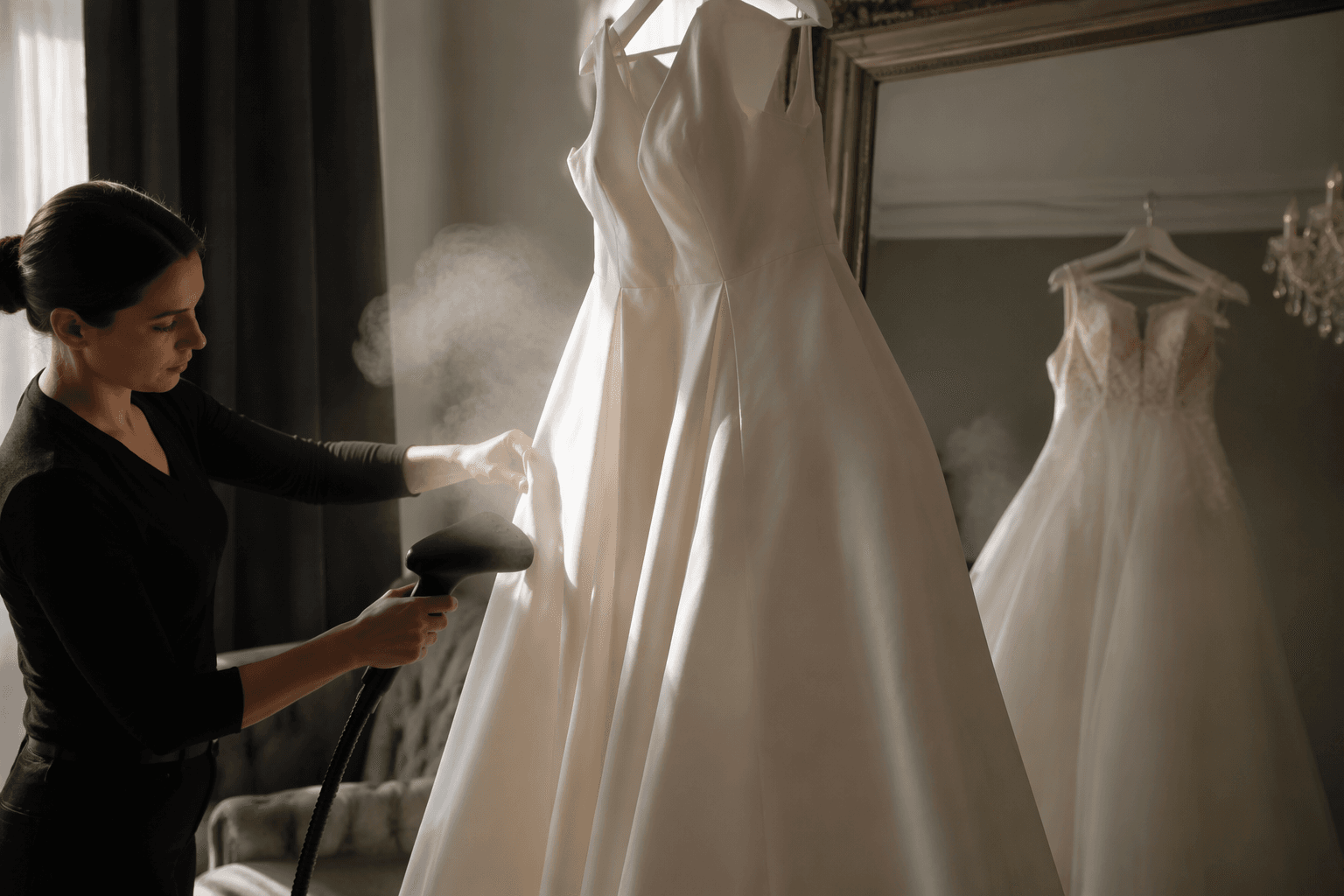
The cleanest wedding-dress steam is the one you never notice, because the silhouette still looks exactly as it was cut to look. That is the real trick: before you chase a wrinkle, read the dress itself. A gown with a structured bodice, layered skirt, and long train can tolerate a very different approach from a simple sheath, and the difference between polished and collapsed is often the difference between steam and shape.
Read the gown before you plug in the steamer
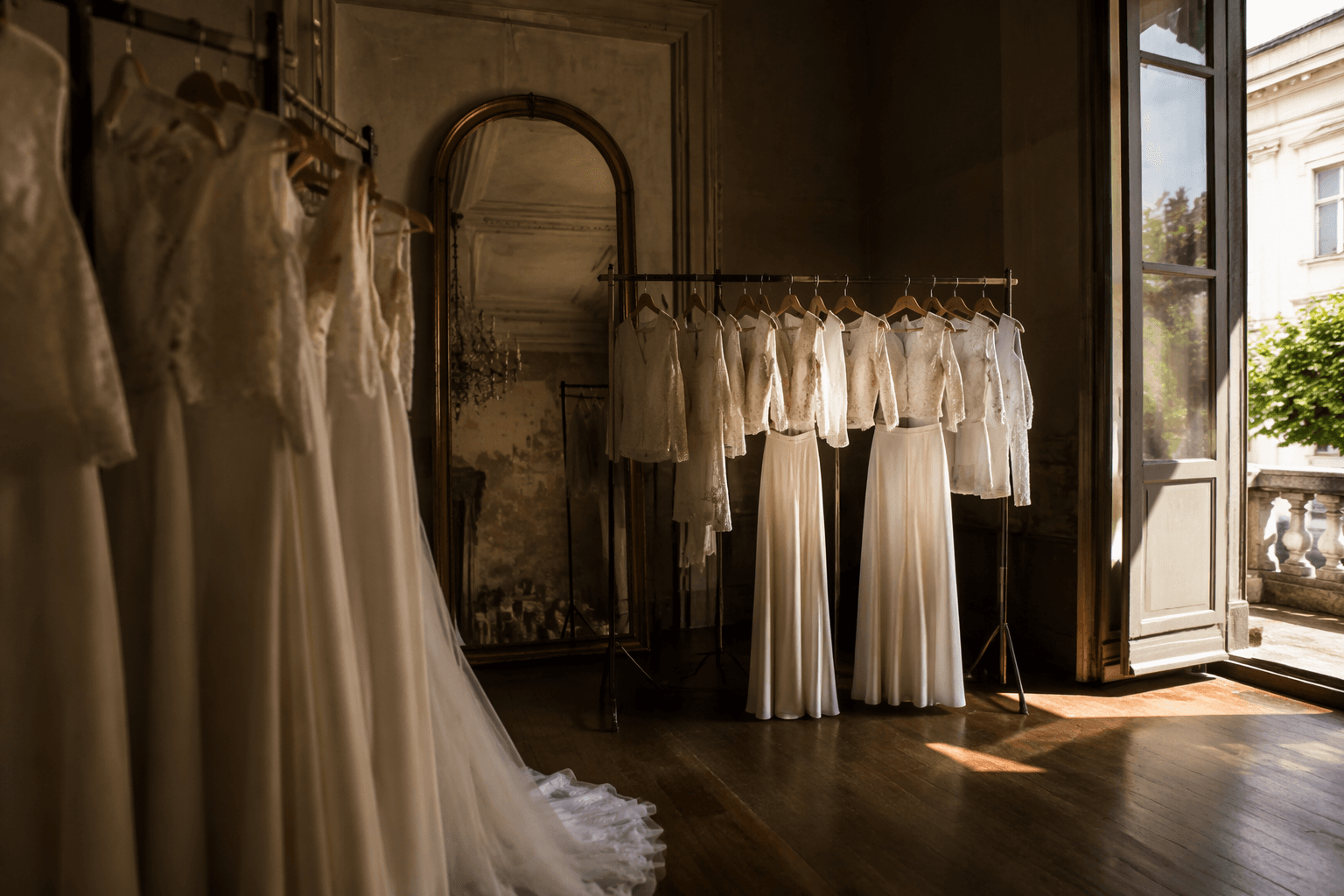
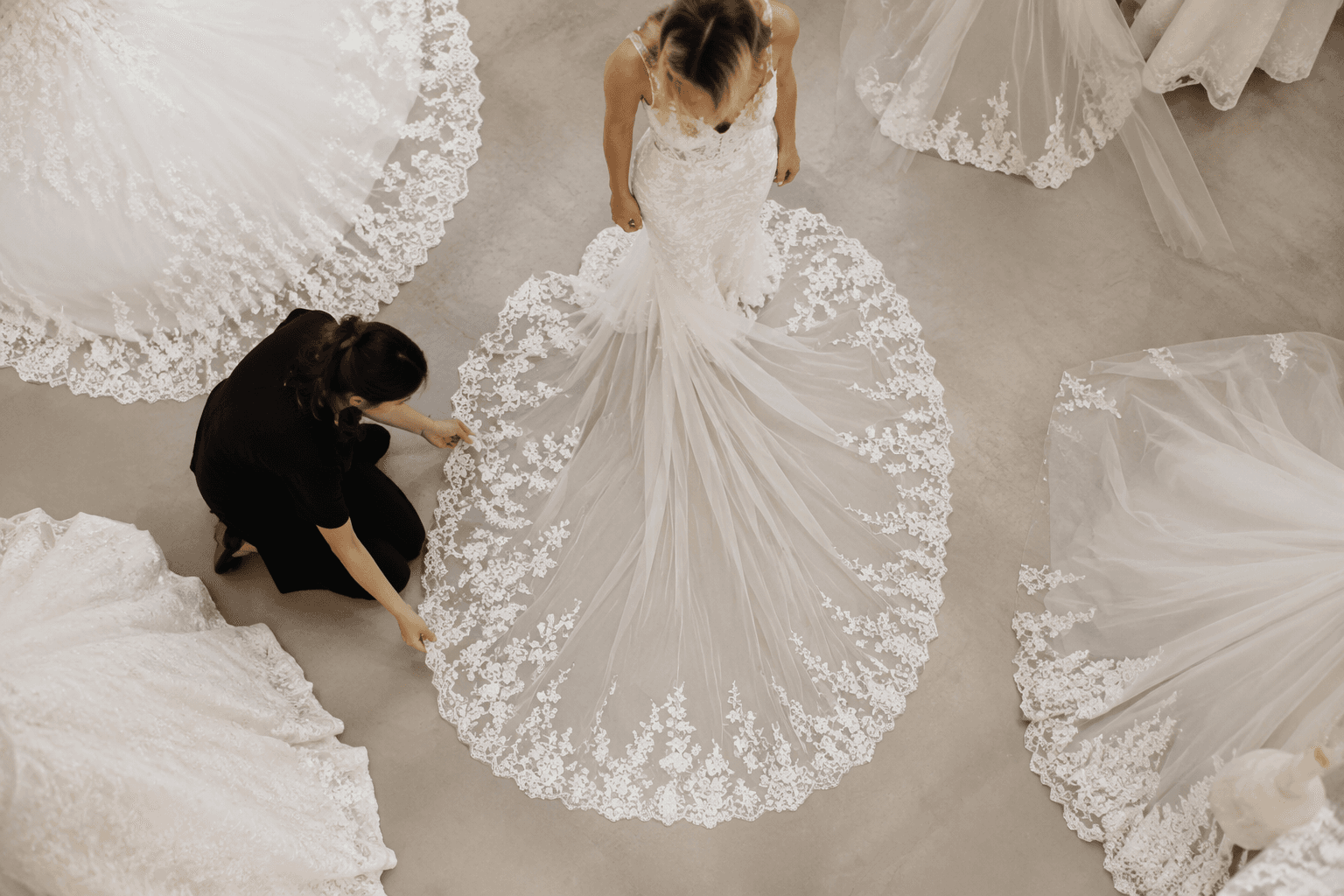
The Knot’s dress-anatomy guide breaks a wedding gown into parts like the bodice, skirt, train, and layers, and that vocabulary matters more than most brides realize. A dress that depends on internal structure needs care that protects the architecture, not just the surface finish. If the skirt gets its volume from crinoline, or the silhouette is built around soft pleats, heat can flatten what the designer intended to stand away from the body.
That is why the first decision is not where to start steaming, but whether the dress should be steamed at all. Wrinkles are most visible on satin, crepe, and some silk fabrics, so those surfaces often need attention. But delicate embellishment, beading, and layered skirts call for a gentler approach, because moisture and pressure can change the way those details sit and catch the light.
What can usually be steamed at home
Brides has said a wedding dress can be steamed from top to bottom for up to three hours, which tells you something important about the scale of the job. This is not a quick pass before you leave for the ceremony. It is a slow, deliberate process that rewards patience, especially when the fabric is smooth and the structure is relatively simple.
J. Major’s Bridal Boutique, in a wedding-dress steaming FAQ, notes that wrinkles and creases commonly happen during storage, travel, and fittings, and that they do not have to show up on the wedding day. That makes home steaming a rescue tool, not a panic move. If you are working on a gown with a straightforward line and no fragile surface work, home steaming can smooth the finish as long as you stay alert to the dress’s construction.
A careful process looks like this:
1. Identify the gown’s architecture first.
Find the bodice, skirt, train, and any inner layers so you know what needs shape, not just steam.
2. Hang the dress where it can fall freely.
You want the fabric to relax into its own line, not bunch against a wall or chair.
3. Let the steamer fully heat up away from the gown.
J. Major’s Bridal Boutique specifically advises this step so the machine is stable before it touches the dress.
4. Release a few initial bursts of steam into the air before you begin.
That reduces the risk of water splatter landing on the fabric.
5. Work from top to bottom, moving slowly across smooth sections.
A wedding dress can take time to refresh properly, and the full length can require hours rather than minutes.
6. Stop if the shape starts to flatten.
If the volume is part of the design, the goal is to preserve it, not iron it into submission.
What should not be steamed
Soft pleated skirts and crinoline are the clearest no-go zones. Brides’ guide is explicit that those sections cannot be steamed and should be shaped by hand instead. That distinction is the heart of smart bridal dressing: steam removes wrinkles, but it can also erase the spring and air that give a skirt its body.
The same caution applies to highly ornamented gowns. Beading, lace overlays, and layered skirts can look exquisite when they are left untouched, then suddenly tired when they are overhandled. If the dress depends on crisp volume, hand-shaping is safer than forcing moisture through the structure. If the dress depends on the exact fall of a pleat, do not assume heat will improve it.
When to stop and call a bridal salon or cleaner
The question of whether to steam a gown has been hanging around for years, which is why Charlotte’s Weddings & More even framed a 2019 post around the question, “To Steam or Not to Steam.” That long-running hesitation makes sense. Brides are usually deciding among one of the most expensive, photographed garments they will ever wear, and a mistake shows immediately in front, in profile, and in every close-up.
This is the point where professional help earns its place. The Wedding Steamer, listed with more than 15 years of experience, says it professionally steams or presses wedding dresses and travels to the wedding location. Its service list extends beyond bridal gowns to veils, bridesmaids’ dresses, groom and groomsmen suits, mother-of-the-bride and mother-of-the-groom dresses, flower girl dresses, and bridal robes or PJ sets. That breadth matters, because once one piece in the wedding-week wardrobe needs care, the rest of the party often does too.
Professional help is especially useful when the dress has multiple layers, a heavily structured bodice, or detailing that you would hate to test with hot vapor. It is also the right move when the gown is being unpacked after travel, when time is tight, or when the silhouette is too architectural to improvise on your own.
The final wedding-week rule
Steam is part of styling, not a cleanup chore you squeeze in at the end. The best results come when you respect the material, the silhouette, and the time the dress actually needs. A satin gown that has been gently refreshed, a crepe skirt that still skims cleanly, or a train that falls without a crease all look more expensive because they have been handled with restraint.
The bridal lesson is simple: steam what can take it, shape what cannot, and stop the moment the dress stops looking like itself. Done well, the fabric reads as fresh, the silhouette stays intact, and the gown looks exactly as the bride imagined when she first saw it on the hanger.
This article was produced by Prism’s automated news system from verified source data, official records, and press releases, then run through automated quality and moderation checks before publishing. The system is built and supervised by the people who set the standards it runs under. Read our full AI policy.
Did this article answer your question?