How to choose the perfect wedding dress train for your ceremony
The right train balances ceremony drama with real movement. Choose by venue, fabric, and bustle, not just by the photo you want.
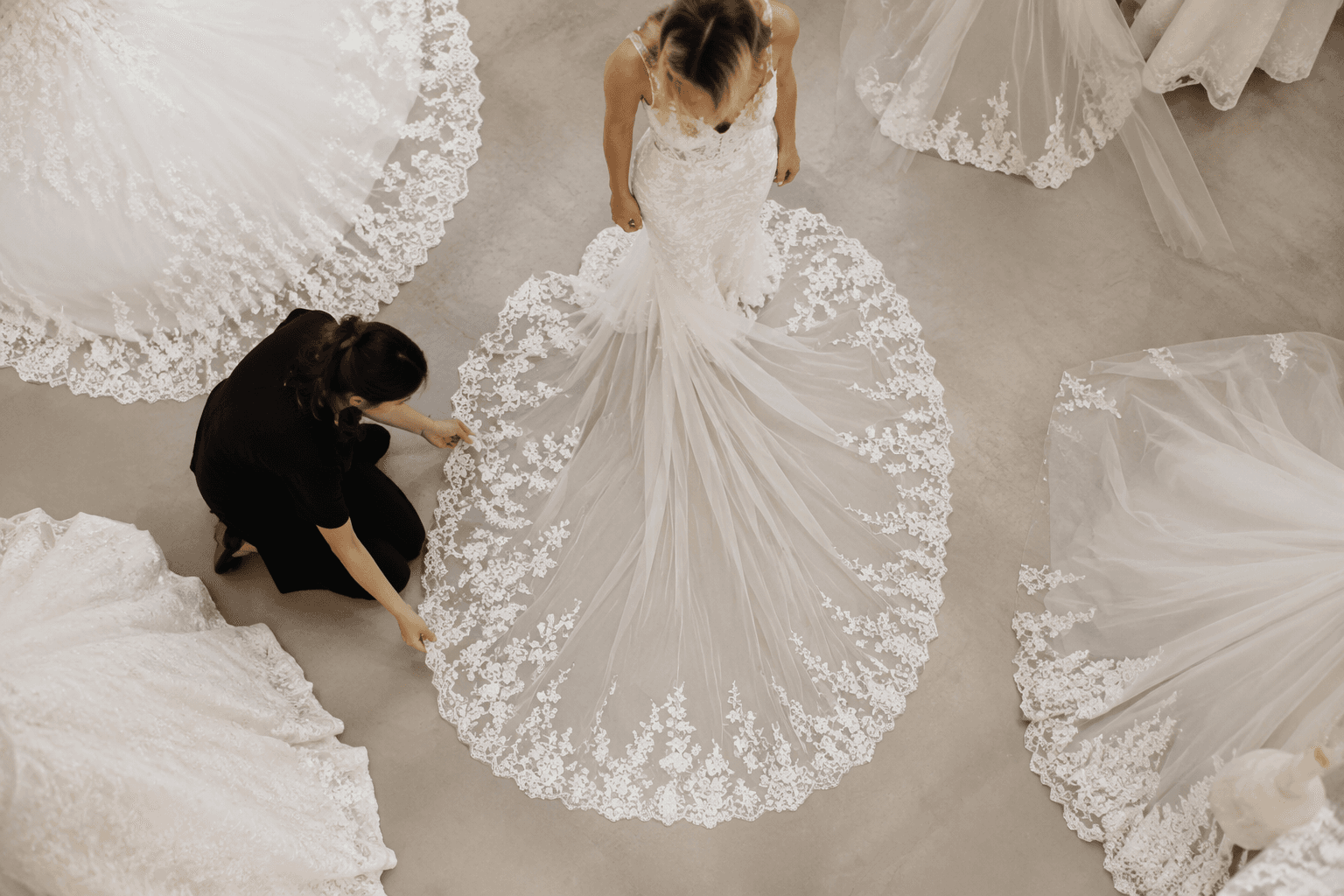
A cathedral train can command a church aisle and still become a problem on stairs, grass, or a packed dance floor. The Knot treats the train as a design decision, not an ornament. Zola places the choice in the context of different styles and personal fit.
The central trade-off: visual drama versus real mobility
The first question is not how long you want the train to look in a still image. It is how you need to move in it. A shorter train is generally easier to manage in grass, on stairs, in narrow interiors, and anywhere guests will be brushing past your hem, while a longer train gives the aisle more authority and the photographs more sweep.
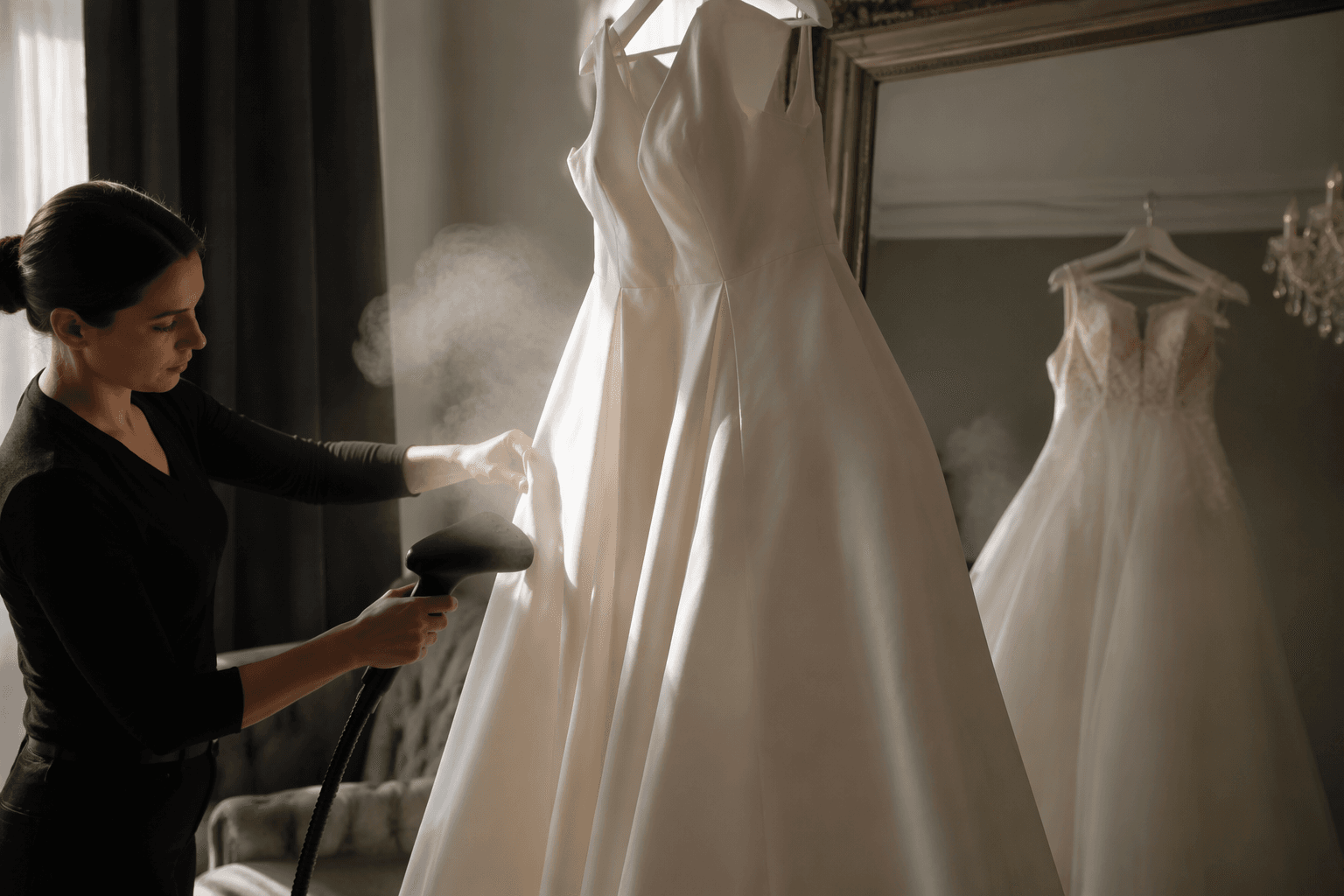
The train is part of garment engineering. David’s Bridal says a bustle is built with hooks, buttons, or ribbons to lift and secure the train after the ceremony, and that is what makes a formal gown danceable once the vows are done. If your reception means turning, sitting, or walking a crowded room with a glass in hand, the bustle matters as much as the hemline.
Match the train to the room you are actually marrying in
The classic bridal vocabulary usually starts with sweep or brush, court, chapel, cathedral, and royal or monarch. Those categories map neatly onto real settings and real bodies in motion. The Knot covers sweep, chapel, cathedral, and royal lengths, and Zola places train choice in the context of style and fit.
A sweep or brush train leaves only a small trail behind the dress. It softens the hem without asking much of your attendants, and it is the easiest choice if your ceremony involves gravel paths, uneven lawns, or a lot of movement before the portrait session.
Court and chapel trains bring more presence without crossing into full spectacle. They work especially well when you want a longer line through the back of the gown but still need to walk, kneel, and turn with some ease. Chapel length is often the sweet spot for brides who want a visible train in photos and a manageable reset for the reception.
Cathedral trains are the ones that change the mood of a room. They read more formal and traditional, and they suit large aisles, church ceremonies, and highly photographed settings where the dress can be given the space to unfurl. Once you move into that territory, a bustle plan is no longer optional in spirit, even if it is technically flexible in construction.
Royal or monarch trains are the true statement-makers. They create the kind of arrival that belongs in a grand hall or a ceremony with serious choreography, but they also require support, planning, and usually more alteration work to keep the train from becoming the day’s most difficult guest.
A practical decision map for fittings
- Choose a sweep or brush train if you want softness with the least fuss, especially for outdoor venues, stairs, or narrow interiors.
- Choose a court or chapel train if you want balance: enough drama to photograph beautifully, enough control to move through the day without constant help.
- Choose a cathedral or royal train if the venue is spacious, the aisle is long, and the ceremony is meant to feel formal from the first step.
- Choose a detachable train if you want ceremony impact without asking the reception to carry the same level of drama.
Detachable trains are especially appealing for brides who want two distinct moments from one gown. You get the grandeur of the aisle, then the freedom to move through dinner and dancing without hauling extra fabric behind you. Detachable, semi-cathedral, and watteau styles are part of the broader bridal conversation, even as the classic lengths still dominate the vocabulary.
Fabric changes everything about how a train behaves
A train is not just about inches. It is about what the fabric does in motion. Structured materials like mikado or satin hold shape and read architectural, which makes a dramatic train feel crisp rather than floppy. Tulle and chiffon move more softly, creating a lighter, airier effect that can look beautiful in motion and less heavy on a long day.
This is where silhouette matters too. A strong, smooth fabric can make even a simpler train feel formal, while a softer textile can keep a longer train from looking severe. The same cathedral length will feel very different on a polished satin column than it does on a floaty chiffon gown, so the hem has to be read together with the cut of the dress.
Do not separate the train from the bustle
The bustle is not an afterthought tacked on during the last fitting. It is the mechanism that turns a ceremony gown into a reception gown, and it is typically planned at fitting time so the dress can be worn comfortably after the portraits and processional are done. That means the cost and complexity of alterations tend to rise with the length and construction of the train, especially when multiple layers or heavier fabrics are involved.
In fitting-room reality, the train gets tested on movement more than on beauty. You will want to walk, turn, sit, and imagine dancing before you sign off on the final alteration plan. A train that looks exquisite in the mirror but catches on every stair or pools too heavily on a crowded floor will become a constant interruption.
The history behind the train
Trains date back to medieval times, when longer lengths were associated with wealth and social status. That history still lingers in the way a cathedral or royal train reads in a room: longer fabric still signals ceremony, formality, and occasion.
This article was produced by Prism’s automated news system from verified source data, official records, and press releases, then run through automated quality and moderation checks before publishing. The system is built and supervised by the people who set the standards it runs under. Read our full AI policy.
Did this article answer your question?