How bridal fabrics shape weight, movement, and light on gowns
The right bridal fabric changes silhouette, comfort, and even the way a gown catches light. Pick by behavior first, because the swatch decides far more than the sparkle.
Silhouette gets all the attention, but the cloth underneath decides whether a gown floats, stands away from the body, or skims it in a clean line. Fabric is the first serious bridal decision, and it is the one that quietly controls everything else. It affects cost, comfort, and the way a bride chooses the dress in the first place.
Start with what the fabric does, not what it is called
The smartest way to shop is to ask what you want the dress to do. Do you want structure, shine, softness, movement, or lightness? That question narrows the field faster than chasing neckline inspiration or pinning endless bodice photos. Fabric can matter as much as silhouette, because it changes how the dress fits, moves, and feels on the body.
That practical lens also keeps you from getting trapped by labels that sound similar but wear very differently. Satin is a weave, silk is a fiber, so two satin gowns can have completely different hands and drapes depending on what they are made from and how they are finished. A silk-forward dress will usually read richer and more luminous; a satin dress can lean sleek and polished, but its weight and bounce depend on the construction.
For romance and softness, lace still does the most work
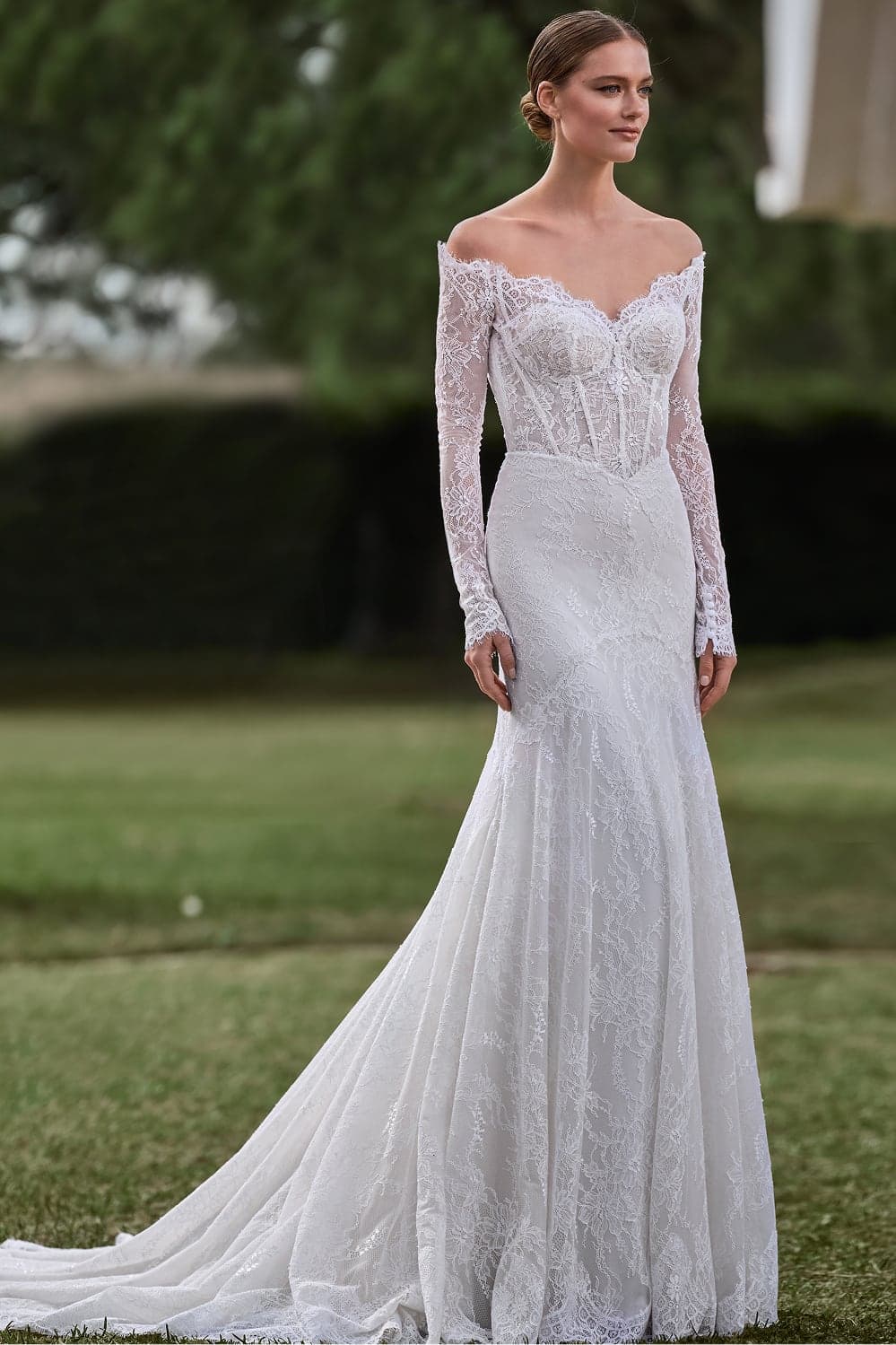
Lace is the emotional fabric in bridal dressing. It brings texture, a vintage feeling, and that visual softness brides reach for when they want the dress to look intimate rather than severe. The Metropolitan Museum of Art traces lace back to cutwork in the 16th century. It has always carried the sense of handwork, even when it is used in a modern, pared-back gown.
Lace works differently depending on how much of the dress it covers. Allover lace reads more layered and atmospheric, while lace appliqué can break up a plain surface without adding the bulk of a heavier textile. If you want romance without swallowing the shape of the body, lace over a lighter base often gives you the most control: enough detail for the camera, not so much density that the dress loses movement.
Satin and silk are about light, polish, and ceremony
If lace is about texture, satin and silk are about glow. They catch light in a smoother, cleaner way, which is why they can make a gown feel instantly more formal even before you add embellishment. In a bright ceremony space, that luminous finish can be stunning; in harsh direct light, it can also become unforgiving, so the exact sheen matters more than many brides expect.
Before the Industrial Revolution, patterned silk textiles required a skilled weaver and a serious investment in equipment and raw materials, which is part of why silk still reads as special. That legacy survives in bridal: silk-heavy dresses and satin finishes still carry ceremony in the way they reflect light, especially in ballroom settings, church aisles, and evening receptions where a little shine looks intentional rather than excessive.
Crepe and chiffon are the movement fabrics
Crepe and chiffon are for brides who want the dress to move with them instead of around them. Chiffon is sheer and flowy, while crepe is fluid and ideal for flowing silhouettes. That makes both fabrics especially strong for destination weddings, courthouse ceremonies, and second-look receptions where you want elegance without the stiffness of a heavily built gown.
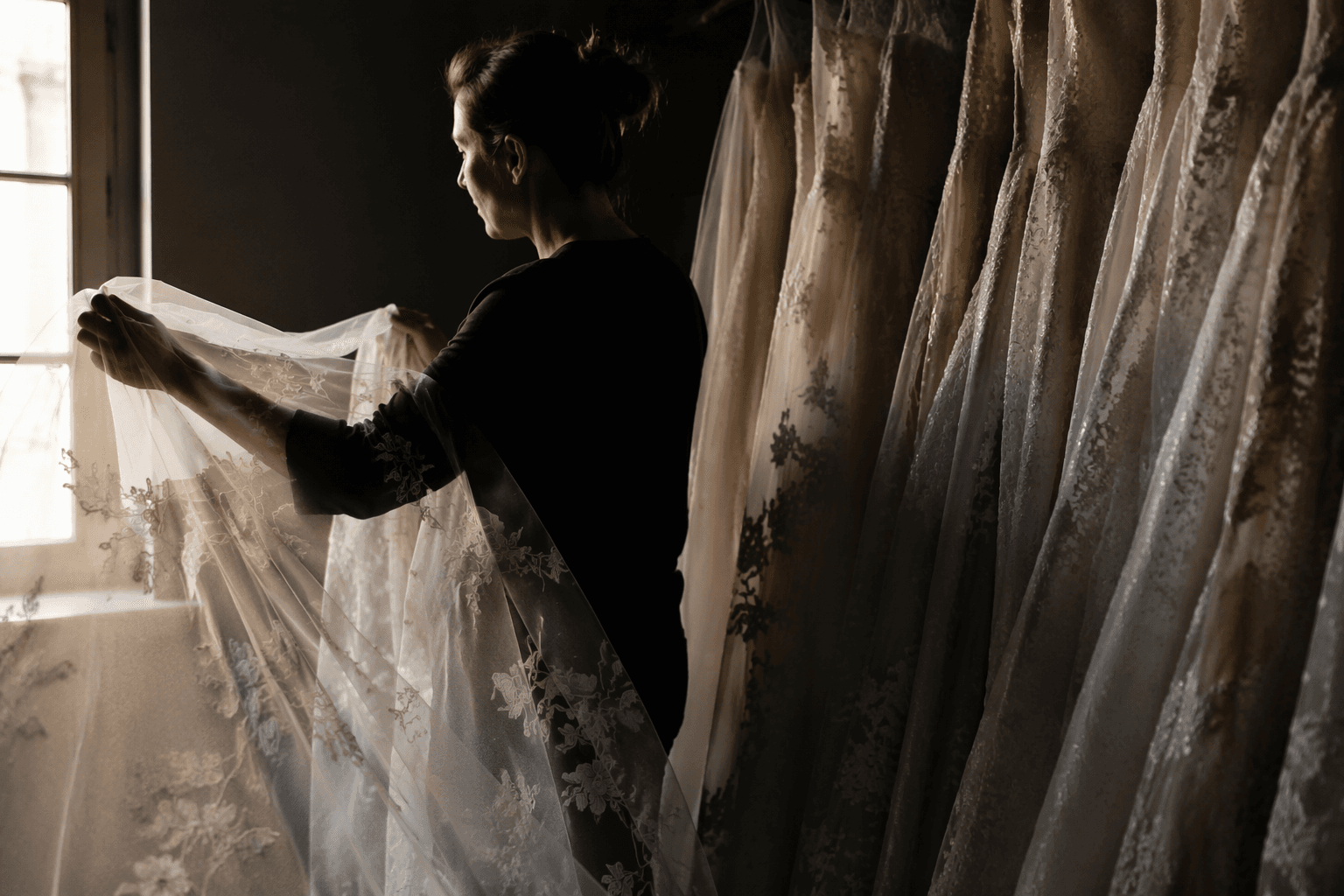
The difference is in the body language. Crepe skims, so it can make a column dress, sheath, or softly draped silhouette feel clean and modern. Chiffon is lighter and more ethereal, the kind of fabric that catches a breeze and looks like it is in motion even when you are standing still. A Met dress from the 1820s uses chiffon in three-dimensional leaf trim, a good reminder that this fabric has long been used for decoration and softness, not just for contemporary minimalism.
Mikado, taffeta, organza, and tulle build the shape
When you want architecture, you need fabric that can hold its own. Mikado and taffeta are bolder materials because they shape a gown instead of just covering it. Mikado is heavier than other woven silks, with shine and beautiful drape, which is why it is such a natural fit for crisp ball gowns, dramatic A-lines, and minimalist dresses that rely on clean lines rather than embellishment.
Taffeta and organza push in a similar direction, but with different effects. Organza has enough stiffness to create volume, which gives skirts that airy but controlled lift brides love for formal entrances. Organza and tulle are light and airy for dramatic skirts, and that is the key distinction: they create volume without feeling dense. They are the fabrics that make a gown read as sculpted from across the room, especially under flash or strong indoor light.
Tulle is its own kind of bridal theater. It is a stiff, transparent netting made from nylon, silk, polyester, or blends, and layers of it build fullness and romance. That is why tulle can look soft from a distance and almost architectural up close. It creates the cloud effect brides want for ball gowns and veils, but it can also add bulk if the layers are too heavy or the silhouette is already wide.
Warm-weather weddings call for a different equation
Not every bridal look needs weight, shine, or drama. Cotton and linen have a place in wedding dressing too, especially for simple, breathable ceremonies in warm weather. They are legitimate bridal options rather than afterthoughts, and that matters because summer ceremonies, outdoor elopements, and low-key civil weddings often need comfort first.
These fabrics are less about spectacle and more about ease. They do not give you the same gloss as satin or the same sculptural presence as mikado, but they can make a dress look fresh, clean, and modern in a way that feels right for heat, sun, and movement. If the venue is a garden, a courthouse, or anywhere you want to feel like yourself instead of armored into the dress, cotton and linen make real sense.
The runway still proves fabric is the story
Spring-Summer 2027 collections were already in view at New York Bridal Fashion Week 2025. Spring 2025 luxury bridal couture centered mikado, organza textures, and charmeuse satin.
This article was produced by Prism’s automated news system from verified source data, official records, and press releases, then run through automated quality and moderation checks before publishing. The system is built and supervised by the people who set the standards it runs under. Read our full AI policy.
Did this article answer your question?