How heart-shaped wedding jewellery became a bridal tradition
Heart jewelry reads bridal because it once signaled devotion, faithfulness and rank. Today it works best as one deliberate piece, not a novelty accent.
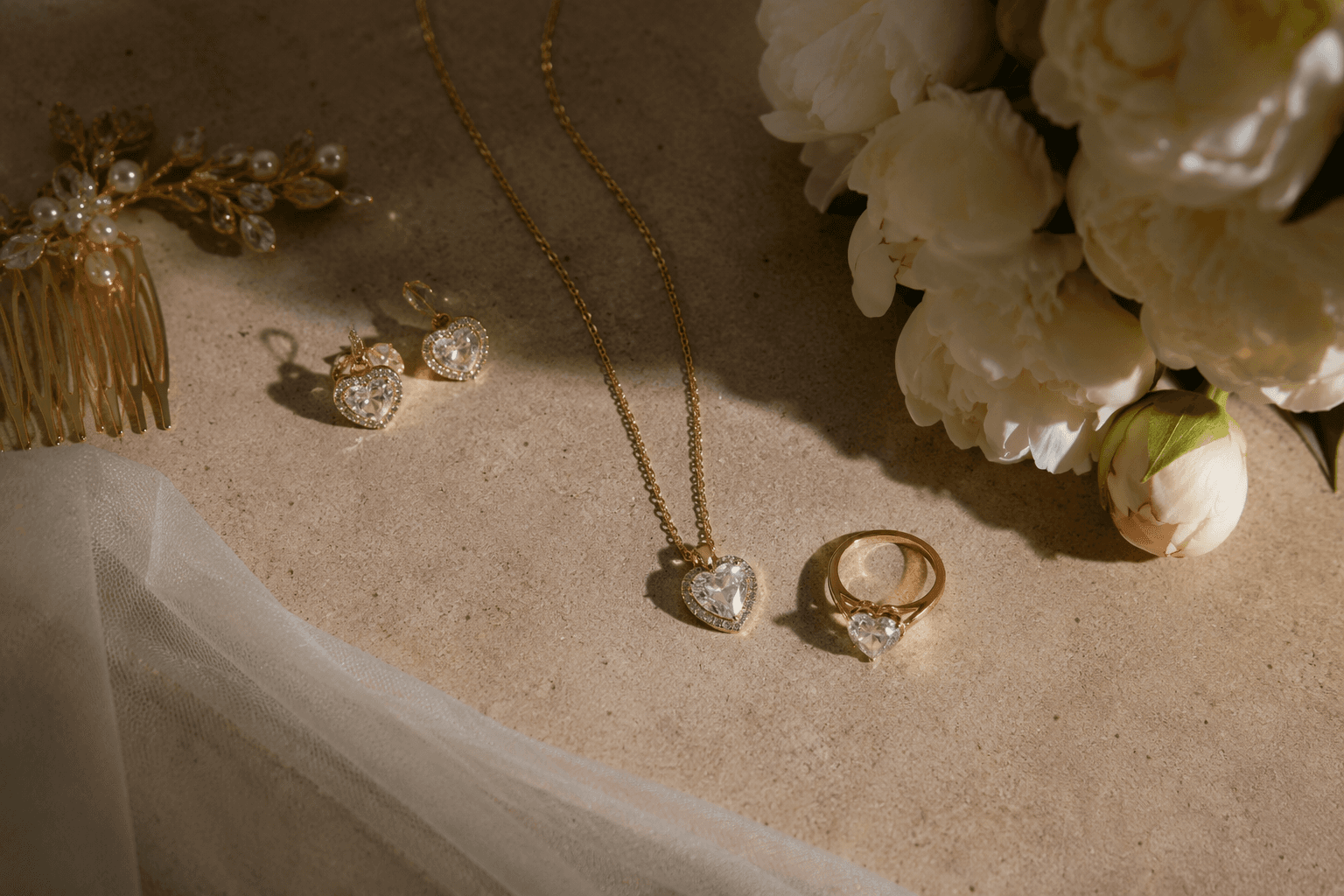
Heart jewellery belongs in bridal styling because it has never been just cute. The motif moved from ancient visual culture into late-medieval objects tied to love and marriage, then picked up the weight of status, inheritance and ceremony in the kinds of jewels brides still covet today. That is why a single heart pendant can feel romantic without tipping into novelty, especially when it sits against clean silk or a sharply cut gown.
From ancient emblem to wedding code
Harvard Art Museums traces the heart symbol back into ancient visual culture, and Erica Weiner places the double-cleft heart icon in the Middle Ages. The British Museum sharpened the point in a February 14, 2025 post, noting that the idea of giving your heart to a loved one was widely depicted in medieval art and stood for devotion, faithfulness and loyalty. The crucial shift comes later, in the late Middle Ages, when the heart begins decorating objects connected with love and marriage instead of simply floating as a general sign of feeling.
That dateable turn is what makes the motif useful for bridal fashion now. It is not a vague romance cliché that has somehow survived untouched for centuries; it is a visual code that evolved as marriage, display and symbolism became more entwined. In other words, the heart did not become bridal because it was always bridal. It became bridal because people kept attaching it to commitment, then kept making it beautiful.
Why bridal jewellery carried both feeling and rank
Britannica’s history of medieval jewellery gives the heart motif its second life: jewellery in that era was not only adornment, it was also a marker of status or rank. That matters because wedding jewellery has always been asked to do two jobs at once, announce emotion and signal position. A bridal heart piece was never just sentimental fluff. It was a tiny public statement about family, wealth and intention.
The Art & History Museum’s Heart Museum collection makes that history feel very specific. Its 17th-century wedding jewel, shown as a gilded-silver piece set with diamonds, rubies, emeralds and enamel, is exactly the kind of object that proves the point. The gilded metal gives it warmth, the stones add visible value, and the enamel softens the whole thing into something more intimate than a crown jewel but far more deliberate than a casual accessory.
That mix is still the template. Heart-shaped wedding jewellery works when it feels like it has a story built into the materials, not when it looks like a novelty charm pulled from a display tray. The best versions borrow from that old formula of symbolism plus craftsmanship, whether the piece is antique, heirloom, or newly made with the same sense of purpose.
Why it feels current again
Recent bridal trend coverage has pushed jewellery back into the center of the look. Vogue’s 2025 wedding trend piece pointed to unique bridal jewellery as a real trend, and Stuller’s 2025 bridal trend report framed bridal jewellery as a key category for next-season wedding style. That shift explains why the heart motif has resurfaced with more edge than sentimentality. Brides are choosing accessories that feel individual, not interchangeable.
The heart shape fits that mood because it is recognisable without being generic. A plain round stud disappears; a heart pendant, a heart-drop earring, or a gemstone heart on a chain reads as a choice. It has enough iconography to be meaningful, but enough shape to act like fashion. That balance is exactly what modern bridal styling wants, especially when the dress is already doing a lot of work.
How to wear it with intention
Ceremony
For the ceremony, keep the heart piece clean and close to the body. A single heart pendant against ivory satin or a minimal neckline looks disciplined, not precious, and it lets the gown stay in charge. If the dress is already dramatic, like a ball gown or an off-the-shoulder A-line, the jewellery should stay singular so the eye has one focal point instead of a fight.
That is where the historical weight helps. Because the motif began as a sign of devotion and faithfulness, a quiet heart pendant can carry the emotional note without demanding attention. The piece should look as if it belongs to the silhouette, not as if it was added after the fitting.
Reception
At the reception, the same motif can go louder. The 17th-century jewel in the Art & History Museum’s collection proves that heart jewellery can handle diamonds, rubies, emeralds and enamel without losing its bridal logic, so evening light is where the shape really starts to glow. A ruby-accented heart drop works especially well for a winter wedding, while enamel and mixed stones give a more heirloom-heavy feel.
This is also the moment for a second-look switch. A bride in a puff-ball mini or a sleeker after-party dress can trade a necklace for heart-shaped earrings, or pin a heart brooch to a satin wrap, and suddenly the motif feels intentional rather than themed. The point is to let the jewellery signal a change in energy, not just repeat the ceremony look louder.
Gifting
Heart jewellery also makes sense as a gift because the symbol has always carried a clear emotional script. In medieval art, giving your heart to someone signified devotion, faithfulness and loyalty, so the shape already does the speaking for you. That is why a heart pendant, a brooch or a pair of gemstone earrings works so well as a wedding-morning gift or a piece handed over before the ceremony.
The smartest gifts echo the old bridal formula of meaning plus materials. A heart in gilded metal feels richer than a token charm, and stones or enamel make it feel like an object that could be kept, not just worn once and forgotten. That is the real appeal of the motif in bridal fashion: it can move from medieval devotion to modern polish without changing its outline.
This article was produced by Prism’s automated news system from verified source data, official records, and press releases, then run through automated quality and moderation checks before publishing. The system is built and supervised by the people who set the standards it runs under. Read our full AI policy.
Did this article answer your question?