How paper wedding dresses redefined bridal style in the 1960s
Paper wedding dresses were never just a gimmick. In the 1960s, they turned bridal style into a lesson in materials, marketing, and modern novelty.
%2Fhttps%3A%2F%2Ftf-cmsv2-smithsonianmag-media.s3.amazonaws.com%2Ffiler_public%2F92%2F6b%2F926b8de0-0c0b-40c0-b41f-61c02b1634eb%2Fsharpened-wedding.jpg&w=1920&q=75)
The paper wedding dress was the kind of idea that sounds like a punchline until you see how much bridal fashion it actually changed. In 1967, the Australian Women's Weekly called it “the ultimate disposable gown,” and the phrase stuck because it captured a new kind of bridal fantasy: light on commitment, big on style, and perfectly in step with a decade obsessed with reinvention.
A bridal dress that made the material the message
The first thing to understand is that these dresses were not made from literal craft-store paper. They were cut from high-tech synthetic nonwoven textiles with names like Kaycel and Dura-Weve, materials that had already been developed for utilitarian uses such as hospital gowns and lab coats before fashion recast them as desirable. That shift is the real story here. Bridal wear was borrowing from the same industrial logic that was reshaping everyday clothing: efficiency, novelty, and a sense that modern life should come in lighter packaging.
That is why the paper dress feels so contemporary, even now. It was never only about whimsy. It was about proving that a wedding dress could be reimagined through chemistry and manufacturing, not just lace, satin, and handwork. The novelty was the point, but so was the message: a bride did not have to look traditional to look right.
Why the silhouette mattered as much as the fabric
The dresses worked because the shapes were already moving in a cleaner direction. The period’s A-line silhouettes and straight sheath shapes suited flat, lightweight materials far better than heavy, sculpted gowns would have. A crisp line gave the fabric structure; the fabric gave the silhouette an easy, unfussy polish. The result looked current, not costume-like.
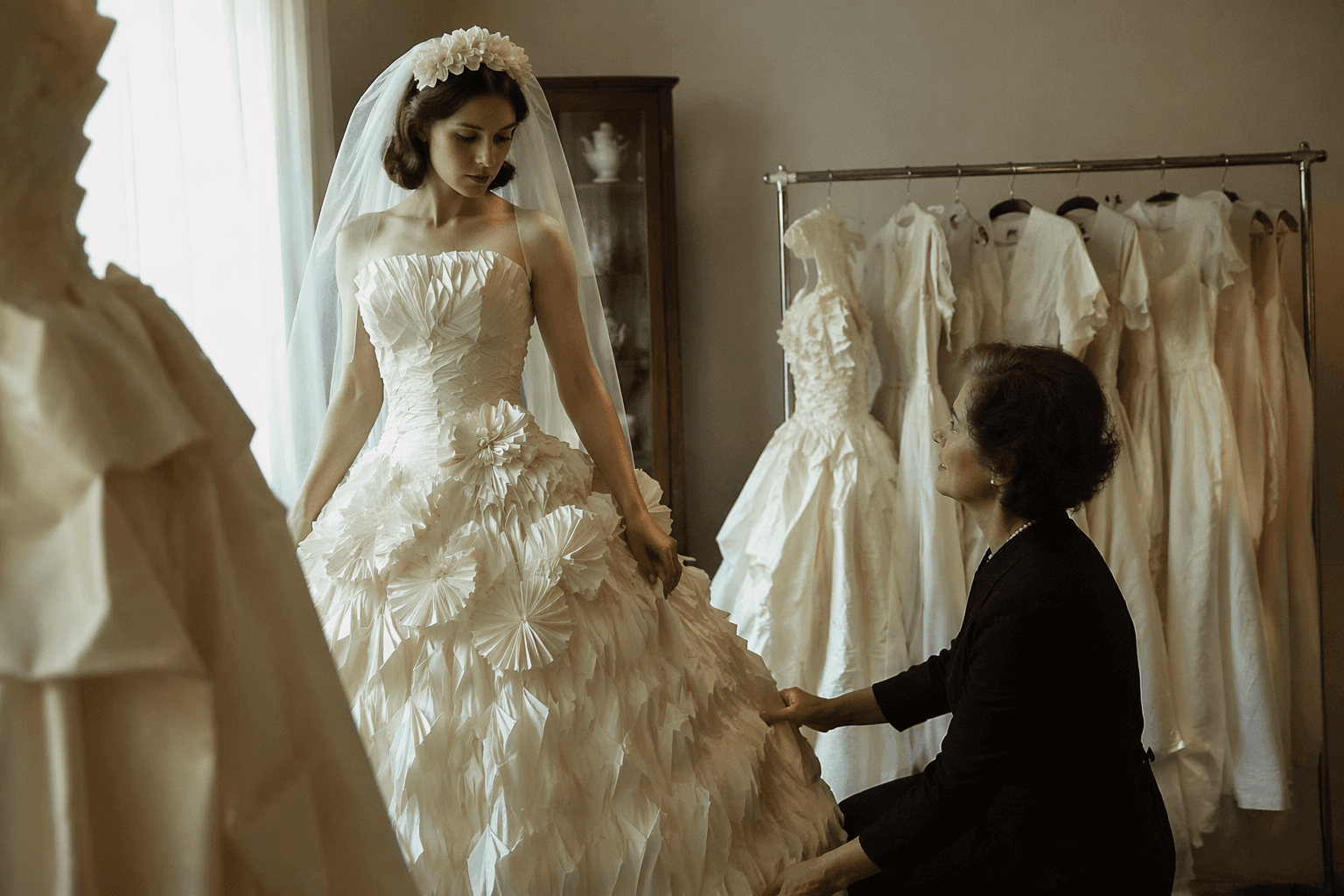
That matters because bridal style is often judged on romance, but the most influential looks are usually the ones that feel easy to wear. The paper wedding dress succeeded when it read as sleek and modern, not merely experimental. A clean sheath in a lightweight nonwoven textile could suggest confidence, simplicity, and a certain 1960s cool that still feels familiar in today’s minimal bridal dressing.
The sale was part of the style story
The appeal of these dresses was not confined to how they looked on the body. They were lightweight and easy to mail, which placed them neatly inside the rise of remote shopping and mail-order fashion. That is a crucial detail, because it shows the dress was designed to travel as easily as it was designed to wear. In other words, the shopping experience was part of the fantasy.
That low-friction sales model helps explain why the paper dress felt democratic. It promised a new kind of access, one built around convenience and speed as much as price. The big bridal lesson is still relevant: how a dress is sold can shape how modern it feels. A gown that arrives by mail, in a material that seems almost anti-luxury, can still sell a very specific version of sophistication.
Beyond brides: a special-occasion universe in miniature
Paper dresses were never only for weddings, and that matters to the way the trend should be remembered. They were worn for school dances, beach vacations, and promotional events, which puts bridal wear inside a larger culture of disposable special-occasion dressing. Brides were not standing apart from the trend; they were participating in it.
%2Fhttps%3A%2F%2Ftf-cmsv2-smithsonianmag-media.s3.amazonaws.com%2Ffiler_public%2F81%2Fe4%2F81e401ee-ad20-4420-bf61-b33738570ed1%2Fbride.jpg&w=1920&q=75)
The category also had real commercial muscle behind it. Commercial paper companies like the Scott Paper Company and DuPont helped popularize the idea, pushing the material from utility into fashion fantasy. On the more fashion-forward side, Ossie Clark, textile designer Julian Tomchin, and Lord & Taylor tested the concept in contexts that gave it credibility beyond novelty. That mix of corporate promotion and design experimentation is exactly why the paper dress endured as more than a one-season stunt.
The most interesting part is that all of this happened at once: marketing, material innovation, and a changing idea of what special-occasion dressing could be. Paper dresses were playful, but they were also highly legible to a consumer culture that was learning to prize the new, the easy, and the disposable. Bridal fashion did not sit outside that shift. It absorbed it.
Why the paper dress still matters now
The reason this story still lands is that it anticipates arguments fashion is still having. Today, bridal designers use the language of sustainability, innovation, and unconventional luxury to sell dresses that feel fresh without feeling wasteful. The paper wedding dress shows that those tensions are not new. Fashion has been dressing up novelty as progress for decades, and bridalwear has always been one of the clearest places to see it.
That is what makes the 1960s paper dress so useful as a reference point. It reveals how easily “unconventional” bridal ideas can be repackaged for a new moment, whether the selling point is convenience, experimentation, or a supposedly lighter footprint. The details may change, but the appeal stays familiar: a bride wants to look like she is stepping into the future, even when the idea comes dressed in a material that once belonged to hospitals and labs.
This article was produced by Prism’s automated news system from verified source data, official records, and press releases, then run through automated quality and moderation checks before publishing. The system is built and supervised by the people who set the standards it runs under. Read our full AI policy.
Know something we missed? Have a correction or additional information?
Submit a Tip