Ines Di Santo’s Le Nouveau Jardin brings Art Nouveau bridal sculpture
Le Nouveau Jardin turns the bride into Art Nouveau sculpture, with fluid lines and botanical romance poised to steer 2026 salons toward softer, more architectural gowns.

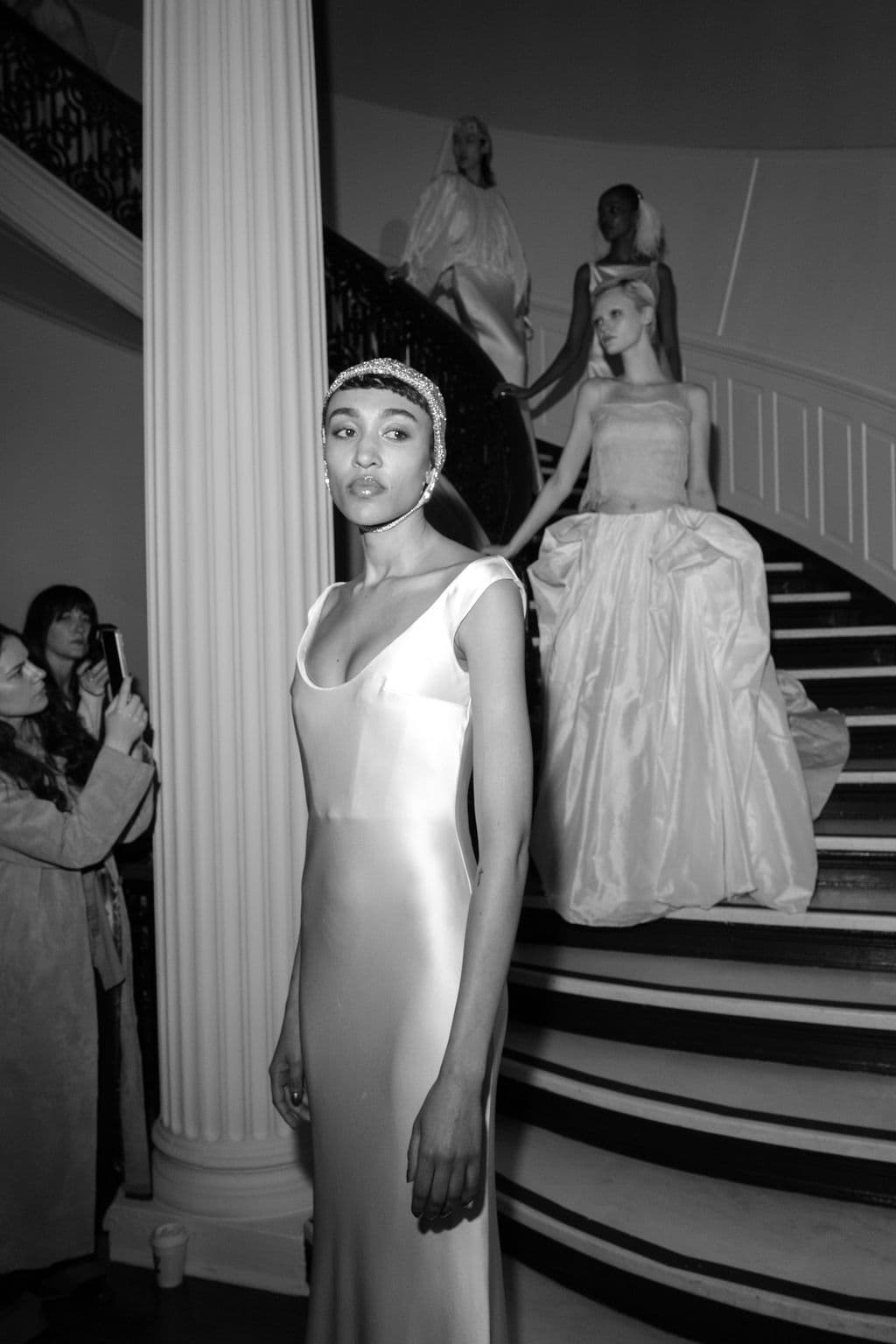
Ines Di Santo’s Le Nouveau Jardin does what the strongest bridal collections always do: it translates an art movement into a wedding wardrobe without losing the pulse of real desire. The result is a lineup that feels less like costume and more like structure in motion, where the bride becomes the sculpture and the gown becomes the frame.
Art Nouveau, recast for the aisle
Le Nouveau Jardin is built on the long, sinuous language of Art Nouveau, and that gives the collection its distinctive mood immediately. The brand and Barcelona Bridal Fashion Week describe the inspiration in terms of fluid lines, organic forms, and botanical references, which shifts the emphasis away from hard-edged glamour and toward a softer, more architectural kind of luxury. That matters in bridal right now, because it points to a market that still wants drama, but prefers it refined through line, contour, and craft.
The collection’s most useful signal is its balance of romance and restraint. Instead of piling on sparkle for its own sake, Di Santo leans into nature-inspired ornamentation that reads as part of the garment’s shape, not decoration pasted on top. For brides, that usually translates into gowns that photograph beautifully from a distance and hold up under close inspection, the sweet spot for a season when ceremony and social media scrutiny live side by side.
What brides are likely to request next
The names in the Spring 2026 couture lineup, Monclar, Violette, and Claude, already suggest a collection with personality rather than a single formula. That is often where bridal buying starts to move: salons do not just stock a silhouette, they stock a feeling. Here, the feeling is sculpted, lyrical, and quietly opulent, which should push demand toward gowns that have visible structure but never look stiff.
The strongest takeaway for shoppers is that the luxury bridal market is continuing to drift away from overt heaviness and toward line-led softness. Expect more interest in gowns that combine fitted bodices with movement below, illusion effects that keep the body covered without flattening the design, and floral or vine-like embellishment used sparingly enough to preserve elegance. The collection’s Art Nouveau code also favors curved seams, elongated shapes, and a sense of grown-in texture rather than dense, crystal-driven shine.
That is exactly the kind of direction salons will notice. Brides who come in asking for “something romantic” increasingly mean something with architecture under the surface, and Le Nouveau Jardin gives retailers a clean vocabulary for that request: sculptural, botanical, and expressive without being overworked.
Why the presentation matters to the market
WWD’s June 11 gallery presentation of the Spring 2026 collection turns the runway into a buying tool as much as an editorial one. Seen as a photo set, the collection reads as a preview of what will define bridal wish lists next season: gowns that look substantial in still images, but remain fluid enough to feel modern in motion. That is a useful signal for salons, because bridal buying is increasingly driven by what photographs well on first glance and what feels special in the fitting room.
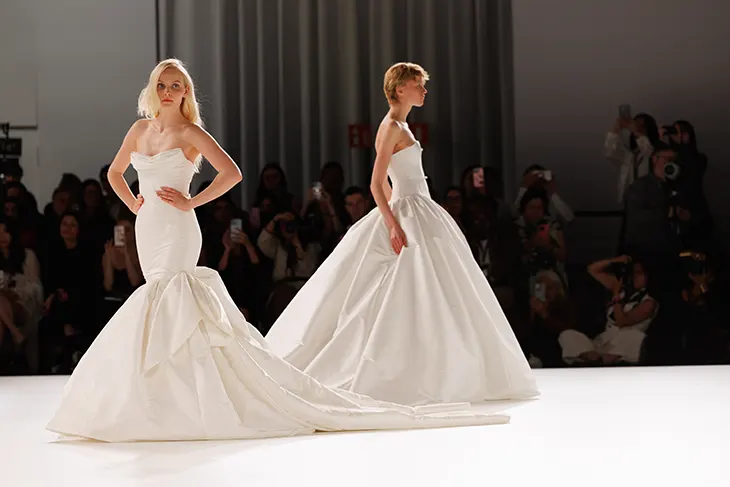
The collection was first presented during Barcelona Bridal Fashion Week in April 2025, which places it squarely in the European bridal conversation while keeping the brand’s North American footing visible. Ines Di Santo is widely recognized as an internationally renowned bridal and eveningwear designer, and Barcelona Bridal Fashion Week has positioned her as a leader on the world wedding stage for more than three decades. That legacy helps explain why this collection lands with industry weight: it is not a one-off mood board, but a continuation of a house language that salons already trust.
The house behind the gowns
Ines Di Santo says it creates bridal collections twice a year, and that cadence shows in the breadth of the Spring 2026 offering. The brand describes itself as a luxury bridal, accessories, and loungewear company, which is part of why its collections often feel fully imagined rather than narrowly bridal. There is a larger lifestyle sensibility here, but the wedding dresses remain the center of gravity.
The brand’s own history reinforces that point. It says Ines Di Santo was born in Milan, raised in Buenos Aires, and later lived in Toronto, where the business grew under the leadership of Ines and her daughter Veronica Di Santo. Veronica joined the company in 1998 and is now the managing partner, a detail that matters because it suggests continuity as much as evolution. The house has kept its identity intact while expanding its reach, which is one reason it remains relevant across generations of brides.
That Toronto base also underscores the label’s North American market presence, even as the brand continues to move comfortably on an international stage. In bridal, that balance is valuable: a designer can speak fluent couture and still understand what a real client is likely to request in a salon appointment.
From couture to more accessible bridal
The Spring 2026 couture lineup is only half the story. The brand’s Ines by Ines Di Santo line, with styles including Calder, Flores, and Sunny, shows how the same artistic direction can travel into a more accessible tier without losing the collection’s signature mood. That is where the market is most likely to feel Le Nouveau Jardin first, because many brides encounter the aesthetic through diffusion pieces before they ever step into full couture.
This is the real industry signal in Di Santo’s Spring 2026 season: Art Nouveau is not returning as nostalgia, but as a shorthand for modern bridal sculpture. Expect salons to lean into gowns that feel hand-shaped, botanical, and quietly sensual, with embellishment used as contour and styling used to reveal the body’s line. Ines Di Santo has turned a historic visual language into something current enough to influence the next wave of bridal appointments, and that is how a collection moves from runway image to retail reality.
This article was produced by Prism’s automated news system from verified source data, official records, and press releases, then run through automated quality and moderation checks before publishing. The system is built and supervised by the people who set the standards it runs under. Read our full AI policy.
Did this article answer your question?