Iris van Herpen turns cosmic couture into futuristic bridal dreams
Van Herpen's Sonic Starquakes turns plasma, glass and tulle into a bridal blueprint for luminous veils, sculpted overskirts and ceremony looks.
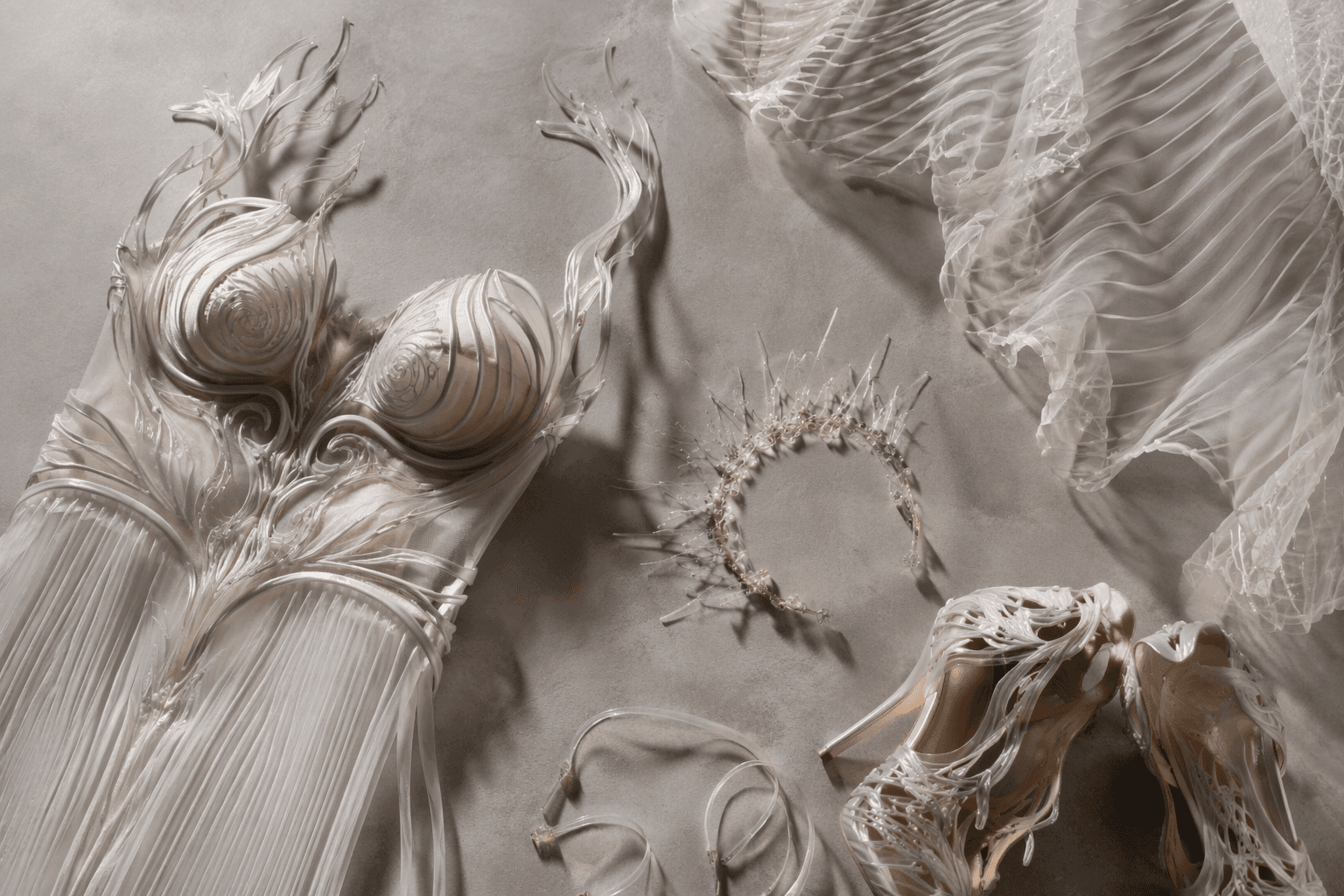
Iris van Herpen has a rare gift for making bridal fantasy feel engineered. In Sonic Starquakes, the Fall 2026 couture collection she presented in Paris on July 6, she pushed the idea of a wedding dress toward the edges of science fiction, with plasma effects, lightning energy, and glass-and-tulle construction that made the clothes seem lit from within. The Helix Nebula and Fractal Universe looks were the kind of celestial forms that could change how an avant-garde bride thinks about movement, light, and the space a gown takes up in a room.
The new bridal reference point
The most useful thing about this collection is not its drama, but its discipline. Van Herpen said Sonic Starquakes was inspired by sonic vibrating stars, the branching structures of exploding supernovae, the spiraling geometries of galaxies, and the turbulence of plasma. That is a very specific visual language, and it translates beautifully into bridal when you strip away the runway scale and focus on structure. A veil can borrow the sense of atmosphere. An overskirt can move like an energy field. A ceremony gown can feel less like a static object and more like something in motion.
Miles Socha’s WWD review, which framed the show as Iris Van Herpen Fall 2026 Couture: Space Jam, captured the collection’s outer-space mood, but the more interesting detail is how grounded the work remains in construction. Fashion Week Daily described the show as an experiment in turning plasma, the fourth state of matter, into couture, and van Herpen has long talked about her fascination with creating a garment “woven from energy alone.” That is the bridge bridal designers can actually use: not the fantasy of space, but the idea that a dress can appear weightless while still being rigorously built.
What bridal designers can borrow from the construction
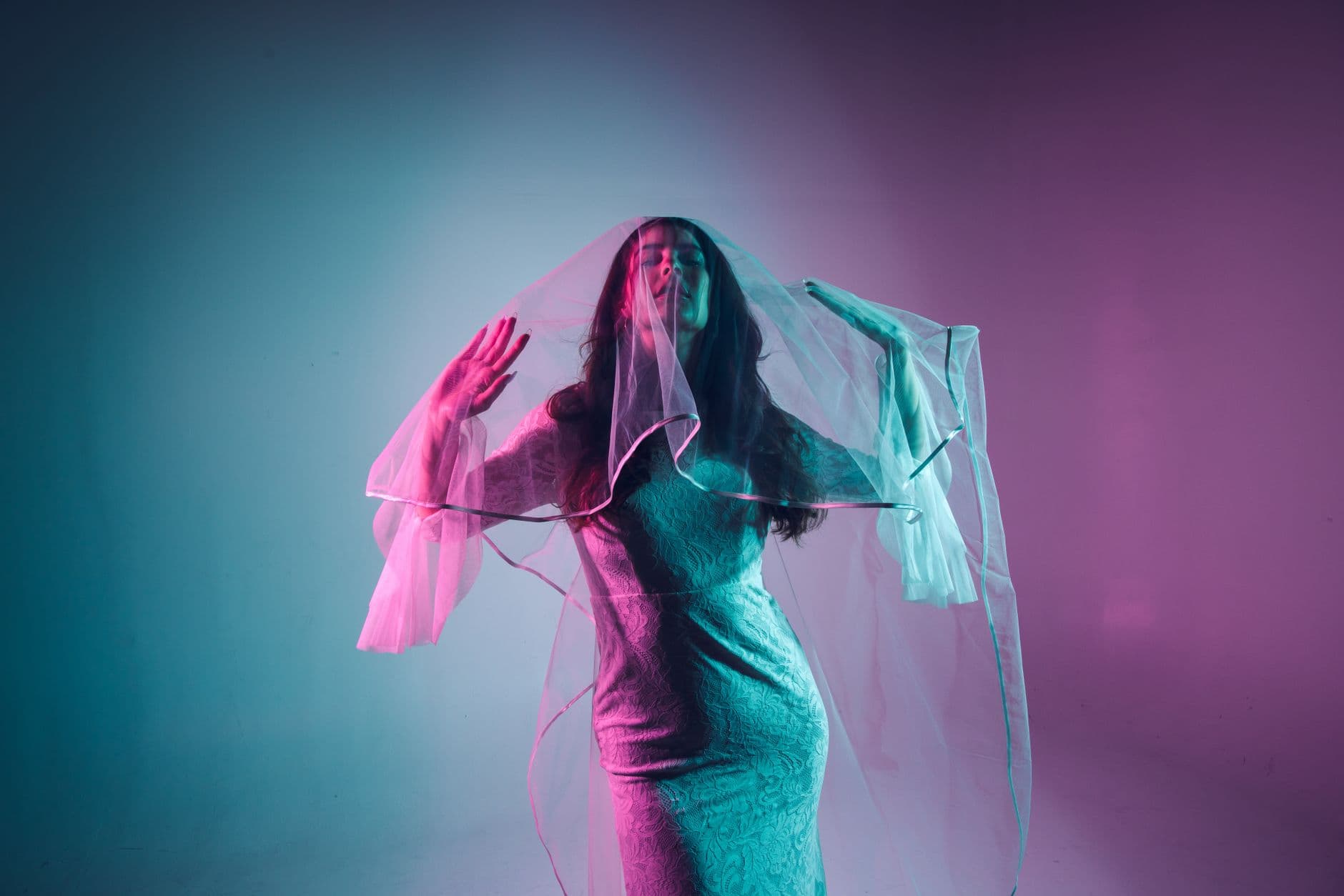
The collection’s strongest takeaway for bridal is its treatment of transparency as architecture. Glass-and-tulle engineering gives a gown a kind of visual suspension, where layers do not simply cover the body but shape how light travels across it. For brides who want something modern without losing romance, that is a more compelling direction than heavy beading or opaque satin that shuts the eye down.
- Build veils and capes with layered sheerness, so they read as structure rather than decoration.
- Use overskirts to create movement, not volume for its own sake. In van Herpen’s world, motion is part of the silhouette.
- Let surface effects feel luminous and atmospheric, the way plasma and lightning are translated here, instead of crowding the dress with embellishment.
- Keep the line clean enough for the form to register. The collection’s power comes from its geometry as much as from its spectacle.
The Helix Nebula and Fractal Universe looks are especially instructive for ceremony dressing because they suggest a bride who wants presence without stiffness. That could mean a sculpted bodice that opens into a soft, drifting skirt, or a veil that trails like a cloud rather than a train that simply follows behind. Van Herpen’s cosmos is not about piling on more decoration. It is about letting shape, translucence, and motion do the talking.
Why this matters for bridal now
The brand’s bespoke bridal page makes the case plainly: its customized couture is designed for weddings, as well as gala dinners, red carpet events, and premières. The house says those pieces bring a client’s “sophisticated vision to life,” and that they are guided by Iris van Herpen and the petit mains in the Amsterdam atelier. That matters because it places the collection in the real world of ceremonies, fittings, and personal presentation, not only in the realm of runway image-making.
For bridal designers, that means Sonic Starquakes is not just a mood board. It is a reminder that the future bridal silhouette may be less about one dominant shape and more about engineered transitions: a fitted core that blooms into a translucent second layer, a shoulder treatment that suggests nebular expansion, or a veil that behaves like a moving field of light. The collection’s language of stars, supernovae, galaxies, and plasma gives those ideas a visual logic that feels fresh rather than decorative for decoration’s sake.
The fact that van Herpen’s maison already speaks directly to weddings also sharpens the relevance. These are not hypothetical fashion fantasies cut off from ceremony. They sit on the same continuum as the house’s bespoke commissions, which are built in Amsterdam and shaped around individual clients. That is why the collection reads as couture R and D for bridal, not just a spectacular detour.
A house that keeps proving the point
Sonic Starquakes lands as part of a much longer pattern in van Herpen’s work. Her previous collection, Sympoiesis, was also built around a science-and-nature concept, and in Fall 2025 she created a living look made from 125 million bioluminescent algae. That kind of detail matters because it shows the designer is not dabbling in science as a theme. She keeps returning to it as a method, which makes the bridal implications stronger. When a house repeatedly tests how living systems, energy, and material behavior can become couture, the results are more likely to shape the next generation of ceremony dressing.
That broader pull shows up beyond the runway as well. The house says Sculpting the Senses at Kunsthal Rotterdam became the most visited exhibition in the museum’s history, with 281,000 visitors. For a bridal reader, that number is a useful signal: van Herpen’s language of science, spectacle, and precision already has a public audience large enough to influence what feels modern.
For the next few seasons, the sharpest bridal ideas may come from exactly this kind of work, where a gown behaves like a system rather than a costume. The brides most drawn to van Herpen’s world will not be looking for more ornament. They will be looking for movement, translucence, and a silhouette that feels as if it has been engineered for light.
This article was produced by Prism’s automated news system from verified source data, official records, and press releases, then run through automated quality and moderation checks before publishing. The system is built and supervised by the people who set the standards it runs under. Read our full AI policy.
Did this article answer your question?