Isha Ambani and Athiya Shetty spotlight couture-led bridal dressing
Isha Ambani and Athiya Shetty turn bridal dressing toward couture names, unreleased drops, and sharper silhouettes. The signal is clear: Indian occasionwear is moving beyond the lehenga.
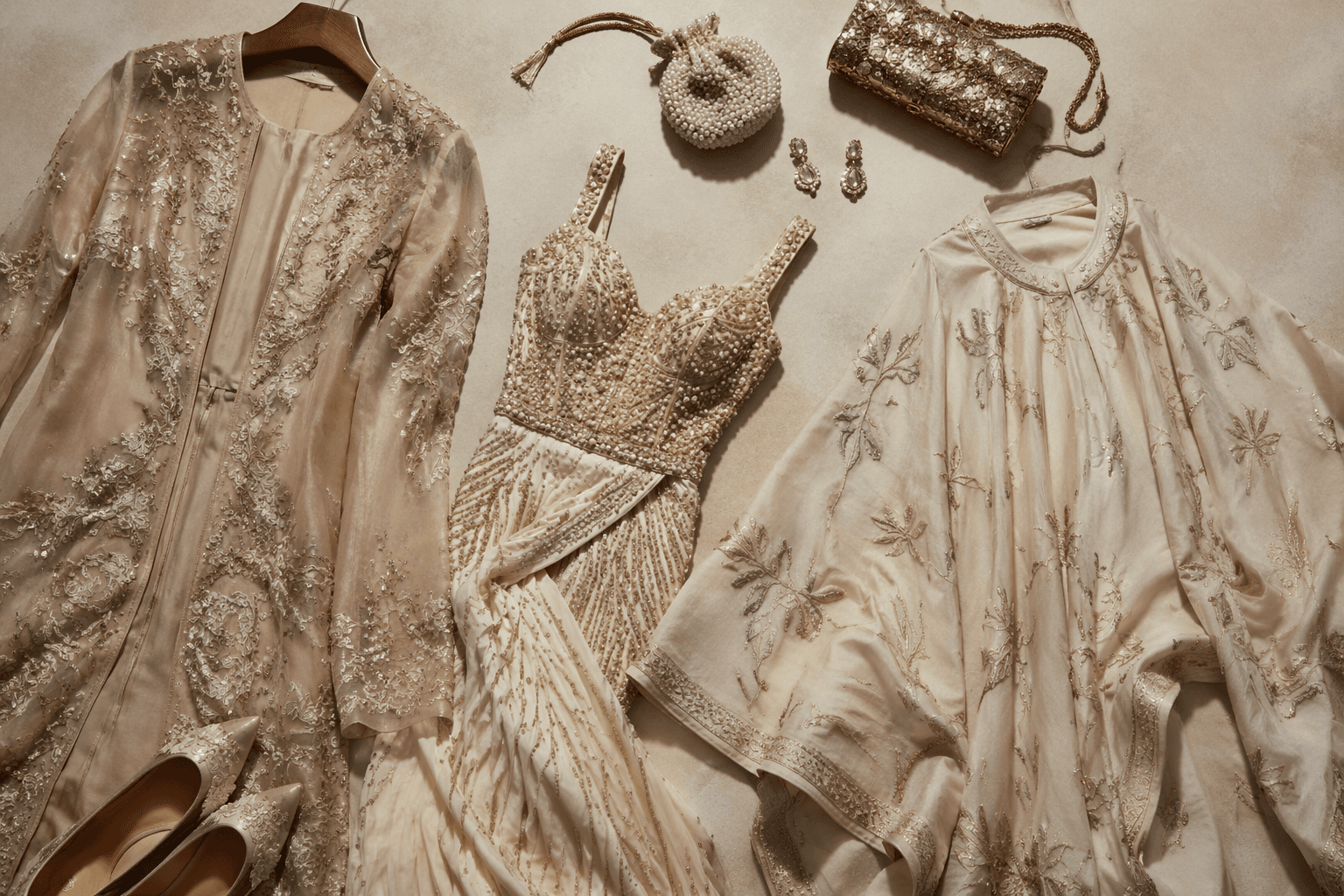
Isha Ambani in Rahul Mishra and Athiya Shetty in an unreleased House of Masaba bridal salwar top say more about the mood of Indian occasionwear than any polished trend deck ever could. Together, they point to a bridal wardrobe that wants designer recognition, couture-level finish, and a silhouette with personality, not just volume. Vogue India placed both looks at the center of its 11 July 2026 bridal-fashion roundup, and the timing matters: Paris Haute Couture Week was still unfolding in early July, with Isha Ambani already visible in the front-row conversation there.
Couture is becoming the new bridal shorthand
The most striking shift here is not simply that these are celebrity looks. It is that both reads are tied to identifiable designer worlds, which is exactly where bridal dressing is headed now. Instead of leaning on a generic “festive” aesthetic, the new statement is brand-specific and construction-led: Rahul Mishra for couture with craft credentials, House of Masaba for bridal pieces that sit between heritage reference and modern styling.
That is why this moment feels like an early market signal rather than a one-off style recap. Vogue India’s same-day fashion listing placed the story alongside other wedding and celebrity coverage, which underscores how concentrated the bridal conversation has become around named labels and visible silhouette changes. The fashion takeaway is blunt: brides and wedding guests are increasingly dressing by designer language, not by category.
Rahul Mishra brings couture authority to bridal dressing
Rahul Mishra’s relevance in this conversation is unusually strong because his label’s own positioning already frames couture as a cultural proposition. The designer describes himself as the first Indian designer to showcase at Paris Haute Couture Week, and his brand emphasizes slow fashion and traditional Indian crafts. That combination gives a bridal look a specific kind of weight: it reads as elevated, but also rooted in technique rather than mere spectacle.
Isha Ambani’s presence on the front row at Paris Haute Couture Week on 7 July sharpened that association. When a bride-adjacent public figure appears in the orbit of couture week and then reappears in a Rahul Mishra look, the message is unmistakable. Bridal dressing is borrowing from couture’s language of precision, narrative, and artisanal authority, not just its surface drama.
For readers tracking what this means on the ground, the implication is practical. Bridal occasionwear is moving toward pieces that can hold their own in a room full of couture, with silhouettes that feel deliberate rather than inflated. That is a meaningful change from the old expectation that wedding dressing must be maximal to be memorable.
Athiya Shetty previews the next phase of House of Masaba
Athiya Shetty’s look matters for a different reason: it is unreleased. A bridal salwar top that is not yet on the rack turns the outfit into a preview of where House of Masaba is taking its bridal vocabulary next, and that makes it more interesting than a standard product placement. The brand already operates a dedicated bridal universe through The Masaba Bride, so this is not a tentative experiment. It is an extension of an established bridal language.
House of Masaba’s bridal offering includes bridal sarees and a broader luxury womenswear frame built around heritage, artistry, and individuality. The brand also describes these pieces as contemporary interpretations of India’s textile legacy, which is exactly why the salwar top registers. A bridal salwar top broadens the trousseau conversation beyond the expected lehenga set, giving brides an alternative that feels less formulaic and more directional.
That shift matters because separates can change the emotional tone of bridal dressing. A salwar top suggests ease, movement, and a closer relationship to everyday Indian silhouettes, but when it is filtered through Masaba’s bridal lens, it still carries occasion weight. It is the sort of piece that could work for a pre-wedding dinner, a more intimate ceremony, or a bride who wants her wardrobe to feel layered rather than locked into one grand look.
What these looks reveal about the next bridal wardrobe
Taken together, these two statements suggest that bridal dressing is splitting into two equally powerful lanes. One is couture-led and rooted in designer authority, where craft, week-calendar relevance, and singular silhouette identity matter. The other is the modern trousseau lane, where heritage-inflected separates and bridal-ready pieces can feel newly personal without losing their ceremonial charge.
The common thread is individuality, but not in a vague sense. It is individuality expressed through named fashion houses, visible fabrication, and a more nuanced silhouette vocabulary. Rahul Mishra offers the bride a couture register with craft at its center. House of Masaba offers a bridal language that can move from sarees to salwar tops without losing its identity. Both answers are persuasive because they give the wearer something concrete: a look with provenance, shape, and a point of view.
That is why these celebrity appearances land as an early-market signal. The strongest bridal dressing right now is not chasing novelty for its own sake. It is choosing labels that already mean something, then using them to build a look that feels more edited, more personal, and more precise than the usual lehenga-first formula.
This article was produced by Prism’s automated news system from verified source data, official records, and press releases, then run through automated quality and moderation checks before publishing. The system is built and supervised by the people who set the standards it runs under. Read our full AI policy.
Did this article answer your question?