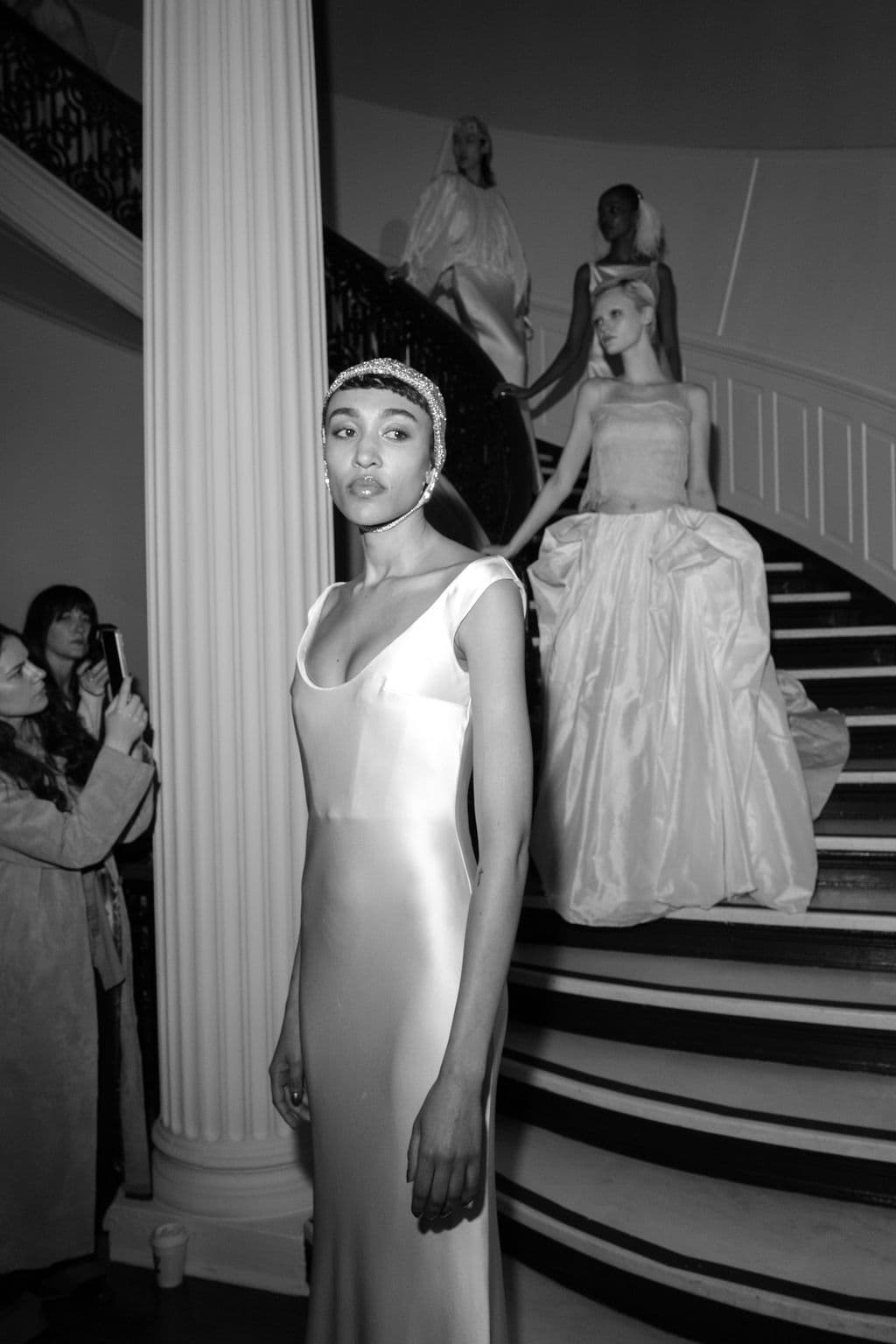
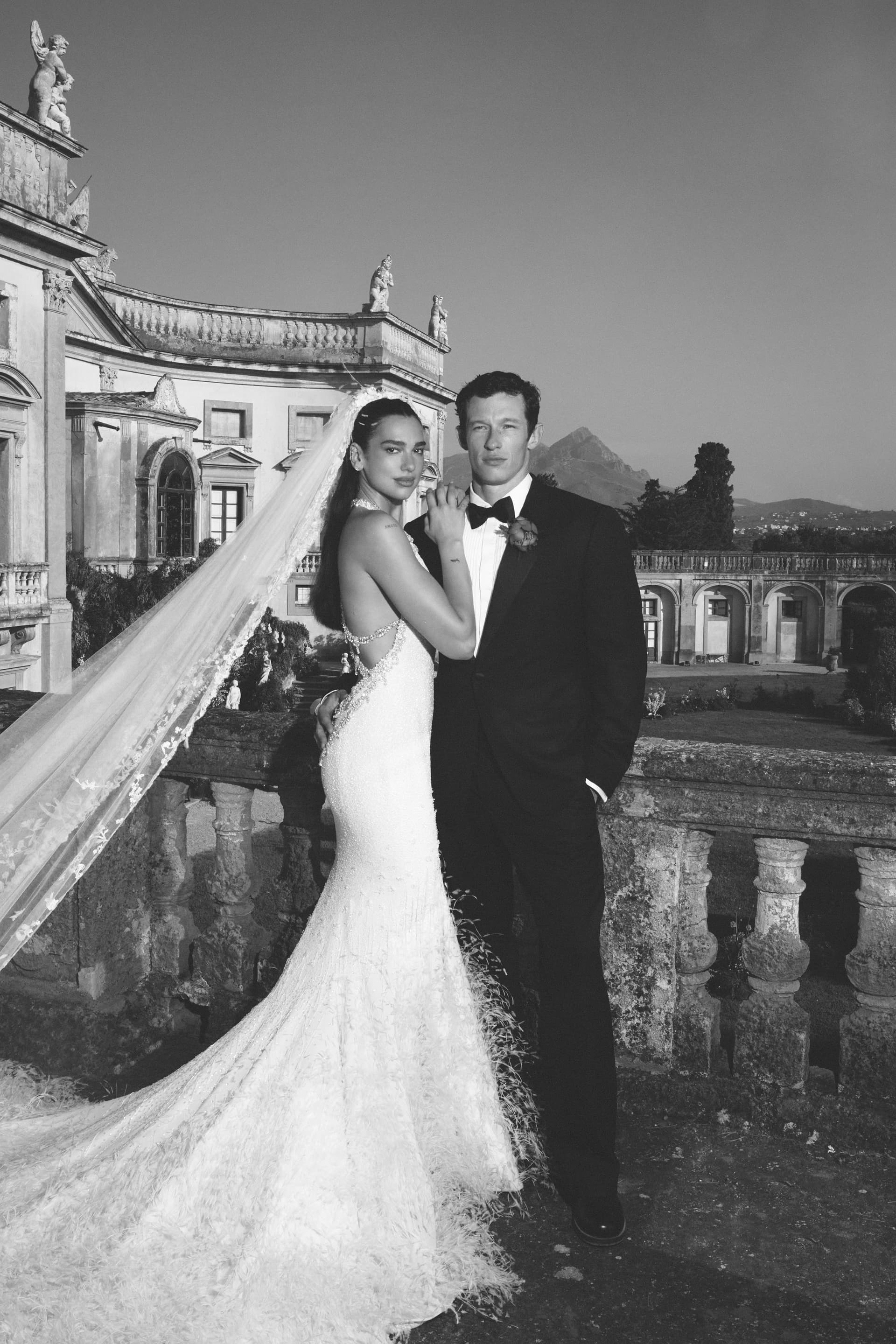
Jaclyn Whyte reimagines the ballgown with removable layers and romance
Removable layers and lace-draped volume turn Jaclyn Whyte’s Spring 2026 ballgowns into ceremony-to-reception solutions with serious bridal drama.

The new ballgown is built to move
Jaclyn Whyte’s Spring 2026 bridal work takes the oldest fantasy in wedding dressing, the full ballgown, and makes it practical enough for a bride who does not want a second look. The key idea is transformation: removable layers and lace-draped construction create a silhouette that can arrive with ceremony-level grandeur and then soften for the reception without losing its shape or romance.
That is exactly why the collection feels timely. Spring 2026 bridal has been tilting toward versatility, resourcefulness, and dresses that can work across rehearsal dinner, ceremony, and after-party settings. Whyte’s answer is not minimalism. It is controlled drama, the kind that lets volume do the talking while still giving the bride a way to edit the look once the vows are done.
Why removable layers matter more than another outfit
The smartest thing about a detachable ballgown is that it gives you options without forcing a style reset. Instead of changing into a shorter second dress, you can peel back the weight and formality of the ceremony look and keep the underlying dress intact. That matters if you want continuity in photos, if you are planning a tight timeline, or if you simply do not want to disappear into the back room for a wardrobe change.
Whyte’s use of lace-draped construction softens the architecture of the gown, so the drama does not feel bulky or rigid. Lace brings lightness to volume, and that balance is what makes the idea work for modern brides. You get the sweep and spectacle of a ballgown, but not the sense that you are trapped inside it all night.
Who should consider statement volume
This is the collection for the bride who wants presence. If you are marrying in a formal ballroom, a historic house, a church, or any venue with scale and ceremony, a full skirt will look intentional rather than excessive. A dress with removable layers is especially useful if the reception moves into a more social, dance-heavy mood, because the gown can start as a formal entrance piece and end as something easier to navigate.
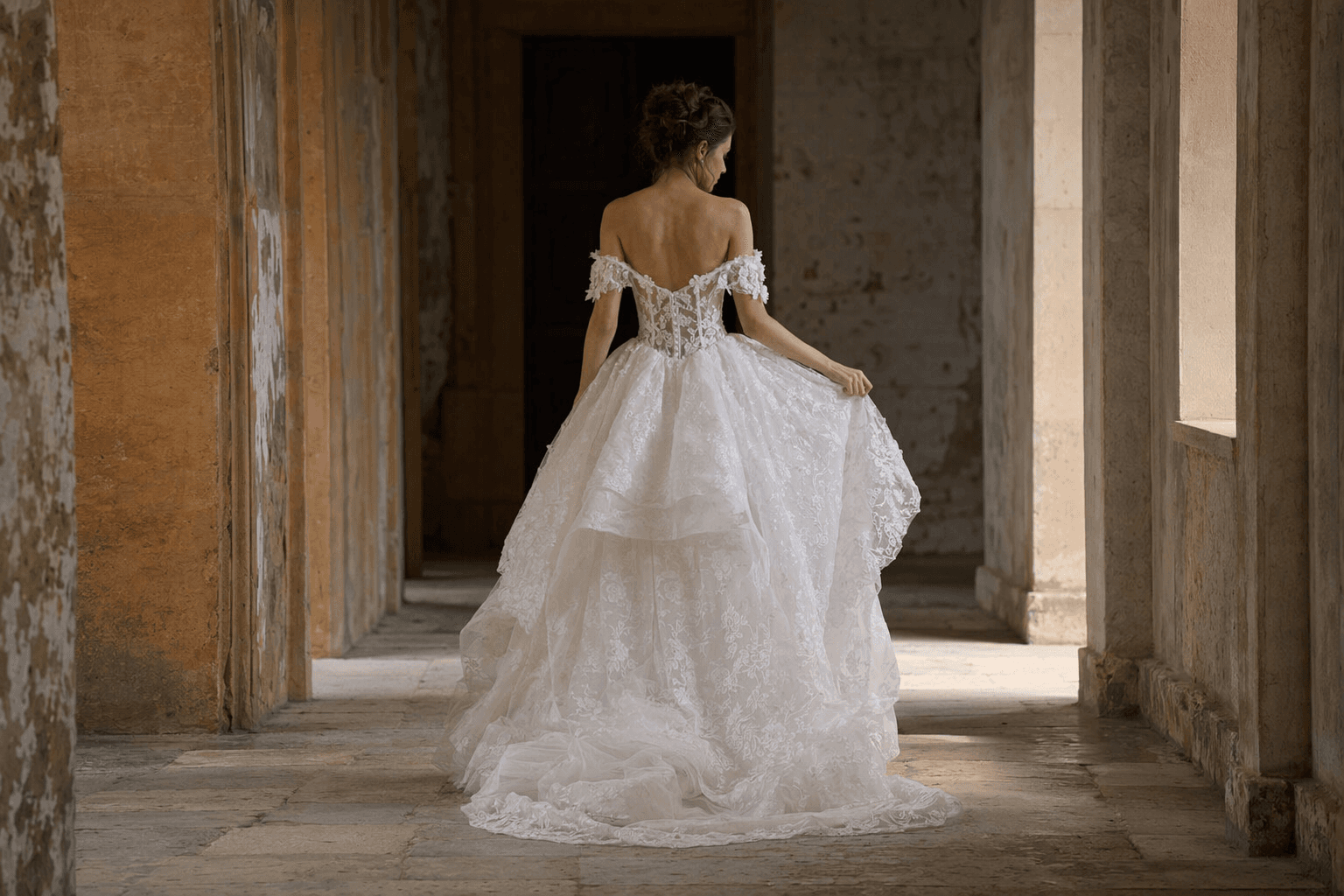
It also makes sense for brides who care about photographs as much as the live moment. A ballgown creates movement in pictures, and a layered design gives the photographer multiple silhouettes from one dress. For a bride who wants impact without committing to a single static version of herself, that flexibility is the point.
How this solves the second-dress problem
The desire for a second dress has become one of the defining pressures of modern bridal dressing. Brides want ceremony drama, but they also want to eat, move, hug, and dance. Whyte’s detachable approach is a clean answer to that tension: one dress can do the work of two.
That also makes the collection feel more aligned with the broader bridal conversation around sustainability and smart buying. Choosing a gown that transforms, rather than a second outfit that exists for a few hours, is a more considered way to spend on occasion wear. The appeal is not only aesthetic. It is emotional and practical, too, because the dress keeps evolving with the day instead of being replaced by it.
The house behind the romance
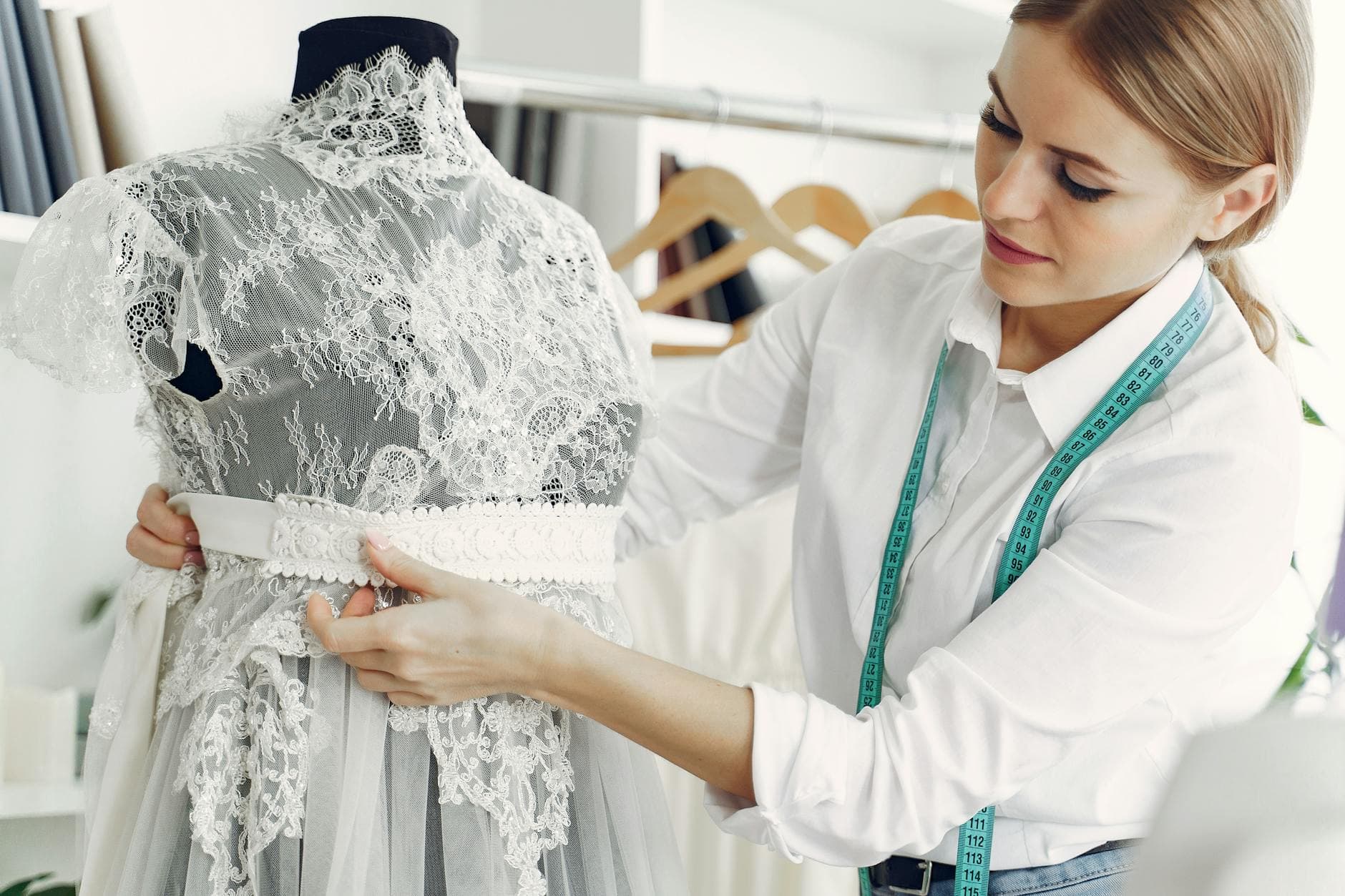
The brand’s story gives this collection extra depth. Whyte Couture says its first atelier opened in Toronto in 2011, and Francesca Guzzo-Whyte has been dressing brides for more than 40 years. That kind of longevity matters in bridal, where trust is as important as trend awareness. It suggests a house that understands the difference between a gown that photographs well and one that actually works in motion, under pressure, and over a long day.
Jaclyn Whyte sits as the ready-to-wear and prêt-à-porter extension of the bespoke WHYTE Couture business. The brand says it introduced its first prêt-à-porter collection under the Jaclyn WHYTE label in 2024, which helps explain why these gowns feel more accessible in spirit even when they remain fully dramatic in effect. The collection reads as a bridge between atelier craft and the realities of modern bridal shopping.
Where the collection belongs
The retail footprint reinforces that shift. The company says its locations now extend beyond Toronto to select partners including Kleinfeld Bridal in New York, The Wedding Shoppe in Pennsylvania, Bisou Bridal in Vancouver, and Bergdorf Goodman’s bridal salon in New York. That mix matters because it places the line in spaces known for serious bridal clients who expect both fashion and function.
For a bride shopping outside Toronto, that wider availability makes the collection less like a regional secret and more like part of the current bridal conversation. It also signals confidence: a label does not land in those rooms unless it can hold its own beside other fashion-driven bridal names.
Why this ballgown feels current
What makes Whyte’s Spring 2026 work stand out is that it treats the ballgown as a storytelling device, not just a silhouette. Wedding Style Magazine grouped Jaclyn Whyte with designers redefining ballgown drama, and that is exactly the right frame. The volume is still there, but now it carries a narrative: ceremony to reception, formality to ease, fantasy to function.
That is the direction bridal is moving in. Brides still want the sweep of a grand entrance, the ceremony photo with a train that catches the light, the moment when the room turns to look. What they do not want is a dress that asks them to choose between beauty and comfort. Jaclyn Whyte’s answer is to keep both, and that is why these layered, lace-draped gowns feel less like a trend piece and more like a very intelligent way to marry romance with real life.
This article was produced by Prism’s automated news system from verified source data, official records, and press releases, then run through automated quality and moderation checks before publishing. The system is built and supervised by the people who set the standards it runs under. Read our full AI policy.
Did this article answer your question?