June brides choose pearls, moonstone and alexandrite jewelry for keepsake style
June’s birthstones do the styling work for you: pearls for polish, moonstone for glow, alexandrite for drama. The smartest bridal jewelry feels personal enough to rewear long after the aisle.
June’s most useful bridal jewelry story starts with choice
When the dress is nearly decided, the jewelry can stop being an afterthought and become the detail that makes the look feel like yours. June brides have an unusually good set of options: pearls, moonstone and alexandrite are all official June birthstones, and that three-stone lineup gives you a rare kind of styling range, from soft and familiar to rare and showy.
That matters because bridal jewelry is no longer just about sparkle. It is about finding a piece that reads as wedding-day beautiful, then still feels right in six months, on an anniversary dinner, or at someone else’s ceremony. That is why birthstone jewelry has such staying power here: it sits exactly at the intersection of sentiment and style.
Why June is different
June is one of only three months with three birthstones, alongside August and December. The modern U.S. birthstone list was standardized in 1912, and alexandrite was added later, in 1952, which helps explain why June offers more than one canonical choice. Instead of forcing every bride into a single gemstone story, the month gives you a polished trio with very different personalities.
Pearls are the traditional June birthstone, and that heritage still gives them a special place in bridal fashion. Moonstone brings a luminous, almost misty finish. Alexandrite is the outlier in the best way: rare, color-changing and prized for the dramatic shift that makes it feel more like a treasure than an accessory.
Pearls are the safest bet, but they are far from boring
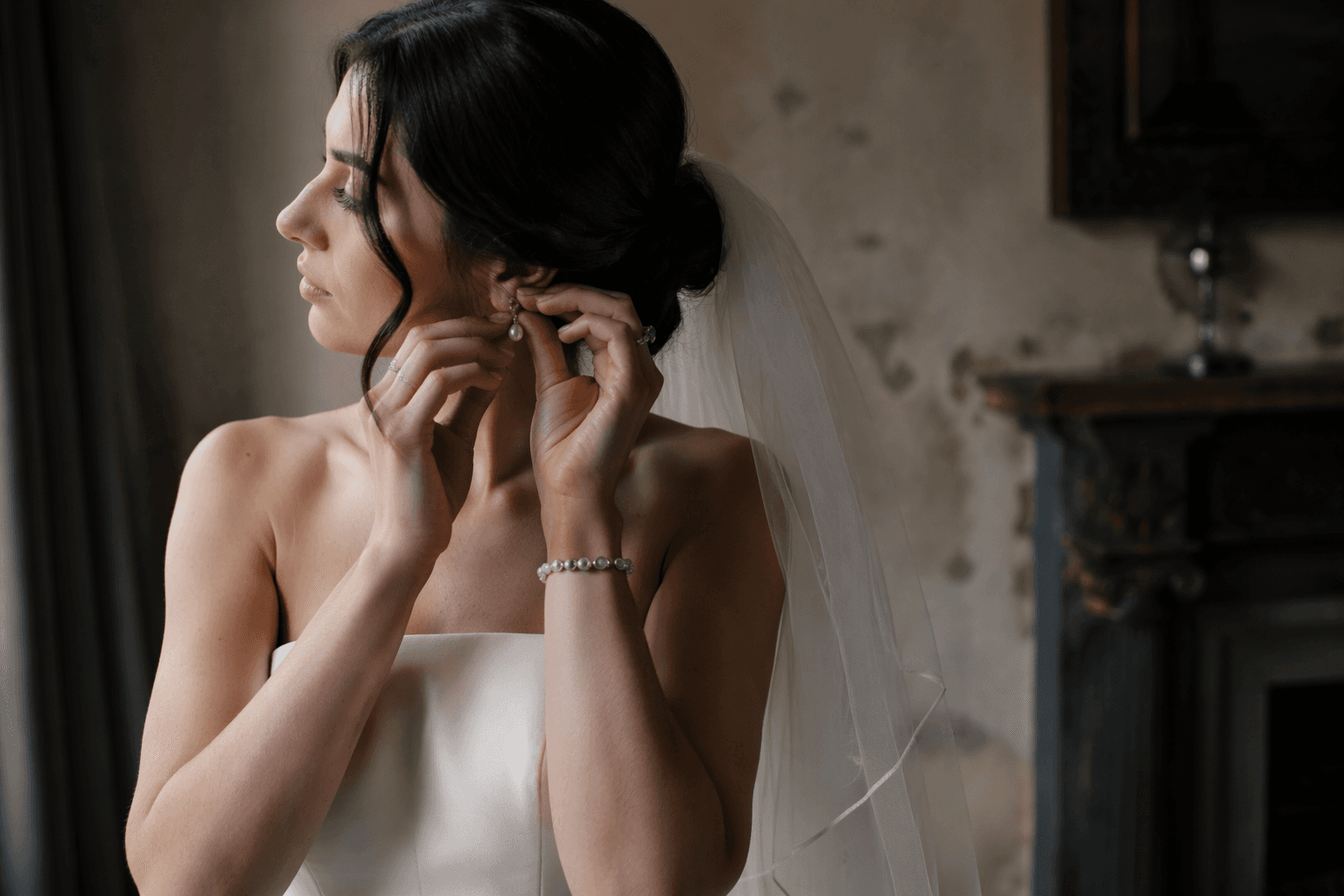
If you want the easiest June birthstone to wear with a wedding dress, pearls lead the conversation. They have always belonged to weddings, but they feel especially current now because bridal fashion has rediscovered them as a clean alternative to heavy crystal work. Bridal editors have called pearls a cool way to add polish without leaning on sequins, and that is exactly the appeal: they brighten a look without overwhelming it.
Pearls also work across almost every level of formality. A refined strand or drop earring looks right with a minimalist gown, while pearl accents can feel almost architectural on more ornate dresses. The Knot notes that brides now find pearl-encrusted gowns, pearl veils, gloves and plenty of pearl jewelry, which shows how thoroughly the look has moved beyond a single necklace at the neckline.
For the bride who wants a keepsake she will actually wear again, pearls are the smartest starting point. They are linked to the 30th wedding anniversary, so the emotional value extends well beyond the ceremony. They also look natural with classic evening clothes, which makes them the easiest of the three birthstones to rewear without feeling overly bridal.
Moonstone is for the bride who wants softness and light
Moonstone has a very different mood. Where pearls read crisp and tailored, moonstone feels fluid, with a luminous glow that catches light in a gentler, more romantic way. Gem sources describe it as an accessible June birthstone, and that accessibility matters for brides who want something special without going into the rarified territory of a truly scarce gem.
This is the stone to consider when the dress already has a lot of structure or shine and you need a softer counterpoint. A sleek satin column, a modern square neckline or an otherwise pared-back silhouette can all benefit from moonstone’s hazy, glowing quality. It feels less formal than alexandrite and more contemporary than a strictly traditional pearl look, which makes it especially appealing for brides who want “bridal” without looking precious.
Moonstone also has strong rewear potential because it does not shout. It slips easily into daytime jewelry after the wedding and looks especially fresh in earrings or a delicate pendant. If pearls are the polished classic, moonstone is the one that whispers.
Alexandrite is the statement piece with heirloom energy
Alexandrite is the most dramatic choice in the June trio, and it is the one that feels most like a future family story. It is prized for its scarcity and its color-change effect, qualities that make it feel more rarefied than the other two stones. That scarcity is also why it tends to read as a true investment piece, especially for brides who think of jewelry as something to pass down, not just wear once.
It is also tied to the 55th wedding anniversary, which gives it a different kind of milestone appeal. If pearls are the obvious choice for a wedding-day classic and moonstone is the subtle romantic, alexandrite is the connoisseur’s gem, the one that says the bride is choosing something with depth and longevity.
Stylistically, alexandrite makes the most sense when the gown and setting are already formal. Think evening weddings, more structured silhouettes, and dresses that can handle a jewel with presence. Its color-shift quality gives it a little drama without needing extra ornament, so it works best when the rest of the look is deliberately edited.
How to choose based on neckline, formality and repeat wear
The easiest way to decide is to start with the dress, then the occasion, then the life you want the jewelry to have after the wedding.
- Choose pearls if your neckline is clean, your wedding is classic or traditional, and you want the most wearable keepsake. Pearls are also the most naturally bridal, which is why they anchor everything from veils to gloves to earrings.
- Choose moonstone if your dress needs a gentler finish, your wedding leans romantic or modern-soft, and you want a piece that can move easily into everyday life. It is the least expected option, but still feels deeply wedding-appropriate.
- Choose alexandrite if your celebration is formal, your dress is refined enough to let a rare gem take the spotlight, and you want the kind of jewel that feels destined for heirloom status.
The point is not to match the birthstone to the calendar and stop there. The point is to let June’s three official stones do what good bridal jewelry should do: flatter the dress, suit the mood of the day and survive the wedding without being trapped by it.
The keepsake argument is the real one
The strongest bridal accessories are the ones that keep working after the photos are taken. That is where this birthstone trio feels especially smart for 2026 brides. Pearls carry wedding tradition and anniversary meaning. Moonstone offers a softer, less obvious path into meaningful jewelry. Alexandrite brings rarity, history and a sense of occasion that makes it feel more like a collected object than a trend piece.
In a season full of accessories that look beautiful for one day, June’s birthstones offer something better: jewelry with a personal charge and a real wardrobe future.
This article was produced by Prism’s automated news system from verified source data, official records, and press releases, then run through automated quality and moderation checks before publishing. The system is built and supervised by the people who set the standards it runs under. Read our full AI policy.
Did this article answer your question?