Kate Middleton’s Alexander McQueen Wedding Dress Still Defines Royal Bridal Style
Kate Middleton’s McQueen gown didn’t just look expensive, it wrote the bridal rulebook. Fifteen years on, brides still want the lace sleeves, sharp waist, and a train that knows how to enter a room.

The dress that still sets the code
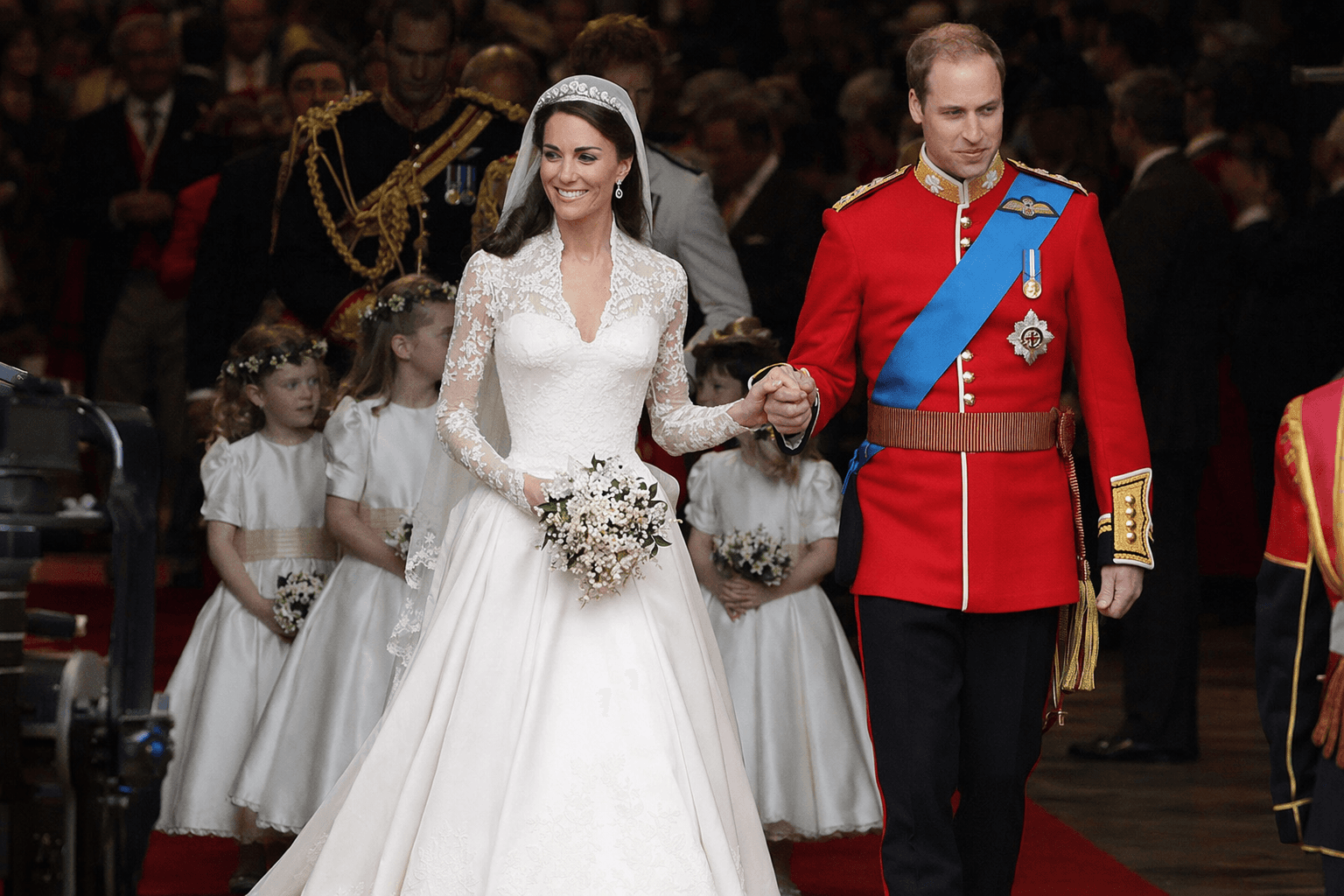
Kate Middleton walked into Westminster Abbey on 29 April 2011 in a gown that instantly became more than a royal wedding dress. Sarah Burton’s design for Alexander McQueen had the kind of control that still makes brides stop scrolling: an ivory lace bodice, long lace sleeves, a defined waist, a flowing satin skirt, and a train that stretched about nine feet behind her. It was polished, exacting, and romantic without tipping into costume, which is exactly why it still feels like the reference point.
That is the part people miss when they reduce the dress to nostalgia. It was never just about the spectacle of a future princess. It was a masterclass in balance, with tradition and modernity sitting right on top of each other, and that tension is still what modern brides chase when they say they want something “classic” but not boring.
Why brides keep asking for the same things
The most enduring parts of the look are also the most useful to actual brides. Long lace sleeves, a cinched waist, and a train with real presence are still the details that sell a gown in fittings because they do three jobs at once: they flatter the body, read formal in photographs, and give the dress emotional weight. When a bride wants to feel dressed, not just covered, this is the formula she reaches for.
The lace bodice was especially important because it gave the gown texture without heaviness. Instead of piling on embellishment, Burton let the lace do the talking, which is why the dress still feels fresh compared with the overworked crystal-heavy bridal looks that came after. The satin skirt kept the shape clean and fluid, so the eye moved from the fitted top to the sweep of the train in one elegant line.
The craftsmanship is the whole point
The Royal Family says Middleton chose Alexander McQueen for the beauty of its craftsmanship and technical construction, and that is the detail that separates this dress from the merely pretty. She worked closely with Burton on the design, and the result looked tailored rather than theoretical. It had the discipline of couture and the softness of a bride who knew exactly how she wanted to appear.
The lace appliqué for the bodice and skirt was hand-made by the Royal School of Needlework at Hampton Court Palace, with floral motifs cut from machine-made lace and appliquéd onto silk net. That mix of handwork and precision is why the gown still reads as heirloom-level fashion, not just celebrity bridal theater. The dress also used fabrics sourced from British companies, which gave the whole thing a quiet confidence that matched the moment.
What still feels timeless, and what feels tied to 2011
The timeless part is obvious: the lace sleeves, the fitted waist, the long line of the skirt, and the train that moves behind the bride like a final note. Those elements still show up in bridal appointments because they photograph beautifully and feel ceremonial without needing a lot of explanation. If you strip away the royal context, the silhouette still works because it understands proportion.
What feels specific to the royal-wedding era is the mood around it. In 2011, this dress was part of one of the most anticipated royal nuptials since Prince Charles married Princess Diana in 1981, and the culture around it had a kind of collective fever. The gown had to carry both institution and intimacy, which is not the brief most brides are working with now, even when they want a princess moment.
The media machine mattered as much as the dress
The wedding did not live only in the abbey. The Royal Family launched an official royal wedding website, live-streaming, and extensive online coverage to make the ceremony widely accessible, which turned the day into a global viewing event rather than a closed royal ritual. On 29 April, the British Monarchy account on Flickr received 11 million views, a number that says everything about how completely the wedding saturated the internet before “viral” was even the default language.
That reach helped the dress become a shared visual memory, not just a fashion fact. Brides did not need to be royal watchers to absorb the look. They saw the lace sleeves, the clean waist, the train, and filed it away as the modern answer to formal bridal dressing.
Why Sarah Burton mattered then, and still does
Burton was named creative director of Alexander McQueen in 2010 after more than 14 years working with the house, and that timing gave the dress even more weight. She was not parachuted in to make a headline gown and move on. She came from inside the language of the brand, which is why the dress felt so disciplined and so tied to McQueen’s technical rigor even as it softened into bridal romance.
That matters for British fashion too. The gown became proof that a British house could produce a royal wedding dress with real cultural force, not just pageantry value. It also cemented Burton’s reputation as a designer who could handle emotional pressure, national attention, and exacting craftsmanship without losing the silhouette.
The bridal lesson that still holds
If you are looking at the dress as a blueprint rather than a museum piece, the takeaway is simple: the best royal bridal style is built on restraint, not excess. The gown works because every major element has a job. The lace brings delicacy, the waist brings structure, the satin brings movement, and the train brings drama without noise.
That is why brides still ask for versions of it 15 years later. Not because they want to look like Kate Middleton exactly, but because the dress figured out the enduring equation for formal bridal style: visible craft, a defined shape, and one unforgettable sweep at the end.
This article was produced by Prism’s automated news system from verified source data, official records, and press releases, then run through automated quality and moderation checks before publishing. The system is built and supervised by the people who set the standards it runs under. Read our full AI policy.
Did this article answer your question?