Kiara Advani’s baby-pink Masaba sari makes a soft bridal statement
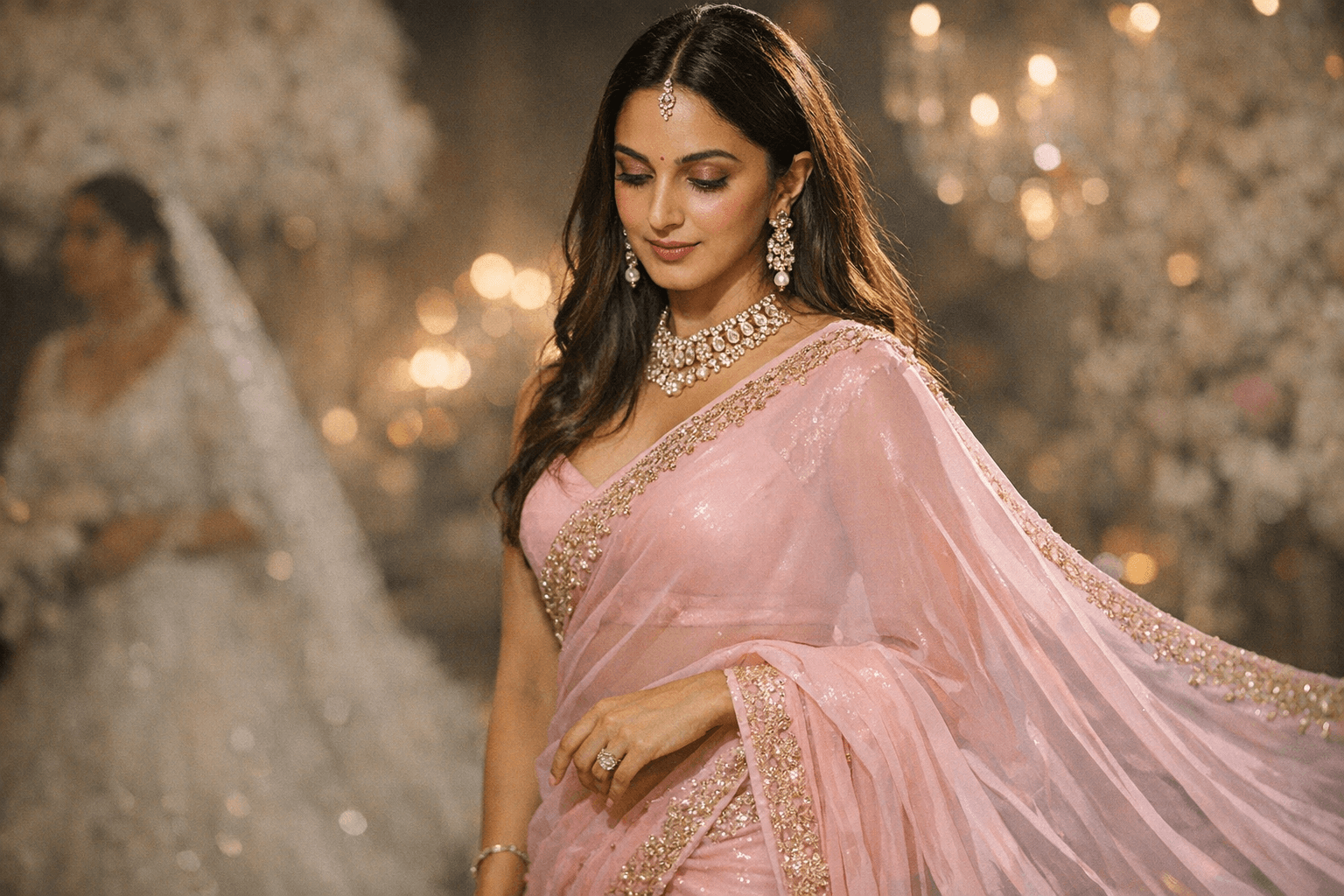
Kiara Advani’s baby-pink Masaba sari proves soft bridal dressing can still feel rich when the pallu leads and every other detail stays in line.
Let the pallu do the talking
The smartest thing about Kiara Advani’s baby-pink House of Masaba sari is not the color, though that muted pink is doing plenty of work. It is the discipline. The patchwork, buta work and gold embroidery never fight for attention because the pallu stays in charge, and that is exactly the kind of restraint brides need when they want softness without looking underdone.
This is the difference between looking dressed and looking decorated. The sari, identified as Masaba’s “Gulposh” design, is crafted in silk crepe and built around pink-and-green organza patchwork, gold thread embroidery, and motifs called “Gul Jharokha” and “Paankh Bagh.” Nothing here is timid, but nothing is shouting either. For a bride who wants ornamentation that feels considered, not crowded, this is the template.
Why this sari works for a modern bride
The appeal is in the balance. Patchwork can easily turn busy, but here it reads as texture, not clutter. The buta work adds that close-up richness Indian occasion dressing needs, while the gold embroidery gives the sari ceremony-level polish without tipping into heavy-handed bridal excess. Because the pallu is the visual anchor, the eye knows where to land first, and that single point of focus keeps the whole look elegant.
That matters now because bridal style is moving toward softer, more wearable statements. Brides do not want to look trapped inside their outfit. They want something that feels beautiful in motion, looks good in photos, and still lets the face, hair, and jewellery breathe. This sari does that by mixing craft-heavy surface detail with a muted baby-pink palette that softens the impact immediately.
The lesson for brides who want mixed surface detail
If you are choosing a sari with several finishes at once, treat the outfit like an edit, not a compilation. The Masaba look works because the patchwork, embroidery, and motifs are all disciplined around one strong pallu. That means the sari feels layered, not overloaded.
Use that same logic when you are building your own bridal look:
- Keep one element dominant, whether it is the pallu, border, or blouse
- Let embroidery and texture stay in conversation, not competition
- Choose a softened palette if the surface detail is dense
- Balance ornate fabric work with clean styling so the eye gets rest
- If the sari is richly worked, keep the overall silhouette fluid rather than fussy
That is the real takeaway here. You do not need less craft to look modern. You need better choreography.
Why House of Masaba makes this feel bridal, not just festive
House of Masaba has been pushing bridal sarees as a meeting point between India’s textile heritage and Masaba Gupta’s sharper, more graphic design language, and this is where that idea finally clicks. The brand positions its wedding collection around the reality of Indian weddings, which typically stretch across three to seven functions. That makes the sari a practical kind of bridal dressing, not just a reception flex.
And that is where this look gets interesting. A bride does not live in one outfit for one moment anymore. She is dressing for multiple ceremonies, multiple photo ops and multiple levels of formality. A softly embellished sari like this gives her range. It can work for a wedding-adjacent celebration, a pre-wedding function, or a bride who wants to step away from the expected lehenga and still look unmistakably ceremonial.
The styling is part of the story
Kiara Advani wore the sari at the Nita Mukesh Ambani Cultural Centre third anniversary celebration in Mumbai on April 3, 2026, alongside Sidharth Malhotra. The styling pushed the look further into statement territory: a Maharani-style necklace reported at 1.85 lakh and a Hermès Mini Kelly Pochette bag reported at 33.20 lakh. That mix of old-world jewellery language and high-luxury accessories made the sari feel less like costume and more like a fully built fashion moment.
The price also places the sari in sharp focus. At about 1.3 lakh, the Gulposh design sits in the zone where craft is part of the value proposition. This is not cheap occasionwear pretending to be bridal. It is expensive because the material, embroidery and construction are doing actual work. For a bride comparing options, that matters more than sheer ornament count.
Kiara’s bridal story keeps evolving
This moment also lands because Kiara’s bridal narrative already has a strong starting point. She married Sidharth Malhotra on February 7, 2023, at Suryagarh Palace in Jaisalmer, Rajasthan, wearing an old-rose lehenga by Manish Malhotra. That look was all about romance and traditional bridal grandeur. This Masaba sari shows a different side of the same woman: softer, more directional, and less interested in meeting anyone else’s expectations of what a bride should look like after the wedding day.
That shift is exactly why the sari is resonating. It is not trying to replace the classic lehenga. It is widening the bridal vocabulary. There is room for brides who want shimmer and softness at the same time, who want heritage craft without visual heaviness, and who want a sari that reads as fashion first without losing ceremonial weight.
The new bridal formula: rich, restrained, and readable
If bridal dressing used to reward volume, the new mood rewards clarity. Kiara Advani’s baby-pink Masaba sari shows how to layer patchwork, buta work and gold embroidery without letting the outfit collapse under its own decoration. The pallu stays focal, the palette stays gentle, and the whole look feels designed rather than packed.
That is the kind of bridal statement that travels well now, because it works in a wedding album, under ballroom lights, and in the real life of a celebration that lasts all night.
This article was produced by Prism’s automated news system from verified source data, official records, and press releases, then run through automated quality and moderation checks before publishing. The system is built and supervised by the people who set the standards it runs under. Read our full AI policy.
Did this article answer your question?