Mark Ingram’s Fall 2026 bridal collection spotlights halters, 3D flowers
Mark Ingram is steering Fall 2026 brides toward cleaner necklines and richer surface detail. The looks that matter most are the ones salons can actually sell.
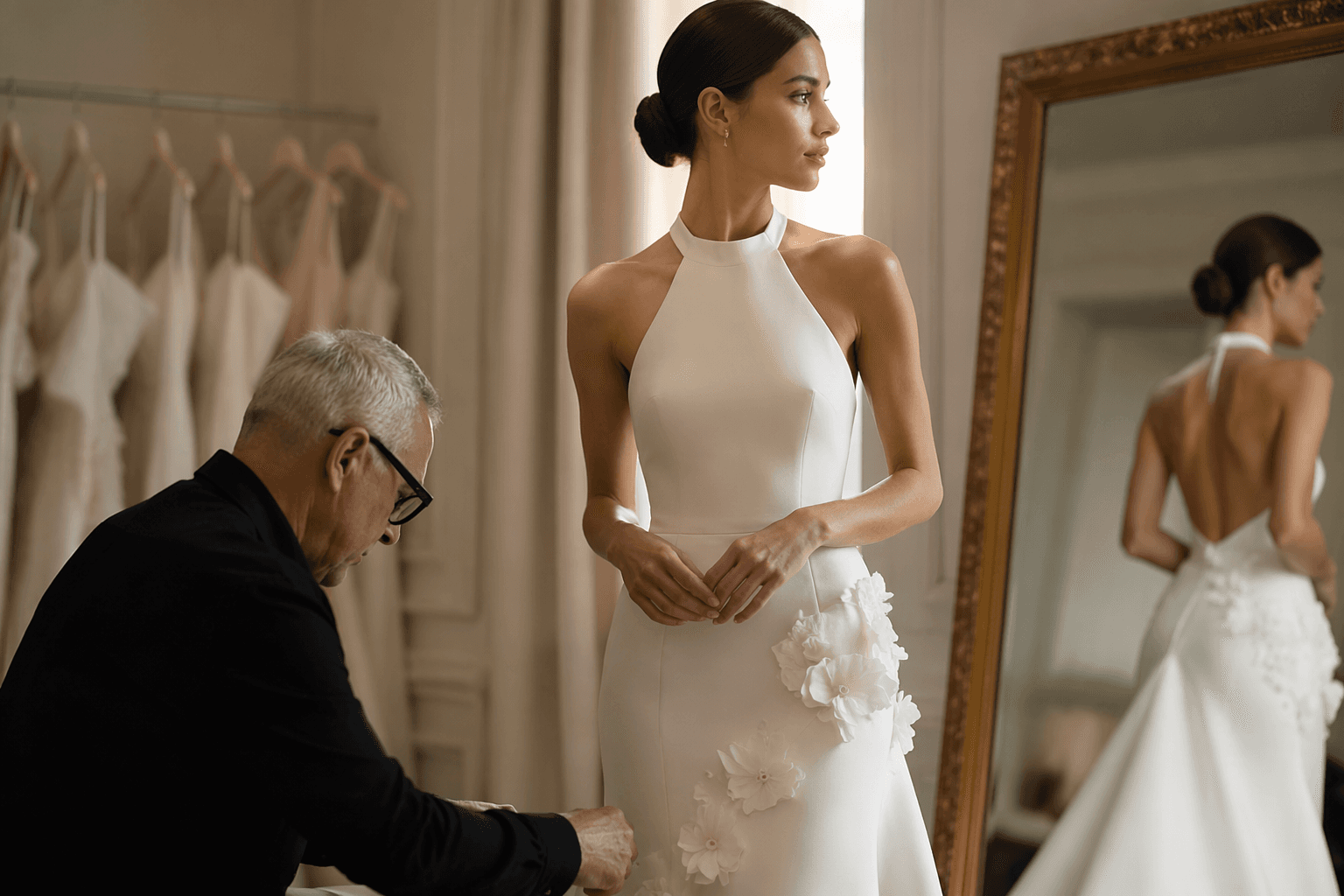
The new bridal mood is clear: necklines are rising, texture is getting bolder, and the dress is doing more of the styling work. Mark Ingram’s Fall 2026 collection lands right where the season is headed, with halters, 3D flowers and soft disruption in the details, the kind of ideas that move quickly from runway image to fitting room conversation.
That matters because Ingram is not just designing from the outside in. He has spent more than two decades as a bridal retailer and has been making his own collection since 2019, which gives this line a practical edge that many runway-only labels never quite achieve. He also recently opened a new Madison Avenue atelier in the DuMont Building, a move WWD framed as part of a more personal, more elevated bridal-shopping experience. In other words, this is a collection built for the way real brides shop: by trying on, comparing, adjusting and narrowing down what actually feels like them.
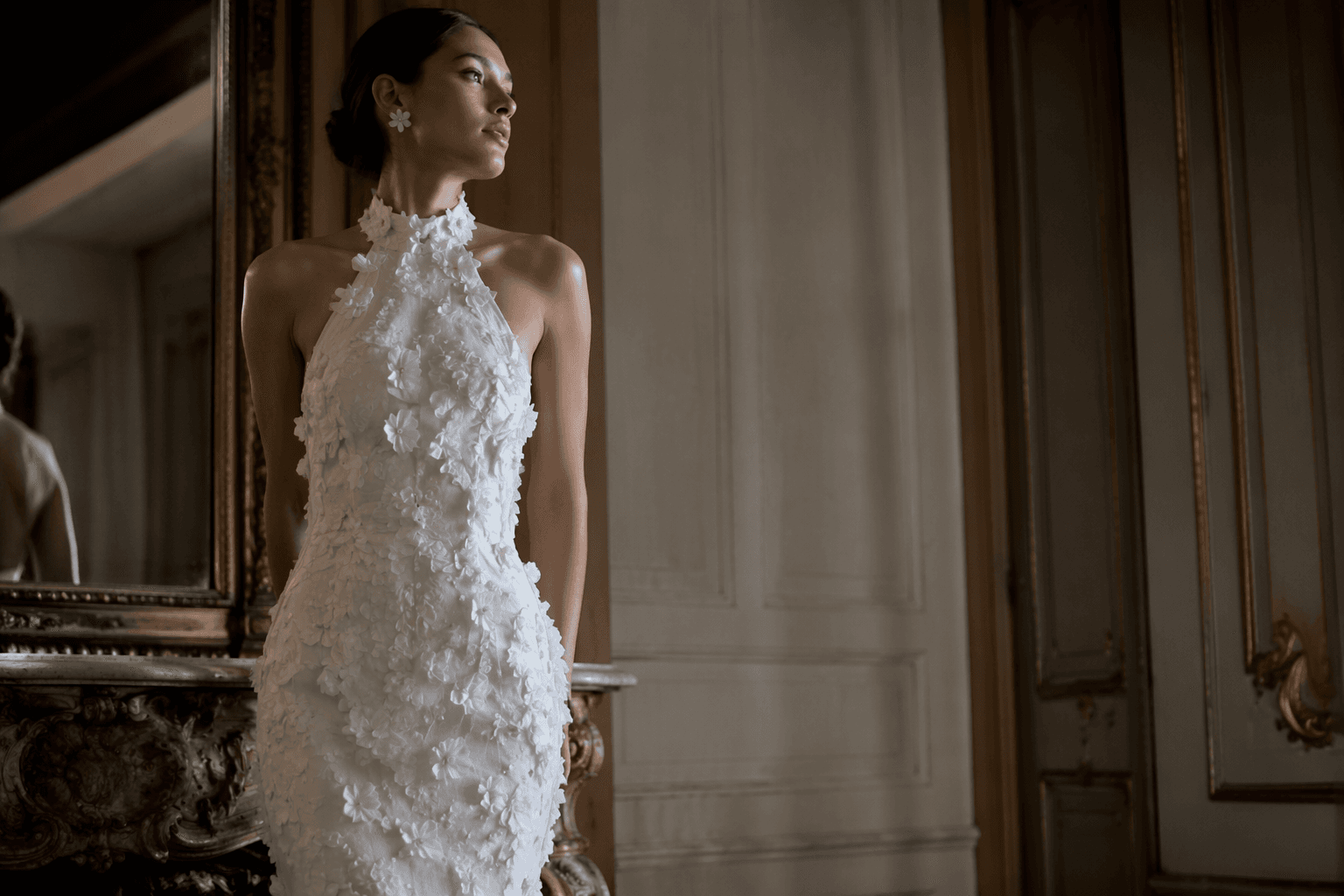
The strongest takeaway: halters are moving from trend note to salon staple.
Halter necklines were one of WWD’s defining Fall 2026 directions across New York Bridal Fashion Week, and Ingram’s collection gives that idea commercial muscle. The shape is flattering for brides who want the upper body to feel elongated and secure, especially if they are leaning away from strapless or sweetheart silhouettes that can read more expected. It also suits modern city weddings, destination ceremonies and second looks that want polish without too much softness.
If you cannot get the exact runway version, look for halter gowns with a clean neckline, a sleek waist and minimal fussy finish. The best interpretation is not about copying the catwalk; it is about borrowing the line of the silhouette and letting the fabric do the rest. A halter works especially well when the dress needs a strong top half to balance a fuller skirt or when the bride wants jewelry to stay quiet and the neckline to do the talking.
3D flowers are the easiest way for a bride to signal fashion without going full fantasy.
Fall 2026 bridal coverage across WWD repeatedly returned to three-dimensional floral decoration, and Ingram’s collection places that detail where it can actually sell: as a lift in texture rather than a costume flourish. 3D flowers flatter brides who want softness but do not want the dress to disappear in photographs. They work beautifully for spring or fall weddings, garden settings, black-tie celebrations and receptions where a little dimension catches candlelight and flash.
The key is scale. A few sculptural blooms at the bodice, hip or hem feel refined; too many and the dress becomes ornamental in a way that may date quickly. Brides can translate the idea by choosing gowns with appliqués, floral embroidery that rises off the surface or petals clustered at the shoulder or waist. It is a detail that reads expensive when it is controlled, not crowded.
The undone look is not about looking unfinished, it is about softness with intent.
WWD identified intentionally undone draping and fraying as one of the season’s major bridal directions, and that is exactly the sort of idea salons can explain quickly to a bride who wants romance with a little edge. This approach flatters brides who do not want a rigid, over-structured gown. It eases around the body rather than pinning it into place, which makes it especially appealing for ceremonies that feel intimate, artful or less formal.
The best setting for this detail is a wedding that does not need the dress to perform perfection: a gallery ceremony, a city hall celebration, an oceanfront event or a fashion-forward dinner reception. To wear the idea without runway access, look for draped satin, chiffon or crepe that falls with some looseness through the hip or bodice, or for hems and edges that have a deliberately softened finish. The effect should feel composed, not messy.
Unexpected lace is the season’s quiet pivot, and it gives retailers a safer way to sell experimentation.
Lace never really leaves bridal, but WWD’s Fall 2026 coverage points to it in a less conventional form, and that is where the commercial opportunity sits. Unexpected lace flatters brides who want tradition but are tired of looking like everyone else. It suits formal church weddings, classic estates and ballroom settings, but it can also modernize a simpler silhouette when the lace is placed asymmetrically or used in a less obvious pattern.
That makes it a useful salon buy because it speaks to both ends of the bridal spectrum: the bride who wants a romantic layer and the one who wants a fashion point of view. The smartest way to interpret it is through placement and contrast, not volume. A lace sleeve, a sheer insert or a directional motif can do more than an allover overload of pattern.
The season’s most decorative note, Marie Antoinette-style embellishment, is the one to use sparingly.
WWD also flagged Art Deco and Marie Antoinette-inspired embellishment as part of Fall 2026’s bridal language, and Ingram’s collection sits comfortably in that ornate lane without turning theatrical. This kind of detail works best for brides who want the ceremony look to feel ceremonial, even slightly regal. It is particularly suited to grand hotels, historic venues and evening weddings where beadwork, shine or elaboration can live up to the setting.
The risk, of course, is excess. The safest interpretation is to choose one embellished moment and keep the rest of the dress relatively clean. Think jeweled embroidery at the bodice, a trimmed neckline or a carefully decorated train. That way the gown feels rich rather than overworked.
Seen against spring, the message is consistency with refinement.
Spring 2026 bridal coverage was all about corsetry, bow details, rounded volume, allover lace, colorful florals and bigger basque-waist or ball-skirt silhouettes. Fall 2026 does not abandon that language so much as sharpen it. The waist still matters, the dress still wants structure, but the season pushes brides toward cleaner neckline stories, fresher surface texture and embellishment that feels more edited than maximal.
That is what makes Mark Ingram’s collection important to the market. It gives salons a very usable read on what to stock, what to pull for appointments and what a bride is likely to respond to once she gets off the screen and into the fitting room. The season is not about louder dresses. It is about dresses with one clear idea, executed well enough to feel inevitable.
This article was produced by Prism’s automated news system from verified source data, official records, and press releases, then run through automated quality and moderation checks before publishing. The system is built and supervised by the people who set the standards it runs under. Read our full AI policy.
Did this article answer your question?