Mother-of-the-bride style turns bolder, richer, and more flattering
Mother-of-the-bride dressing is loosening up. The best looks now feel polished, flattering, and just bold enough to hold their own in photos.
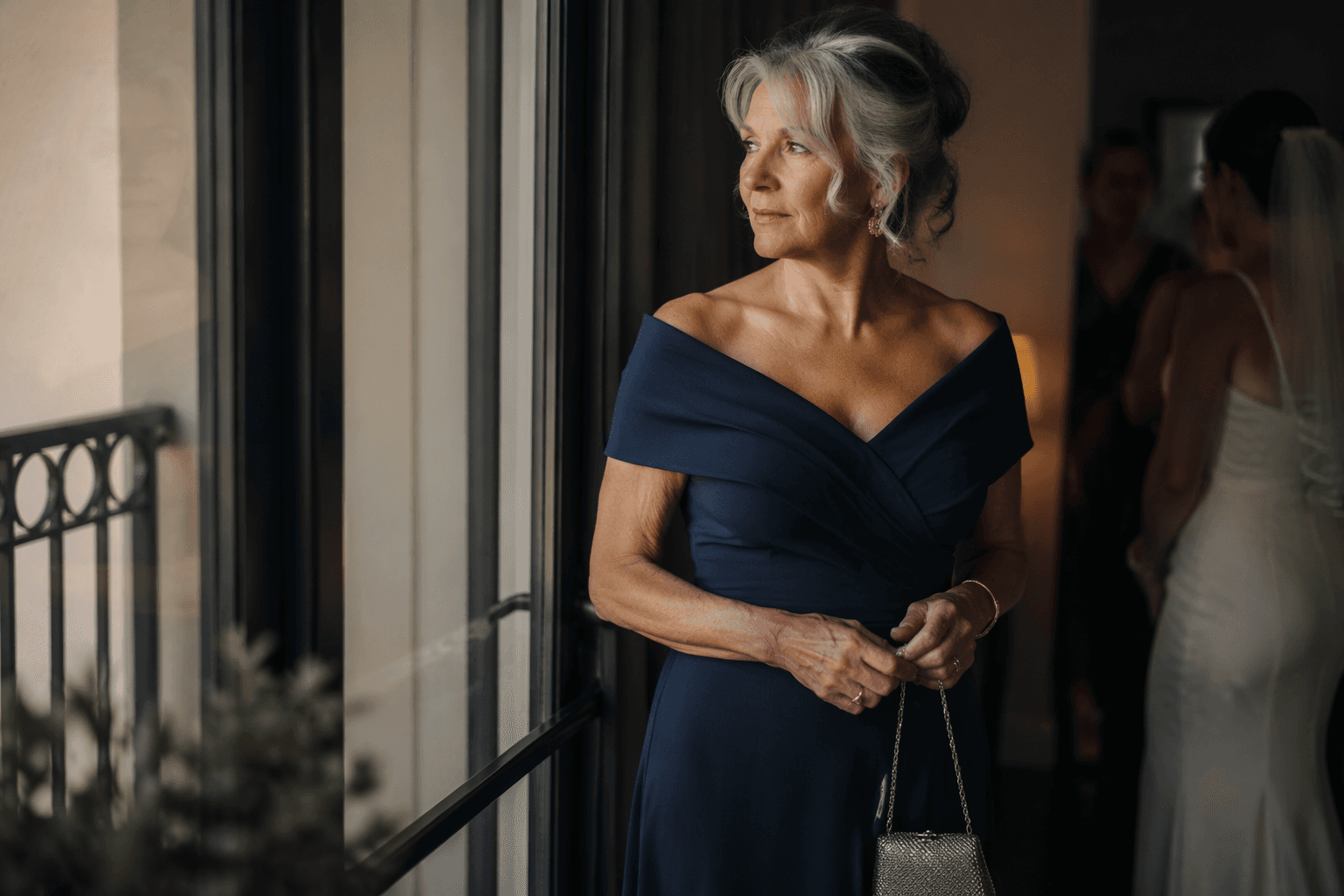
A viral Audrey + Brooks mother-of-the-bride dress drew comments about whether it was too attention-grabbing. The dress code has shifted toward richer color, more flattering silhouettes, and outfits with enough presence to look intentional in wedding photos without pulling focus from the couple.
The new rule is confidence, not camouflage
The updates from last year are subtle, with slight adjustments in color, pattern, and fabric, while silhouettes stay classic and flattering. The look should feel current, but it should also do the practical work of smoothing, shaping, and photographing well from ceremony to last dance.
Nicole Carrabine, who owns The Lake Forest Shop on Chicago’s North Shore, says the category is not driven by bridal trends so much as by what is fashionable in a given year and what flatters the woman wearing it. She says the old cardinal rules have relaxed. Mothers are being allowed more style, but the social pressure around “upstaging” has not disappeared.
Start with silhouette, then build the color story
The safest-looking mothers’ dresses are usually the least effective. What reads modern now is a shape with structure and ease: a clean column, a softly tailored sheath, a fluid A-line, or a gown with sleeves that feel purposeful rather than dated. The goal is not to disappear into a generic occasion dress, but to choose a cut that lets the fabric fall cleanly and keeps the body looking balanced in person and in photographs.
Color does a lot of the work. Vibrant colors and prints, especially pastels and florals, are ideal choices for spring weddings. That does not mean bright for brightness’ sake. It means choosing depth and freshness over flat, lifeless neutrals, so the dress feels alive against spring light, garden settings, and floral arrangements without drifting into bridal territory.
For mothers who prefer solids, richer tones tend to look the most polished. Jewel tones, softened metallics, and saturated midtones carry more visual weight than beige or taupe, and they tend to hold up better in flash photography. If the wedding palette is already highly dramatic, the winning move is usually a shade that complements it rather than competes with it.
Fabric should match the season, and the camera
Light, airy materials such as chiffon and organza are especially well suited to spring weddings. Those textiles catch movement beautifully and create the kind of soft edge that reads expensive without looking stiff. Chiffon skims; organza gives shape and a little lift. Both work well when a mother wants polish without heaviness.
Fabric is no longer just about modesty or coverage. It is about whether a dress breathes, whether it moves cleanly in a breeze, and whether the surface catches light in a flattering way. A floral print on chiffon feels romantic. The same print on a dense, shiny fabric can look harsher and less refined.
Carrabine’s advice to shop in person makes practical sense here. A dress may look beautiful on a hanger and fail completely once it moves with the body. Trying on multiple silhouettes in the store is the fastest way to see whether the neckline, sleeve shape, and waist placement actually flatter the wearer instead of simply checking an occasion-wear box.
Comfort is part of the dress code now
The most modern mother-of-the-bride look is one she can wear all day without fussing with it. Carrabine says couples today want their mothers to look and feel their best, and that shows up in the way women are shopping. They are not just asking what looks appropriate. They are asking what lets them stand, sit, dance, hug, and pose without adjusting the dress every five minutes.
A mother who tries on a roomful of silhouettes is more likely to find the one that feels right at the shoulder, under the arm, and through the waist. In 2024, Beverly Norberg tried on 30 mother-of-the-bride dresses before finding the one she loved.
The internet still polices the line between polished and “too much”
The dress may be for one woman, but the conversation around it often belongs to thousands of strangers. In March 2025, internet users were divided over whether a mother-of-the-bride dress was appropriate. In 2024, Cathy Caradimitropoulo wore a white gown to her daughter’s summer wedding, and while her family supported the choice, commenters did not.
That tension is exactly why mothers are shopping more strategically now. White still reads as loaded at a wedding, no matter how elegant the cut. Highly embellished or overly bridal-looking silhouettes can trigger the same reaction. The safest path is not dullness, but distinction: a dress with color, texture, or print that feels elevated and unmistakably mother-of-the-bride, not a dress that could be mistaken for the bride’s.
The viral backlash around a bold look also explains why the category has become more conscious of balance. A statement dress can absolutely work, but it has to be anchored by restraint somewhere else, whether in the color, the hemline, the fabric, or the accessories.
The mother-of-the-groom should take the same cues
The same guidance applies to mother-of-the-groom outfits, and the old hierarchy of bridal dressing has loosened on both sides of the aisle. The same rules hold: flattering silhouette, thoughtful fabric, color that complements the wedding palette, and enough individuality to feel modern without looking performative.
This article was produced by Prism’s automated news system from verified source data, official records, and press releases, then run through automated quality and moderation checks before publishing. The system is built and supervised by the people who set the standards it runs under. Read our full AI policy.
Did this article answer your question?