New York Bridal
New York Bridal Fashion Week's Fall 2026 season decoded: corsetry returns as pure architecture, lace goes oversized, and the second look is no longer an afterthought.

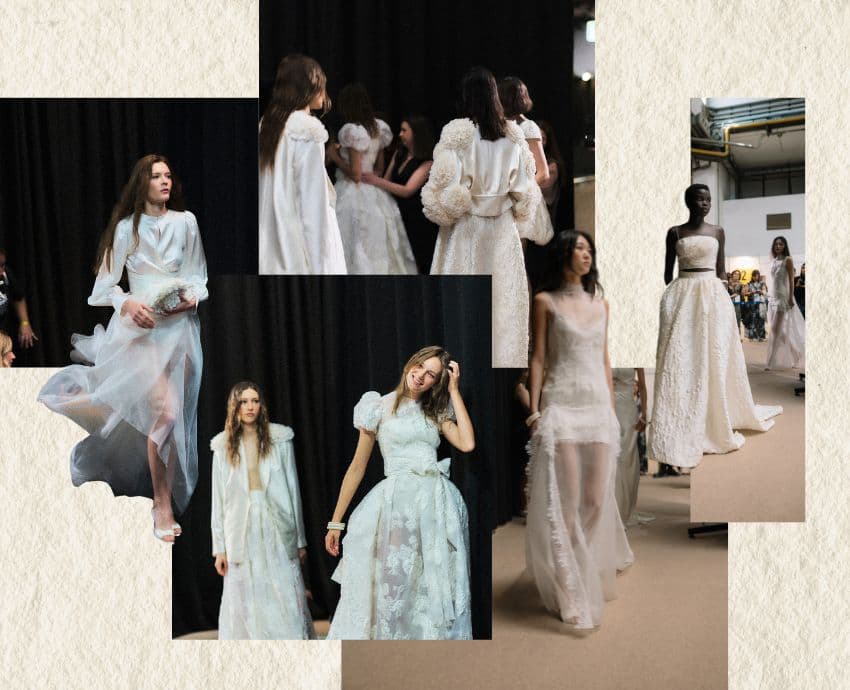
New York Bridal Fashion Week's Fall 2026 season arrived with a clear creative argument: the wedding dress is no longer just a garment, it is a position. The collections that made the strongest case were the ones that treated construction as storytelling, fabric as authorship, and the aisle as a full-length editorial. From Hayley Paige's charged runway comeback to Katherine Tash's quietly radical lace vocabulary and Alyssa Kristin's precision crepe, five macro-trends emerged with enough force to shape what salons are fielding, and what brides will actually be wearing.
The Basque Waist: History Repurposed
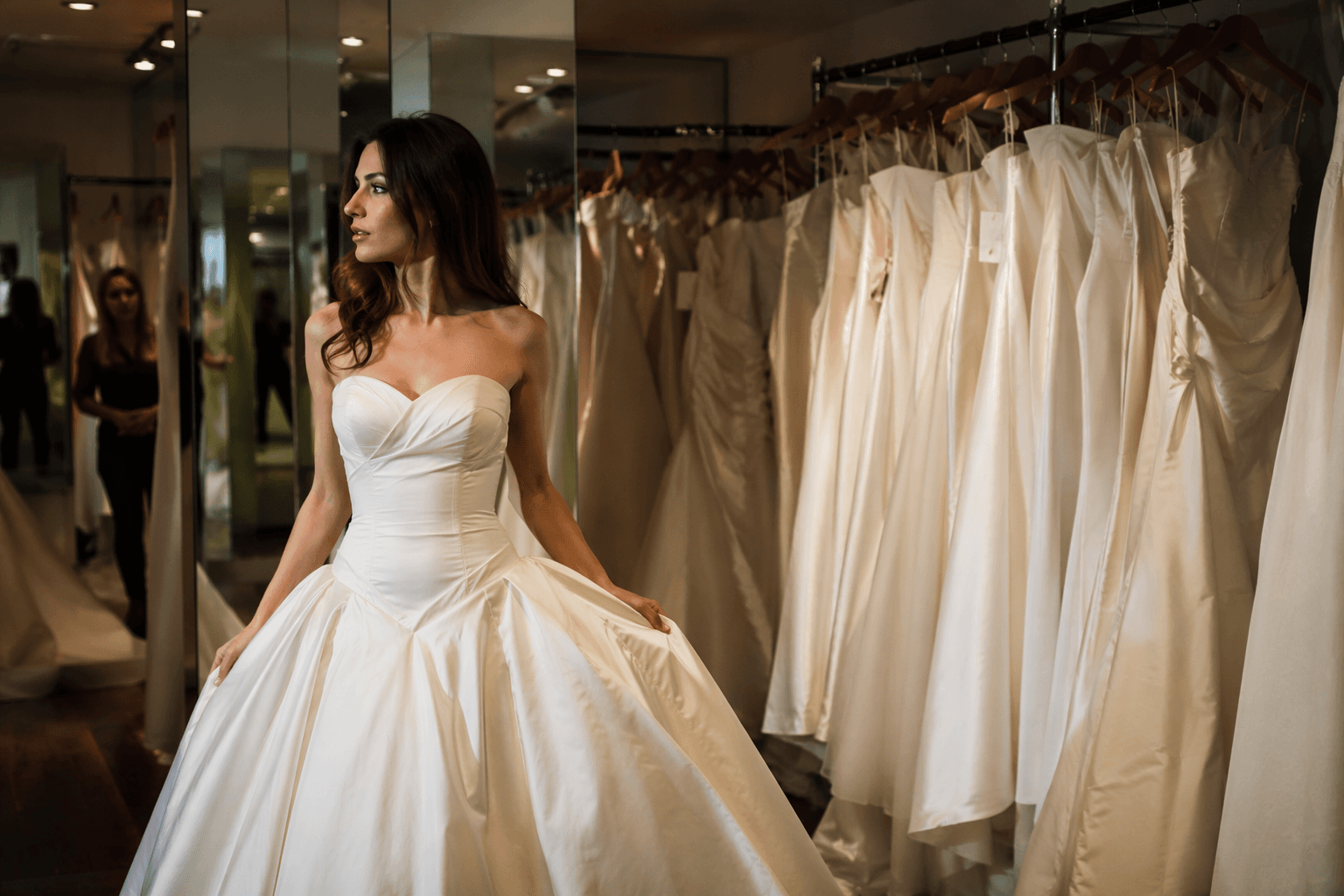
Of all the silhouette signals at this season's shows, the basque waist carries the most weight, literally and historically. The elongated, pointed front bodice that dips below the natural waistline is back with real architectural conviction, most prominently in Hayley Paige's REIN collection, her first independent runway showing after a seven-year absence. The return to NYBFW is itself a story: REIN marks Paige's re-emergence after reclaiming her name and creative autonomy, and the collection's structure reflects that. Sculpted bodices, dropped waists, and exaggerated hips reposition shape as the central narrative, and the basque waist sits at the heart of it all: a silhouette that reads simultaneously historical and sharply modern.
In salon terms, ask specifically for a "basque bodice" or "dropped-point waist." This shape elongates the torso and creates a defined hip, making it especially flattering on pear and hourglass figures. It works beautifully in both formal ballroom ceremonies and intimate garden settings. Style it with a fingertip-length veil at the back to keep the bodice unobscured, and keep jewelry minimal: a single ear cuff or pearl studs rather than a full statement necklace, which will compete with the bodice architecture.
Modern Corsetry: Engineering as Aesthetic
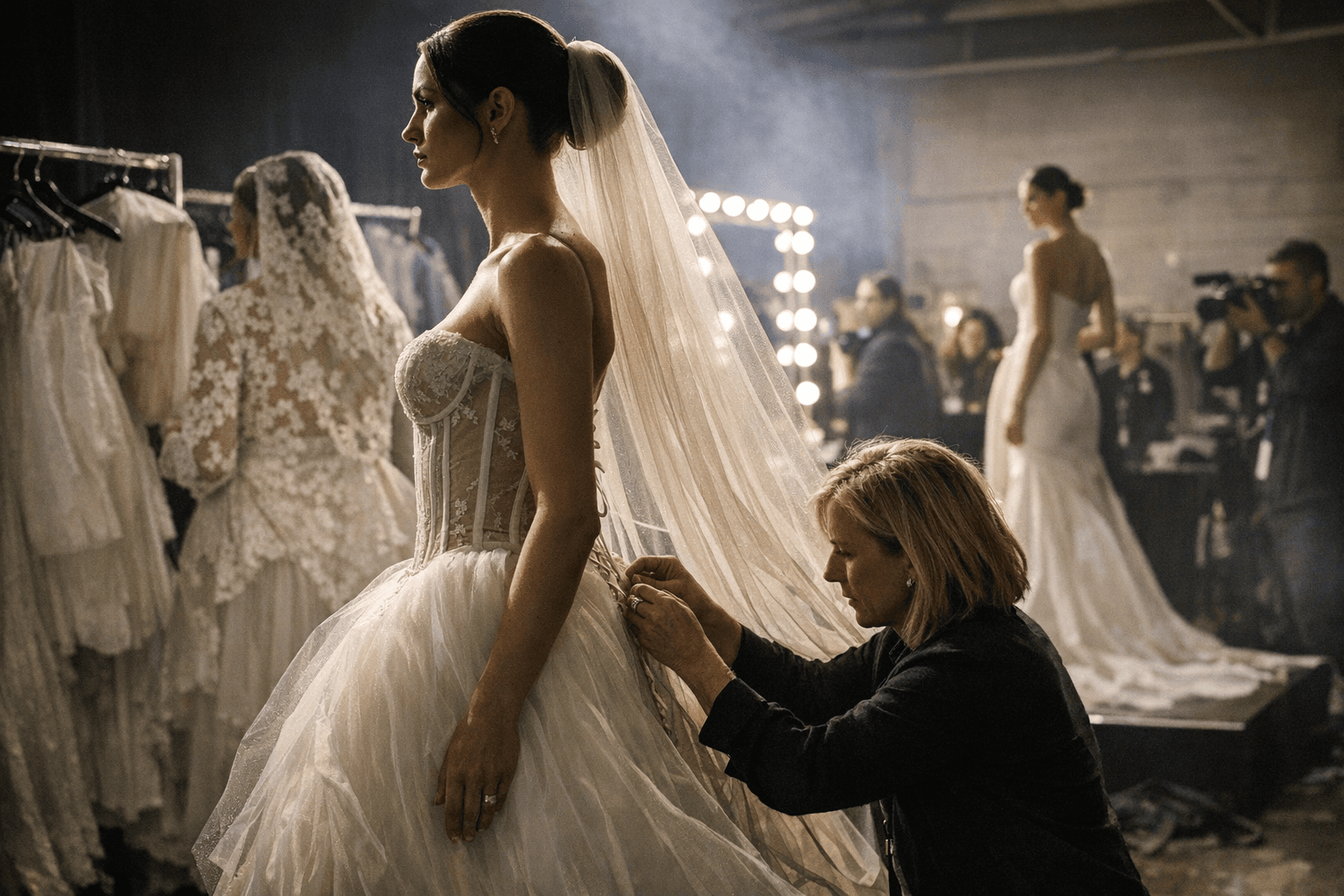
Corsetry is the season's dominant fabrication conversation, but the most interesting iteration is internal rather than exposed. Paige's REIN collection engineered internal corsets to support rather than restrict, with careful weight distribution designed to allow ease of movement across an entire wedding day. Pannier structures add volume with architectural clarity rather than the soft, undisciplined puff of earlier decades. This is corsetry for women who want a structured silhouette without feeling encased, an important distinction to make when shopping.
When trying gowns, ask whether the corset is boned externally or internally, and whether it's removable. Fully boned external corsets in heavy duchess satin are the most restrictive; internal boning with soft cups offers the same shaping with significantly more comfort. This trend reads strongest in formal ceremony settings, particularly those with dramatic spaces, think cathedral ceilings, grand historic venues, anywhere the architectural gown has room to perform. Shoe-wise, a low block heel or kitten mule in ivory satin will keep the proportion balanced without adding height that throws off the structured bodice line.
Ornamental and Oversized Lace: Two Designers, One Argument
Lace in Fall 2026 is not the delicate, whisper-weight allover pattern of previous seasons. It is large, intentional, and in some cases the entire visual conversation. Katherine Tash's spring 2027 Chrysalis collection moves toward new beaded lace, silk organza, and silk jacquard wedding dresses with an airy, almost botanical quality: the lace operates as a design element rather than decoration. Meanwhile, Hayley Paige's REIN pushed what she calls ornamental lace, entirely proprietary and developed from scratch rather than sourced. In REIN, custom lace sits alongside caviar beading, intricate sequins, and softly layered ombrés, giving each gown a distinct visual identity that feels authored.
In the salon, ask for "placed lace" as opposed to "allover lace." Placed lace means the motifs are positioned deliberately, at the hemline, across the shoulders, or as a single dramatic panel on the skirt, rather than repeated uniformly across the fabric. This trend flatters most body types, but it is particularly striking on tall frames where the scale of a large lace motif reads as intended. Pair it with a plain silk tulle veil, not lace-edged, to let the gown's texture breathe. Hardware jewelry in gold or brass adds an unexpected warmth.
Sculptural Crepe and the Minimalist Case
Against the ornament-heavy collections, Alyssa Kristin makes a clean counter-argument with minimalist, sculptural crepe shapes. Crepe at this level is not simple; it demands immaculate construction because there is nowhere for imprecision to hide. Kristin's approach treats the fabric's natural weight and drape as a design tool, creating shapes that move with intention. The result is a category of gown that photographs as beautifully in a black-and-white editorial as it does in full colour: modern, architectural, quietly confident.
Ask for "heavy crepe" or "double-faced crepe" in salons and specify a bias cut if you want the fabric to follow the body's curve rather than stand away from it. This silhouette is ideal for city ceremonies, rooftop venues, art galleries, or any setting where sharp tailoring feels appropriate rather than underdressed. Style with a long, simple silk drop veil and sculptural architectural earrings. Skip the bracelet; this look is about restraint.
The Western and Equestrian Thread
One of the more unexpected signals in REIN is its Western and equestrian undercurrent. Paige drew on 2026 as the Year of the Horse as both calendar fact and symbolic frame, weaving references to strength, grace, and forward motion throughout the collection. The influence appears not as literal prairie silhouettes but as a structural ethos: controlled movement, athletic ease built into couture construction, and a sense that the gown is designed to be lived in rather than posed in. Pearl draping is used as a sculptural element, and hints of cashmere introduce depth without weight.
This trend is most legible at outdoor ceremonies, ranch weddings, vineyard or estate settings, and any venue that leans toward landscape over architecture. When shopping, look for gowns with "ease of movement" listed as a construction priority; ask specifically how the skirt is weighted. Style with a mid-length feathered heel or a clean Western boot under a shorter hemline. Jewellery should feel found rather than formal: vintage turquoise, hammered gold, or a simple layered chain.
Separables and the Reception-Ready Second Look
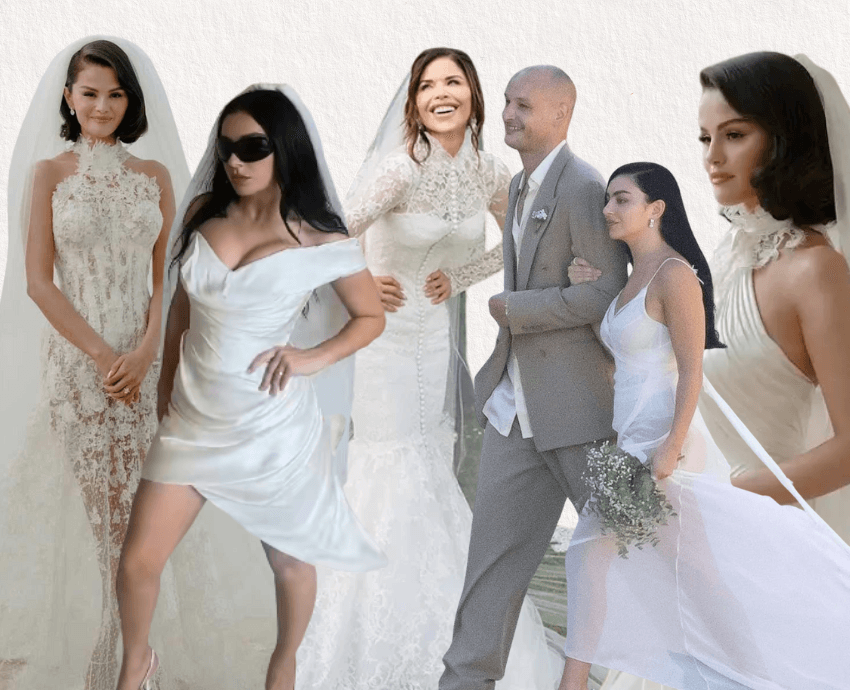
If there is one trend that cuts across every collection at NYBFW Fall 2026, it is the acknowledgment that the wedding day runs long and brides want to dress for both acts. The editorial framing across showroom appointments consistently pointed toward separables, detachable elements, and reception-ready second looks as a design priority rather than an afterthought. Overskirts that unbutton to reveal a fitted mini, bodices that work as standalone tops, and capes that transform the ceremony silhouette into something entirely different at the reception; these are being designed in as structural features, not add-ons.
In salons, specifically ask which elements are removable and what the silhouette looks like beneath. Some of the most interesting gowns this season are only fully understood as two looks. Style the ceremony version with a cathedral-length veil and let the reception look stand alone: block-heel ankle strap shoes and drop earrings that were hidden under the veil all ceremony.
OUMA and Savannah Miller: Designers Worth Tracking
The season also surfaced OUMA and Savannah Miller as designers to follow with genuine attention. Both are building their own visual languages within a market that tends to reward familiarity. Keep both names in your shortlist when beginning boutique appointments, particularly if your instinct runs toward distinctive bridal rather than category-expected.
Shopping the Season
The most practical way to navigate all of this: go into salon appointments with a clear vocabulary. The trends that will define wedding dresses from this season forward, basque waists, oversized placed lace, internal corsetry, sculptural crepe, and modular second looks, each require specific questions to find correctly. Know your venue and its light before you commit to embellishment scale. And if your fitting is not surfacing these categories organically, name them. The gowns are there; they simply require the right conversation to find them.
This article was produced by Prism’s automated news system from verified source data, official records, and press releases, then run through automated quality and moderation checks before publishing. The system is built and supervised by the people who set the standards it runs under. Read our full AI policy.
Know something we missed? Have a correction or additional information?
Submit a Tip