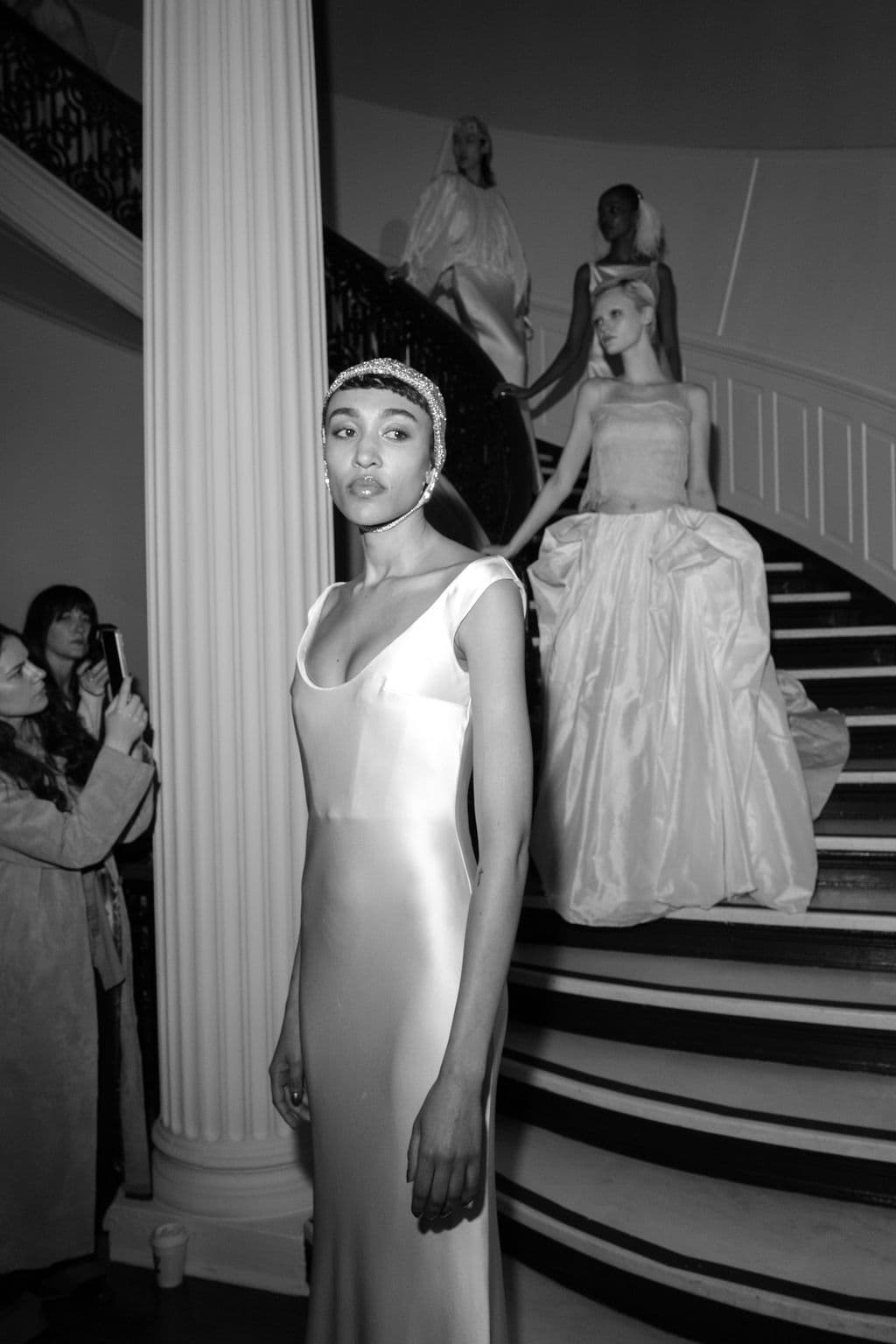
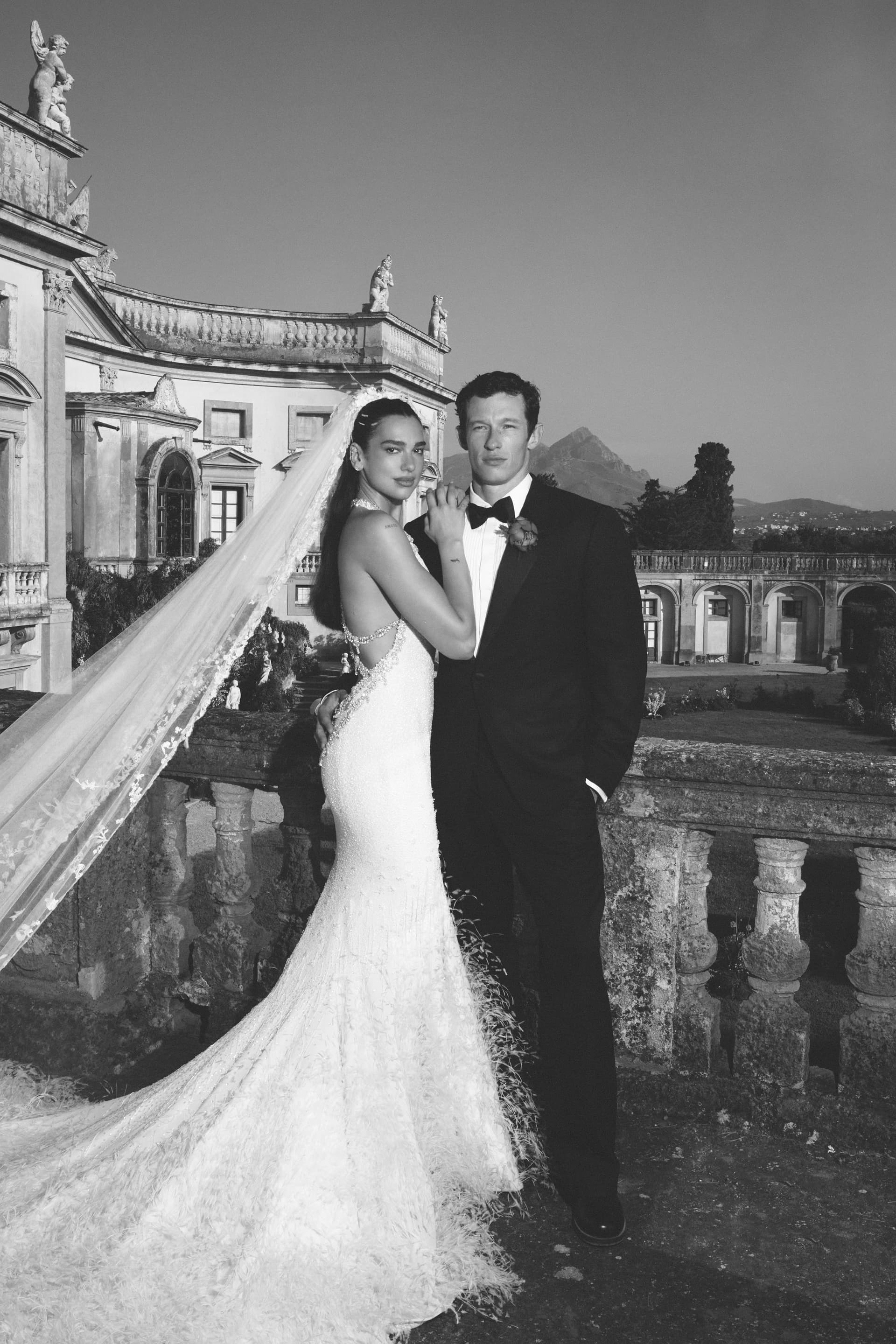
Olivia Bottega taps the rise of customizable, affordable bridal couture
Olivia Bottega shows how bridal’s new premium tier is built on made-to-order ease, price clarity, and customization, not just sparkle.

Olivia Bottega sits in the exact place bridal has been moving toward: between mass-market sameness and full couture expense. The brand’s pitch is simple but potent, couture-quality design at more accessible prices, backed by custom sizing, made-to-order production, and ready-to-ship options for brides who do not have months to spare.
Accessible luxury is becoming the real bridal story
The most interesting shift in bridal right now is not about whether a gown is dramatic enough for the aisle. It is about whether it can feel personal, look expensive, arrive on time, and still leave room in the budget for the rest of the wedding. Olivia Bottega has turned that equation into its core business case, and that is why it reads as more than another label with pretty dresses.
For more than 10 years, the brand says it has been designing custom and made-to-order wedding dresses for brides. Its positioning is unusually direct for a category that has long traded in opacity: affordable prices, free custom sizing, inclusive sizing from petite to plus, and a shopping experience that happens online with personal styling support. In bridal, clarity is now part of the luxury signal.
That matters because the old premium script has changed. Brides still want the hand-finished feeling of couture, but many now expect a cleaner path to get there, with fewer appointments, fewer mysteries around fit, and less pressure to buy into a single, high-stakes moment. Olivia Bottega’s made-to-order model, with 9- to 15-week production times, speaks directly to that appetite for control.
What the price point actually means
The Knot’s 2025 Real Weddings Study gives the category its most useful benchmark: the average U.S. wedding dress cost is about $2,100, based on nearly 10,474 couples married in 2025. In the same study, only 19% of female participants wore custom-made attire. That is the gap Olivia Bottega is exploiting with precision. It is not trying to compete with mass bridal basics, and it is not asking brides to jump to full bespoke pricing.
The Knot also puts custom wedding dresses in a much higher bracket, typically starting around $3,000 to $4,000 and rising further when corsetry, hand-beaded appliques, and more intensive fabrication enter the picture. Against that backdrop, Olivia Bottega’s mix of sub-$1,000 options and gowns above $2,000 feels strategically placed. It gives the bride couture cues without forcing couture economics.
That price architecture is the point. Premium in bridal no longer means only the most expensive dress in the room. It increasingly means a gown that looks considered, arrives within a workable timeline, and can be tailored without a bespoke price shock.
Why made-to-order now feels smarter than off-the-rack
The made-to-order model has become especially persuasive because it offers a middle ground that feels more modern than old-school bridal shopping. Brides can choose a style, have it produced for them, and still avoid the inflated cost and long lead time associated with true custom work. Olivia Bottega also offers ready-to-ship gowns for urgent timelines, which makes the brand flexible in a market where engagements, venue deadlines, and travel plans do not always line up neatly.

This is also where direct-to-consumer convenience becomes part of the design story. Shopping online is no longer a compromise if the brand gives enough guidance, enough sizing support, and enough visual confidence in the product. Olivia Bottega’s personal styling support and free custom sizing sharpen that promise. The bride is not simply buying a dress, she is buying a controlled process.
The appeal extends beyond logistics. Made-to-order feels more thoughtful in an era when brides want fewer wasted purchases and more intentional consumption. A gown produced for a specific body, in a specific size, with a known timeline, carries a different kind of value than a garment pulled from a rack.
The rest of the industry is moving in the same direction
Olivia Bottega is not inventing the trend so much as proving its commercial strength. Forbes has noted that the bridal wear market has shown steady growth, and the category’s customer base remains substantial. The CDC’s National Center for Health Statistics recorded 2,041,926 marriages in the United States in 2023, with a marriage rate of 6.1 per 1,000 population. Bridal remains a large business, which is why it is now being reshaped from the middle out.
Other players are making adjacent bets. David’s Bridal launched Reimagine by DB Studio, its first eco-minded collection made from recycled fabrics, a sign that sustainability has moved from niche talking point to retail expectation. Amsale is leaning into custom bridal design tools online and at its New York City atelier in SoHo, showing that personalization is no longer a rarefied extra reserved for the highest tier of clients.
Taken together, these moves point to a broader recalibration of premium. The winning bridal brands are not just selling fantasy. They are selling informed choice, quicker decision-making, and the feeling that a dress was made with the bride’s actual life in mind.
How to read the new premium code
When a bridal label claims accessible luxury, the details should do the talking. In practice, the strongest signals are easy to spot:
- Clear price bands, including options below and above $1,000, instead of vague “investment piece” language.
- Made-to-order production windows that are specific, like Olivia Bottega’s 9 to 15 weeks.
- Free custom sizing or equivalent fit support, especially across petite to plus ranges.
- A ready-to-ship lane for brides working on compressed timelines.
- Online customization tools or atelier-based personal design support, as seen at Amsale.
- Sustainability upgrades, such as recycled fabrics, when they are paired with real product development rather than marketing gloss.
That is what makes Olivia Bottega such a revealing case study. It understands that bridal shoppers are not only buying romance, they are making a high-stakes purchase under time pressure, with emotional and financial consequences attached. In that environment, the future of premium looks less like distance and more like access.
This article was produced by Prism’s automated news system from verified source data, official records, and press releases, then run through automated quality and moderation checks before publishing. The system is built and supervised by the people who set the standards it runs under. Read our full AI policy.
Did this article answer your question?