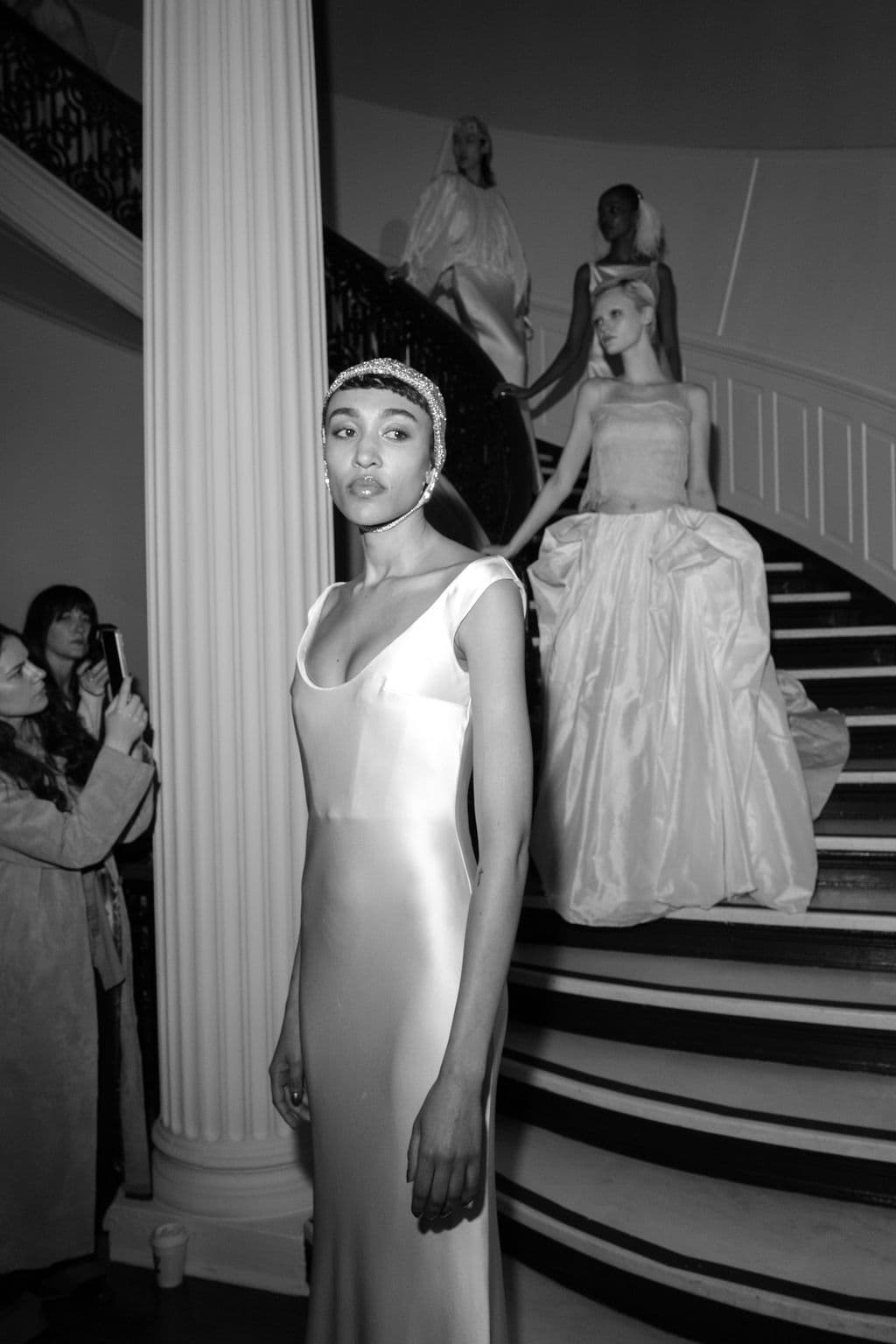
Oscar de la Renta Spring 2026 Bridal Blends Florals, Couture Volumes
Oscar de la Renta's Spring 2026 bridal collection uses cherry blossom embroidery and tulle petal ballgowns to make florals do structural, not just decorative, work.

Cherry blossoms and peonies drove every design decision in Oscar de la Renta's Spring 2026 bridal collection, presented at New York Bridal Fashion Week by Co-Creative Directors Laura Kim and Fernando Garcia. The lineup delivered five distinct signatures, each with a clear use case that extends well beyond the runway.
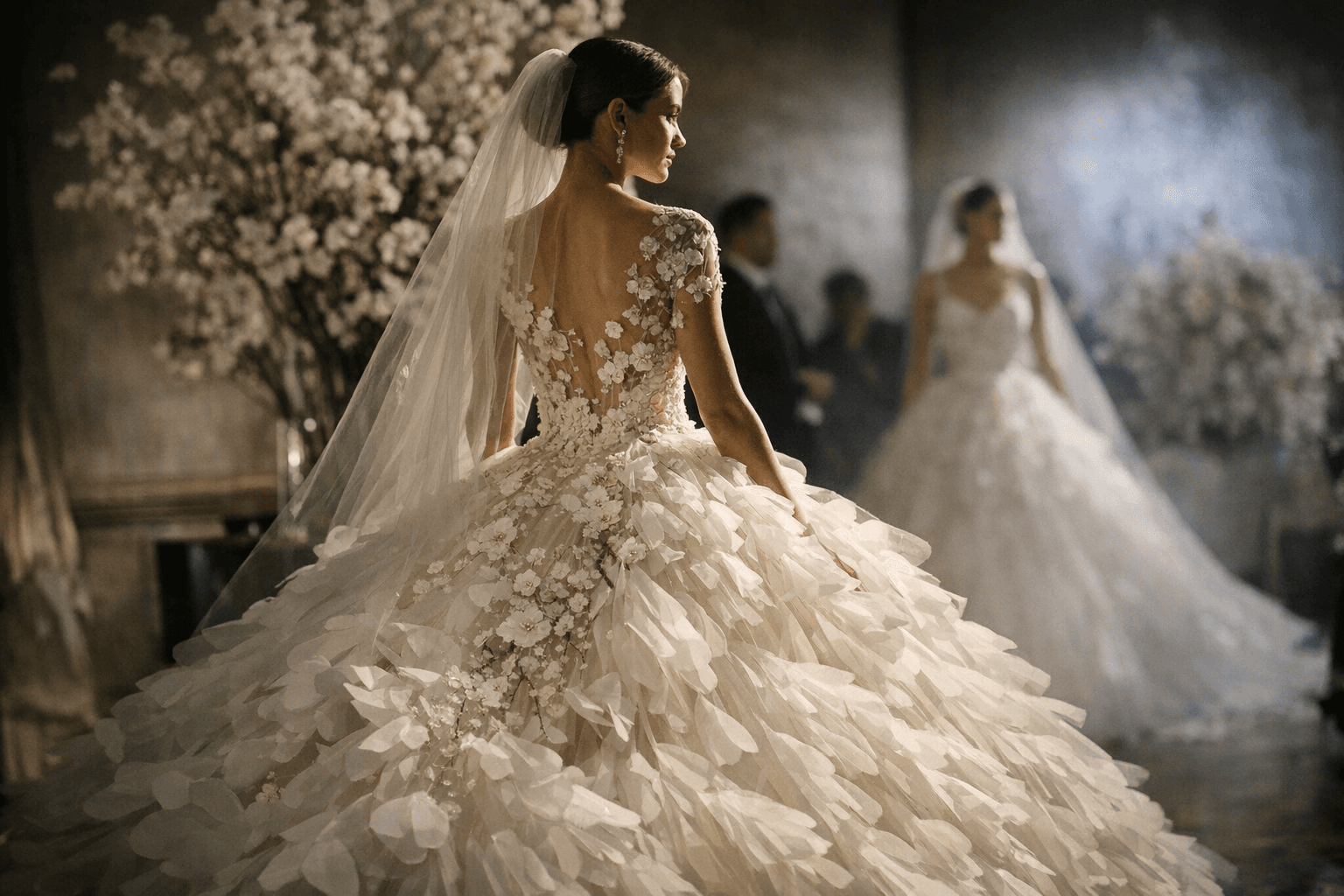
The most technically ambitious detail was pixelated 3D cherry blossom embroidery, a couture-level technique where raised blooms build dimension against the body of the gown. On silk organza, each blossom catches light as the fabric moves, meaning this embellishment does its best work in candlelit ballrooms or chandelier-lit reception halls. For straighter, column-shaped figures, it is a strategic choice: the raised texture reads as volume without requiring layers of underskirt. If Oscar de la Renta's price point is aspirational, ask an atelier about applying clustered fabric rosettes to a simpler gown. The hand-application time costs far less than couture embroidery, and the dimensional effect lands similarly.
The hero silhouette, a voluminous ballgown constructed from cascading layers of tulle petals finished with a dramatic high-low hemline, is architecture first and gown second. It demands space: cathedral naves, estate lawns, and ballroom floors where the skirt can breathe. It also needs a petticoat or crinoline underneath to hold its shape across a full ceremony and reception. For brides with a fuller hip-to-waist ratio, the alteration priority is a fitted bodice seam before the skirt takes over; waist definition anchors the volume rather than letting the silhouette overwhelm the frame. Tiered tulle skirts with horsehair hem treatments at lower price points approximate the cascading petal effect and stay manageable in tighter venue spaces.
Look 1 opened with a strapless lace mini dress featuring a sweetheart neckline and large-scale floral embroidery, and that neckline appeared consistently throughout the collection as one of its most reliable structural choices. It lengthens the neck, defines the décolletage, and pairs naturally with a corseted interior. For brides who want the sweetheart line but worry about a strapless fit lasting through a long reception, ask your atelier to build boning directly into the dress rather than relying on adhesive or an external bustier; guipure lace holds boning channels cleanly and keeps the neckline intact.
The drop-waist silhouette was the collection's modern pivot. Where the ballgown demands ceremony, the drop-waist moves. It reads better at vineyard weddings or intimate restaurant receptions where floor-sweeping drama would feel overwrought, and it remains one of the more comfortable options for brides who plan to dance. In alterations, the drop-waist seam point can shift by a few inches to flatter different torso lengths; longer torsos generally read better with the seam positioned lower toward the hip.
Hand-drawn peony motifs applied across layers of silk organza formed the collection's softest register, producing painterly movement that reads as deeply romantic without heavy embellishment. Silk organza is difficult to alter after embroidery has been applied, so insist that fitting adjustments happen before any motifs are added. At accessible price points, digitally printed peony organza has become widely available and delivers a similar painterly quality for a fraction of the cost.
Garcia and Kim built this collection on the conviction that florals could do structural work, not just decorative work. The Spring 2026 lineup makes that argument look effortless.
This article was produced by Prism’s automated news system from verified source data, official records, and press releases, then run through automated quality and moderation checks before publishing. The system is built and supervised by the people who set the standards it runs under. Read our full AI policy.
Did this article answer your question?