Podiatrist-backed tips for wedding guest shoes that last all night
The best wedding guest shoes do one job: look polished from vows to the last song. Podiatrists say heel height, toe room, straps, cushioning, and break-in time matter more than the label.

The new wedding-guest mandate: survive the whole day
The prettiest shoe in the room is useless if it quits before dessert. The smartest wedding-guest pairs are built for the real event, which is not just the aisle moment but the photo sprint, the standing-around phase, and the dance floor at full volume.
That is the core message in the most useful shoe guidance circulating right now: comfort is not a downgrade, it is the difference between looking pulled together and limping through the after-party. Anna Baird, a podiatrist and founder of Bared Footwear, makes the case plainly. Wedding shoes should carry you from ceremony to dance floor without punishment, and the best ones do that by design, not by luck.
The timing makes sense. Weddings are endurance tests dressed up as celebrations, and the footwear conversation has finally caught up. Recent coverage has pushed block heels, kitten heels, wedges, mules, and flats as polished alternatives, not backup-plan options. Bared Footwear has gone even further, arguing that comfortable wedding shoes are no longer a compromise and spotlighting arch support, cushioned footbeds, and walkable silhouettes as the new baseline.
Why podiatrists are so suspicious of pretty heels
The medical case for being picky is not abstract. A 2016 systematic review in BMJ Open linked high-heeled shoes with hallux valgus, musculoskeletal pain, and first-party injury. A 2025 PLOS One study found that high heels changed walking parameters in healthy adult women compared with sneakers, which is exactly the kind of subtle disruption that turns into a long night of recalibrating your stride. A 2024 Scientific Reports study looked at pain and discomfort across different body regions over six hours of high-heeled wear, and six hours is barely a wedding timeline.
That is why the best wedding guest shoe is not the one that only looks elegant in a mirror. It is the one that keeps your posture calm, your steps steady, and your expression unbothered after the ceremony chairs get cleared and the music gets loud.
Heel height: the first non-negotiable
If you want shoes that last, start with the heel. Lower, broader heels usually win because they distribute pressure more evenly and feel more stable on grass, cobblestones, polished hotel floors, and wherever else a wedding planner decides to send you. Kitten heels, block heels, and modest wedges have real staying power because they give you polish without forcing your calf muscles into a nine-hour protest.
The mistake is assuming every event needs a towering heel to look dressed up. It does not. A cleaner silhouette in a lower heel almost always reads more expensive than a wobble, and if the wedding includes stairs, outdoor photos, or a long walk between venues, height becomes a liability fast. If you already know you lose balance in anything too narrow, that is your sign to stop shopping for the fantasy version of the shoe.
Toe box, straps, and cushioning: the hidden comfort trio
The front of the shoe matters as much as the heel. A narrow toe box squeezes the forefoot, and by the time the reception starts, that pressure becomes the only thing you can think about. Look for enough room to let your toes spread naturally, especially if the shoe has a pointed shape. A sleek silhouette can still have a forgiving fit if the structure is thoughtful.
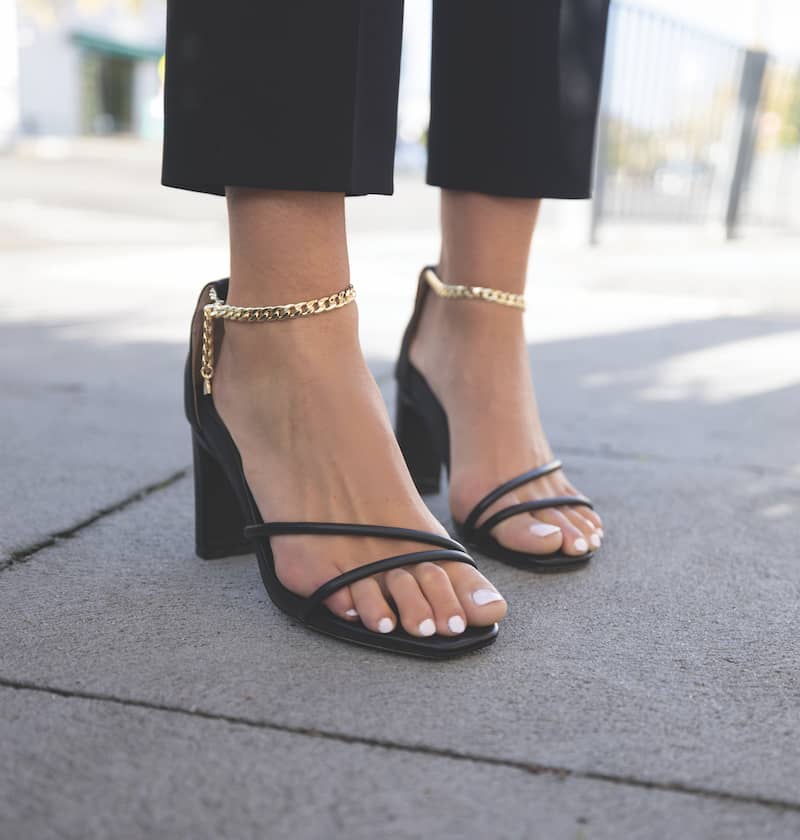
Straps are your insurance policy. A secure ankle strap, a vamp that actually holds the foot, or a design that keeps you from sliding forward can make the difference between a shoe that moves with you and one that punishes every step. Slip-ons can look effortless, but if your foot is swimming inside them, the friction shows up later.
Then there is cushioning, which sounds unglamorous until you are halfway through speeches. Padded footbeds and arch support are the boring details that save the night. They matter more than decorative crystals, more than a glossy finish, and more than whatever a brand is calling its most photographed style this season. If the insole feels flat and thin in the store, it will feel worse after the first drink.
Break them in before the first toast
Wedding shoes should never be brand new on the day. That is how you end up with hot spots, blisters, and the sort of defensive walking that ruins a good dress. Break the shoes in at home with real movement, not a five-minute shuffle in front of a mirror. Walk in them on hard floors, stand in them while getting ready, and test them for the things a wedding actually demands: stairs, turning, pausing, and a few minutes of dancing.
If the shoe needs a dramatic break-in period, that is already a warning. A comfortable pair may soften slightly, but it should not require a month of negotiation. The goal is to learn how the shoe behaves before the event, not discover its flaws when the DJ has finally gotten the room moving.
The pre-buy checklist that keeps you out of trouble
Before you buy, or before you pack a backup pair, run through this:
- Heel is stable, not spindly
- Toe box gives your toes room to move
- Straps or structure actually secure the foot
- Footbed has cushioning and some arch support
- The shoe feels walkable on hard ground
- You can stand in it without shifting weight constantly
- You have already worn it long enough to spot pressure points
- A backup pair is easy to slip into if the night runs long
That backup pair can be a flat, a refined mule, or a lower heel that still matches the outfit. The point is not to surrender style. It is to protect the finish of the night.
What to buy if you want style without the wobble
The smartest wedding-guest shoe buys now sit in that sweet spot between elegance and function. Block heels give you height with a wider base. Kitten heels bring a cleaner, lighter feel. Wedges help on uneven ground. Mules and flats have moved firmly into the chic category, especially for guests who want to stay on their feet without looking underdressed.
That shift is not a trend bubble. It is a recognition that weddings are long, expensive, and highly photographed, and nobody wants to spend the most dressed-up day of the season thinking about blisters. Zola’s 2025 First Look Report, which surveyed close to 6,000 couples getting married in 2025, is a reminder of how much planning and money still gets funneled into these events. Guests are responding in the same way the bridal market is: with more attention to versatility, more attention to comfort, and less patience for shoes that look good only in the first ten minutes.
The new standard is simple. If the shoe cannot make it through the ceremony, the photos, and the dance floor, it is not wedding-guest ready.
This article was produced by Prism’s automated news system from verified source data, official records, and press releases, then run through automated quality and moderation checks before publishing. The system is built and supervised by the people who set the standards it runs under. Read our full AI policy.
Did this article answer your question?