Rising Costs Push Brides Toward Convertible Gowns and All-in-One Venues
As weddings average $36,000 in 2026, venue packages and vendor inflation are quietly rewriting what brides buy, wear, and spend on alterations.

The dress used to lead. The venue followed. This season, that order has reversed.
With the average U.S. wedding now running $36,000 and venue fees averaging $8,573 before catering, florals, or setup labor enter the equation, couples are collapsing the logistical stack wherever they can. The most consequential booking decision being made this spring is venue type: all-in-one properties that bundle ceremony, reception, and overnight lodging into a single contract are outpacing split-venue plans. That consolidation is rewriting fabric choices, silhouette decisions, and alteration budgets from the ground up.
The financial math is straightforward. Coordinating separate ceremony and reception venues means two sets of setup costs, two rounds of vendor logistics, and two distinct flooring situations for a gown to navigate. When vendors are already working with inflated labor and supply costs and staffing shortages have compressed the available pool of reliable day-of coordinators, every added variable becomes a liability. Brides working within tight timelines and tighter budgets are responding by choosing dresses that solve problems rather than create them.
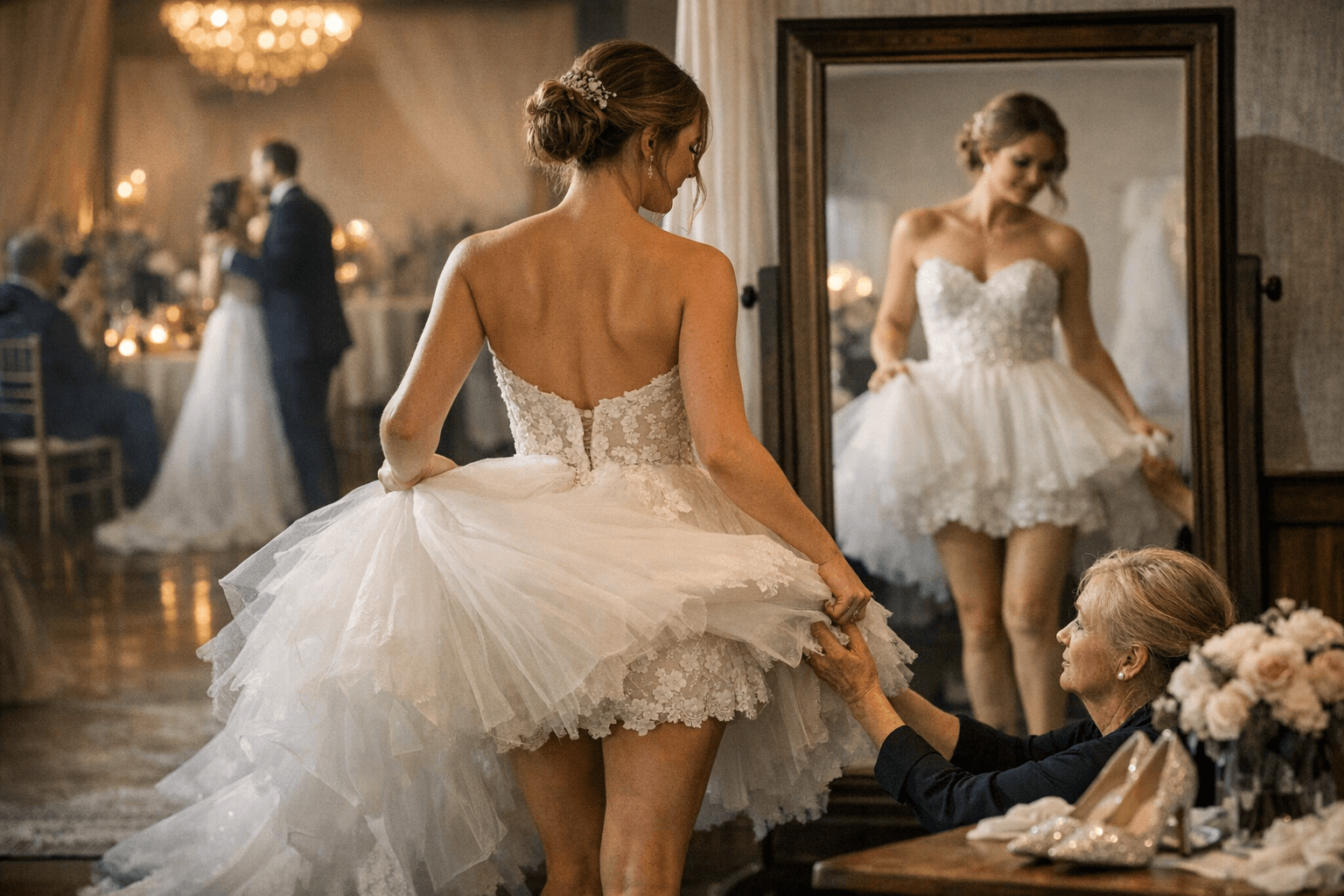
That means convertible gowns are having their moment, not as a trend for its own sake but as a genuinely practical response to how modern weddings are being staged. Detachable skirts, removable trains, and convertible silhouettes let a bride move from a structured ceremony look to something more functional for dancing or outdoor movement without a second gown purchase. Pronovias reported surging demand for layered skirts, detachable sleeves, and convertible trains across its 2026 bridal collections, and the direction tracks with what planners are hearing on the ground.
Lighter fabrics follow the same logic. Chiffon, crepe, and tissue-weight mikado move better through multi-use spaces, survive outdoor-to-indoor transitions, and require less structural alteration work than heavily boned construction or cathedral-length trains. Alterations on a complex gown with intricate lace, deep boning, or beaded appliqué can run $700 to $1,000. A simpler silhouette in lightweight fabric typically lands between $300 and $500, and that gap matters to brides already absorbing venue and catering increases.
Before committing to any venue, the gown conversation starts with four questions that most brides ask too late. Is décor and furniture included in the package price, or billed separately? How is setup and breakdown labor handled? What is the actual flooring across ceremony and reception spaces? And how does the venue manage weather-contingent outdoor-to-indoor transitions? Those answers determine more than the event timeline. Exposed concrete or uneven outdoor terrain rules out a long train entirely. A property that handles its own furniture rental removes a cost center that would otherwise press against the dress budget. A venue with no covered transition between spaces makes a lightweight, fluid gown a structural requirement, not a style preference.
Footwear is absorbing the same practical reasoning. Block heels and low-heeled sandals are outpacing stilettos in bridal footwear this spring, driven in part by venue type: all-in-one properties often include lawn, gravel, or mixed-surface outdoor areas where a 4-inch heel becomes a genuine hazard. Multipurpose shoes that carry through from ceremony to reception are cutting a secondary accessory spend that once routinely ran $200 to $400.
The bride shopping this season is thinking in systems. Gown, shoes, alteration budget, and venue package are all being weighed together, and the silhouettes winning right now are the ones that hold up across all four.
This article was produced by Prism’s automated news system from verified source data, official records, and press releases, then run through automated quality and moderation checks before publishing. The system is built and supervised by the people who set the standards it runs under. Read our full AI policy.
Did this article answer your question?