Samantha Ruth Prabhu’s lime-green sari revives bridal marodi embroidery and kiran lace
Samantha Ruth Prabhu’s lime-green organza sari makes a strong case for lighter bridal dressing, with marodi embroidery and kiran lace doing the heavy lifting.
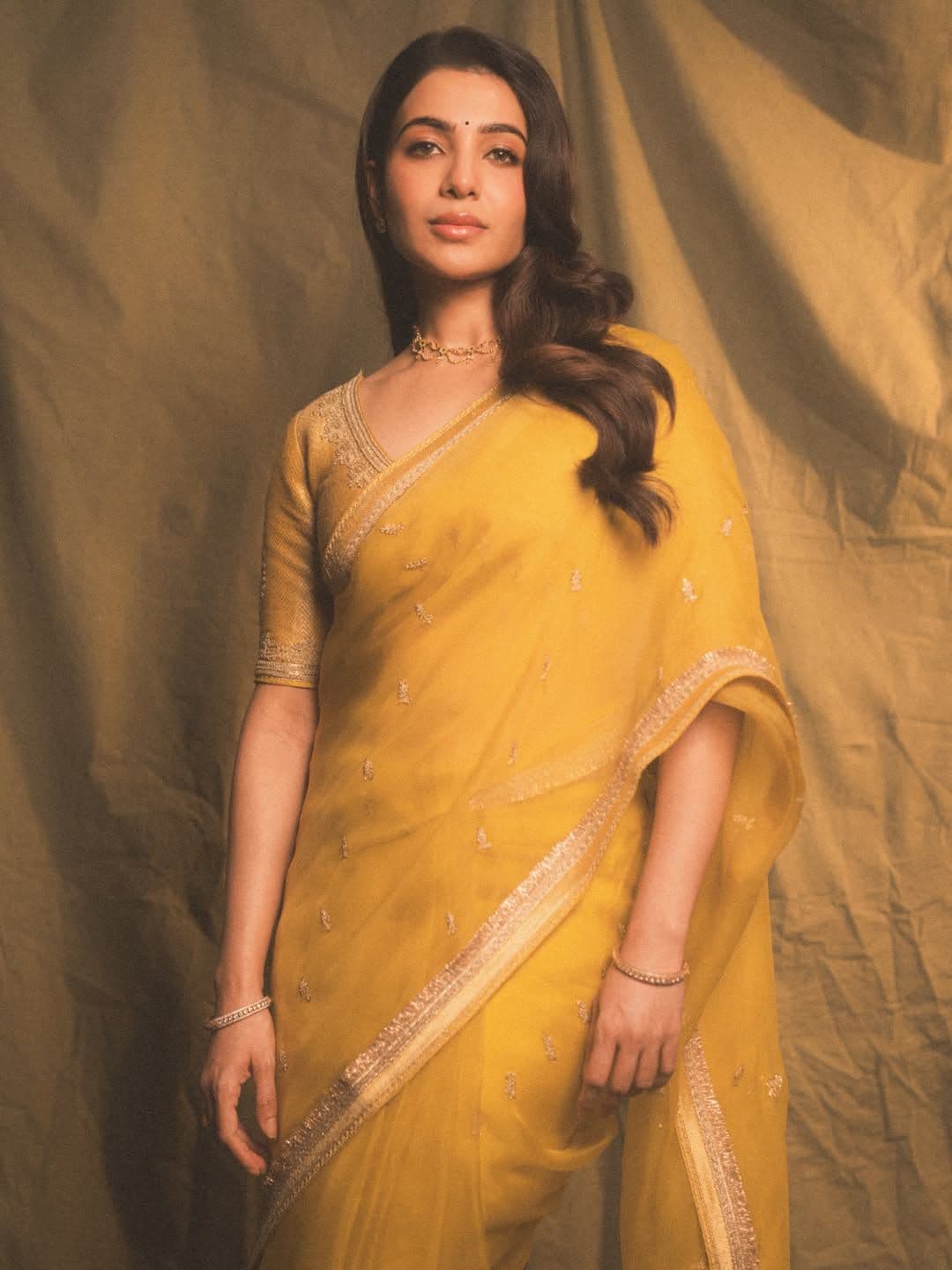
Samantha Ruth Prabhu’s latest sari was a sheer lime-green organza look finished with marodi embroidery and kiran lace. It lands where bridal style is headed: lighter, finer, and far more interested in craft than weight. It feels made for the bride who wants a softer register for an intimate ceremony, a trousseau event, or a reception that leans elegant rather than maximal.
Why this sari is getting attention now
The look appeared in Vogue India on 16 June 2026, after a run of Samantha sari features in the same month. That includes a hand-painted Kalamkari sari that took nearly 250 hours to make.
Lajjo C designed the sari Samantha Ruth Prabhu wore to the pre-release event for Maa Inti Bangaaram. The same lime-green organza saree appears at Rs 79,000 in one listing and Rs 1.16 lakh in another headline. Either price places it in the luxury bracket, with a lightness that separates it from heavier bridal brocades and dense wedding-day finery.
What marodi embroidery brings to bridal dressing
Marodi embroidery looks delicate from a distance and quietly complex up close. In Indian textile craft, it is a chain-stitch method long associated with bridal and festive wear in Rajasthan, often alongside gota patti. The pairing gives the sari a sense of heritage without turning it rigid or overworked.
For brides, marodi sits in a sweet spot between ornament and restraint. On organza, especially, the embroidery can sketch shape without collapsing the airy drape, which is why this kind of work feels so right for smaller wedding events where the outfit needs presence but not bulk. If you want the same effect, look for saris or dupattas where the embroidery traces the border, pallu, or blouse rather than covering every inch.
Why kiran lace feels newly relevant
Kiran lace is the other reason this look feels current. It is a frilly metallic edging that has re-entered bridal and festive wardrobes in a big way, turning up on wedding dupattas, odhanis, saris, salwar-kameez, and even potlis. It brings movement first, shine second, which is why it reads fresher than a more conventional crystal trim.
On a sheer sari, kiran lace does something especially clever: it frames the fabric without weighing it down. The edge catches the light, but the overall effect stays fluid, making one outfit work across pre-wedding dinners, mehendi-adjacent gatherings, and post-ceremony receptions.
How to translate the look into your own bridal wardrobe
The smartest way to shop this trend is to think in terms of texture and movement, not just color. A lime-green organza sari like Samantha’s gives you translucence, sheen, and a floaty drape that feels dressy without becoming heavy. If lime green feels too bold for your palette, the same formula works in soft mint, pistachio, or even champagne-toned organza, as long as the embroidery remains finely placed.
- Choose organza or another crisp, airy fabric that keeps the silhouette light.
- Look for marodi on the border, pallu, or blouse so the craftsmanship stays visible.
- Use kiran lace when you want movement at the hem or dupatta edge.
- Keep the blouse clean and tailored so the sari does the decorative work.
- Save heavier layering for the jewelry, not the fabric, if the event is indoors or intimate.
A few practical cues make the look easier to wear:
This approach is especially effective for brides who want something polished for a registry lunch, a smaller family ceremony, or a reception where you still want the room to register the outfit at once.
This article was produced by Prism’s automated news system from verified source data, official records, and press releases, then run through automated quality and moderation checks before publishing. The system is built and supervised by the people who set the standards it runs under. Read our full AI policy.
Did this article answer your question?