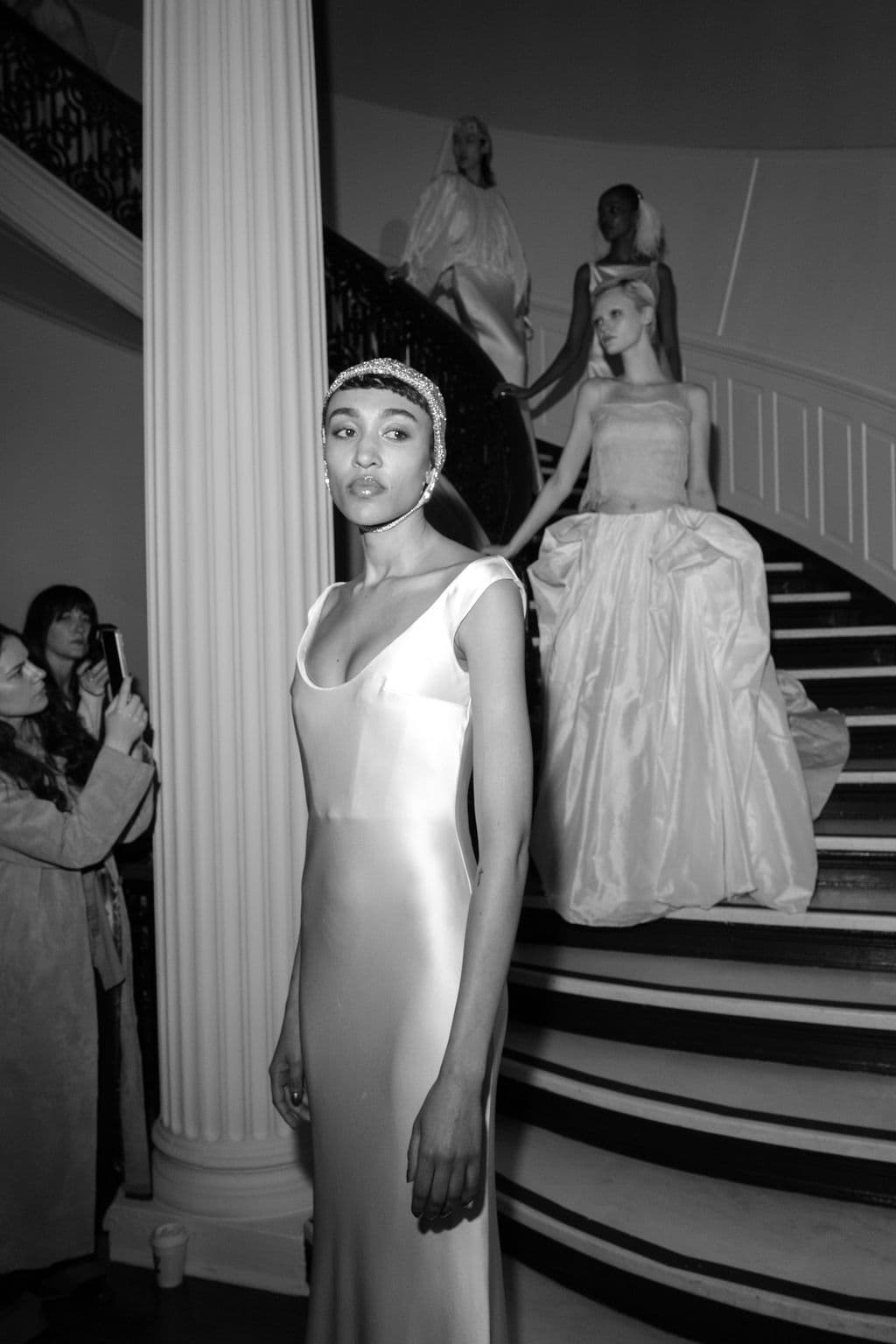
Tanner Fletcher reimagines bridal tradition with queer spring 2026 silhouettes
Tanner Fletcher turns bridal into a queer tailoring story, where tuxedos, slim satin columns, and softer structure point to a new kind of ceremony dressing.

The new bridal brief
Tanner Fletcher is making the strongest case in bridal for a bride who wants tailoring first and tradition second. The spring 2026 collection is split roughly in half between tuxedos and dresses, and that balance is the point: this is ceremony dressing for anyone who wants to look polished, gender-fluid, and unmistakably fashion-aware.
The designers, Tanner Richie and Fletcher Kasell, framed the collection as a way of “reclaiming tradition,” and that idea runs through every look. Instead of pushing bridal into a narrow idea of softness, they keep it open, modern, and pointedly queer, with silhouettes that feel as interested in identity as in romance.
Tailoring is the headline
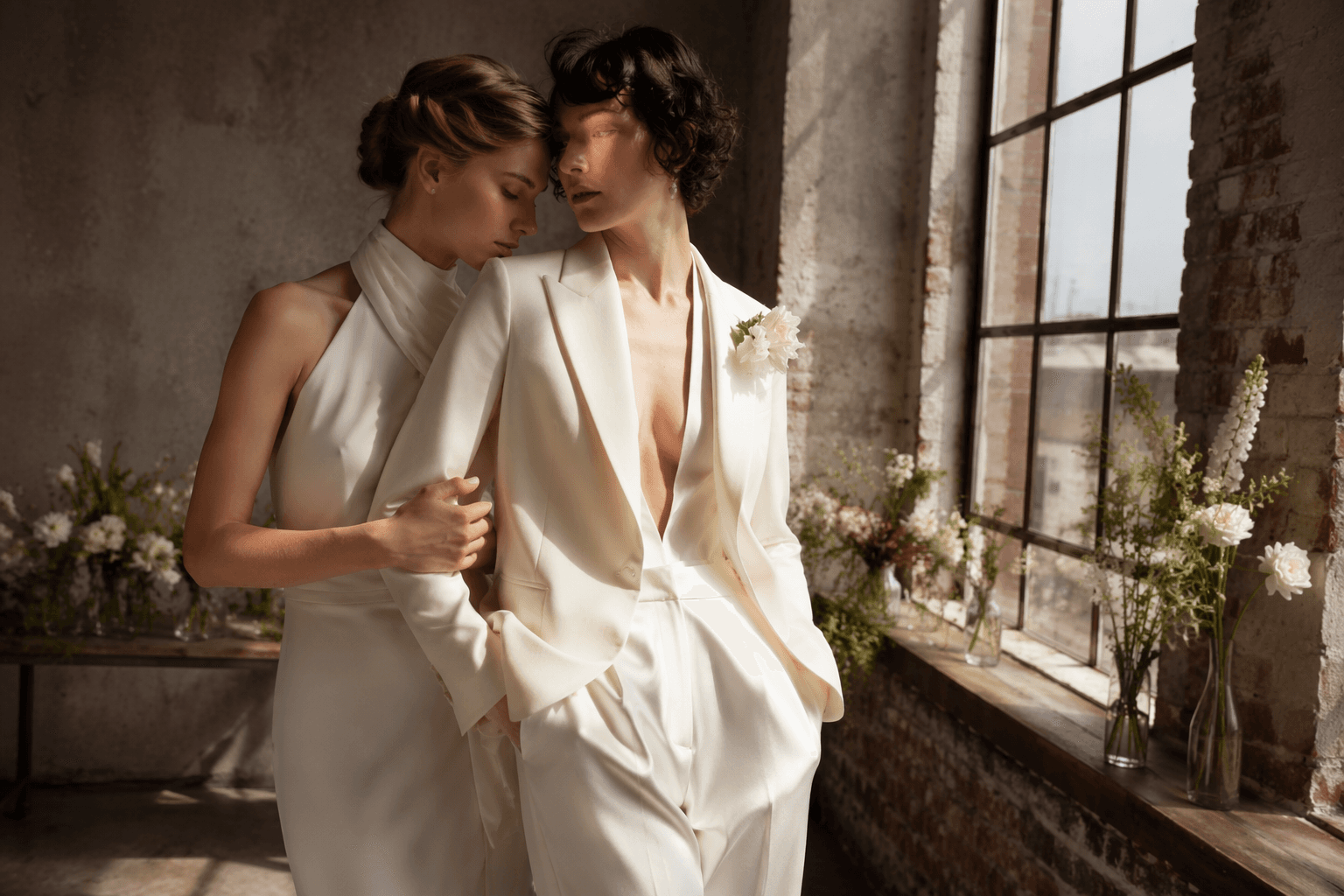
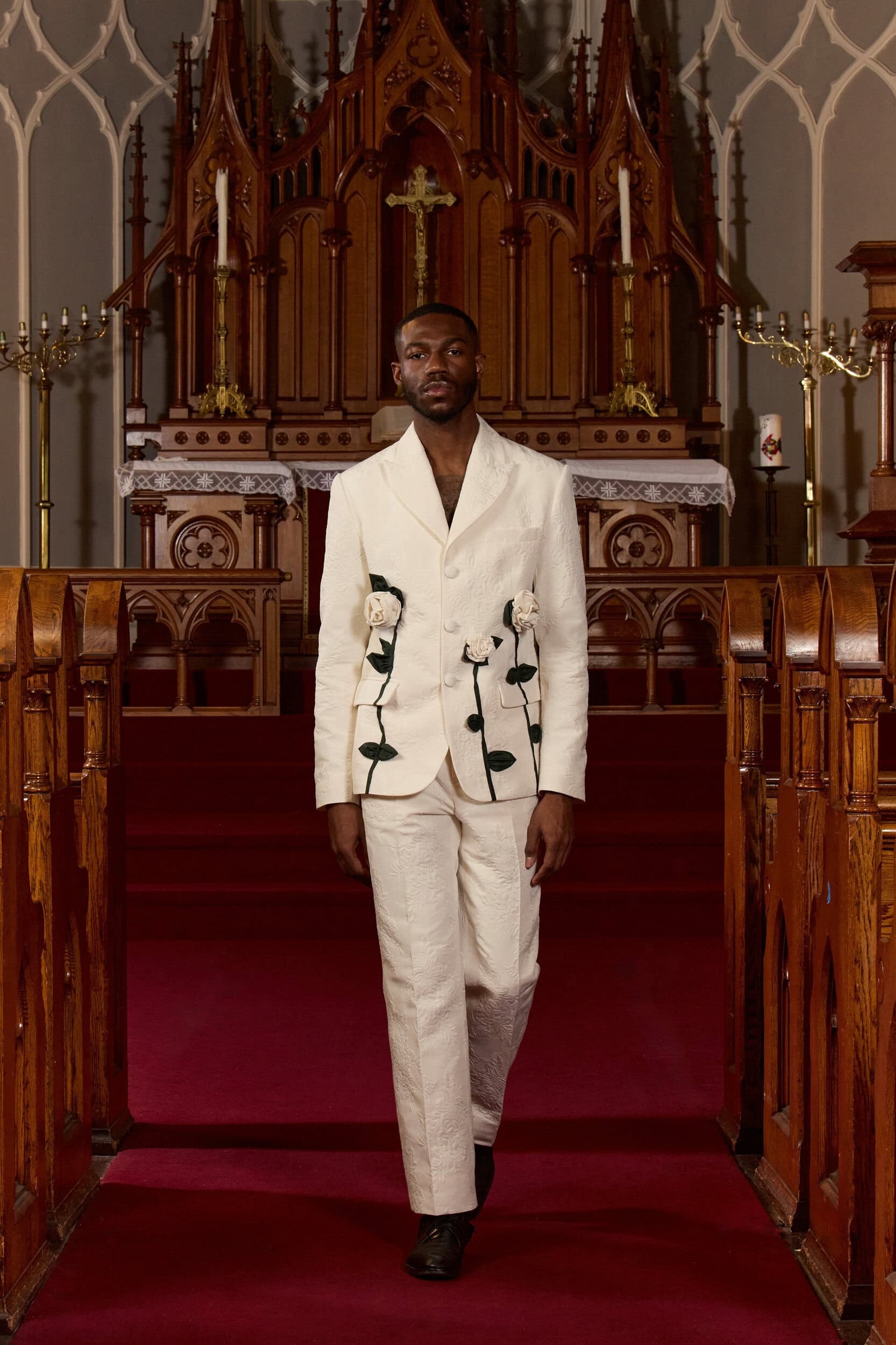
The clearest signal in the collection is the tailoring. Tuxedos appear in blue toile de jouy or brocade, then get overlaid in lace, which gives the clothes a ceremonial richness without tipping into costume. That combination matters because it widens what bridal can mean: not just a suit alternative, but a real statement for a courthouse ceremony, a reception entrance, or a second look that still feels elevated.
This is the kind of bridal tailoring that reads best when the shape stays clean. The fabric does the talking, not the amount of decoration. For a reader looking for something wearable beyond the runway, the tuxedo is the most realistic entry point from the collection, especially if the goal is to look formal without defaulting to a dress.
- Best for a courthouse wedding: a tuxedo with print or texture, especially in a pattern as vivid as toile de jouy.
- Best for a reception change: a brocade suit with lace layered on top, because it gives impact without extra volume.
- Best for a second look: anything from this tailoring group, since it already carries enough presence to stand alone.
The dresses are slim, not fussy
The other half of the collection leans into slim silk and satin dresses, detailed with quilting and rosettes. These are not princess gowns, and that is exactly why they feel current. The lines stay long and lean, which gives the dresses a sleekness that works for brides who want romance without heaviness.
Richie and Kasell also said they were deliberately avoiding restrictive boning and cage skirts, and that choice gives the collection a very specific energy. The clothes skim instead of confine, which makes them feel more believable for real movement, dancing, and the kind of close-up photos that define modern bridal style. If the tailoring is the boldest statement, these dresses are the easiest to translate into actual shopping.
The most editorial looks in this group are the ones with the strongest rosette or quilting treatment, where the surface detail becomes the drama. The most wearable are the cleaner satin silhouettes, especially for brides who want something that feels sleek in profile and soft in motion.
What feels editorial, and what can leave the runway
Not every idea here needs to be worn exactly as shown. The most theatrical elements, like the full queer runway framing and the collection’s overt political stance, belong to the presentation and to the message behind it. The same goes for the grand wedding staging that Tanner Fletcher has already made part of its bridal identity.
The pieces themselves divide neatly into two camps:
Editorial-only energy
The tuxedos in lace, especially in blue toile de jouy or brocade, have real fashion power and a strong runway presence. They are ideal for a bride who wants to make a point, but they read most dramatically in a styled setting with sharp accessories and little competition from other embellishment.
Most realistic for actual wear
The slim silk and satin dresses are the more natural fit for reception dressing, intimate ceremonies, or second-look shopping. Their lack of restrictive structure makes them easier to imagine on a real body, in real movement, after the aisle moment has passed.
In other words, Tanner Fletcher is not selling fantasy for fantasy’s sake. The collection is showing how bridal can be tailored, fluid, and still deeply ceremonial.
Why this label keeps reshaping bridal
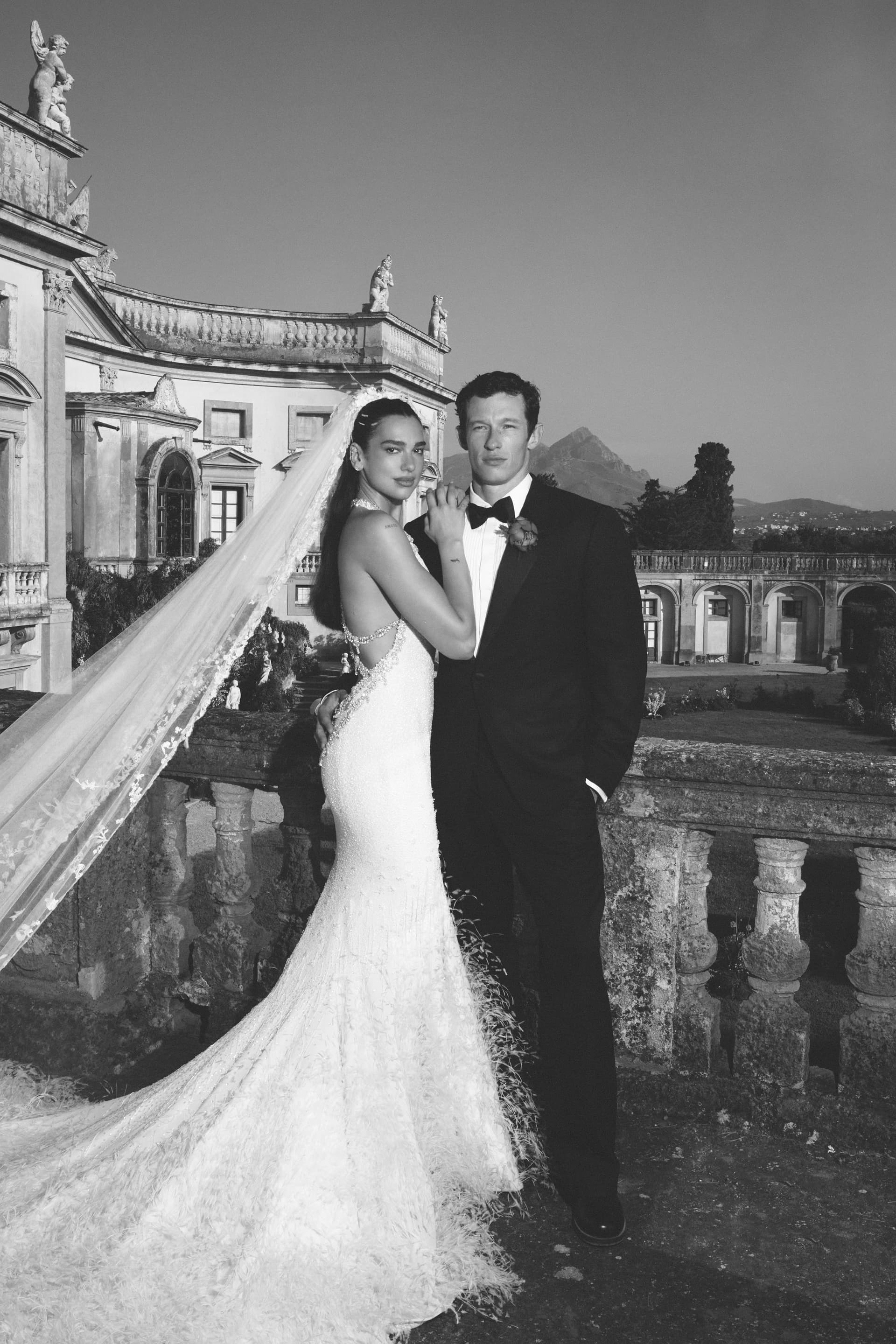
Part of what makes Tanner Fletcher so relevant is the brand’s origin story. Richie and Kasell founded the Brooklyn-based, gender-fluid luxury label during the pandemic in 2020, and by 2023 they were finalists for the CFDA/Vogue Fashion Fund. They built their name through genderless ready-to-wear, homeware, celebrity dressing, and a wedding collection that has steadily broadened the brand’s reach.
That growth has been real enough to move the business outward, too. In 2024, the founders pointed to celebrity visibility, including Bad Bunny wearing a bow blazer for Time, as a boost. Forbes later said the brand was sold at Nordstrom, Shopbop, and Selfridges and projected it would surpass $1 million in revenue by 2025. That kind of traction explains why bridal now feels less like an offshoot and more like a defining part of the label’s identity.
The larger bridal calendar also puts that momentum in context. Tanner Fletcher is now part of a competitive field that includes Reem Acra, Danielle Frankel, Monique Lhuillier, Andrew Kwon, and Joseph Abboud, which only sharpens the impression that this label is carving out a distinct lane inside an already crowded market.
From chapel to runway
The spring 2026 collection builds directly on Tanner Fletcher’s first official bridal debut, Going to the Chapel, shown on April 10, 2025, at St. Paul’s German Evangelical Lutheran Church in Chelsea, Manhattan. That show was staged like a complete wedding experience, with white roses, baby’s breath, a live harpist, a flower girl, and couples walking down the aisle. A real couple who met on Tinder exchanged vows mid-runway, turning the show into both spectacle and ceremony, while a donation to the ACLU underscored the label’s support for LGBTQ+ rights.
That debut was inspired by 1930s silhouettes and included ivory silk charmeuse gowns, floral jacquard suiting, toile sequin tailoring, lace-covered bustiers, and taffeta rosettes. It established the brand’s bridal vocabulary as one built on softness, polish, and a refusal to play by the usual rules of femininity.
The spring 2026 collection takes that language further. Where the first show introduced the idea, this one sharpens it into a real wardrobe thesis: bridal does not have to look conventional to feel romantic, and the strongest clothes here are the ones that let identity, tailoring, and ceremony exist in the same frame.
This article was produced by Prism’s automated news system from verified source data, official records, and press releases, then run through automated quality and moderation checks before publishing. The system is built and supervised by the people who set the standards it runs under. Read our full AI policy.
Did this article answer your question?