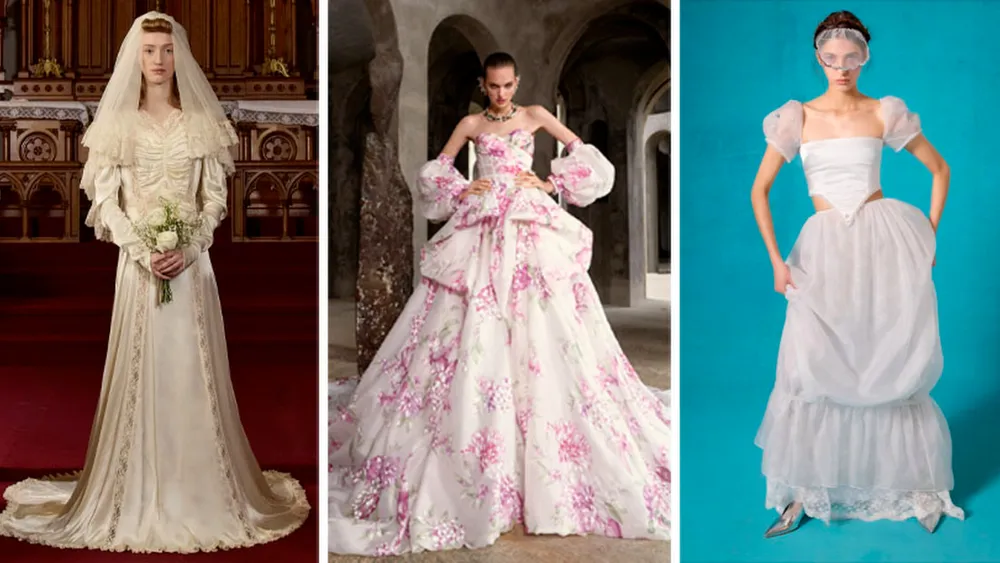
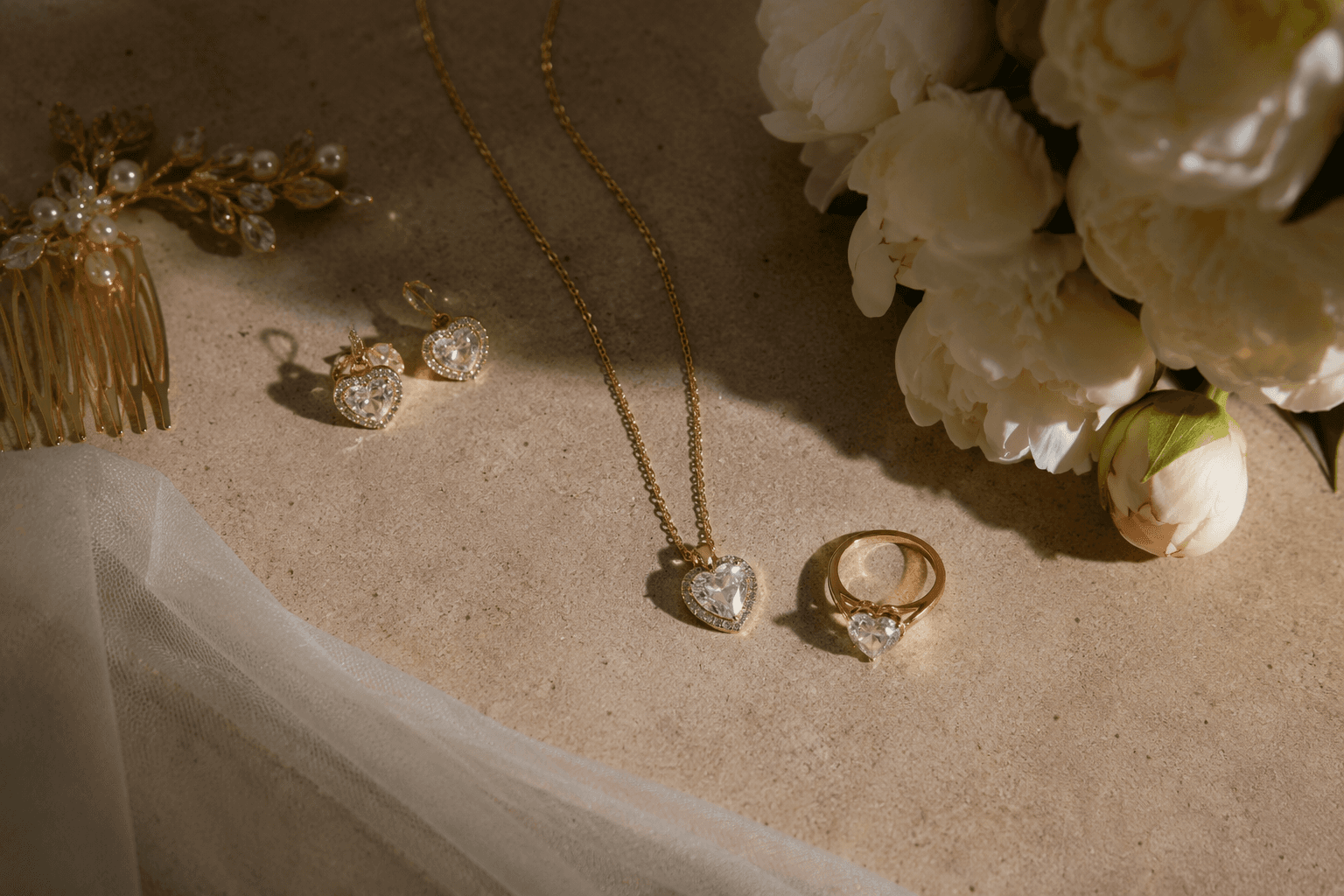
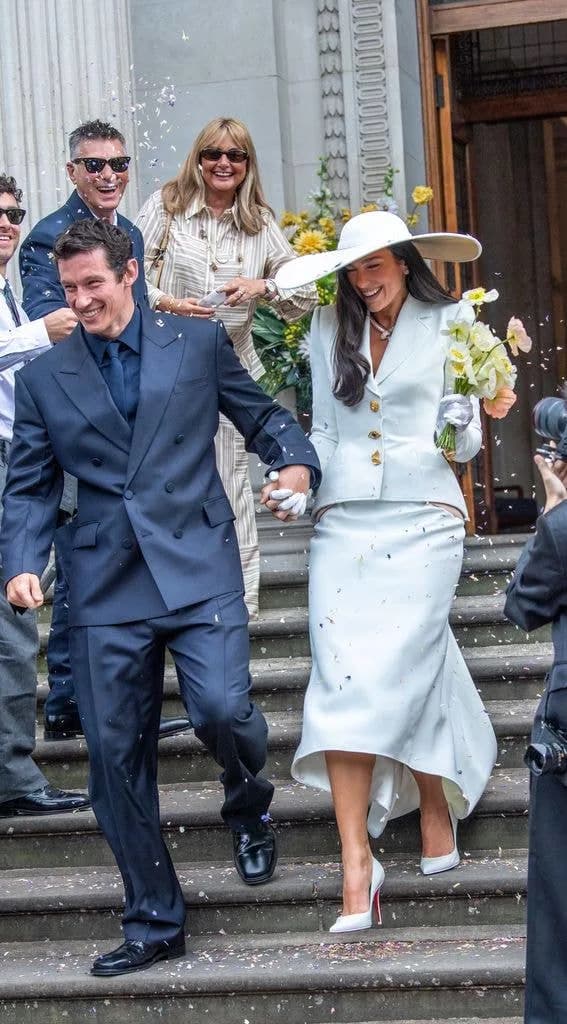
The meaning behind something old, something new, something borrowed, something blue
The old-new-borrowed-blue rhyme began as superstition, then became a styling blueprint. Modern brides still use it through heirlooms, borrowed veils and hidden blue details.
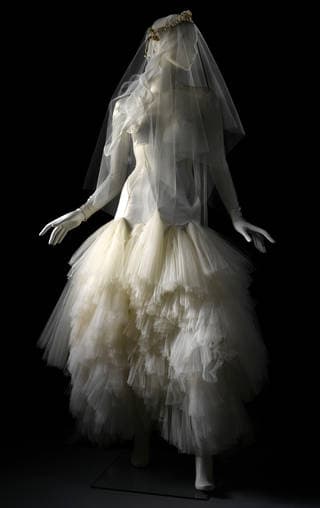
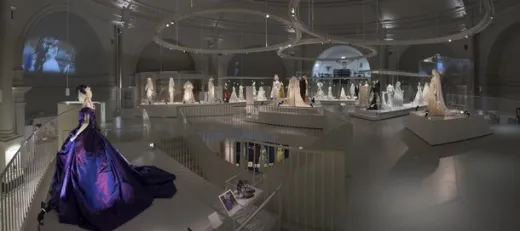
The Victoria and Albert Museum traces frequent references to “something old, something new, something borrowed, something blue” to the late Victorian period, though the tradition’s origins are uncertain. The rhyme has become a shorthand for how a wedding look can carry memory, luck and intent at once, especially when the dress itself feels modern but the styling nods to family and ritual.
Why the rhyme still matters
Wedding dress history is steeped in symbolism, with bridal and groom wear often serving as acts of tradition or superstition that communicate hopes for married life. Each word gives a bride permission to build meaning into a look without surrendering personal style. In practice, the rhyme functions like a styling brief as much as a charm, guiding choices about jewelry, shoes, veils and embroidery.
The four-part version is the one most brides know, but the rhyme also appears in a longer form: “and a silver sixpence in her shoe.” The older, longer form signaled good fortune, stability and prosperity, especially when marriage was still wrapped tightly around family approval and social standing.
Old: family, continuity and the romance of inheritance
“Something old” has long been read as the bride’s connection to family and the past. In bridal fashion terms, that does not have to mean a gown that looks antique or a full vintage silhouette. It can be one deliberate heirloom detail that changes the emotional temperature of the whole outfit: a grandmother’s bracelet, a mother’s handkerchief stitched into the bouquet wrap, or a pair of pearl earrings worn down the aisle and kept for the reception.
The most elegant modern versions of “old” tend to feel quiet rather than costume-like. Antique lace sewn into a veil hem, a cameo pinned inside a bodice, or a family ring layered beside a new engagement ring all do the work without overwhelming the dress. If the gown is sleek satin or a sharp corseted sheath, one old piece can soften it with history; if the dress is already romantic, the heirloom keeps it from feeling generic.
New: the start of married life, translated into fashion
“Something new” signals optimism and the beginning of married life, which is why it naturally maps onto the bridal wardrobe itself. Most brides cover this automatically with the gown, but the most satisfying interpretations go beyond the obvious. A newly made veil, a fresh pair of satin heels, a crisp bolero or a custom-embroidered clutch can all serve as the “new” without feeling forced.
This is where modern shopping decisions get interesting. A bride might choose a contemporary silhouette, like a column gown with a sculpted waist or an A-line with a clean square neckline, and let the fresh construction stand in for the tradition. Even a minimalist look can feel deeply ceremonial when the fabric is new to the eye: liquid crepe, crisp organza, or polished mikado all give “new” a tactile presence that reads immediately in photographs.
Borrowed: friendship, support and the modern heirloom network
“Borrowed” has usually been linked with borrowed happiness, friendship or support from a married woman, which is why it still carries an intimate charge. The easiest way to wear it now is through accessories that move through a wedding day with ease: a friend’s veil, a borrowed pair of earrings, a wrap borrowed from a sister, or a clutch carried from one ceremony to another in the family.
This is also the most flexible part of the rhyme for fashion-minded brides who want a clean, contemporary silhouette. A borrowed cathedral-length veil can turn a minimalist dress into something more cinematic. A borrowed bracelet can sit beside a new wedding band and an old family ring, creating a layered story on one wrist. Even a borrowed hair comb or cape can be enough to satisfy the ritual without changing the shape of the dress.
Blue: fidelity, love and the detail that does not have to be a garter
Blue is the rhyme’s most visually adaptable element, and the symbolism is old enough to feel almost instinctive now. Blue has long been linked to love, purity and fidelity, and the custom is also traced to a blue garter. The hidden, intimate accessory became a broad styling category that now includes shoes, ribbons, linings and jewelry.
The modern bride rarely needs a garter to make blue work. A pale blue ribbon stitched inside a corset, blue embroidery on the underskirt, a sapphire pendant, a powder-blue shoe lining or a tiny monogram in silk thread can all carry the tradition without announcing it. Some brides prefer the detail to stay visible, especially with ankle-strap heels or a bouquet ribbon peeking from beneath silk; others keep it secret, choosing a blue satin label inside the gown as a private charm.
The sixpence: a small coin with a long afterlife
The silver sixpence is the tradition’s most literal lucky charm, and The Royal Mint dates the British tradition to 1551. Brides tucked the coin in their shoe for good luck, a detail that has survived precisely because it is so tangible. In a fashion sense, it is the least visible element of the rhyme and the most tactile, a reminder that bridal superstition once lived in the architecture of the shoe as much as in the dress.
The custom fits easily into modern bridal styling. If a sixpence could live in a heel or pump, then modern equivalents can live almost anywhere: inside a seam, under a bow, clipped into a bouquet wrap or sewn into the lining of a veil.
How brides actually use the rhyme now
The tradition gives structure to styling decisions that can otherwise feel purely aesthetic. A bride might pair an A-line gown with her mother’s earrings for “old,” a newly made cathedral veil for “new,” a borrowed wrap for the ceremony for “borrowed,” and pale blue embroidery at the wrist for “blue.” Another bride might choose a modern column dress, borrow a veil, add an heirloom brooch at the waist and wear blue heels that disappear under the hem.
The rhyme still shapes shopping behavior. It lets brides ask sharper questions while they try on dresses: Which part of this look tells my family story? Which part is freshly made for this moment? What can I borrow without losing my own point of view?
This article was produced by Prism’s automated news system from verified source data, official records, and press releases, then run through automated quality and moderation checks before publishing. The system is built and supervised by the people who set the standards it runs under. Read our full AI policy.
Did this article answer your question?