The original bridal capsule wardrobe: trousseaus, bonnets and cassoni
Bridal style began as a wardrobe, not a single dress: trousseaus, cassoni and Edo chests turned weddings into a plan for dressing beyond the aisle.
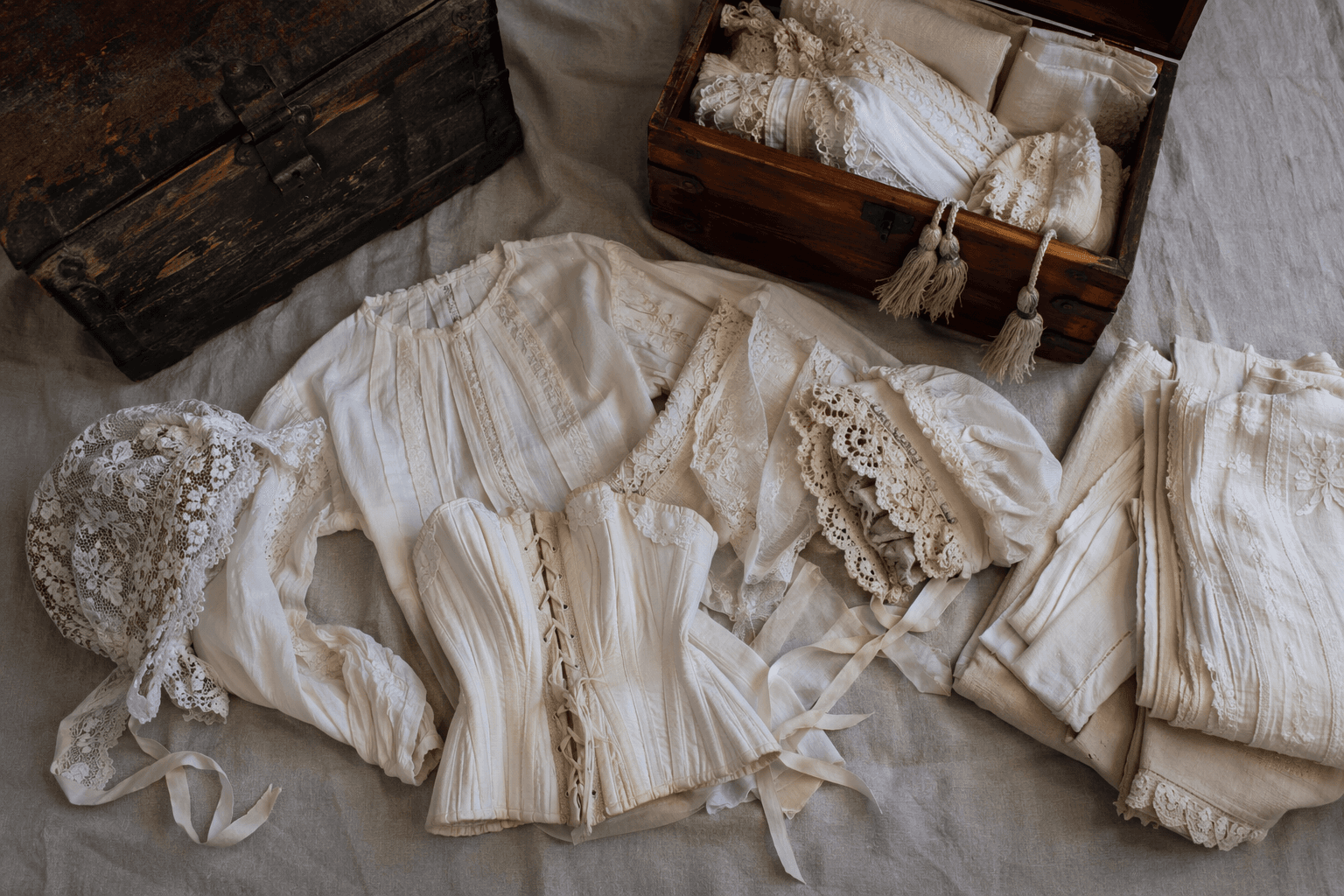
Elizabeth Farren’s 1797 trousseau included thirty muslin dresses and a wedding night cap that cost eighty guineas, about £84 at the time. Before bridal white became shorthand for a single day, marriage dressing was built like a wardrobe with a future. Brides assembled trousseaus, from muslin dresses to bonnets and night caps, with the next morning, the honeymoon and the social season still in view.
The trousseau was the original bridal capsule wardrobe
The Victoria and Albert Museum places the combined annual wages of a housekeeper, cook, housemaid and lady’s maid at about £58 in 1796, less than Elizabeth Farren’s wedding night cap cost on its own. A bridal wardrobe was expensive and expected to keep working after the wedding breakfast.
That practicality ran through the details. In late 18th- and early 19th-century Britain, brides still chose pieces with continued wear in mind, and even bonnets could make more sense than veils because they were easier to alter and reuse.
A wedding wardrobe does not have to mean a single statement dress that is over the moment it is worn. The old model suggests something better: build around pieces that can move from welcome party to ceremony to honeymoon to life after the aisle.
In Renaissance Italy, the storage chest was part of the look
If the British trousseau was a wardrobe, Renaissance Italy turned it into architecture. Cassoni, the ornate wedding chests that held a bride’s trousseau, were displayed in the main bedchamber, the camera, where an upper-class woman’s life centered. These were not hidden away in some back room. They sat in the room where status, marriage and domestic identity were on view.
The chest itself became part of the bridal story. Cassoni were often commissioned by the groom and carried prominently in the nuptial procession, loaded with the bride’s dowry. In the fifteenth century, whole workshops were devoted to making and decorating them. At princely weddings, the dowry could fill many cassoni of different sizes, turning the transfer of clothing, linens and goods into a public performance of wealth.
The decoration mattered too. Cassoni were often painted with mythological scenes of love and fertility, so the chest did double duty: it stored the trousseau and framed the marriage as a cultural event.
The best wedding wardrobes are not just about the dress on the hanger. They are about the bag, the box, the garment bag, the shoe case, the place where everything travels and returns from. In the Renaissance, the container was inseparable from the contents. Modern bridal styling is not so different when a rehearsal dinner dress needs to survive a car ride, a red-eye and a second outing months later.
Edo-period Japan made the bridal trousseau a marker of power
In Edo-period Japan, the trousseau was political. Daimyo marriages required the consent of the Tokugawa shogunate, and when a daimyo married a daughter of the shogun, the ceremony became even more formal, sometimes requiring a new compartment attached to his residence.
The preparations began as soon as an engagement was announced, and the bride’s belongings traveled to the groom’s estate in an elegant procession. These trousseaus signaled social rank and political alliances.
The objects inside were specific and revealing. A four-shelved kurodana, or shelf for cosmetic boxes, held toiletries and items used for tooth blackening, a marker of a married woman. Lacquer clothing stands had already become conventional in wealthy women’s bridal trousseaus by the thirteenth, fourteenth and fifteenth centuries. Shell game sets also appeared in daimyo brides’ trousseaus, underscoring that this was not just about dressing the body but about outfitting a cultivated domestic life.
Even the procession was documented. Bridal processions in Edo Japan were depicted on screens and handscrolls, and sometimes the names of participants were recorded.
What the trousseau means for bridal dressing now
Modern weddings still have the same problem: too many occasions, not enough coherence. A single dress may carry the ceremony, but a wedding week now asks for much more. There is the welcome party, the civil ceremony, the formal dinner, the honeymoon suitcase, the airport look, the first dinner after the wedding and the clothes that still feel right when the flowers are gone.
The trousseau model answers that by organizing fashion around use. Start with one ceremonial piece, then build outward. Add something practical, something reusable and something that feels like a keepsake rather than a costume. A sleek suit can replace a second dress for a city ceremony. A soft boned bodice or silk slip can move from dinner to travel with a change of shoe. A headpiece, whether a bonnet-inspired shape, a veil or something between the two, can do what the old bonnets did: create impact without becoming dead weight after one wear.
A modern trousseau also thinks about storage the way the old world did. The cassoni and kurodana were not afterthoughts; they were part of the system. Today that means choosing pieces that pack well, resist wrinkling, and can be rehung, boxed and repeated. It also means leaving room for life after the vows. The most useful bridal purchase is often the one that still looks right with a black blazer, a flat sandal or a clean white shirt six months later.
This article was produced by Prism’s automated news system from verified source data, official records, and press releases, then run through automated quality and moderation checks before publishing. The system is built and supervised by the people who set the standards it runs under. Read our full AI policy.
Did this article answer your question?