Vintage bridal boutiques make secondhand gowns feel new again
Secondhand bridal is now a sourcing skill: the best boutiques deliver archival design, real savings, and dresses with more story than most new gowns.

Stillwhite, which calls itself the world’s largest global marketplace for preowned, used and secondhand wedding dresses, has more than 102,693 gowns for sale. The Wed has mapped 16 chic vintage boutiques and resale platforms around the globe that pull archival designer gowns into a shopping experience that feels edited, modern, and dangerous in the best way. Once online resale changed how used fashion was bought and sold, the bridal category stopped being a backroom afterthought and started looking like a serious style strategy.
Why vintage bridal suddenly feels so sharp
Secondhand fashion has existed for decades, but the online resale era gave it speed, reach, and a lot more polish. Brands are now treating resale as an opportunity, which is exactly why bridal resale no longer reads as a fallback for budget-only shoppers. It reads like access: access to better construction, better design history, and dresses that were built when the idea of a gown meant weight, structure, and handwork.
The RealReal offers authenticated wedding dresses at up to 90% off. In the United States, Mordor Intelligence estimates the wedding services market at USD 63.95 billion in 2026, with nearly 2 million couples married in 2025 and an average spend of USD 34,000 on ceremonies and receptions.
What vintage and archival shopping actually buys you
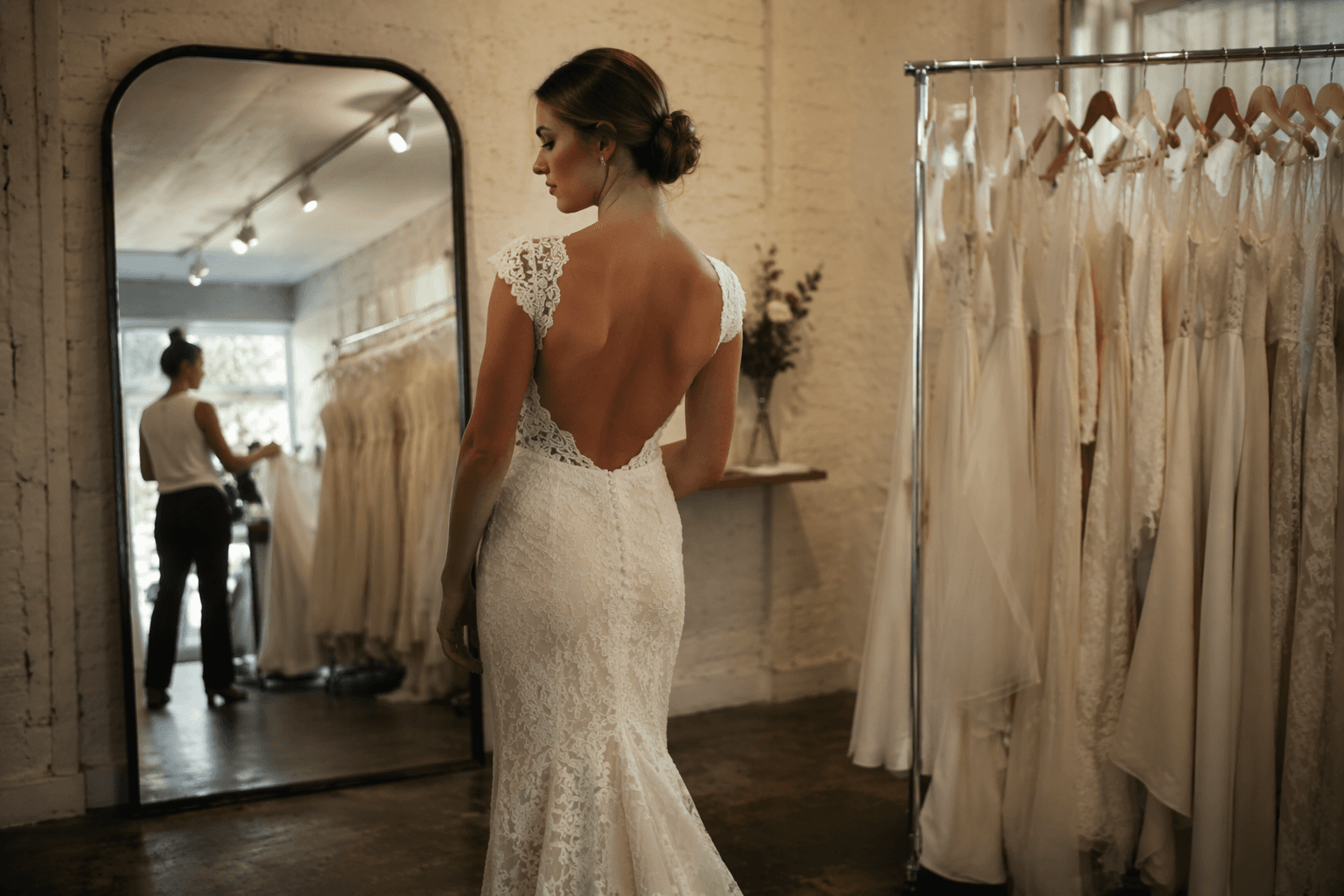
The appeal is not just price. It is originality, craftsmanship, and the kind of fashion history you can feel in the garment the second it hits the hanger. A good vintage silk has a different drape than a fresh, mass-produced satin. Old lace often has a tighter, more deliberate pattern. The bodice sits with intention. The skirt has weight. The whole thing feels selected, not churned out.
Happy Isles opened in 2016 and calls itself the first luxury vintage bridal salon of its kind. Founder Lily Kaizer saw a gap for fashion-forward brides who wanted a wedding-day look with a clearly defined point of view, not just a white dress with a brand name attached.
The best boutiques understand that specificity. They do more than hang gowns on racks. They curate by silhouette, era, label, and condition, then make the whole thing feel effortless enough that the bride can focus on how the dress moves, how the neckline frames the collarbone, and whether the skirt falls cleanly instead of fighting the body.
The resale shops with a bigger mission
Some bridal resale spaces are built around impact as much as inventory. Brides Do Good donates one-third of profits to charity projects working to end child marriage, citing the reality that 12 million girls are married before age 18 each year.
Brides for a Cause has a different scale of footprint. Since 2012, it has collected more than 50,000 wedding dresses and given away more than $4 million to various charities.
How to shop secondhand like you know what you are doing
The difference between a great find and an expensive headache is usually the questions you ask before you fall hard for the lace. A vintage gown can be a steal, but only if you understand what it needs to get down the aisle.
Ask boutiques these things:
- How was the gown stored, and has it been professionally cleaned or preserved?
- What alterations have already been made, and can any of them be reversed?
- Are the seams original, or has the dress been reworked at the bodice, waist, or hem?
- Are beads, buttons, zippers, or lace appliqués missing, replaced, or fragile?
- What size was the original dress, and what measurements matter most now?
- If you are buying online, can you see the gown in natural light from multiple angles?
Condition matters more in vintage bridal than in almost any other category because so much of the value lives in the garment’s structure. The bodice should feel firm, not collapsed. Zippers should glide. Tulle should look airy, not crunchy. Beading should sit evenly instead of shedding when touched. If a hem has been shortened, that is not automatically a problem, but you need to know it before you start imagining shoes and alterations.
Budget for tailoring from the start. Secondhand does not mean untouched, and it rarely means perfect right off the hanger. It means you may be paying for a cleaner, a seamstress, or a specialist who understands delicate fabric better than a general alterations shop. That is still often cheaper than many new-market gowns, especially when The RealReal offers authenticated dresses at up to 90% off.
Who benefits most from buying secondhand
Vintage and archival bridal makes the most sense for brides who care about having a look no one else can copy, brides who want better construction than fast-turn bridal can usually give them, and brides who see shopping as part style hunt, part sourcing skill. It also works beautifully for anyone who wants to keep a tighter grip on a wedding budget in a market where the average U.S. ceremony and reception spend already hits USD 34,000.
It is especially strong for the bride who likes a silhouette with attitude. Think a crisp column, a sculpted ball gown, a bias-cut slip, a lace sheath with actual texture, not just surface decoration.
This article was produced by Prism’s automated news system from verified source data, official records, and press releases, then run through automated quality and moderation checks before publishing. The system is built and supervised by the people who set the standards it runs under. Read our full AI policy.
Did this article answer your question?