Vintage Bridal Gains Momentum as Brides Embrace Resale and Sustainability
Vintage gowns are moving from fringe to front-runner as brides chase individuality, lower waste, and a smarter budget. The math is getting as persuasive as the mood.
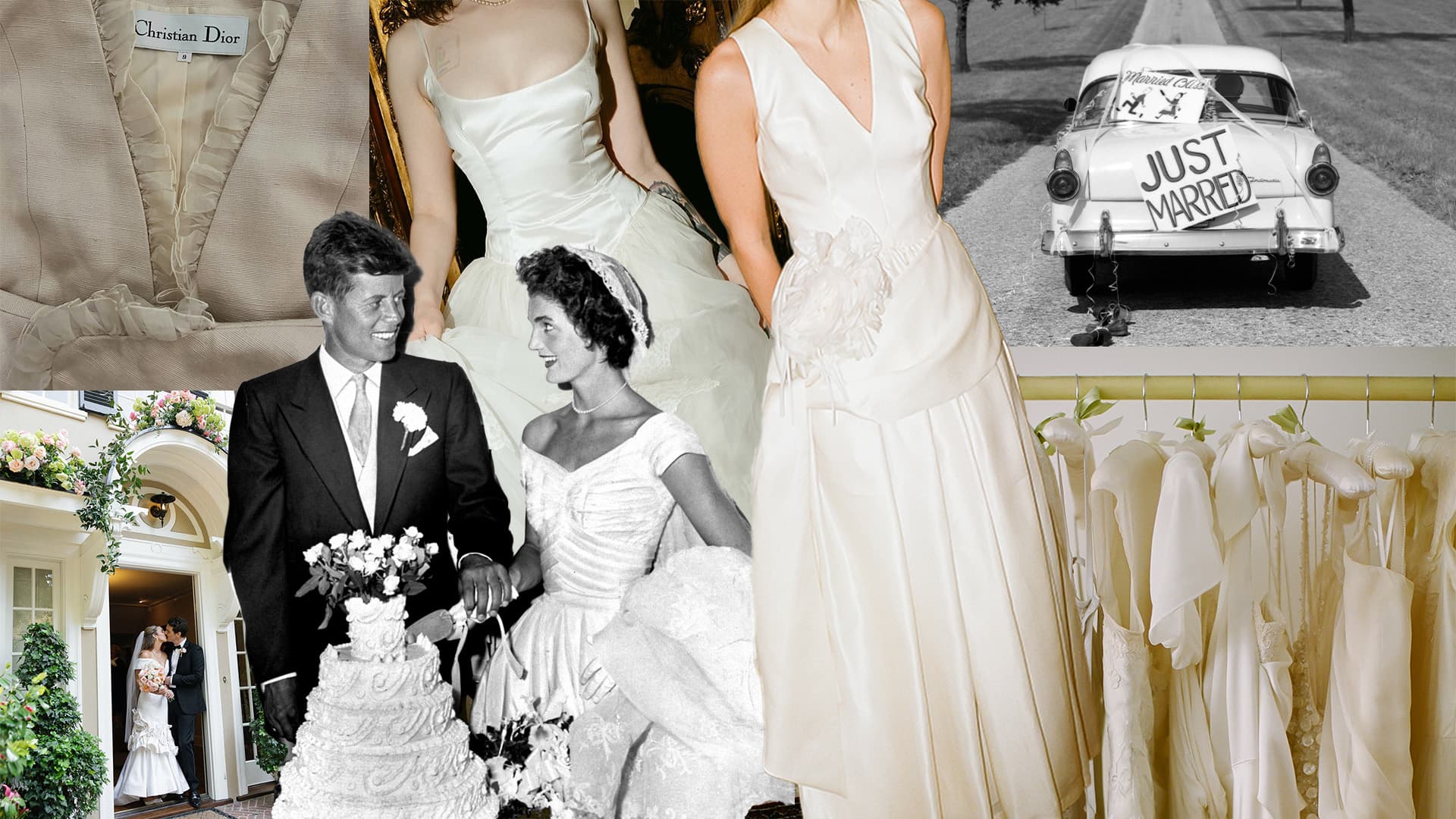
The most interesting bridal rack right now looks less like a showroom and more like an archive, and that is exactly the point. Brides are turning toward pre-owned gowns, not as a compromise, but as a way to get something more personal, more responsible, and often more financially rational than a brand-new dress pulled from the same seasonal run as everyone else’s.
The numbers explain why the shift feels so visible. Zola’s First Look Report shows thrifted or sustainably sourced wedding looks rising from 14% in 2024 to 17% last year, while the average wedding cost has held at $36,000 for the second year in a row. That pressure sits alongside a generation that plans differently: Gen Z makes up the majority of engaged couples in Zola’s latest survey of more than 11,500 couples, more than half now get inspiration from TikTok, and nearly 1 in 5 couples are entering full planning mode before the proposal is even official. Brides are not simply shopping with a tighter budget. They are shopping with a sharper point of view.
Why vintage feels modern again
The vintage bridal resurgence is not powered by nostalgia alone. It is being shaped by a stronger appetite for personality, and by bridal runways that have repeatedly leaned into historical language without making it feel costume-like. Spring 2025 and spring 2026 collections were full of Victoriana, corsetry, basque waists, lace, bows, and other references that make the waist look sculpted and the upper body look deliberately framed.
That matters because the current bride does not want a dress that disappears into the background. She wants a silhouette with intent. The most modern vintage-inspired gowns are not the fussiest ones, but the ones that use old-world details to sharpen a shape: a corseted bodice that defines the torso, a basque waist that elongates the waistline, lace that feels airy rather than heavy, or a bow placed with precision instead of excess.
Social media has only accelerated that appetite. Pinterest search interest in “Victorian wedding dress vintage” and “Victorian gothic wedding” jumped 170%, while “vintage inspired wedding dresses” surged 240%. Those are not niche micro-trends anymore; they are proof that brides are actively searching for gowns with a point of view, not just a label.
The resale market now has a real price logic
Vintage and pre-owned bridal also works because the secondary market has become more legible. Rowely, a bridal resale marketplace created in August 2023 and launched in March 2024, was built around the very real fact that weddings often stretch across months of events, each with its own white dress and each one quietly adding to both waste and cost. Founder Sarah Brennan Hughes has said that this can create a financial burden as well as waste, and that framing feels especially sharp now that many couples are already living with a $36,000 average wedding bill.
The Knot has added the kind of resale math that makes the category easier to trust. A used wedding dress in great condition, if it is under two years old, can typically resell for about 50% of its original retail price. Designer gowns from names such as Oscar de la Renta and Vera Wang can sometimes reach closer to 60%. Rowely takes a 20% commission per piece, which still leaves enough value on the table to make resale feel less like liquidation and more like a circular luxury market.
That is the key shift. Pre-owned bridal is no longer being framed only as thrift. It is becoming a way to recapture value from a garment that may otherwise be worn once, photographed heavily, and then stored indefinitely.
Which vintage looks feel current now
The vintage eras reading as especially fresh are the ones that bring structure to romance. Victorian references are resonating because they offer high drama without requiring a full period look. Think fitted sleeves, high necklines, lace that looks sheer rather than dense, and bodices that create shape through construction instead of decoration alone.
The silhouettes to watch
• Basque waists, because they lengthen the torso and create a cinched, elegant line.
- Corseted bodices, because they give support and visible structure, which feels both romantic and architectural.
- Lace gowns with cleaner proportions, because the texture does the work without overwhelming the body.
- Bows used sparingly, because a single well-placed bow reads polished, while too many can turn precious fast.
- Pearl details and softened Victorian touches, because they nod to tradition without flattening the look into costume.
The most successful vintage-inspired gown today does not try to recreate an era in full. It borrows the proportion, the texture, or the finishing detail, then stops. That restraint is what makes the look feel like fashion rather than reenactment.
What to inspect before you buy, alter, or restore
A pre-owned dress should be judged like any beautiful garment that has already lived a life. Look first at the structure. If the gown has corsetry, boning, or a basque waist, make sure those elements still hold the intended shape, because repairs to internal support can be more involved than fixing an outer seam.
Fabric condition matters just as much. Check lace for pulls, beading for missing stones, satin for scuffs, and hems for abrasion, especially if the dress was worn outdoors or hemmed to a specific height. Vintage and pre-owned pieces can carry the exact patina that makes them irresistible, but there is a difference between graceful wear and damage that will compromise the drape.
- Examine the underarms, hem, and closure for staining, stretching, or stress.
- Ask whether the dress has already been altered, and if so, where the original shape has been changed.
- Check whether any restoration has affected the line of the bodice or the fall of the skirt.
- Factor in professional cleaning and preservation before you assume the listed price is the final price.
Alterations deserve the same care as the buy decision. A gown with a dramatic waistline or corseted top can be easier to fit than a fully fluid silhouette, but it can also lose its character if the proportions are changed carelessly. The right tailor will protect the bones of the dress, not just the measurements.
Vintage bridal is rising because it answers the three questions that matter most now: how do you make the dress feel like yours, how do you avoid waste, and how do you spend smarter without giving up the moment. That is why the look is expanding from a style choice into a new bridal logic, one where the smartest dress is often the one with a little history already stitched into it.
This article was produced by Prism’s automated news system from verified source data, official records, and press releases, then run through automated quality and moderation checks before publishing. The system is built and supervised by the people who set the standards it runs under. Read our full AI policy.
Know something we missed? Have a correction or additional information?
Submit a Tip