Vogue Scandinavia’s guide to bridesmaid dresses that flatter and rewear
Bridesmaid dressing is moving past the one-night uniform. Earth tones, softer silhouettes, and venue-aware cuts now have to flatter the wedding and survive after it.
The smartest bridesmaid dress today has a hard job description: look polished in the ceremony photos, stay true to the person wearing it, and never pull focus from the bride. That is exactly the tension Isabella Manganas was working through while searching for her sister’s bridesmaid dress for a September 2026 wedding, with only one clear instruction to anchor the process, earth tones.
The bridesmaid dress is no longer supposed to disappear
That shift is bigger than one family wedding. The Knot’s 2026 Real Weddings Study points to a broader move toward highly intentional, personalized celebrations, which means bridesmaid dressing is getting pulled out of the old cookie-cutter playbook. The uniform parade of identical dresses is giving way to something more editorial: a bridal party that coordinates without looking cloned, and a dress that can live again after the last toast.
That is the useful industry read here. Bridesmaids are no longer dressing for a single obedient moment. They are dressing for a ceremony, a reception, a photo archive, and whatever comes after, which is why Manganas framed the search around fit, comfort, and whether the dress can make it from the aisle to the final song without feeling like a costume.
Start with the setting, not the dress rack
The cleanest way to choose a bridesmaid dress now is to let the venue lead. A garden wedding, a city ceremony, a formal dining room, or a beach-adjacent party all ask for different levels of structure and shine, and that matters if the goal is wearability. Manganas’s approach, focusing on setting, tone, formality, comfort, and lifespan, is the right framework because it keeps the bride’s request intact without trapping the bridal party in one-note sameness.
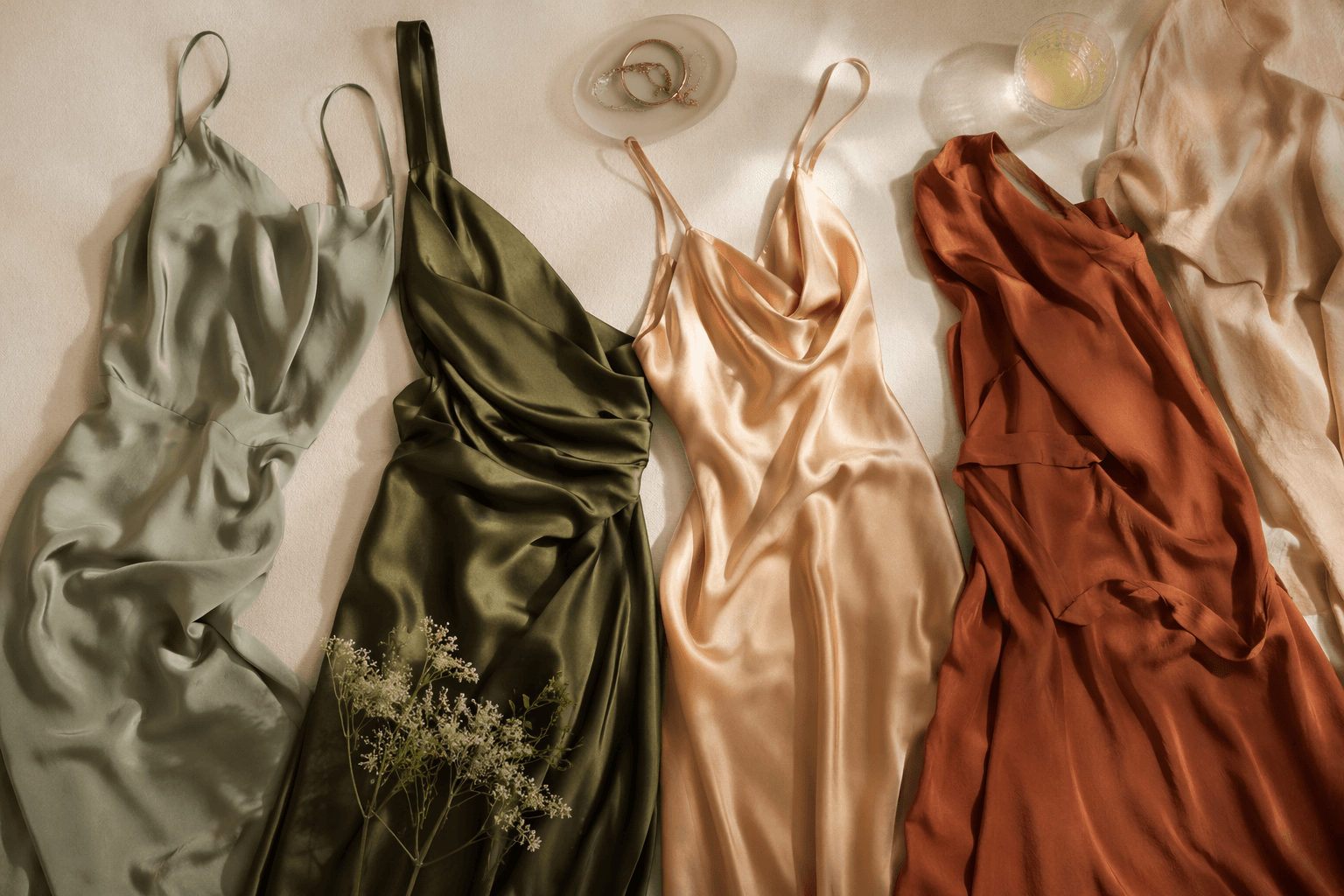
For outdoor or daylight settings, earth tones do the heavy lifting. Think olive, clay, sand, cocoa, or muted rust, shades that feel warm in photographs and easy to style later with a leather jacket, a flat sandal, or a simple heel. In a more formal room, the same palette can shift into cleaner lines and a more restrained finish, which keeps the look elevated without veering into precious territory.
The best colors are the ones that can leave the wedding and still make sense
Earth tones are having their moment because they do two things at once: they flatter a range of skin tones and they read as grown-up wardrobe pieces instead of disposable bridesmaid inventory. The sister’s direction in Manganas’s search, earth tones with no strict silhouette rules, is basically the dream brief for anyone who wants cohesion without deadening individuality.
The sweet spot is not loud coordination. It is tonal coordination. A mix of taupe, chestnut, moss, and ochre looks intentional on a line-up of bridesmaids, but each dress can still be chosen for the wearer’s shape and comfort. That matters if the dresses are meant to earn a second life at a dinner, a gallery opening, or even just a very good birthday party later on.
Choose cuts that flatter bodies, not bridesmaid stereotypes
The old bridesmaid formula prized obedience over shape. The new one should do the opposite. A dress with a defined waist, a soft column, a fluid slip, or a gently draped midi can feel coordinated without locking everyone into the same silhouette. That flexibility is what makes the look rewearable, because a dress that respects the body is much easier to restyle than one that only worked because the bridal party was standing in a row.
If the wedding leans relaxed, softer shapes are the move. A midi with movement, a bias-cut dress, or a long-sleeve style in a muted tone can feel polished without reading as formalwear that has nowhere else to go. For a more dressed-up wedding, cleaner tailoring and a more sculpted line do the job, especially if the color stays grounded in an earth-tone range rather than moving into something shiny or overly trend-driven.
Think about the dress as a piece of the full day
Manganas’s real test was not just how the dress looked in one frame. It was whether it could hold up through the entire wedding day, from ceremony to last song. That is where bridesmaid dressing gets practical, because a dress that looks great in standing photos but pinches, wrinkles, or overheats by cocktail hour is already a bad investment.
Comfort should not be treated like a compromise. If the bridal party is expected to move, dance, and stay in the look for hours, then fabric weight, shoulder construction, and hemline matter as much as color. Dresses that are easy to sit in, walk in, and wear again are the ones that make the strongest case for the rewear trend. That is what separates a real wardrobe piece from a one-night uniform.
The old bridesmaid ideal was built on matching, but history is already full of that story
The modern move toward mix-and-match bridesmaid dressing feels fresh because the old version was so rigid. Queen Victoria designed the dresses worn by her twelve bridesmaids for her wedding to Prince Albert on February 10, 1840, and the Royal Collection Trust says those bridesmaids were the eldest daughters of peers. Their dresses were simple white, trimmed with sprays of roses, a reminder that bridesmaid clothing has long been used to echo the bride’s world rather than express the wearer’s own.
That historical backdrop matters because white bridal wear itself became culturally powerful through Victoria’s own wedding look. The Victoria and Albert Museum notes that her 1840 white wedding choice helped popularize the white wedding dress through print media and commercial fashion culture. In other words, bridal fashion has always been about repetition and influence. What is different now is that the new status symbol is not strict matching. It is controlled variety.
How the new bridesmaid formula actually works
The strongest bridesmaid looks in this moment are the ones that balance three things at once: the bride’s color story, the venue’s formality, and the wearer’s life after the wedding. That is why the most useful palette is often earth-tone based, the most useful silhouettes are the least fussy ones, and the most useful result is a dress that feels elegant in the room and believable in a closet afterward.
- Use color to create unity, not sameness. Earth tones make a bridal party feel composed without flattening everyone into duplicates.
- Let silhouette vary within a clear frame. A slip, a column, and a soft midi can all coexist if the color and finish are disciplined.
- Match the venue, not just the invitation. Garden weddings want ease, formal city rooms want sharper lines, and the dress should answer the space.
- Prioritize comfort as part of the look. If the dress cannot survive the whole night, it is not actually working.
Bridesmaid fashion is finally catching up to how people actually dress now, with more intention, more personality, and less appetite for disposable formality. The best dresses in this new lane do not scream bridesmaid at all. They just look like good clothes that happened to be worn to a wedding first.
This article was produced by Prism’s automated news system from verified source data, official records, and press releases, then run through automated quality and moderation checks before publishing. The system is built and supervised by the people who set the standards it runs under. Read our full AI policy.
Did this article answer your question?