Wedding guest style turns maximalist with bold colors and glam details
Wedding guests are dressing like the party is their moment too, swapping safe neutrals for saturated color, texture, and shine. The smartest looks feel celebratory, not attention-seeking.

The guest role is no longer background
Wedding guest dressing has left the safety of the little black dress behind. In Lauren Fisher’s WWD coverage, saturated color, bold prints, sweeping capes, matching scarves, feather trims, and metallic lamé corsetry are replacing subdued minimalism, and the message is blunt: guests are dressing to make an entrance, not to disappear into the crowd. That is a real shift in wedding style, because it turns the guest outfit into part of the event’s visual language, not just a polite footnote.
Why weddings now feel like fashion moments
The deeper story is that weddings have become more like fashion ecosystems. Lulus’ Spring 2025 Wedding Trend Report says wedding wardrobes are “more dynamic, expressive, and personalized” than before, and its own chief merchandising officer, Laura Deady Holt, put it plainly: “Weddings are no longer about just one dress, they’re about an entire fashion experience.” The brand’s data-backed report also shows how quickly the mood has changed, with slip dresses up 107 percent and draped cowl necklines up 250 percent among bridal shoppers, a clear sign that guests and hosts alike are moving toward silhouettes with movement, polish, and a little drama.
That matters because it explains the economics underneath the trend. Weddings are now a full wardrobe occasion, with guests shopping for looks that photograph well, feel special, and still land at accessible price points. Lulus’ analysis points to internal sales data, on-site search behavior, and customer surveys, which is exactly the kind of evidence you’d expect from a market where the dress is no longer just for one ceremony, but for engagement dinners, welcome parties, and the inevitable photo carousel after midnight.
Maximalism is the new guest uniform
The maximalist turn is not just about more color, it is about more intention. WWD’s May 28 story notes that guests are gravitating toward vibrant palettes, playful prints, and fashion-first details that do the work for them, from feather trims that catch the light to scarf-draped necklines and vintage-feeling florals. Grace Lee Chen of Birdy Grey says the shift is showing up in “chartreuse, fuchsia, poppy orange,” which tells you everything you need to know about the old rules: neutral, quiet, and invisible are no longer the default.
What is interesting is that the new glamour is less about costume and more about emphasis. A cape over a streamlined dress feels different from a full ball skirt; a metallic corset has a sharper edge than a simple satin slip. The point is not to outshine the couple, but to show up with enough personality that the wedding itself feels styled, not merely attended.
The new etiquette is still about reading the room
For all the extra shine, the smartest guests are not dressing without boundaries. Beth Chapman, the stylist The Knot turns to for color advice, says the dress code should lead every decision: black-tie generally calls for darker tones, while cocktail, semi-formal, and casual weddings open the door to far more color. She also notes that spring and summer are the best seasons for pastels, brights, and lighter hues, which is where the maximalist trend finds its most natural home.
That balance is the entire game now. The guest who understands the invite can wear more color, more print, and more embellishment without crossing into chaos. Chapman’s guidance keeps the trend grounded in etiquette rather than spectacle, and it is exactly why this shift feels modern instead of reckless: it rewards personality, but only when it still honors the couple’s vision for the day.
Glamour is coming back in a more formal key
The Knot’s 2026 guest forecast pushes the look further into old-school glamour, with draped scarves and shawls, floor-length gowns, and Old Hollywood-inspired accessories like crystal and pearl necklaces, sparkly clutches, evening gloves, and folding fans. Jackie Avrumson, quoted in The Knot’s guest-trend forecast, frames wedding guest style as “understated glamour,” but the direction for 2026 is clearly more polished, more formal, and far less shy. Katie Sands Bochner adds that formalwear is on the rise and that guests are embracing elevated looks, even when the dress code does not technically demand a gown.
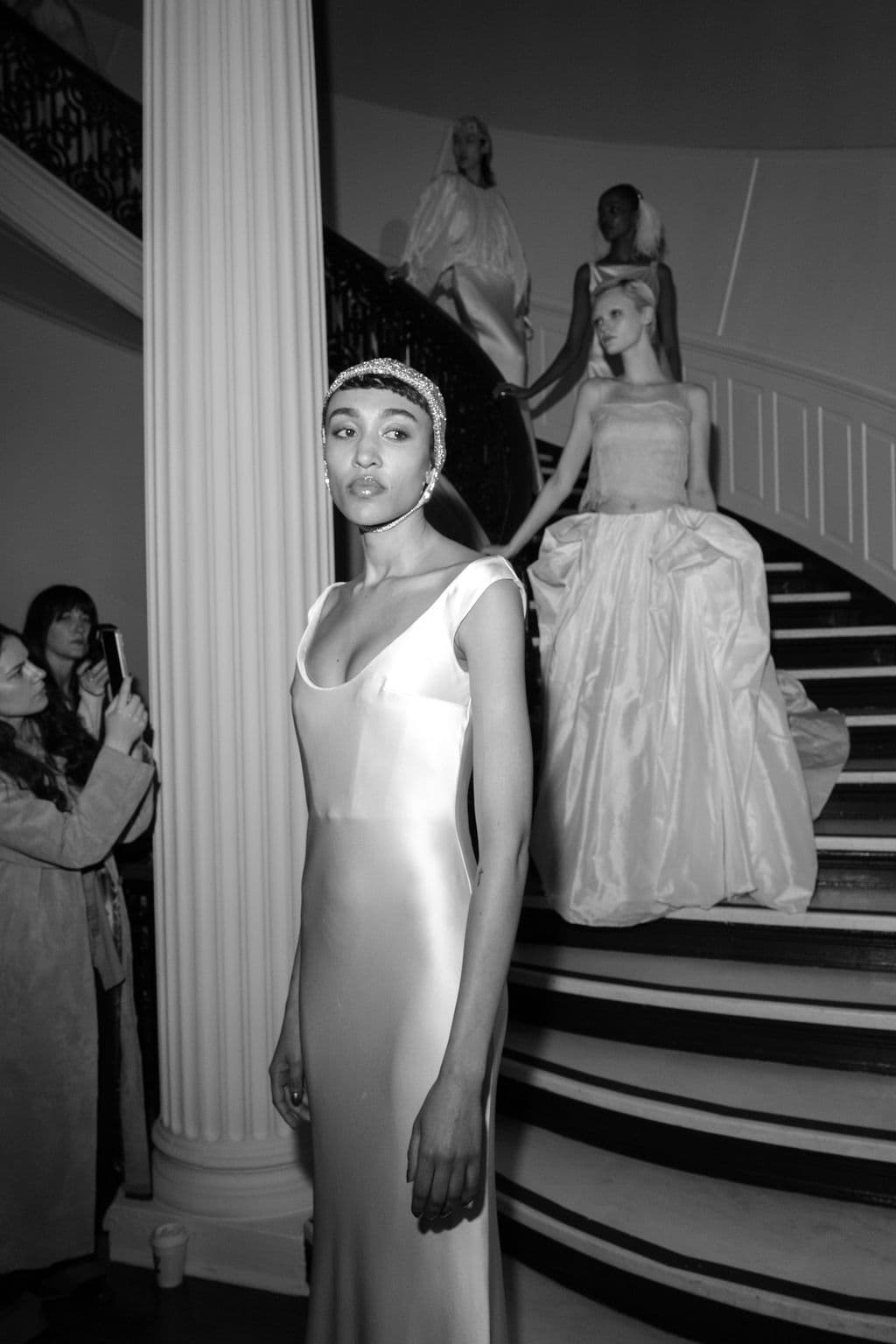
That same taste for stronger shape and richer detail is visible on the bridal side of the runway. WWD’s New York Bridal Fashion Week Spring 2026 coverage highlights corsetry, bow details, rounded volumes, allover lace, and colorful florals, with colorful florals, printed or embellished, presented as a frontier for nontraditional brides. In other words, the bridal ecosystem is converging on the same idea: structure, ornament, and color are no longer special effects. They are the main event.
How to wear the trend without blowing past the bride
The simplest formula is this: pick one dramatic register and let the rest stay clean. If the dress is saturated and printed, keep the shape elegant. If the silhouette is strong, like a cape, corset, or floor-length column, let the color do the talking. If you want the old-Hollywood finish, add one accessory with presence, such as a draped shawl or a luminous clutch, instead of stacking every idea at once. That is the difference between celebratory and competitive, and it is where the best wedding looks are landing now.
Maximalist guest dressing is not a rejection of etiquette, it is etiquette with personality. Weddings have become performance spaces for style, but the sharpest guests still understand the assignment: bring the color, bring the gloss, and never forget whose moment it is.
This article was produced by Prism’s automated news system from verified source data, official records, and press releases, then run through automated quality and moderation checks before publishing. The system is built and supervised by the people who set the standards it runs under. Read our full AI policy.
Did this article answer your question?