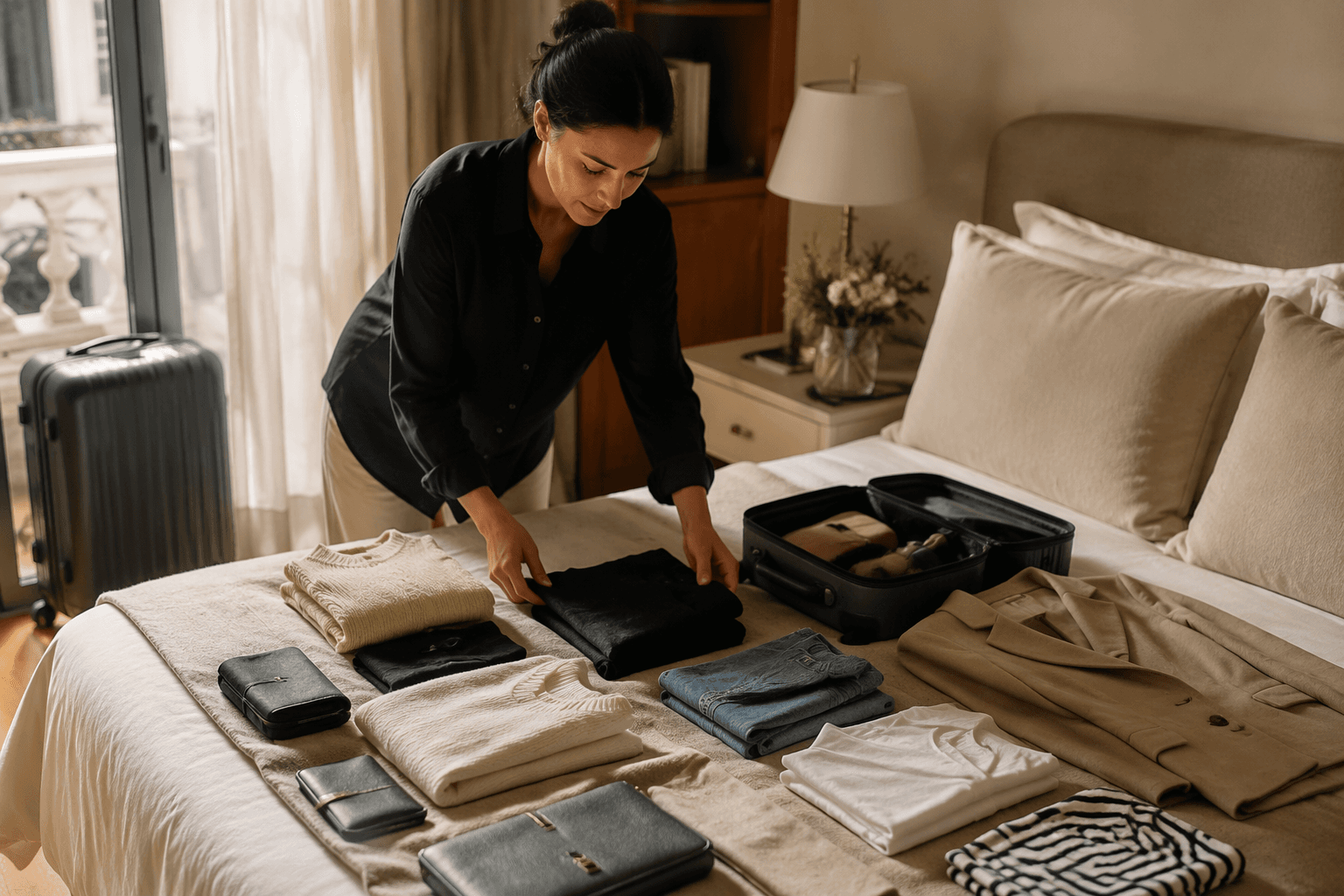
Build a capsule wardrobe with your three-word style formula
Start with three style words, not beige basics. The right archetype turns a capsule into a tighter, more personal system and cuts down on unworn buys.

Allison Bornstein’s three-word method decides what belongs in your closet before you buy anything. A capsule wardrobe falls apart fast when you build it from neutrality instead of identity. Choose the style archetype first, then edit your closet around it, so every piece has a job and every buy has a reason to exist. The method stops you from collecting “versatile” basics that never quite feel like you, and pushes you toward a smaller wardrobe with more personality and less waste.
Start with the words, not the shopping
Indyx’s three-word method page compares four different style-expert approaches, but the idea is simple: define your personal style in three words, then use those words as a filter for everything else. A capsule does not fail from being too minimal. It fails when the pieces are interchangeable on paper but dead wrong on your body, your habits, and your taste.
By June 2022, Allison Bornstein had moved this method from niche styling trick to mainstream habit. A wardrobe stylist and brand consultant, she had become a “style guru” who uses three adjectives to identify a person’s unique look. Her closet-editing process works best as self-care: this is not about deprivation, it is about clearing the static so the right clothes can breathe.
How to choose your three words
The best words are not vague mood-board language like “cool” or “pretty.” They are functional. Think in tensions: polished and relaxed, classic and directional, feminine and utilitarian, or minimalist and slightly undone. You want words that can steer real decisions, the kind that separate a blazer from a leather jacket or a drapey tee from a crisp button-down.
She launched FaceTime styling sessions in March 2020, has worked with more than 2,200 clients around the globe, and now has a following of over 500,000. Her debut book, Wear It Well, carries the same idea: style works best when it is repeatable, not random.
If you are trying to find your words, look at the pieces you reach for on repeat and the pieces that sit untouched. Ask what the outfit is doing when you feel most like yourself. Then name the pattern in three words and make those words the filter for every purchase.
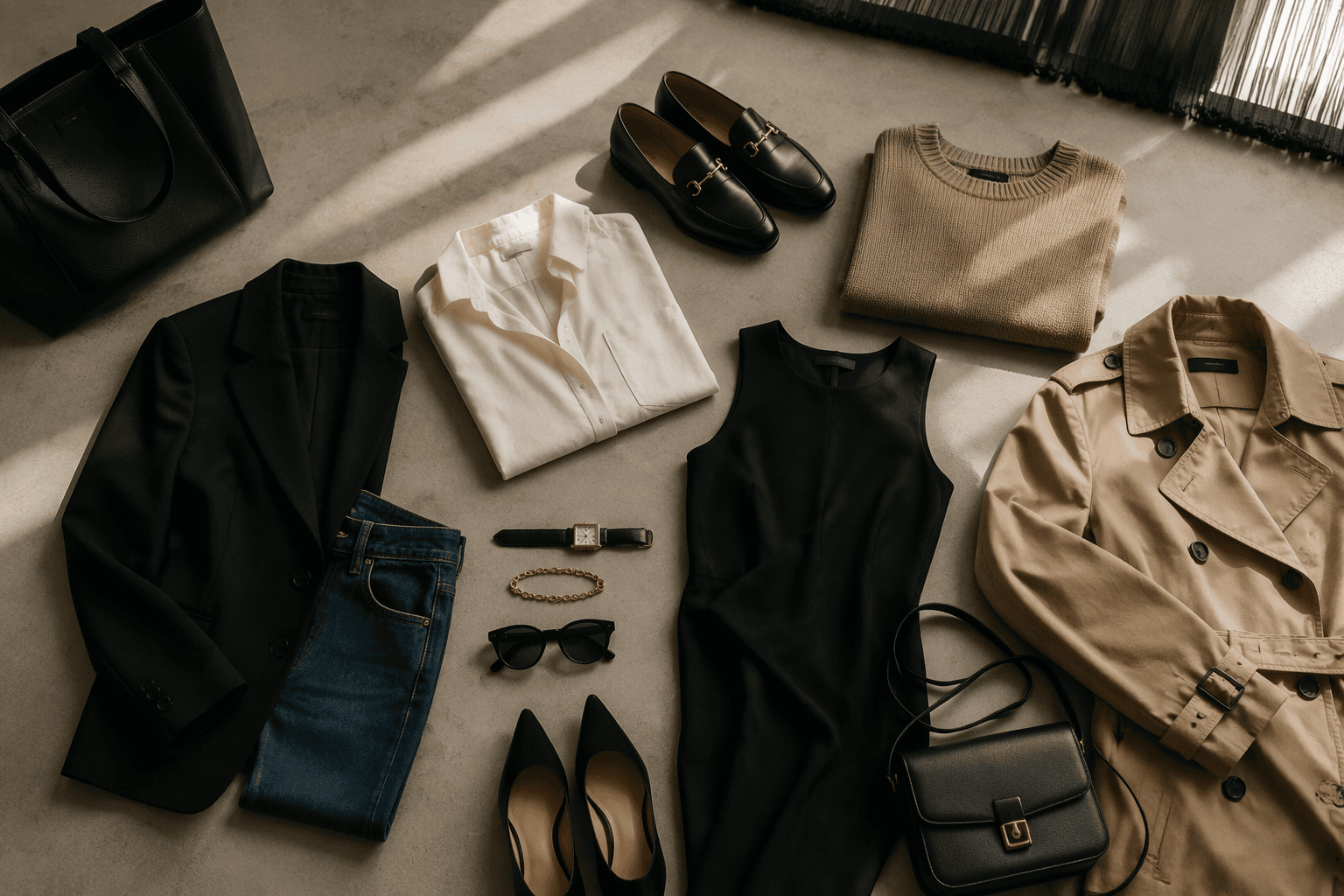
Turn the words into a capsule system
The method becomes useful in a very practical, very anti-waste way. Instead of asking whether something is basic enough, ask whether it fits the shape of your style. A strong archetype makes hard decisions easier, especially when you are choosing between close cousins like straight-leg jeans and wide-leg trousers, or loafers and boots.
One Indyx example makes the point cleanly. Jeans, a T-shirt, and loafers can point in completely different directions depending on the words you choose. If your words are “classic,” “relaxed,” and “edgy,” the styling call changes immediately: a leather jacket makes more sense than a blazer, because it matches the wardrobe personality you actually want.
Use that logic to build the capsule itself:
- Silhouettes: choose the cuts that echo your words. If your style is clean and tailored, lean into straight lines, neat shoulders, and trousers with structure. If your style is softer and looser, prioritize fluid shirts, drapey tees, and trousers with movement.
- Fabrics: let texture do some of the work. Leather, denim, crisp cotton, brushed wool, and silk each send a different signal, even in the same color family. A capsule with the right fabric mix feels edited instead of generic.
- Hero pieces: pick one or two pieces that carry the personality of the whole closet. For one person, that might be a leather jacket. For another, it might be a perfectly cut blazer, a strong boot, or a great loafer. These are the pieces that stop the wardrobe from drifting into anonymous basics.
- Color accents: keep the base tight, then use color like punctuation. A narrow palette can still have life if you reserve one or two accent shades that fit your words, such as deep burgundy, washed olive, ink blue, or silver hardware. Aim for controlled contrast instead of a beige uniform.
Once you do this, shopping gets cleaner. A plain white tee is no longer just a plain white tee. It is either the right one for your silhouette and your styling language, or it is dead weight.
Capsules were never meant to be bland
The modern capsule wardrobe has older roots than the current minimalist internet loves to admit. Susie Faux, owner of the London boutique Wardrobe, coined the term in the 1970s. The original idea was not a drawer full of lifeless neutrals. It was a set of essential, timeless items that could be supplemented with seasonal pieces.
Donna Karan helped push the concept into the mainstream in 1985 with Seven Easy Pieces, her capsule collection of interchangeable workwear.
Why the sustainability angle actually holds up
The three-word method fits the sustainability conversation because it reduces the most common kind of waste: buying pieces that are technically useful but practically wrong. A May 2024 Kathmandu Post piece tied capsule wardrobes to sustainability, and the 2025 Iowa State University ITAA proceedings paper, titled “Less is More”: A Systematic Literature Review on Capsule Wardrobes and Minimalist Fashion, examined the subject in academic fashion circles.
This article was produced by Prism’s automated news system from verified source data, official records, and press releases, then run through automated quality and moderation checks before publishing. The system is built and supervised by the people who set the standards it runs under. Read our full AI policy.
Did this article answer your question?