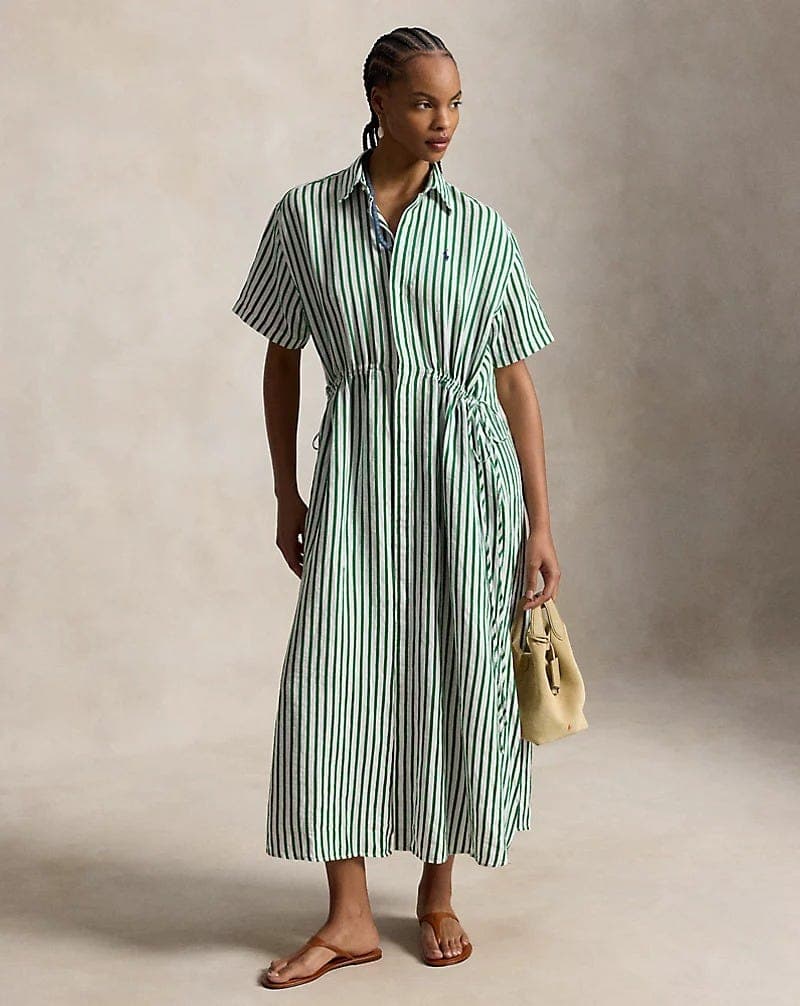
Capsule Wardrobe Essentials: Effortless Style & Sustainable Fashion
Thirty pieces, endless outfits: a capsule wardrobe isn't about owning less, it's about wasting nothing and getting dressed with intention every single day.

The average American generates 82 pounds of textile waste every year. Wardrobes overflow, yet the daily "I have nothing to wear" spiral persists. The capsule wardrobe is the antidote: a compact, intentional edit of pieces that actually work together, anchored in quality rather than quantity, and built to last well beyond a single season.
The concept is simple on paper. In practice, it requires a different kind of discipline: buying less, choosing better, and committing to a wardrobe that earns its keep every time you open the closet door.
The Backbone Pieces
A capsule wardrobe isn't defined by a rigid piece count. Think of it as a category-based checklist, where every slot is filled only by something that genuinely pulls its weight. The essential categories break down like this:
- A classic blazer (structured, neutral, works over everything)
- Dark wash jeans (a cut that reads as polished, not casual)
- A white button-down shirt
- The little black dress
- A cashmere or wool sweater
- Tailored trousers
- A Breton-stripe tee
- White sneakers
- A versatile handbag
- Black and white basic tees
Notice what's missing: anything trend-specific, anything that only works with one other piece, anything you'd hesitate to wear in two years. Every item on this list has earned its place precisely because it refuses to stay in a single lane.
Fabric First
The difference between a capsule that lasts a decade and one that pills out after six months lives entirely in the fabric. Natural fibres, including wool, cashmere, cotton, and linen, are breathable, biodegradable, and built to age gracefully. Synthetic fibres like polyester and nylon shed microplastics, trap heat, and can cause skin irritation, none of which recommends them for pieces you intend to wear for years.
Cashmere and wool sweaters are the clearest illustration of this logic. A well-cared-for merino or cashmere knit softens and improves with wear; a polyester equivalent simply degrades. The same principle applies across every category. When you're choosing a blazer or a pair of tailored trousers, reach for natural blends. The upfront cost is higher; the cost-per-wear, over time, is dramatically lower.
Building Your Palette
The most functional capsules are built on a neutral base, then given room to breathe with a single accent color. Start with black, white, navy, and camel as your foundation. These tones mix effortlessly, ensuring that everything in your wardrobe can theoretically talk to everything else. A neutral palette is the backbone of sustainability: by ensuring every piece harmonizes with the next, you eliminate the need for filler items, ensuring every garment earns its place through maximum versatility.
The accent color is where personality enters. Choose one, whether that's a terracotta, an olive, a dusty rose, or a cobalt and let it thread through your accessories and occasional statement pieces. Capsule wardrobe devotees often choose one to three accent colors on top of neutrals for added interest so that mixing and matching stays cohesive. One is usually enough. Two starts to feel curated. Three requires real discipline to pull off without the wardrobe fragmenting into unrelated clusters.
Putting It Together: Outfit Logic
The real test of any capsule is how many distinct outfits it generates. A blazer, a basic tee, and dark wash jeans is the clearest starting point: sharp enough for a client lunch, relaxed enough for a creative office. Swap the tee for a white button-down and the outfit sharpens by a register. Add the tailored trousers in place of the jeans and you're at a formal meeting without touching anything else in the wardrobe.
The Breton tee functions as the great equalizer. It pairs with trousers for a Parisian day-off look, tucks into a midi skirt with ankle boots for an evening that reads effortless rather than overdressed, and layers under the blazer when the temperature drops. The cashmere sweater works the same corridor: worn over the LBD with white sneakers for a dressed-down evening, or knotted over the shoulders of a button-down for a relaxed daytime layer. The outfit combinations multiply quickly when every piece genuinely belongs.
The Sustainability Case
The argument for a capsule wardrobe is partly aesthetic and largely environmental. The fashion industry is responsible for 10% of the total annual carbon footprint, surpassing the emissions from all international flights and maritime shipping combined. The equivalent of one garbage truck's worth of clothing is either incinerated or sent to landfill every second. The world consumes around 80 billion new pieces of clothing every year, 400% more than twenty years ago.
A capsule wardrobe won't single-handedly reverse those numbers. But it represents a meaningful shift in how you participate in the system. Buying fewer, better pieces directly reduces demand for the disposable end of the market. Choosing natural fibres keeps synthetic microplastics out of waterways. And committing to a wardrobe you actually wear means less ends up in landfill.
Repair, Mend, Resell
The final, often overlooked layer of capsule wardrobe philosophy is what happens when something wears out. The instinct is to replace; the better habit is to repair. A cashmere sweater with a small hole at the elbow is a mending project, not a write-off. A blazer with a loose button needs two minutes and a needle, not a new blazer. Investing in a tailor relationship, even occasionally, extends the life of tailored pieces by years.
When a piece genuinely reaches the end of its useful life in your wardrobe, resale is the most sustainable exit. Platforms that connect secondhand buyers with quality pieces have grown significantly, giving well-made garments a second life rather than a landfill fate. The resale value of quality natural-fibre pieces is also meaningfully higher than fast fashion equivalents, which rarely survive the wash cycle long enough to be worth selling on.
The capsule wardrobe, at its best, isn't a minimalist aesthetic exercise. It's a framework that makes getting dressed faster, spending smarter, and consuming less feel like the obvious choice rather than the virtuous one.
This article was produced by Prism’s automated news system from verified source data, official records, and press releases, then run through automated quality and moderation checks before publishing. The system is built and supervised by the people who set the standards it runs under. Read our full AI policy.
Did this article answer your question?