Donna Karan's Seven Easy Pieces defined the capsule wardrobe movement
Donna Karan turned seven mix-and-match pieces into the capsule blueprint, and the formula still solves work, travel, and night-out dressing.
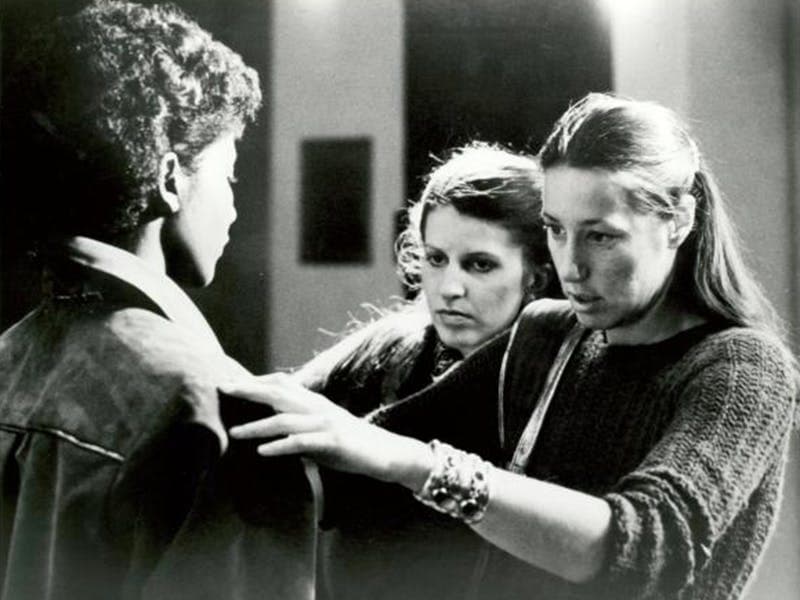
Parsons School of Design dates the start of Seven Easy Pieces to 1984, when Donna Karan launched her eponymous company and turned her first collection into the first version of the system. She built a wardrobe for the real thing, where you need to look polished at 9 a.m., move easily through the afternoon, and still have enough edge left for dinner.
The original capsule was made for women who had no time to overthink
Karan’s early work centered on working women who needed clothing that was luxurious but functional, and ASU FIDM Museum dates her first solo collection to 1985, after her years as head designer for Anne Klein. That collection leaned on coordinated knit separates designed to carry a woman through work, evening, and the weekend without losing composure.
Layered, monochromatic looks in cashmere, wool jersey, and other quietly rich fabrics used a long-sleeved bodysuit as the base, usually paired with opaque tights, then built out with skirts, shawls, coats, and jackets. The silhouette was close to the body but never fussy, and the palette, usually black, made the pieces talk to each other instead of competing for attention.
The seven pieces are the system
The formula is a bodysuit, a tailored jacket, a skirt, pants, a cashmere sweater, a leather jacket, and an evening look. It is a modular wardrobe built to move from day to night, home to office, and weekday to weekend.
Each piece has a job:
- The bodysuit acts as the clean base layer, the thing that keeps everything else sharp.
- The tailored jacket gives structure, which matters when your day asks for polish even if the rest of your outfit is soft.
- The skirt and pants cover the two most useful lower-body lanes without forcing a second thought.
- The cashmere sweater brings warmth and texture, the kind that makes a black outfit look deliberate instead of flat.
- The leather jacket adds attitude and weatherproof edge.
- The evening look means you are not rebuilding your wardrobe after dark. You are only changing the final read.
Accessories were never an afterthought
In 1985, Karan asked Robert Lee Morris to create jewelry for her first solo collection, and the collaboration ran on and off for 20 years. His sculptural, gold-plated pieces were designed to sit with her soft, draped clothing instead of fighting it.
By 1986, The New York Times was already connecting that look to chunky gold jewelry worn with black clothing. Karan was thinking about how belts, bags, and jewelry would finish the silhouette.
What still holds up, and what needs a refresh
The strongest part of Seven Easy Pieces is the architecture. A body-skimming base, a tailored layer, a sweater, a jacket, and one piece that handles the evening shift still make sense if your week includes meetings, trains, flights, dinners, and the kind of plans that move fast. The monochrome idea, usually black, remains the easiest way to make everything cohere, especially if you want to pack light or cut down on decision fatigue.
What needs translating is the severity. The original black-on-black system is elegant, but today’s capsule often has to work harder across climate, calendar, and personal style. You may still want the same structure, but not the same rigidity. The modern version can keep Karan’s logic, while loosening the palette, softening the formality, and making room for the clothes you actually reach for most, whether that means more color, more ease, or a less polished finish.
Why the blueprint lasted
Donna Karan expanded into DKNY in 1989, extending that city-minded dressing into a broader New York identity.
This article was produced by Prism’s automated news system from verified source data, official records, and press releases, then run through automated quality and moderation checks before publishing. The system is built and supervised by the people who set the standards it runs under. Read our full AI policy.
Did this article answer your question?