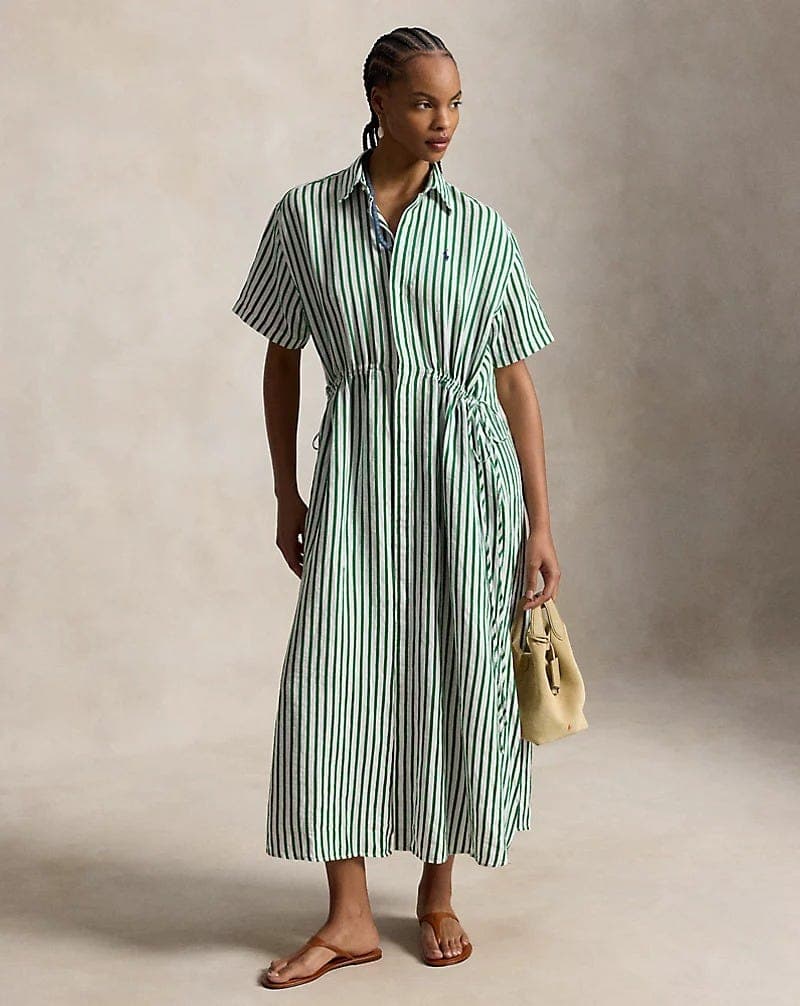
Irene Kim’s seasonality grid solves spring capsule wardrobe dressing
Irene Kim turns spring dressing into a clean decision tool, mapping pieces from winter to summer so a capsule wardrobe can handle every temperature swing.

The logic behind the grid
Irene Kim’s case for spring dressing is wonderfully unsentimental. Instead of treating the season like a style mood board, she turns it into a working system: a seasonality grid that moves pieces from winter territory toward neutral and summer territory. Marie Claire calls it a simple way to master a transitional wardrobe, and that is exactly why it feels useful rather than precious. The point is not to buy more. The point is to read your closet with enough precision to know what still earns its place when the weather cannot make up its mind.
That framing gives capsule dressing fresh life. Spring is rarely the moment for a full wardrobe reset, because the month can hold a coat at breakfast, a knit at lunch, and bare ankles by dinner. Kim’s grid accepts that instability and turns it into structure, which is the real luxury here: fewer choices, but better ones.
Why capsule dressing keeps coming back
The capsule wardrobe has been part of fashion vocabulary for decades. Susie Faux is widely credited with shaping the idea in the 1970s, when the promise of a tightly edited closet already felt radical in a culture of excess. Donna Karan then gave the concept its most memorable modern form in 1985 with “Seven Easy Pieces,” a seven-item collection designed to move a woman from day to night, home to office, and weekday to weekend.
That history matters because Kim’s grid is not a reinvention so much as a refinement. Karan’s original logic was interchangeability. Faux’s appeal was restraint. Kim adds a seasonal lens, which makes the capsule wardrobe feel less like a fixed uniform and more like a responsive system. In other words, the old capsule idea was about the number of pieces; Kim’s version is about where those pieces sit on the weather spectrum.
Why spring is the hardest season to dress for
There is a reason transitional dressing remains one of fashion’s perennial puzzles. Who What Wear describes that stretch between peak winter and true spring as the window when it is not cold enough for heavy layers, but not warm enough for breezy dresses and sandals. That is the exact tension Kim’s grid solves. It gives you a method for dressing through the in-between, rather than forcing every outfit to commit to either winter or summer fantasy.
The weather forecast only sharpens the point. NOAA’s Spring Outlook for April through June 2026 favors above-normal temperatures for much of the United States, while drought conditions are expected to worsen or develop across parts of the West and south-central Plains. For anyone dressing through cool mornings and warmer afternoons, that means the old spring formula, one lightweight layer and done, is too simplistic. The clothes need to flex.
How to use the seasonality grid in real life
Kim’s grid works because it treats garments as pieces in motion, not static categories. A winter-heavy item can stay useful if you lighten its company. A summer-leaning piece can be pulled forward if you anchor it with something denser. The trick is to stop asking whether something is “spring enough” and start asking where it belongs on the continuum from insulating to airy.
A practical version of the system looks like this:

- Keep your heaviest basics in rotation, but pair them with lighter accessories or less rigid layers.
- Move one piece at a time toward neutral territory, where it can bridge cold and warm days.
- Let summer-leaning items appear early if the rest of the outfit still carries weight and structure.
- Think in combinations, not single looks. The same foundation should work with a coat in the morning and a lighter finish by afternoon.
That approach makes the capsule wardrobe feel less precious and more architectural. Instead of building outfits around a single “spring” piece, you are balancing temperature, texture, and proportion. A denser base, like a heavier knit or structured trouser, can hold an outfit together when the forecast dips. A lighter accessory, like a sleeker shoe or a less weighty finishing layer, can keep the whole look from feeling too winter-bound.
Why Irene Kim’s background fits the system
Kim’s own biography makes the grid feel even more apt. Her Marie Claire bio describes her as a contributing editor, a former securities lawyer, and a Paris-based writer living with her husband and two sons. That kind of background suggests a mind comfortable with order, logic, and systems, and the seasonality grid has that same disciplined clarity. It is not dreamy or impulsive. It is methodical in the best possible way.
That matters in a fashion landscape where “capsule wardrobe” is often used as shorthand for bland minimalism. Kim’s version is sharper than that. It leaves room for texture, for weather, and for the real choreography of a day that starts cool, peaks warm, and cools again by evening. The appeal is not austerity. It is control.
The capsule wardrobe, updated for spring now
Marie Claire’s spring coverage keeps circling transitional pieces and spring essentials for a reason. The season rewards clothes that can do more than one job, and Kim’s seasonality grid gives that idea a clear, visual shape. It respects the capsule wardrobe tradition that began with Susie Faux and became iconic through Donna Karan’s seven-piece system, but it also acknowledges the messier reality of modern spring weather.
That is why the grid feels so timely. It does not ask you to dress for an idealized season that exists only on a mood board. It asks you to dress for the actual week ahead, with all its shifts, temperature swings, and indecision. In a spring closet, the smartest piece is often the one that can cross more than one category, and the smartest wardrobe is the one that knows exactly when to let winter, neutral, and summer coexist.
This article was produced by Prism’s automated news system from verified source data, official records, and press releases, then run through automated quality and moderation checks before publishing. The system is built and supervised by the people who set the standards it runs under. Read our full AI policy.
Did this article answer your question?