Prada’s Fall 2026 layering idea becomes a real-world capsule wardrobe experiment
Prada’s layering obsession is really a closet formula in disguise. Julia Gall shows how to turn runway complexity into sharper outfits using what you already own.
The runway move that actually belongs in your closet
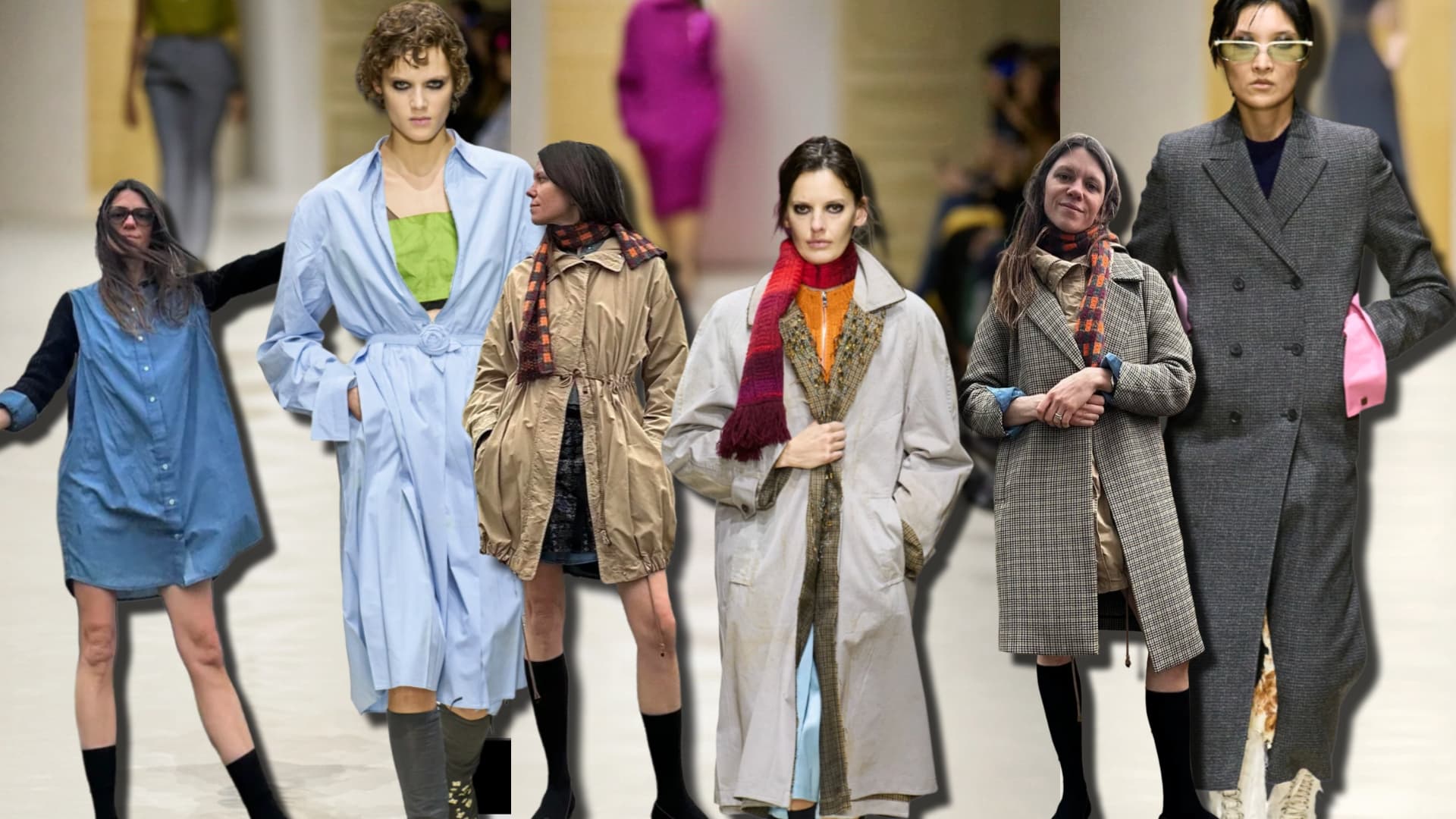
Prada’s latest layering idea is interesting because it is not really about Prada. It is about how a good wardrobe gets smarter when you stop treating clothes like single-use statements and start treating them like building blocks. Julia Gall takes the house’s construction-heavy styling and proves the point in real life: the drama is in the arrangement, not in the shopping list.
That is the part worth paying attention to. Prada’s Fall/Winter 2026 womenswear was framed around layering and “transforming through the day” through clothes, with Miuccia Prada and Raf Simons casting the collection as a study of women’s “multitudes” and “complexities of life.” In plain English, the clothes were meant to shift, interrupt, and reset themselves as you move. That is exactly why the look translates so well into a capsule wardrobe experiment.
Why capsule wardrobe thinking still works
Capsule wardrobes are not a new hack, and that matters. The idea is widely traced back to Susie Faux in 1970s London, where the point was never deprivation, it was precision. Donna Karan sharpened that logic in 1985 with Seven Easy Pieces, a modular formula that still gets cited because it understands something most closets forget: versatility is a luxury of its own.
That history gives Gall’s experiment real weight. She is not using Prada’s runway as an excuse to buy the latest shiny thing. She is using it as a proof of concept for a long-running styling philosophy built on mix-and-match dressing, repeat wear, and making more outfits from fewer items. The runway just gives the formula better posture.
How Prada’s idea reads in real life
Prada’s women’s FW 2026 show was also about juxtaposition and recomposition, which is why the layered looks feel more architectural than decorative. Elsewhere in the collection, the house pushed overlapping shapes, embedded garments, and a sense of clothing being assembled rather than simply worn. That is the sharp detail to steal: not the exact pieces, but the logic of putting one garment into conversation with another until the silhouette changes.
Prada’s spring womenswear show had already been circling the same territory, with composition, juxtaposition, and liberated garment hierarchies at the center of the discussion. The mood across both collections is clear enough to borrow without being literal: clothing should feel composed on the body, not frozen on a hanger. When a house keeps returning to the same idea from different angles, it is basically handing you a styling system.
The closet-first formula
Here is the useful part. To recreate this kind of Prada layering without hunting for exact runway pieces, start with what you already own and build in layers of contrast:
- Begin with a clean base, something simple enough to disappear under other pieces.
- Add one layer that changes the silhouette, like a longer hem, a sharper shoulder, or a boxier shape.
- Bring in a second texture that interrupts the first, such as crisp cotton against knit, or slick fabric against something matte.
- Keep one piece slightly off-balance, because the Prada effect comes from tension, not symmetry.
- Let the outfit shift from one part of the day to the next by removing or adding a layer, not by changing the whole look.
That is the real trick. You are not copying an outfit. You are copying the method. A cardigan over a shirt becomes sharper with a coat thrown over it. A slim knit under a skirt feels more directional if the outer layer widens the body. Even the most ordinary closet starts to look deliberate when you stop thinking in separate pieces and start thinking in stacked proportions.
Why this feels practical, not precious
This is why capsule wardrobe dressing keeps coming back. It cuts decision fatigue, keeps clutter down, and pushes you to make sharper use of what you already own. The sustainability angle is not a side note either. Consumer Reports has tied fast fashion’s environmental impact to garment creation, synthetic-fiber production, and distribution, which makes the case for fewer, better-used pieces feel less like taste theory and more like common sense.
Gall’s experiment lands because it does not ask you to become a minimalist. It asks you to become more intentional. You can still love volume, texture, and a little chaos, but now the chaos has structure. That is a much better deal than buying another rack of clothes that only work one way.
What Prada is really teaching the closet
The deeper appeal of Prada’s layering idea is that it makes room for contradiction. The collection’s emphasis on women’s multitudes and the complexities of life is not just poetic branding; it is a reminder that good dressing should hold more than one mood at once. A crisp shirt can live under something soft. A sharp coat can sit over something slouchy. A familiar piece can feel new if it is forced into a different shape.
That is why this story matters beyond Prada. The runway is not telling you to dress like the runway. It is showing you how to make the pieces in your own closet work harder, look fresher, and feel more alive. In a season full of noise, that kind of layering reads like intelligence, and intelligent clothes always look expensive.
This article was produced by Prism’s automated news system from verified source data, official records, and press releases, then run through automated quality and moderation checks before publishing. The system is built and supervised by the people who set the standards it runs under. Read our full AI policy.
Did this article answer your question?