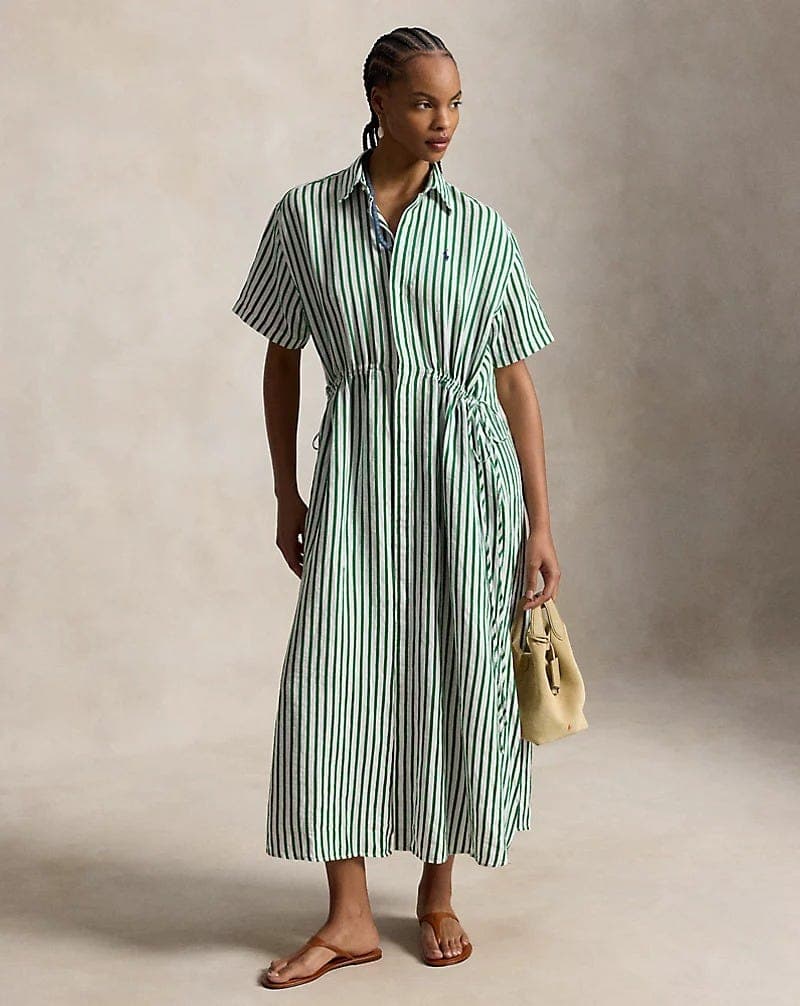
Minimalist Fashion Builds a Sustainable Capsule Wardrobe With Fewer, Better Pieces
Clothing is worn 36% less often than it was in 2000. Here's the three-step plan to fix your wardrobe before buying a single new thing.
Here's the article:
The Ellen MacArthur Foundation found that the average number of times a garment is worn before it's discarded dropped by 36 percent between 2000 and 2015. Read that again. Your closet is likely stuffed, and yet you're wearing less of it than people did two decades ago. This is not a willpower problem. It's a systems problem, and the fix isn't a shopping haul of "better" pieces. It's a smarter closet, built around fewer things that actually work together.
Minimalist fashion, at its most useful, is not an aesthetic. It's an anti-overwhelm toolkit. Done right, it collapses daily decision fatigue, stops the cycle of impulse purchases you'll regret, and turns a bulging wardrobe into something you can actually navigate before 8 a.m.
Here is how to build that wardrobe in three concrete steps.
Step 1: The Closet Audit
Before you buy anything, you have to reckon with what you already own. This is the step most people skip, and it's the reason minimalist wardrobes fail. People declutter emotionally ("I might need this someday") rather than functionally.
Start with the Hanger Flip Test: after wearing an item, hang it with the hanger facing backward. Give yourself 30 days. Anything still facing forward at the end of the month goes into a "maybe" pile. From there, rate each maybe piece on three criteria: Fit, Fabric, and Function, on a scale of one to ten. Any item scoring below seven on even one factor gets donated or sold. Bag those pieces immediately so they don't quietly migrate back into rotation.
Once the closet is clear, photograph your keep pile. This sounds fussy, but the visual inventory reveals gaps you genuinely need to fill versus gaps you've been conditioned to fill by a weekend of targeted Instagram ads. You may discover you have four navy blazers and zero quality trousers. That photograph is your actual shopping list.
Step 2: Define Your Personal Uniform
The second mistake people make when building a capsule is skipping straight to color and buying whatever feels "classic." Classic to whom? A capsule wardrobe only works if it reflects your specific life: your commute, your climate, your actual social calendar.
Before choosing a single piece, define two things: your color palette and your signature silhouettes.
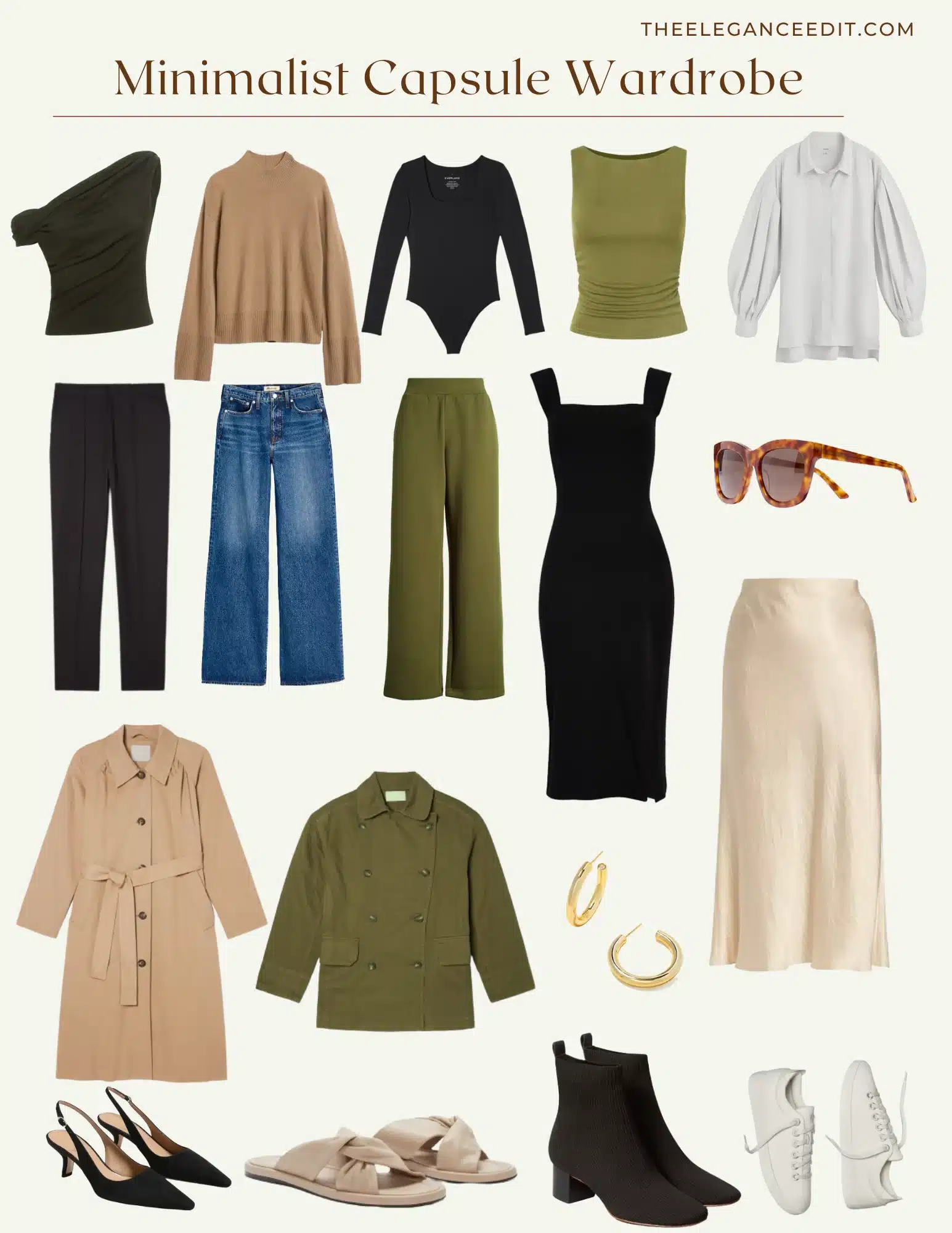
On color, the most reliable framework is the 70/30 split: 70 percent of your pieces in neutrals (navy, grey, camel, black, white) and 30 percent in accent colors such as burgundy, forest green, or cobalt blue. The rule that makes this work is that every accent color must pair with at least three of your neutrals. If it doesn't, it doesn't earn a place. This way, any combination you pull from the closet works without thinking about it.

On silhouette, be honest about what you actually wear versus what you buy hoping you'll become someone who wears it. If you've owned wide-leg trousers for two years and reached for them twice, a straight-leg cut is your silhouette. Work with your reality, not your aspiration. A capsule built around pieces you genuinely reach for will always outperform one built around pieces you admire from a hanger.
As for size: there is no magic number. Some people achieve a fully functioning capsule with 15 pieces; others need 75. What matters is intentionality, not quantity. Minimalist blogger Courtney Carver proved the point with her Project 333 challenge, in which participants dress from just 33 items (including shoes) for an entire three-month season. Thousands of people have completed it and reported that they didn't miss the rest.
Step 3: The "Buy Less, Buy Better" Checklist
Once your audit is done and your palette is set, you're ready to shop. The goal now is surgical precision, not a therapeutic spend. Before any purchase, run it through this checklist:
Fabric: Prioritize natural fibers: cotton, linen, wool, silk. They drape better, breathe better, and last longer than synthetics. Within cotton, look specifically for long-staple varieties, including Egyptian, Pima, and Supima, which produce smoother, stronger fabric that resists pilling. For knitwear, merino wool is the most versatile choice: warm without being heavy, naturally odor-resistant, and wearable across three seasons.
Construction: Turn the garment inside out before you buy it. Look for straight, even stitching with no loose threads. Properly finished seams, either French seams or serged edges, signal that a brand put care into how the piece was built, not just how it photographs. If the interior looks rushed, the exterior will show it within a year.
Versatility: Ask one question before purchasing: can you style this piece at least three different ways with what you already own? If the answer is no, it doesn't belong in a capsule wardrobe, regardless of how beautiful it is in isolation.
Cost per wear: This reframes every purchase in useful terms. A coat priced at 400 euros, worn 200 times, costs two euros per outing. An 80-euro jacket worn 15 times costs more than five euros per outing and ends up in a charity bag within two seasons. The math consistently favors quality. An accessible capsule can be built for roughly 500 to 1,000 euros; a mid-range version runs 1,000 to 2,500 euros. Neither requires luxury spending, but both require patience: buying one right piece rather than three adequate ones.
Care: How you maintain pieces is as important as what you buy. Limiting heat exposure and avoiding overwashing are the two highest-impact habits. High temperatures and aggressive machine cycles break down fibers faster than actual wear. Air drying, spot-cleaning, and proper storage can effectively double a garment's lifespan, which cuts your cost per wear in half without spending a euro.
The 30-Day No-Buy Challenge
Once your capsule is built, test it. Commit to a 30-day no-buy period: no new clothing purchases of any kind for one month. The exercise is revealing because it forces you to style what you have rather than reach for something new when an outfit isn't immediately clicking. Most people find that the gaps they thought existed in their wardrobe were actually styling failures, not inventory failures.
If you share the challenge publicly (with the hashtag #30DayNoBuy), you'll find a large community doing exactly this, which matters because 100 percent of the gains from a capsule wardrobe happen before you open a single browser tab. The point of minimalist dressing was never to shop more carefully. It was to need less in the first place.
The Ellen MacArthur Foundation also found that less than one percent of clothing material is currently recycled into new garments, and that the take-make-dispose model costs the global economy more than 500 billion dollars in lost value every year. A capsule wardrobe doesn't solve that problem at scale. But it removes you from it, one audit at a time.
This article was produced by Prism’s automated news system from verified source data, official records, and press releases, then run through automated quality and moderation checks before publishing. The system is built and supervised by the people who set the standards it runs under. Read our full AI policy.
Did this article answer your question?