Office dressing gets sharper, with skirts, suiting and glove pumps
The office capsule is getting sharper: one statement skirt, one reworked suit, and a polished pump can do the work of a dozen stale separates.

The new work uniform is less corporate, more exacting
Matthieu Blazy’s debut Chanel collection gave the office reset its most persuasive fashion argument: workwear can look disciplined without feeling sealed off from personality. Shown at Paris Fashion Week in October 2025, the Spring/Summer 2026 collection landed with the sort of high-fashion authority that turns a wardrobe idea into a mood, and Chanel’s decision to make it viewable on its site only sharpened the message. The strongest pieces in this new office vocabulary are not the loudest. They are the ones that let one expressive item carry the look while the rest stays repeatable, polished, and easy to rotate.
Why office dressing is changing now
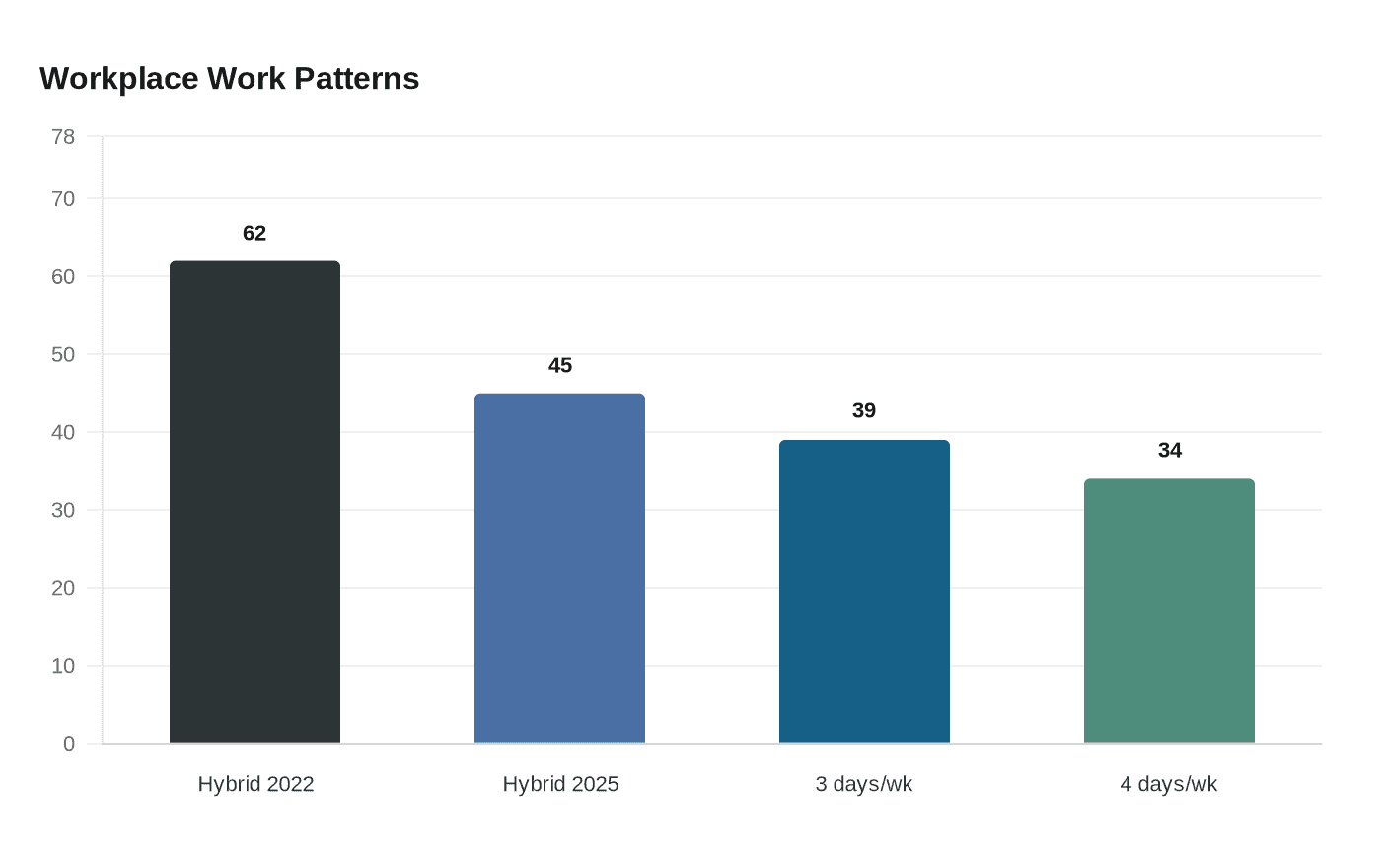
The return to the office is not a clean snap-back to old rules. Cisco’s 2025 global hybrid work study found hybrid arrangements dropped from 62% in 2022 to 45% in 2025, while nearly three-quarters of organizations now require employees to work in the office. Owl Labs adds another layer to the picture: 39% of hybrid workers go in three days a week and 34% go four days a week. That is enough time in front of colleagues to make clothing feel consequential again, but not enough to justify a closet full of rigid, corporate uniforms.
That tension is exactly why the strongest office dressing today leans toward flexibility. International Workplace Group’s 2025 Workwear Reimagined reporting says employees want outfits as adaptable as the jobs they hold, and its press materials point to Gen Z and Millennials as the most stressed about what to wear to work. The style conversation around that stress is telling too: “Quiet Luxury” and “Office Siren” both suggest a wardrobe that is tuned, not timid. The clothes still need authority, but they also need a pulse.
The pieces that actually earn a place in a lean capsule
The smartest way to build this wardrobe is to treat every expressive piece as a multiplier. A statement midi skirt earns its keep when it can break the monotony of a work uniform without demanding a full rethink of everything else. It is the kind of piece that works with a crisp shirt on Monday, a fine knit on Wednesday, and a sharp blazer when the week needs more structure. The point is not volume for its own sake. The point is one distinctive line in the silhouette that makes the whole outfit feel intentional.
Reworked suiting is even more useful because it remains the spine of a work capsule, just without the old stiffness. The fresh version still signals competence, but it does so with a little more ease, which matters when your week includes desk time, client meetings, and the occasional evening event. A good suit in this climate should separate cleanly into pieces that can travel on their own: the jacket over a simple base layer, the trousers with a knit, the full set when you need the strongest version of yourself in the room.
Glove pumps are the most editorial of the three, and that is precisely why they need a stricter filter. They read as a finishing move rather than a foundation, the sort of shoe that can make plain tailoring feel newly considered. In a capsule, they only deserve space if they can pull double duty beyond one special outfit. A pump with that close-fitting, glove-like feel has to do more than look current on a runway. It has to carry you through a real day, from commute to meeting to dinner, without turning the rest of the outfit into a costume.
How to keep the wardrobe polished without looking corporate
The trick is not to reinvent office dressing every morning. It is to keep the base of the outfit quiet enough that one expressive piece does the heavy lifting. That means repeating the same dependable anchors, then swapping in one sharper note: a skirt with more movement, a jacket with a cleaner line, a shoe with a little more tension. The result is less corporate, but no less composed.
This is where the capsule logic matters. If your closet already has the right plain shirt, the right tailored trouser, and the right blazer, then a statement midi skirt becomes a deliberate punctuation mark instead of a trend expense. If your suiting is solid, then you can wear it as a system rather than as a single event. And if your shoes are edited carefully, glove pumps become the piece that changes the read of everything else.
- Use the statement skirt when the rest of the look is streamlined and repeatable.
- Let reworked suiting do the weekday heavy lifting, then split the pieces apart for more mileage.
- Treat glove pumps as a finish, not a foundation, unless they are comfortable enough to survive a full office day.
- Keep the rest of the palette restrained so the expressive item does its job cleanly.
Why the capsule idea feels newly relevant
The current way of dressing for work echoes an older piece of fashion intelligence. Donna Karan’s 1985 “Seven Easy Pieces” is still one of the clearest benchmarks for streamlined professional dressing because it understood something modern offices are rediscovering now: versatility is a form of polish. Back then, the idea was about giving women a compact wardrobe that could be rearranged without losing authority. Today, the logic is almost identical, only the dress code is looser and the life around it is more fluid.
That is why 2026 workwear is being framed less as a strict uniform and more as a curated system. The best version is not packed with novelty for its own sake. It is precise, mix-and-match, and slightly more expressive than the old corporate template. Chanel’s high-fashion stamp on the idea matters because it gives the shift cultural weight, but the real test happens on a Tuesday morning when the clothes have to work without overthinking. The strongest office capsule is the one that lets you look sharper, feel less dressed-up, and still seem completely in control.
Know something we missed? Have a correction or additional information?
Submit a Tip