SeaVees and Quoddy revive the boat shoe for coastal spring style
SeaVees and Quoddy turn the boat shoe into a scarce spring object, with 300 Maine-made pairs in Horween leather and true moccasin construction.
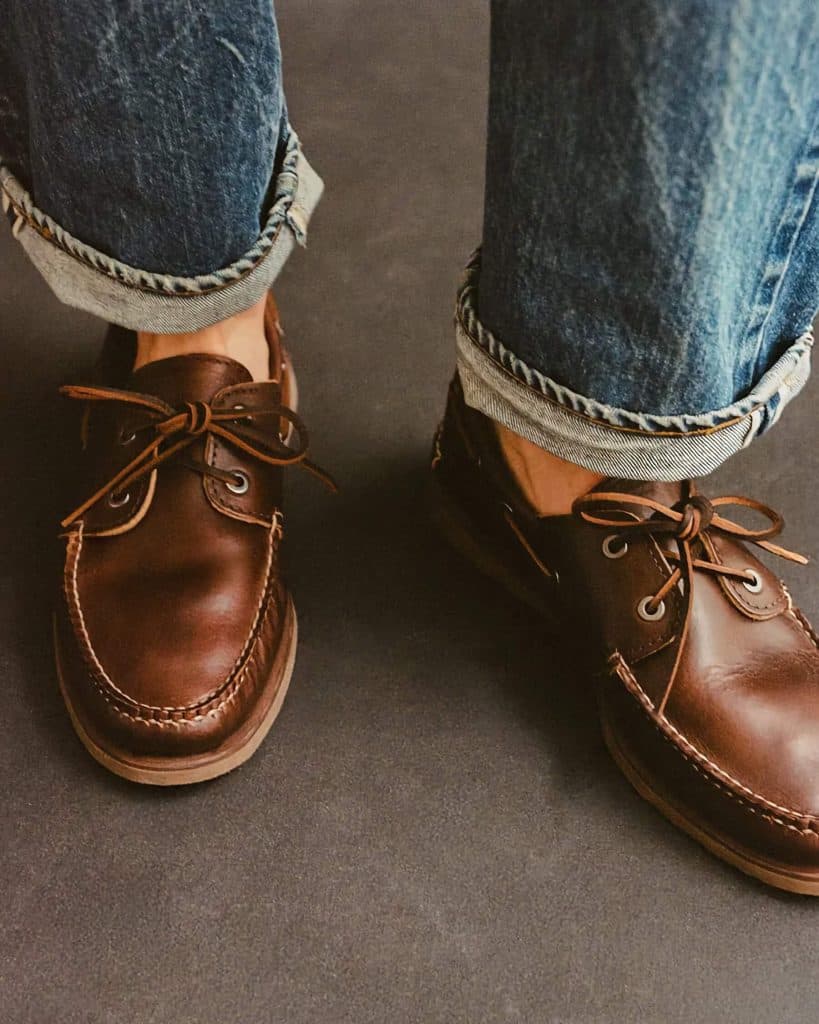
The best thing about the SeaVees x Quoddy Landing Boat Shoe is that it treats a humble preppy staple like a collector’s piece. Limited to 300 pairs, made in Maine from Horween leather, and finished with hand-stitching and a Vibram non-marking wave-grip sole, it lands less like a trend piece than a coastal heirloom that happens to be arriving right when fashion has rediscovered the boat shoe.
A heritage shoe, sharpened for spring
SeaVees built this collaboration around a forgotten prototype it calls “The Lost Boat Shoe,” a detail that gives the project its hook and its legitimacy. The brand says the style was developed and produced in Maine with Quoddy, the Lewiston workshop known for handsewn footwear, while founder and CEO Steven Tiller ties the project back to his own beginnings in Maine in the mid-1990s. That backstory matters because the shoe is not trying to imitate heritage from a distance, it is drawing directly from it.
What distinguishes the Landing Boat Shoe is the tension between familiarity and precision. SeaVees describes it as a “West Coast reimagining,” but the materials and construction speak in a more disciplined language: Made-in-the-USA Horween leather, a custom two-piece upper pattern, true moccasin construction, and a hand-finished build that gives the shoe its quiet authority. In a market crowded with chunky sneakers and oversized soles, this is a study in restraint.
Why the boat shoe feels right again
Boat shoes are back in the style conversation because the mood has shifted toward coastal, preppy, and fisherman-inspired dressing. That is a very different energy from the logo-heavy sneaker cycle of recent seasons. The appeal now is not speed or sport, but polish with a hint of salt air, the kind of shoe that looks at home with linen trousers, striped knits, and relaxed tailoring rather than gymwear.
The category has deep roots. Sperry says Paul Sperry founded the original boat shoe in 1935 after inventing the world’s first non-slip sole, which became the basis for the style’s nautical identity. That origin still shapes how the shoe reads today: practical, deck-ready, and tied to Ivy dressing and leisure, but now reinterpreted as something more specific and more expensive-looking than the average casual loafer.
Scarcity only intensifies that shift. When a boat shoe is limited to 300 pairs and built in Maine, it stops behaving like a mass-market basic and starts reading like a fashion object. That is exactly why this collaboration has traction. It turns a once-everywhere silhouette into something you notice, the way a well-cut blazer or a perfect cashmere cardigan can suddenly feel special again when the details are right.
The craftsmanship is the point
Quoddy’s role is central to the shoe’s appeal. The company says its footwear is handmade in Lewiston, Maine, and that it produces handsewn shoes, boots, moccasins, and slippers in both in-stock and made-to-order styles. That kind of workshop pedigree gives the collaboration weight at a moment when consumers are increasingly looking for evidence of where and how a product was made.
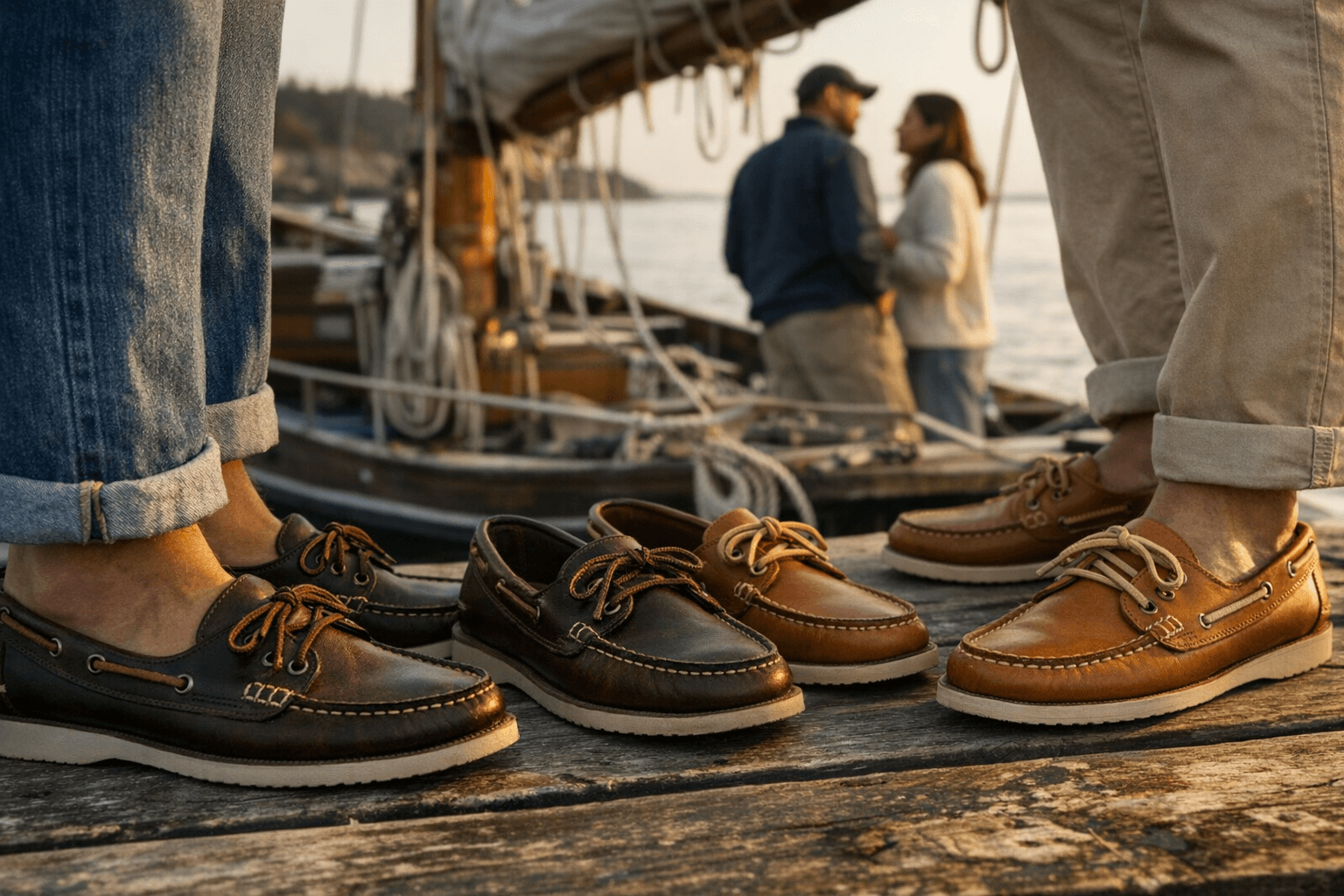
Horween leather adds another layer of credibility. Horween Leather Co. says its leathers are still made by hand, the same way as generations ago, and that old-world continuity fits this project perfectly. On a low-profile boat shoe, leather quality is visible immediately: the grain, the finish, the way the upper holds shape without looking stiff. Pair that with true moccasin construction and the shoe reads as thoughtfully built rather than merely nostalgic.
The Vibram non-marking wave-grip sole also keeps the design from collapsing into costume. It references the shoe’s maritime function without making it look dated, and it gives the silhouette a practical edge that matters if you want coastal style to feel current rather than theme-party polished. The result is a shoe that can move easily from dock to city block, which is precisely why it belongs in the spring wardrobe conversation now.
How to wear it in a coastal grandmother wardrobe
For coastal grandmother style, the Landing Boat Shoe works because it is low, clean, and composed. Its profile keeps outfits from feeling heavy, which makes it a stronger partner for billowy linen, crisp cotton shirting, and softly structured trousers than a bulky sneaker would be. The shoe’s preppy heritage brings discipline to otherwise easy pieces, which is what keeps the look from drifting into costume.
Think in terms of texture. The smooth Horween leather sharpens washed denim, oyster-colored knits, and striped poplin. The hand-stitched moccasin construction adds a tactile note that feels at home beside woven baskets, relaxed tailoring, and all the sea-salt neutrals that define the coastal wardrobe. Even when the outfit is simple, the shoe gives it a finished, intentional edge.
- With linen pants, it reads polished but not formal.
- With straight-leg denim, it feels more New England than sneaker-casual.
- With a crisp white shirt and a navy sweater draped over the shoulders, it taps the coastal-prep mood without looking forced.
The reason this particular shoe works better than a generic sneaker trend piece is that it carries a built-in point of view. The boat shoe already belongs to a specific world, one that includes deck lines, striped jerseys, sailing history, and Ivy dressing. SeaVees and Quoddy have simply made that world more collectible, more tactile, and more sharply defined for spring 2026.
That is the real story here: not that boat shoes are back, but that they have been recast as scarce heritage objects with just enough modern engineering to feel desirable now. In a season leaning into coastal references, this is the pair that makes the argument with the least noise and the most style.
This article was produced by Prism’s automated news system from verified source data, official records, and press releases, then run through automated quality and moderation checks before publishing. The system is built and supervised by the people who set the standards it runs under. Read our full AI policy.
Did this article answer your question?