2026’s polished flats and sneakerinas redefine effortless everyday style
The strongest shoes this year are the ones you can wear twice a week without thinking: mesh flats, polished ballet shapes and sneakerinas that still look sharp at 8 p.m.

The best shoes in the room right now are the ones that pass the repeat-wear test without trying too hard. ELLE’s 2026 shoe-brand guide points to a very specific mood: mesh flats, ballet flats, smart flip-flops, Mary Janes and sneakerinas that look polished enough for dinner but easy enough for a full day on foot. That balance is the story, and it is exactly why these styles feel less like a trend blip and more like the new everyday uniform.
City walking, without the orthopedic vibe
Vagabond is the cleanest answer when the day starts with pavement and ends with one more errand. The Swedish brand says it was founded in the early 1990s in Varberg, and its whole pitch is everyday style, durable quality and refined detailing, which is the right formula for a shoe you actually keep reaching for. ELLE names it the brand for wear-all-day shoes, and that tracks: this is the lane for women who want restraint, not fuss.
Dear Frances is the more fashion-forward version of the same idea. Founded in 2016 by Jane Frances and Scott O’Connor, the brand makes its shoes in Italy and has built a cult around the Balla mesh flats, including mesh ballerina flats and mesh flats with straps. Mesh matters here because it softens the shoe visually and physically, giving you that airy, lightly dressed feel that works from morning commuting to late-afternoon coffee.
Office polish that still looks like a choice
Nomasei is the ballet flat brand for people who want polish with a little Paris-left-bank attitude. Founded by Paule Tenaillon and Marine Braquet, who met at Chloé before working across houses like Dior, Chanel, Louis Vuitton, Givenchy and Jil Sander, the label has the kind of fashion résumé that explains why its flats read sharper than basic. ELLE singles it out for ballet flats, and the appeal is obvious: the shape stays feminine and streamlined, but it has enough edge to sit under tailored trousers or a crisp skirt without looking twee.
Le Monde Beryl pushes the same polished idea into Mary Janes, which is where the silhouette gets interesting for 2026. The brand says its shoes are sustainably produced and hand-finished in Italy by master artisans, and its current collection includes Ballet Mary Janes in leather, mesh and suede. That material range is the point: leather makes them office-ready, mesh keeps them lighter, and suede gives them that soft, afternoon finish that feels especially right when the weather turns warm.
The warm-weather shoe that does not act needy
St. Agni is the smart flip-flop that keeps the whole category from collapsing into beachwear. The brand says its footwear is made by hand from 100% vegetable-dyed leather and designed in Byron Bay, Australia, while SSENSE identifies Matt and Lara Fells as the founders in 2014. ELLE puts St. Agni in the smart flip-flop slot for a reason: it is the easiest shoe here to slip into for travel, summer evenings and any day when you want the lowest possible profile without looking underdressed.
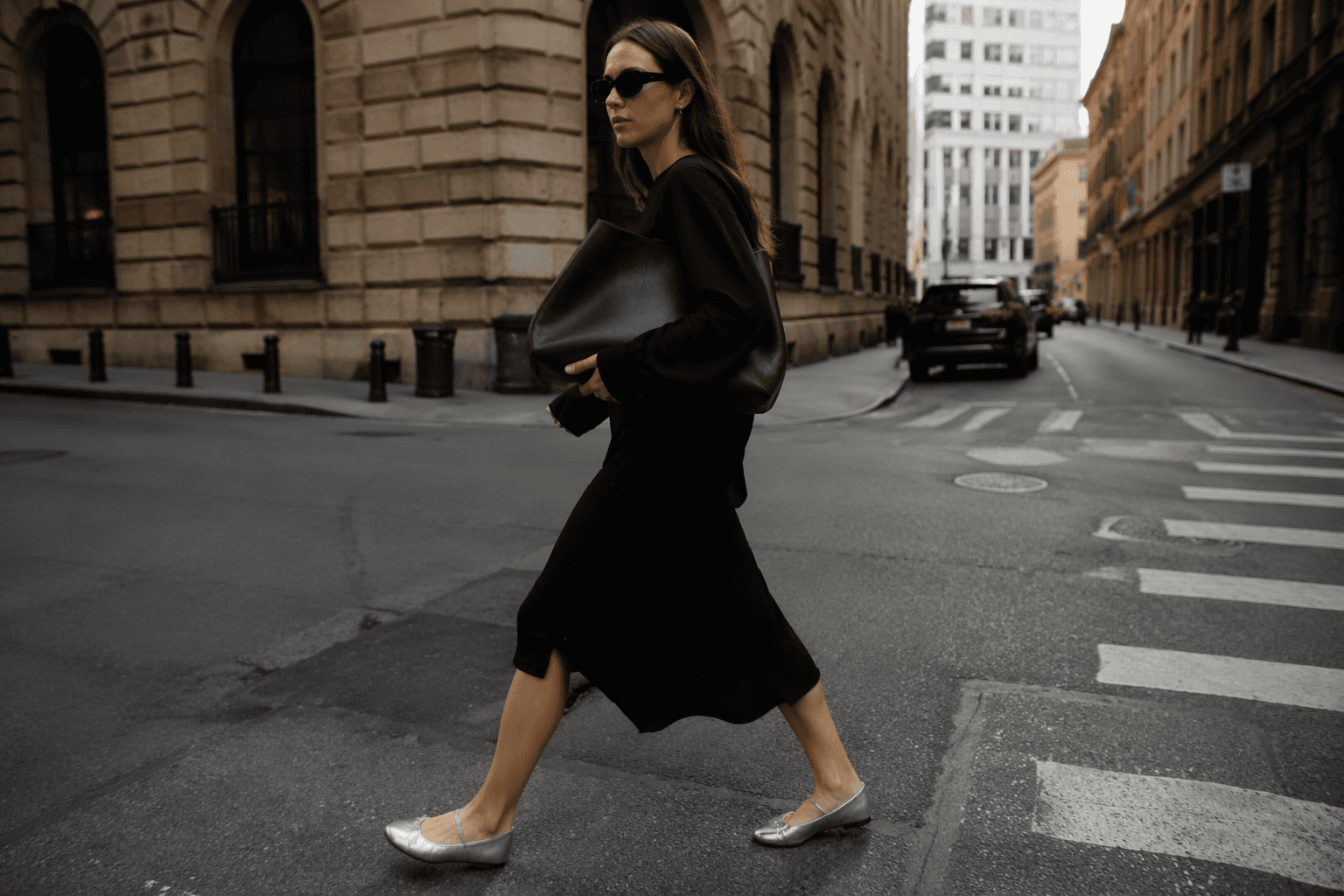
Mesh flats sit in the same warm-weather conversation, and they are being treated like more than a cute seasonal idea. Fashion coverage in 2026 frames mesh ballet flats as a street-style staple from Paris to Copenhagen, which makes sense because the open weave gives them breathability and lightness without losing the clean line of a proper flat. That is the trick with this whole category: the shoes look styled even when they are doing practical work.
Why sneakerinas suddenly make sense
The sneakerina is the shape that explains the whole moment. ELLE calls it one of spring 2026’s defining silhouettes, a hybrid that fuses a ballet slipper with a sneaker, and that mash-up captures what women are actually buying into now: something softer than a trainer, but sturdier than a pure flat. It is fashion’s answer to the day that starts at 8 a.m. and somehow still needs to look intact at 8 p.m.
The market is backing that instinct. ELLE notes that sales of Mary Jane-inspired sneakers on StockX rose more than 350% year-on-year in Q1 2026, which is a huge signal that the ballet-and-sneaker crossover is not just editorial wallpaper. Fashionista’s read on Fall 2026 as a season rooted in pragmatism and commercial viability fits the same pattern: the trend is not about shock value, it is about shoes that sell because they solve a wardrobe problem.
Why this revival feels familiar, not forced
The ballet flat has been here before, and that history is part of why the 2026 version feels so wearable. The modern revival is often traced to the 1950s, when Audrey Hepburn wore ballet flats in Sabrina in 1954 and Brigitte Bardot helped push Repetto’s Cendrillon into the spotlight in And God Created Woman in 1956. Princess Diana kept the shape culturally alive later on, which is why today’s versions still read as familiar even when they show up in mesh, strap detailing or hybrid sneaker form.
That lineage matters because the best 2026 shoes are not trying to invent a new language from scratch. They are tightening the fit, sharpening the line and making the classics work harder, whether that means a mesh flat from Dear Frances, an all-day Vagabond pair, a Paris-coded Nomasei ballet flat, a handmade St. Agni flip-flop or a Le Monde Beryl Mary Jane in leather, mesh or suede. The winning shoes are not the loudest ones in the room, they are the ones that stay on your feet long after the outfit has moved on.
This article was produced by Prism’s automated news system from verified source data, official records, and press releases, then run through automated quality and moderation checks before publishing. The system is built and supervised by the people who set the standards it runs under. Read our full AI policy.
Did this article answer your question?