6 spring 2026 accessories that instantly polish basic outfits
Six easy accessories are doing the heavy lifting this season, turning tanks, tees, and slip dresses into looks with shape, texture, and polish in seconds.
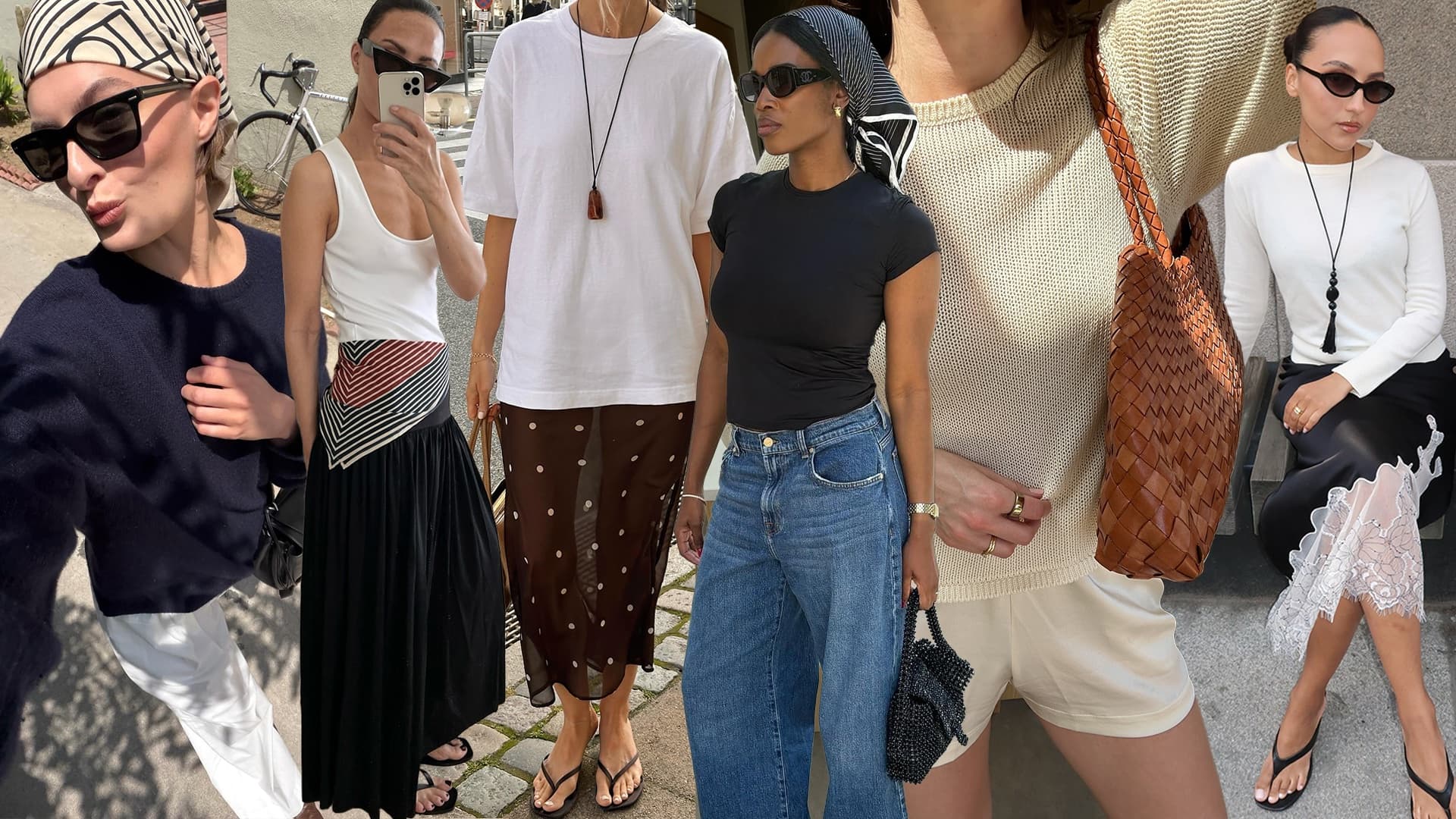
The smartest spring 2026 styling trick is not a new silhouette. It is a small accessory that makes a plain outfit look considered, tactile, and just a little bit expensive. That is why the season’s best edits lean into long pendant necklaces, headscarves, standout belts, woven bags, bucket hats, and scarf belts, with shopping options already circulating through Nordstrom, Zara, Revolve, and J.Crew.
The bigger mood behind all of it is clear: accessories are no longer background noise. Buyers and editors have been pushing craftsmanship, textural richness, and colorblocking, while the fashion crowd has moved away from novelty for novelty’s sake and toward pieces that feel expressive, useful, and built to last. That shift is exactly why these six pieces work so well over the most basic spring and summer formulas.
Long pendant necklaces
Start with the easiest canvas imaginable, a white tank and tailored trousers, or jeans and a tee. A long pendant necklace drops straight down the body and creates a clean vertical line, which is why it instantly makes a flat outfit feel styled instead of just worn. The look has real runway mileage too, with long necklaces showing up at Coach, Michael Kors, Ralph Lauren, Tory Burch, and TWP, sometimes with a functional twist that lets the piece hold or display everyday items.
What makes this feel current is the balance of polish and practicality. A pendant in polished metal or a textured finish does not scream for attention the way a loud statement necklace once did, but it still changes the whole proportion of a look. On a simple slip dress, it reads sleek. On a boxy tee, it adds intent. That is the kind of low-effort shift fashion people keep reaching for.
Headscarves
Take a plain white dress, a tank with trousers, or even a basic black tee and denim, and suddenly tie on a headscarf. The whole outfit sharpens. The fabric frames the face, softens the hairline, and gives the impression that the rest of the look was built around that one move, which is exactly why it feels so polished without looking overworked.
The appeal is partly nostalgic, and that is the point. The scarf revival on New York Fashion Week runways taps into the clean glamour of Audrey Hepburn, Grace Kelly, and Jackie Kennedy, but it does not feel costume-y when it is done now. The trick has also been spreading through social media, where the scarf has become a shape-shifter, worn around the head one day and then reworked as a belt the next. It is one of the rare accessories that can make even the most ordinary outfit look intentionally editorial.
Standout belts
If your uniform is jeans and a tee or a tank with trousers, a standout belt is the fastest way to give it a waist, a point of view, and a little bit of bite. The best versions do more than hold up pants. They interrupt all that blank fabric with hardware, texture, or scale, which makes the outfit feel designed from the center out.
This season’s belt story fits neatly into the broader appetite for craftsmanship and longevity. Think leather with heft, woven finishes, or a buckle that looks deliberate rather than decorative for its own sake. A good belt also changes the silhouette in a way that matters: it pulls a straight outfit into shape, makes oversized trousers feel more intentional, and can rescue a simple dress that otherwise disappears on the body.

Woven bags
A woven bag is the easiest way to make a plain summer outfit look sun-warmed and expensive. Put one with a tank and trousers, a white cotton dress, or jeans and a tee, and the texture does the work for you. Suddenly the outfit has contrast, from crisp cotton or denim against something softer, looser, and more tactile.
The reason woven bags keep winning is that they sit right in the middle of utility and polish. They echo the season’s focus on textural richness, but they also feel relaxed enough for everyday wear, which is why they work so well with the current appetite for pieces that last beyond a single mood cycle. A woven tote or compact shoulder bag does not need much styling help. It is already carrying the outfit.
Bucket hats
A bucket hat is the fastest way to make a basic look feel pulled from a real life, not a styling board. Wear one with jeans and a tee or a simple white dress, and the outfit gets instant shape at the top, a little shadow at the face, and that off-duty energy people keep trying to fake with way more effort.
What makes this version feel different from older sportswear references is the broader 2026 accessory mood around pieces that become the look itself. Editorialist has been tracking a vintage revival across accessories, from 1950s pillbox hats to Art Deco-inspired tasseled jewelry, and the bucket hat fits that same instinct for recognizable form with personality. It is practical, but it also has attitude, which is why it keeps landing on the right side of casual.
Scarf belts
The scarf belt is the most styling-nerdy of the group, and that is exactly why it works. Tie one through the loops of jeans, knot it over a slip dress, or wrap it around a tank and trousers set, and the outfit immediately looks more thought through. It adds color, movement, and a little asymmetry, which is often all a basic look needs.
This is the accessory that really captured the social-media side of the season. The scarf-as-belt trick spread fast in summer 2025, and figures like Lola Tung helped turn it from a clever hack into a repeatable styling move. It also fits the broader fashion shift toward accessories with personality and longevity, because a simple scarf can be worn at the waist one day, in the hair the next, and over a bag handle after that. That kind of versatility is the whole game right now, and it is why these six pieces do more than decorate an outfit. They finish it.
This article was produced by Prism’s automated news system from verified source data, official records, and press releases, then run through automated quality and moderation checks before publishing. The system is built and supervised by the people who set the standards it runs under. Read our full AI policy.
Did this article answer your question?