Chanel revives the graphic T as a polished fashion statement
Chanel’s Matthieu Blazy era has turned the graphic T into a polished status piece, with celebrity styling giving the humble tee real luxury heat.
The new Chanel signal
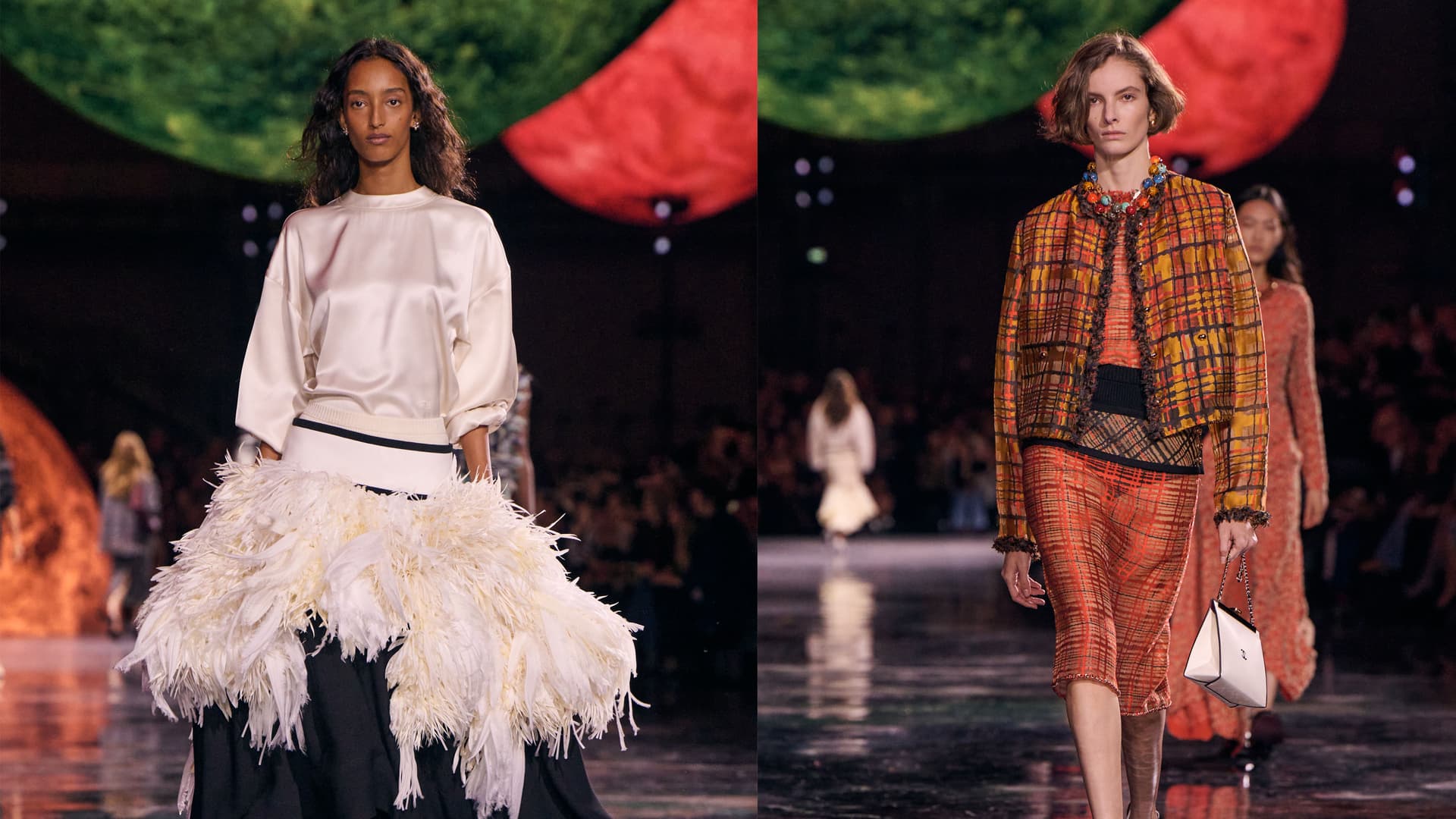
Matthieu Blazy’s Chanel has done something quietly radical: it has taken the graphic T, long the fastest route to looking casual, and recoded it as something deliberate, collectible, and unmistakably fashion-aware. Chanel’s Spring 2026 ready-to-wear debut, shown at Paris Fashion Week in October 2025, sent the house into what buyers later called a reset, and that sense of arrival is exactly what gives the tee its new authority.

This is not a story about a slogan tee thrown over jeans and called effortless. It is about a luxury house with enormous cultural gravity making the everyday look edited. WWD described the graphic T as moving from gimmicky to genuinely fresh again, and Chanel’s runway helped push it back into the conversation. That matters, because when a house like Chanel touches something ordinary, the object stops reading like merch and starts reading like fashion language.
Why the tee suddenly feels expensive
The difference between the old graphic tee and the new one is not just the print. It is the provenance, the styling context, and the sense that the shirt has been chosen with intent rather than grabbed on the way out the door. A Beatles print, a Grateful Dead graphic, or a Hannah Montana reference carries built-in memory and attitude; when those references are placed under Chanel’s influence or beside a couture-minded silhouette, the tee gains weight.
That is what makes the current version feel so much sharper than the generic “ways to wear it” formula. The new graphic T is not about layering in the abstract. It is about contrast: soft cotton against satin, souvenir energy against luxury tailoring, nostalgia against polish. A T-shirt with a familiar image can now function almost like a pin on a lapel, a clue to taste, age, and cultural fluency all at once.
Celebrity styling made the message visible
The clearest proof of the tee’s comeback is how celebrities are wearing it in public, where the styling does the real talking. Jennifer Lawrence and Sabrina Carpenter were both seen in the same yellow Beatles “Strawberry Fields Forever” T-shirt from Junk Food Clothing, but they made it look like two different arguments. Lawrence paired hers with a red-collared cardigan, loose denim, and Adidas Tokyo sneakers, while Carpenter offset the same shirt with a white fur coat, pushing the tee from friendly nostalgia into a more theatrical register.
Kate Hudson took the idea in a more editorial direction, wearing a Grateful Dead graphic T-shirt with a red satin midi skirt and glove pumps. Miley Cyrus went further still, layering a Hannah Montana T-shirt with a Rabanne chainmail gown, a pairing that turned pop memory into red-carpet wit. Meghan Markle’s “Mama” T-shirt from Alliance of Moms, worn with denim and a trench coat, showed the same impulse in a more restrained key: the shirt still carried meaning, but the styling made it feel polished rather than promotional.
From off-duty to high-fashion, the styling shift is the point
The reason this comeback feels different from past graphic-tee moments is that the shirt is no longer isolated from the rest of the look. It now appears in spaces where fashion authority is strongest: Chanel’s runway, Balenciaga’s Spring 2026 show, airport arrivals, film festivals, and carefully considered off-duty moments. WWD’s framing of the trend as moving from the runway to off-duty celebrities captures the key shift: the tee is being validated in luxury spaces and then worn in the real world without losing its sharpness.
Anne Hathaway’s graphic mullet T-shirt at Balenciaga’s Spring 2026 show pushed the category another step toward fashion objecthood. Jennifer Lawrence also wore a Phoebe Philo mullet T-shirt at the San Sebastian International Film Festival on Sept. 26, 2025, which reinforced the idea that the graphic tee can now live comfortably inside a more conceptual wardrobe. The cut, the print, and the styling all matter; a tee that sits at the intersection of designer provenance and cultural reference no longer reads as basic at all.
Why the trend has staying power
The business side of the story helps explain why this resurgence feels so durable. Melody Kole of Junk Food Clothing says the graphic T works because it lets people “express what they love, remember, grew up with, or want to belong to.” That is the emotional engine behind the trend: a good graphic tee carries memory, but when it is styled with luxury pieces, that memory reads as taste rather than sentimentality.
This is also why Chanel’s role matters so much. Buyers described the season as a reset, and Chanel as one of the strongest debuts of the week, which gives the house’s influence real commercial weight. When a collection like that reframes a humble T-shirt as part of the luxury conversation, it changes what feels current in stores, on celebrities, and eventually in wardrobes that want ease without sacrificing intent.
The graphic T is back, but it has returned with discipline. The new version is not louder, just smarter, and in Chanel’s orbit, even the most familiar cotton tee can look like a statement worth making.
This article was produced by Prism’s automated news system from verified source data, official records, and press releases, then run through automated quality and moderation checks before publishing. The system is built and supervised by the people who set the standards it runs under. Read our full AI policy.
Did this article answer your question?