Chrissy Rutherford's Airport Outfits Prove Comfort Can Still Look Polished
Chrissy Rutherford makes airport dressing look intentional again: polished trousers, smart layers, and easy shoes that read chic, not try-hard.
Airport style is not a concession to laziness
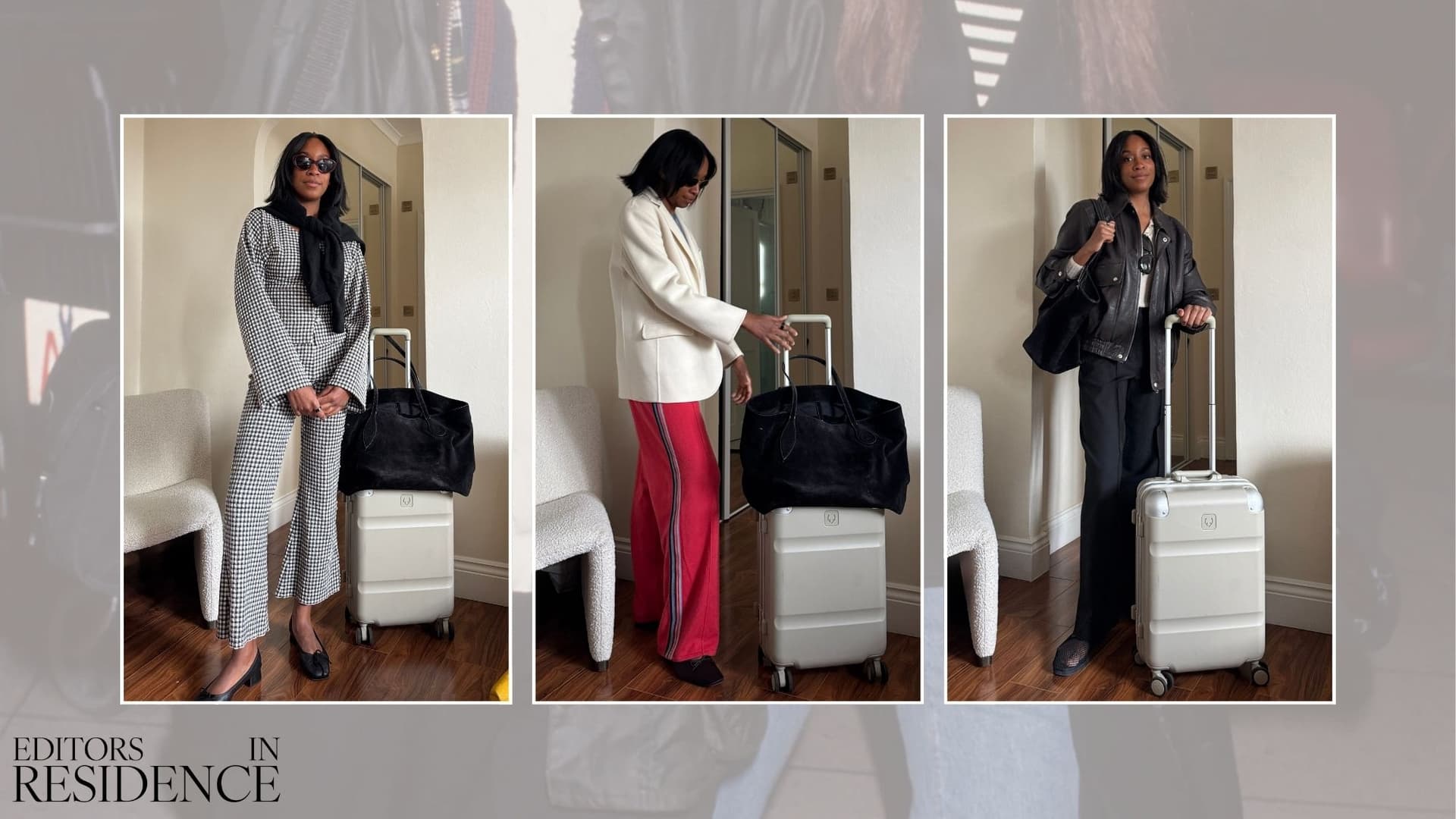
Chrissy Rutherford’s whole point is simple: the airport is not a permission slip to give up. It is a place where comfort, polish, and practicality have to sit at the same table, and the best looks make that balance feel effortless. That is why airport dressing keeps coming back as a fashion obsession, and why it never really stops mattering. It is a public ritual, part security line, part runway, part real life.
The best airport outfits do not scream. They glide. They let you move, survive security, and still look like you made a decision before you left the house, which is exactly the kind of quiet authority model-off-duty style has built its reputation on.
Why airport fashion still has cultural gravity
This fixation is not new, and that is what makes it interesting. Who What Wear has tracked celebrity airport fashion back to the early 1950s, when stars like Marilyn Monroe turned travel into spectacle with a very different kind of glamour. Monroe, born June 1, 1926, and dead by August 5, 1962, remains shorthand for that old-school polished travel fantasy, the era when even transit could look cinematic.
Then the mood shifted. Jeans, cozy outerwear, and practical shoes became the uniform of a later, more functional airport era. That history matters because Rutherford is not arguing for overdressing in some costume-like way. She is arguing that airport dressing has always been about presentation, just with the rules rewritten for modern mobility. Who What Wear has also said airport style is one of its most popular recurring fashion topics, which makes sense. People keep coming back to it because it sits right in the overlap between aspiration and necessity.
Start with trousers that move, drape, and recover
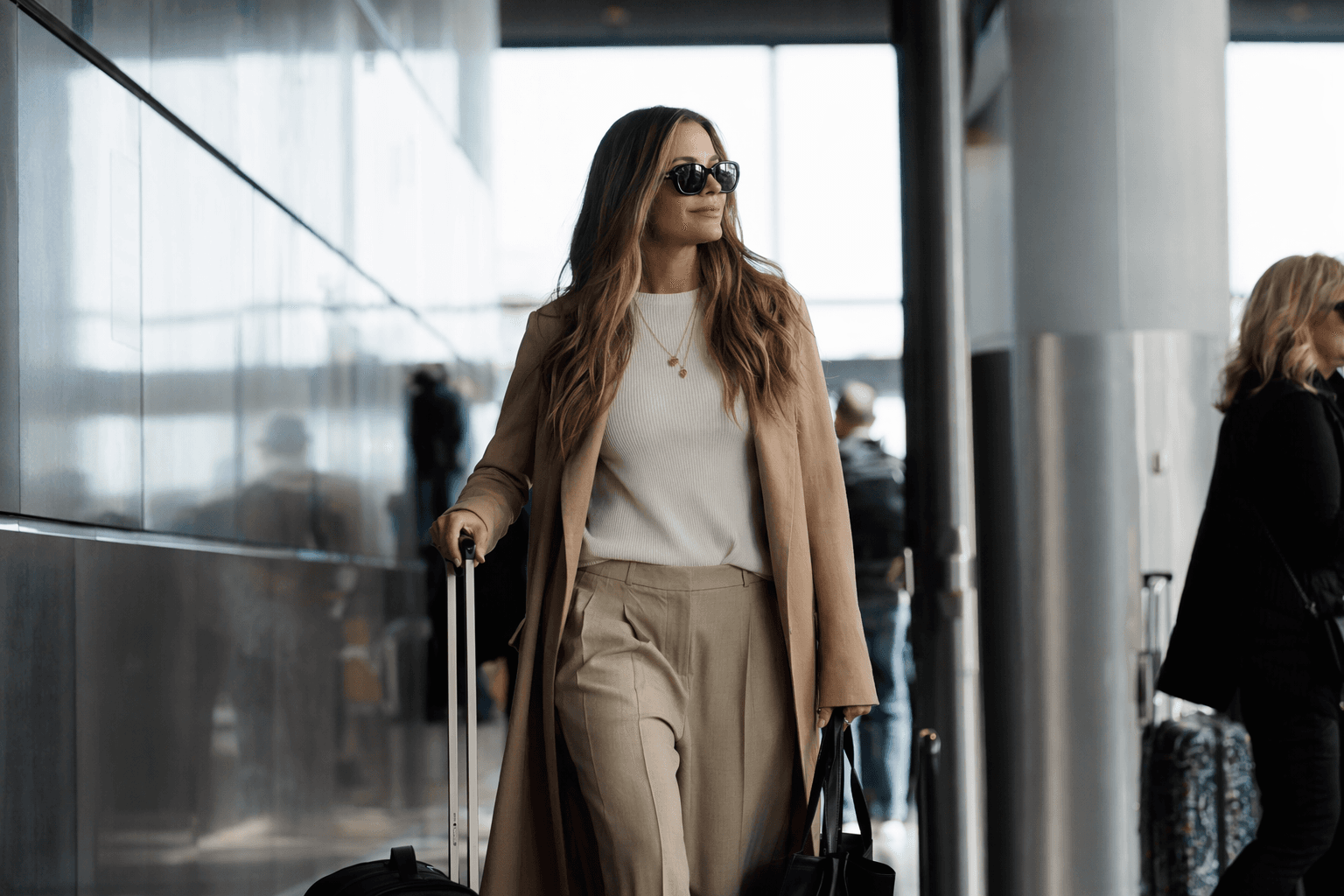
If there is one piece that carries the whole look, it is the trouser. Rutherford leans into easy-breezy pants for a reason: they create shape without squeezing the life out of you. That is the sweet spot. You want a leg that falls cleanly, skims the body, and still looks intact after a flight, not something that wrinkles into a crumpled mess the second you sit down.
The rule here is not complicated. Pick fabrics with enough body to keep their line, enough weight to hang properly, and enough flexibility to sit in without looking defeated. Airy is good; flimsy is not. Anything that collapses, clings, or broadcasts every crease will look tired before you even hit baggage claim. The point of polished airport dressing is that it should read intentional at hour one and still look composed at hour twelve.
Layer like you are dressing for three temperatures at once
Cabin temperature is its own category of chaos. One minute you are too warm, the next you are digging through your bag for something to throw over your shoulders. That is why smart layering is the backbone of this whole formula. Rutherford’s approach is built for movement between curbside, checkpoint, plane, and arrival, which means every layer has to earn its place.
Think in terms of adaptability. Start with something comfortable and breathable, then add a layer that gives the outfit shape, then bring one more piece that can be on or off without wrecking the silhouette. The best airport layers do not bulk you up. They create a frame. That is where model-off-duty dressing still wins: a tee under a knit, a jacket over that, maybe a coat that can be carried without looking like dead weight. The result feels lived-in, not lazy, and that difference is everything.
Shoes need to work harder than they look
The Transportation Security Administration keeps its guidance practical for a reason. Give yourself enough time, wear easily removable shoes, and stay ready for screening. That is not glamorous advice, but it is real life. At airport security checkpoints, you want shoes that can come off quickly and go back on without turning into a small crisis.
The best choices are the ones that hold up through standing, walking, and shuffling through lines while still reading polished when you land. This is not the place for fussy buckles, tricky laces, or anything that slows you down. A clean slip-on, a low profile sneaker, or another shoe that does the job without drama will always beat a look-at-me option that makes every checkpoint a negotiation. The old fantasy of suffering for style dies fast when you are barefoot in a plastic bin line.
Choose a bag that protects the look and the trip
A good airport bag is not just about storage. It is part of the outfit, and it has to behave like one. TSA also advises packing in neat layers to make screening easier and reduce the need for additional inspection, which is a reminder that organization is style, too. A bag that swallows everything and spits out chaos is not chic, no matter how expensive it is.
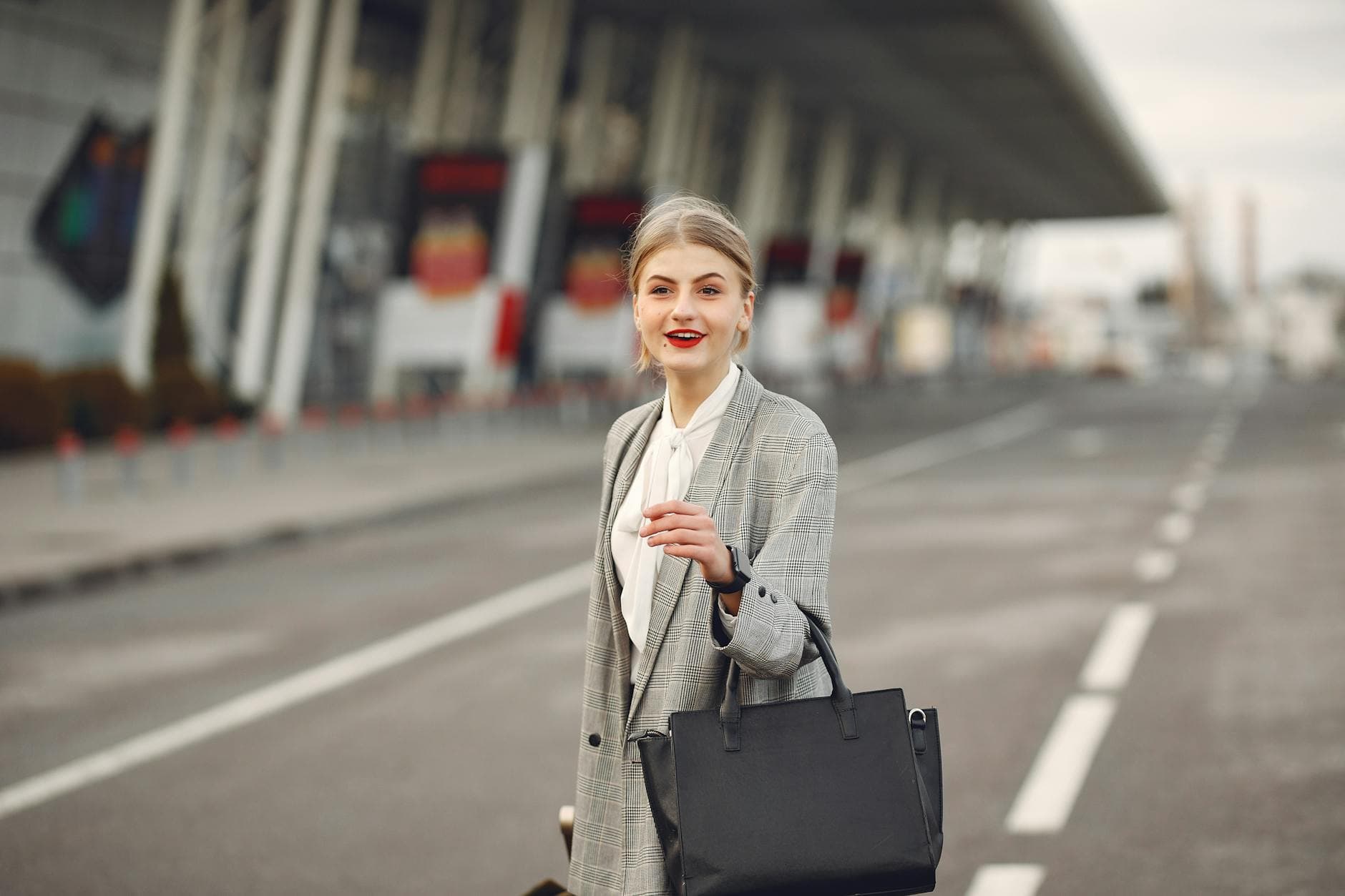
What works best is a bag with structure, enough room for the essentials, and a shape that does not sag into a mess by boarding. You want easy access for the things you actually reach for, plus enough internal order that you are not ripping through the whole thing in line. The polished traveler always looks a little prepared, and the bag is where that shows.
Finish with jet-set beauty, not airport cosplay
Rutherford’s final move is the smartest one: a little jet-set beauty. Not a full beat, not a luggage-cart fantasy, just enough grooming to make the whole outfit feel considered. That tiny bit of polish changes the energy. It says you dressed for the trip you want, not the trip you are trying to survive.
That distinction is why airport style keeps resonating. Who What Wear’s editors say readers continue to engage with celebrity and model airport looks because they offer more than outfit inspiration. They offer a template for how to look like yourself when you are tired, carrying too much, and crossing time zones. CNN Underscored’s travel advice backs up the same logic: the best airport outfits prioritize comfort, breathability, and freedom of movement, especially on long-haul flights that can stretch 12 hours or more. That is the real equation here.
Polished airport dressing works because it does not fight reality. It makes room for security lines, cabin chills, delayed boarding, and all the unglamorous parts of travel while still insisting on a little style. That is not vanity. That is a system, and Rutherford knows exactly how to make it look easy.
This article was produced by Prism’s automated news system from verified source data, official records, and press releases, then run through automated quality and moderation checks before publishing. The system is built and supervised by the people who set the standards it runs under. Read our full AI policy.
Did this article answer your question?