Effortless Elegance: How Modern Women Are Redefining Everyday Style in 2026
Women are wearing just 20% of their wardrobes 80% of the time. Seven repeatable formulas and five micro-habits are changing that for good in 2026.
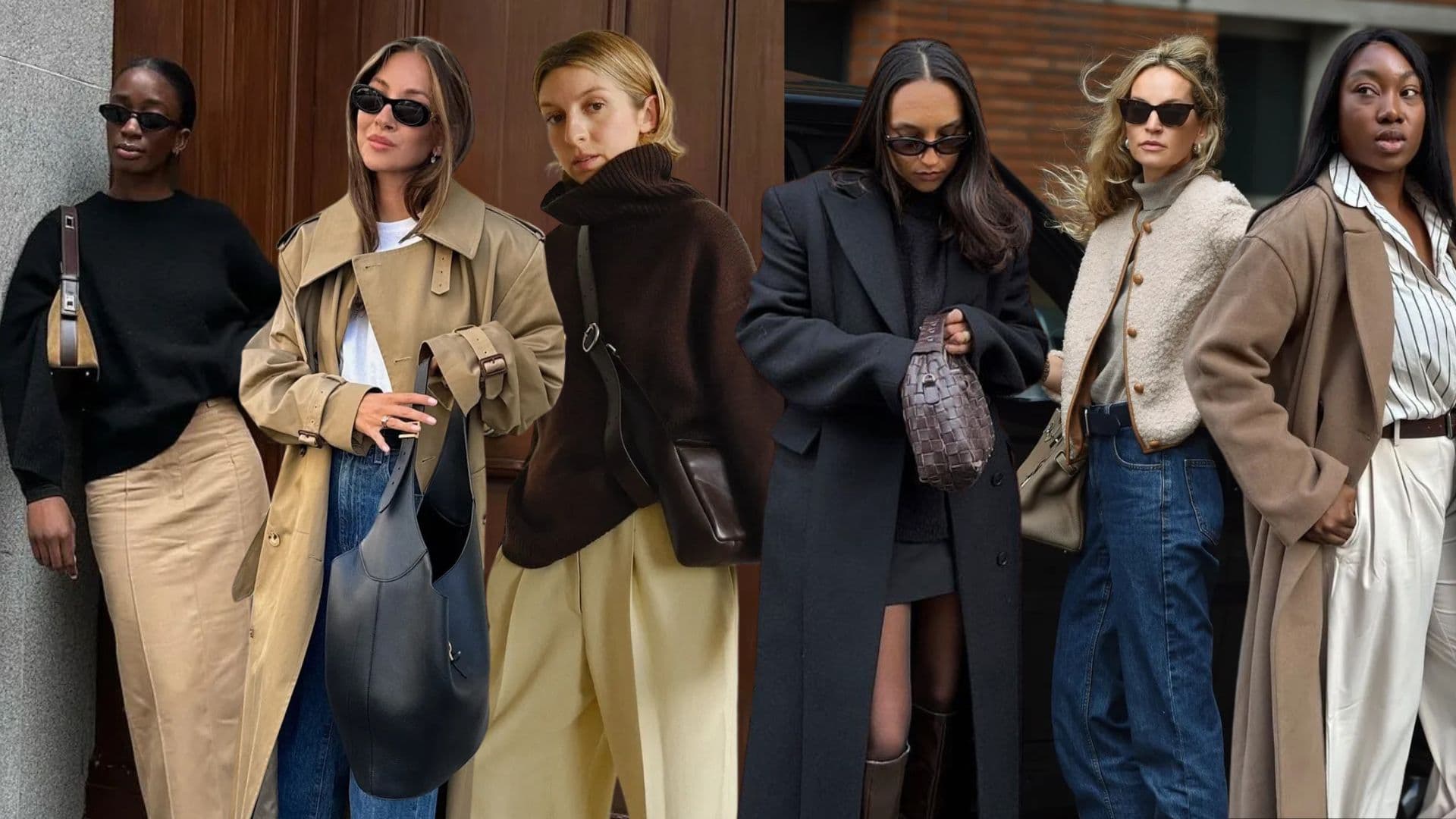
There is a particular kind of confidence that comes from opening your wardrobe and knowing, without hesitation, that everything in it works. Not the confidence of owning a great deal, but the confidence of owning the right things. In 2026, that distinction has quietly become the central organizing principle of how style-conscious women are choosing to dress, a shift driven by sustainability, hybrid work schedules, and a collective exhaustion with trend cycling that promises novelty but rarely delivers lasting satisfaction.
The data behind the shift is arresting: research consistently finds that women wear roughly 20% of their wardrobe 80% of the time. The remaining 80% hangs, unworn, as evidence of impulse purchases and fleeting enthusiasms. Against that backdrop, a viral movement on Instagram and TikTok called the 3-3-3 method, which asks women to select just 33 items and wear only those for three months, has found an enormous audience precisely because it names the problem and proposes a workable answer. Effortless elegance, in 2026, is that answer at scale: a philosophy that trades volume for precision and replaces the daily decision spiral with a set of repeatable rules.
The Foundation Pieces
The blazer, the silk shirt, and the wide-leg trouser form the high-leverage core of this wardrobe approach, and each earns its place by multiplying outfit options rather than limiting them. A well-cut blazer in camel, charcoal, or ivory can carry a boardroom meeting at 10 a.m. and a restaurant dinner at 8 p.m. with nothing more than a shoe change. The silk shirt, tucked or untucked, layered under a V-neck knit or worn alone with a midi skirt, performs the same structural alchemy. Wide-leg trousers in fluid crepe or tailored wool elongate the silhouette and project ease without reading as casual. Brands including The Row, Toteme, and Brunello Cucinelli have built entire identities around precisely these three pieces, treating them not as basics but as the architecture around which everything else organizes. Their approach to cut, fabric weight, and proportion is worth studying even when you shop at a fraction of the price.
To these three, add two supporting players that earn their frequency: a cashmere or fine-wool sweater in a warm neutral and a classic coat with clean, uncluttered lines. Quiet luxury in 2026, as its most articulate proponents define it, is an approach that prioritizes fewer garments of greater quality, with attention to the origin of materials and their durability.
Seven Formulas Worth Memorizing
The goal of effortless elegance is not a mood; it is a reproducible result. These seven formulas deliver it consistently, regardless of season or occasion.
- Column silhouette + third piece. A column dress, a straight-cut trouser with a fitted knit, or a long column skirt serves as the base. The third piece, a blazer, an oversized shirt worn open, or a longline cardigan, adds dimension without disrupting the vertical line. This formula reads as intentional at any formality level.
- Tonal knit co-ordinate. A matching knit set in a single tone, worn together, communicates polish that no amount of mixing and matching quite replicates. Pair it with a leather flat and a structured bag, and the outfit requires no further thought.
- Tailored trouser + flat. This pairing has effectively replaced the heel as the default polished-but-grounded formula across cities from London to Los Angeles. The flat can be a pointed ballet flat, a leather loafer, or a simple mule; the trouser should skim the ankle or break just slightly over the shoe.
- Silk shirt + wide-leg trouser. The classic tension between something that floats and something that drapes. Tucked loosely, with a single fine chain and a leather tote, this combination reads as considered at any hour of the day.
- Head-to-toe tonal color. Full burgundy, all-navy, or a complete look in chocolate brown creates the same streamlined, quietly luxurious effect as a considered two-piece, without requiring a designer label. The key is texture variation within the color story: a silk blouse against wool trousers, or a cashmere knit alongside leather boots, prevents the look from reading as flat.
- Trench coat + simple base. A classic trench in camel or stone over a white shirt and straight-leg denim is one of fashion's most reliable and long-lived formulas. Its longevity is not accidental: it works across body proportions, occasions, and seasons, and it ages better than almost any other outerwear choice.
- Cashmere knit + straight-cut midi skirt. This pairing belongs in the cold-weather rotation as reliably as the trench belongs in spring. A ribbed or fine-gauge knit, loosely tucked into a midi skirt in a complementary or tonal shade, is the kind of outfit that photographs well and feels effortless in real life.
The Tonal Principle
Tonal dressing is the technique that separates a merely functional wardrobe from a genuinely elegant one. In 2026, the palette has evolved beyond the all-beige monotone that characterized quiet luxury's first wave, moving toward richer, more dimensional tones: deep burgundy, warm caramel, soft chocolate, slate blue. Head-to-toe color dressing in these richer shades maintains quiet luxury's emphasis on cohesion and quality while allowing considerably more individual expression than the previous beige-on-cream formula. Mixing materials within a tonal story is what prevents flatness: a matte cashmere top against a glossy satin skirt, a rough-textured linen jacket layered over smooth tailored trousers. Neutral foundations, sand, ivory, oatmeal, warm grey, remain the most versatile choice because they support year-round outfit-building and resist seasonal obsolescence entirely.
The Micro-Habits That Create Polish
The formula is only half the equation. Polish is built from five small habits that cost more in attention than in money.
- Steam, not iron. A handheld fabric steamer revives drape and removes creasing in under two minutes. Clothes that look wrinkled read as careless, regardless of their origin or price point.
- Shoe care. Clean, conditioned leather transforms every outfit it anchors. A scuffed loafer or unpolished heel undercuts even an impeccably chosen look. Keep a leather conditioner and a suede brush accessible.
- Hem precision. The difference between a trouser that grazes the floor and one that breaks awkwardly at mid-calf is the difference between a polished silhouette and an unfinished one. A single tailor appointment delivers an outsized return on almost any garment.
- The jewelry edit. One fine chain, a pair of small gold hoops, or a single sculptural cuff carries more weight than layering every piece simultaneously. Independent labels like Mejuri, Aurate, Otiumberg, and Missoma have made this kind of understated, everyday-wearable jewelry accessible across a wide range of budgets, and each approaches the category with a similar restraint: pieces designed to complement rather than compete.
- Bag discipline. A structured bag, one that holds its form when set down, communicates intention. It does not need to carry a recognizable name; it needs to behave like it was chosen deliberately.
Why 2026 Is the Moment to Commit
Three converging cultural forces make this the most logical moment to build an effortlessly elegant wardrobe rather than simply admire the concept. The first is hybrid work: with most professionals now dividing their week between home and office, clothing that reads polished at 9 a.m. and relaxed by 7 p.m. has become a practical non-negotiable rather than a nice-to-have. A blazer or silk shirt that transitions from a video call to a dinner without a wardrobe change is genuinely solving a daily-life problem.
The second force is cost-per-wear thinking, which has become the dominant framework for intentional shoppers. A $400 cashmere knit worn 120 times costs roughly $3.33 per wear; a $40 trend piece worn twice costs $20 per wear. The arithmetic is unambiguous, and a growing number of women are running those numbers before they buy.
The third driver is sustainability. Quiet luxury in 2026, as articulated by brands like Eileen Fisher, Sézane, Reformation, and ADAY, is explicitly tied to responsible production: traceable materials, longer garment lifespans, and a conscious rejection of disposable trend cycles. Luxury fashion is moving toward responsible production as a baseline expectation, and effortless dressing aligns precisely with that direction by favoring enduring design over seasonal novelty.
Fabric, Fit, and the Last Word
No formula, however well-constructed, survives poor fabric or imprecise fit. Natural fibers, wool, cashmere, silk, linen, move and drape differently from synthetics; they age gracefully, breathe well, and communicate quality at a glance. Brands like Quince and ADAY have made well-constructed natural and blended fabrications accessible at non-luxury prices, making the quality argument considerably easier to act on than it was even five years ago. Sézane and Everlane occupy the same practical middle ground between aspiration and everyday reality.
Fit, however, remains the single most democratic tool in the wardrobe. It is not a function of budget, body type, or brand access; it is a function of one tailor visit and the willingness to treat your clothes as worth the minor investment. A blazer with the sleeves shortened by an inch, a trouser hemmed to the exact right break: these small corrections do more for an outfit than any new purchase could. In a wardrobe built around effortless elegance, that precision is not an optional extra. It is the whole point.
*The above article draws on data from research across Who What Wear, Flanelle Magazine, Old Money Brand, Fashion Times, The Good Trade, and The Capsulist.*
Wait, I should remove that citation line per the rules. Let me present the final version properly.
FINAL FORMATTED OUTPUT:
There is a particular kind of confidence that comes from opening your wardrobe and knowing, without hesitation, that everything in it works. Not the confidence of owning a great deal, but the confidence of owning the right things. In 2026, that distinction has quietly become the central organizing principle of how style-conscious women are choosing to dress: a shift driven by sustainability, hybrid work schedules, and a collective exhaustion with trend cycling that promises novelty but rarely delivers lasting satisfaction.
The data behind the shift is arresting. Research consistently finds that women wear roughly 20% of their wardrobe 80% of the time, while the remaining 80% hangs, unworn, as evidence of impulse purchases and fleeting enthusiasms. Against that backdrop, the 3-3-3 method, which asks women to select just 33 items and wear only those for three months, has gone viral on Instagram and TikTok precisely because it names the problem and proposes a workable answer. Effortless elegance, in 2026, is that answer at scale: a philosophy that trades volume for precision and replaces the daily decision spiral with a set of repeatable rules.
The Foundation Pieces
The blazer, the silk shirt, and the wide-leg trouser form the high-leverage core of the effortlessly elegant wardrobe, and each earns its place by multiplying outfit options rather than limiting them. A well-cut blazer in camel, charcoal, or ivory carries a boardroom meeting at 10 a.m. and a restaurant dinner at 8 p.m. with nothing more than a shoe change. The silk shirt, tucked or untucked, layered under a V-neck knit or worn alone with a midi skirt, performs the same structural alchemy. Wide-leg trousers in fluid crepe or tailored wool elongate the silhouette and project ease without reading as casual.
Brands including The Row, Toteme, and Brunello Cucinelli have built entire identities around precisely these three pieces, treating them not as basics but as the architecture around which a wardrobe organizes. Their attention to cut, fabric weight, and proportion is worth studying even when shopping at a fraction of the price point. To these three, add two supporting players that earn their frequency: a cashmere or fine-wool sweater in a warm neutral and a classic coat with uncluttered lines. Quiet luxury in 2026 prioritizes fewer garments of greater quality, with explicit attention to the origin of materials and their durability.
Seven Formulas Worth Memorizing
The goal of effortless elegance is not a mood; it is a reproducible result. These seven formulas deliver it consistently, regardless of season or occasion.
- Column silhouette + third piece. A column dress, a straight-cut trouser with a fitted knit, or a long column skirt serves as the base. A blazer, an oversized shirt worn open, or a longline cardigan adds dimension without disrupting the vertical line. This formula reads as intentional at any formality level.
- Tonal knit co-ordinate. A matching knit set in a single tone, worn together, communicates a level of polish that mixing and matching rarely replicates. Pair it with a leather flat and a structured bag, and the outfit requires no further deliberation.
- Tailored trouser + flat. This pairing has effectively replaced the heel as the default polished-but-grounded formula on streets from London to Los Angeles. The flat can be a pointed ballet flat, a leather loafer, or a simple mule; the trouser should skim the ankle or break just slightly over the shoe.
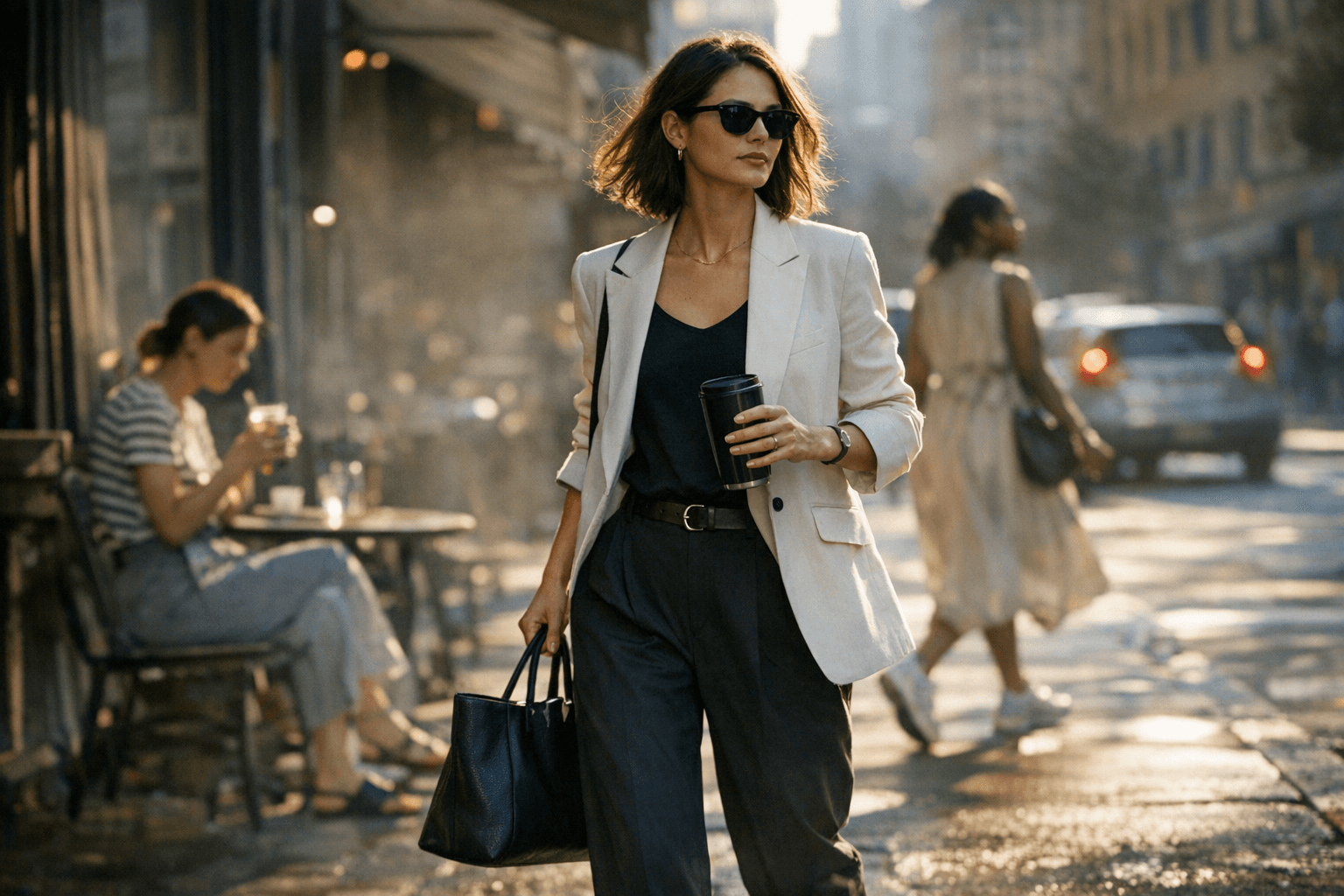
- Silk shirt + wide-leg trouser. The classic tension between something that floats and something that drapes. Tucked loosely, with a single fine chain and a leather tote, this combination reads as considered at any hour of the day.
- Head-to-toe tonal color. Full burgundy, all-navy, or a complete look in chocolate brown creates the same streamlined, quietly luxurious effect as a considered designer two-piece. The key is texture variation within the color story: a silk blouse against wool trousers, or a cashmere knit alongside leather boots, prevents the look from reading flat.
- Trench coat + simple base. A classic trench in camel or stone, layered over a white shirt and straight-leg denim, is one of fashion's most durable and reliable formulas. It works across body proportions, occasions, and seasons, and it ages better than almost any other outerwear choice in existence.
- Cashmere knit + straight-cut midi skirt. This pairing belongs in the cold-weather rotation as reliably as the trench belongs in spring. A ribbed or fine-gauge knit, loosely tucked into a midi in a complementary or tonal shade, is the kind of outfit that photographs well and feels genuinely effortless to wear.
The Tonal Principle
Tonal dressing is the technique that separates a merely functional wardrobe from a genuinely elegant one. In 2026, the palette has evolved past the all-beige monotone that characterized quiet luxury's first wave, moving toward richer and more dimensional tones: deep burgundy, warm caramel, chocolate brown, slate blue. Head-to-toe color in these richer registers maintains quiet luxury's emphasis on cohesion and quality while allowing considerably more individual expression. Designers including Toteme and Joseph have been central to this visual evolution, demonstrating that a single-color story, when executed with attention to fabric and silhouette, is more compelling than even the most considered contrast outfit.
Mixing materials within a tonal look is what prevents flatness: a matte cashmere top against a glossy satin skirt, a rough-textured linen jacket over smooth tailored trousers. Neutral foundations, sand, ivory, oatmeal, warm grey, remain the most versatile choice because they support year-round outfit-building and resist seasonal obsolescence entirely.
The Micro-Habits That Create Polish
The formula is only half the equation. Real polish is built from five small habits that cost more in attention than in money.
- Steam, not iron. A handheld fabric steamer revives drape and removes creasing in under two minutes. Clothes that look wrinkled read as careless, regardless of their price point.
- Shoe care. Clean, conditioned leather transforms every outfit it anchors. A scuffed loafer or unpolished heel undermines even an impeccably chosen look. Keep leather conditioner and a suede brush within reach.
- Hem precision. The difference between a trouser that grazes the floor at exactly the right point and one that breaks awkwardly at mid-calf is the difference between a polished silhouette and an unfinished one. One tailor appointment delivers an outsized return on almost any garment.
- The jewelry edit. One fine chain, a pair of small gold hoops, or a single sculptural cuff carries more weight than layering every piece simultaneously. Independent labels like Mejuri, Aurate, Otiumberg, and Missoma have made understated, everyday-wearable fine jewelry accessible at a range of price points, each approaching the category with the same restraint: pieces that complement the outfit rather than compete with it.
- Bag discipline. A structured bag, one that holds its form when set down, communicates intention. It does not need to carry a recognizable name; it needs to look as though it was chosen deliberately.
Why 2026 Is the Moment to Commit
Three converging forces make this the most logical moment to build a wardrobe around effortless elegance rather than simply admire the concept. The first is hybrid work: with most professionals now dividing their week between home and office, clothing that reads polished at 9 a.m. and relaxed by 7 p.m. has become a practical non-negotiable. A silk shirt or well-cut blazer that transitions from a video call to a dinner reservation without requiring a wardrobe change is solving a genuine daily-life problem.
The second force is cost-per-wear thinking, which has become the dominant framework for intentional shoppers. A $400 cashmere knit worn 120 times costs roughly $3.33 per wear; a $40 trend piece worn twice costs $20 per wear. The arithmetic consistently favors fewer, better pieces, and a growing number of women are running those numbers before committing to a purchase.
The third driver is sustainability. Quiet luxury in 2026, as practiced by brands like Eileen Fisher, Sézane, Reformation, and ADAY, is explicitly tied to responsible production: traceable materials, longer garment lifespans, and a conscious rejection of disposable trend cycles. Luxury fashion more broadly is moving toward traceable and responsible production as a baseline expectation, and effortless dressing aligns precisely with that direction by favoring enduring design over seasonal novelty.
Fabric, Fit, and the Last Word
No formula, however well-constructed, survives poor fabric or imprecise fit. Natural fibers, wool, cashmere, silk, linen, move and drape differently from synthetics; they age gracefully, breathe well, and communicate quality in a way that reads at a glance. Labels like Quince and ADAY have made well-constructed natural and blended fabrications accessible at non-luxury price points, closing the gap between aspiration and everyday reality. Sézane and Everlane occupy the same practical middle ground for women who want considered craftsmanship without the Brunello Cucinelli price tag.
Fit, however, is the single most democratic tool in the wardrobe. It is not a function of budget, body type, or brand access. It is a function of one tailor visit and the willingness to treat your clothes as worth the modest investment. A blazer with its sleeves shortened by an inch, a trouser hemmed to exactly the right break: these corrections do more for an outfit than any new purchase could. The entire premise of effortless elegance rests on the idea that looking put-together is a skill, not a spending habit. In that sense, the most important thing you own is not a piece of clothing at all. It is the confidence to know the difference.
Know something we missed? Have a correction or additional information?
Submit a Tip