Elevate Casual Outfits With Simple Gold Jewelry for Effortless Chic
Gold studs and a thin chain can transform a white tee and jeans into something that looks genuinely considered. Here's how to wear it right.
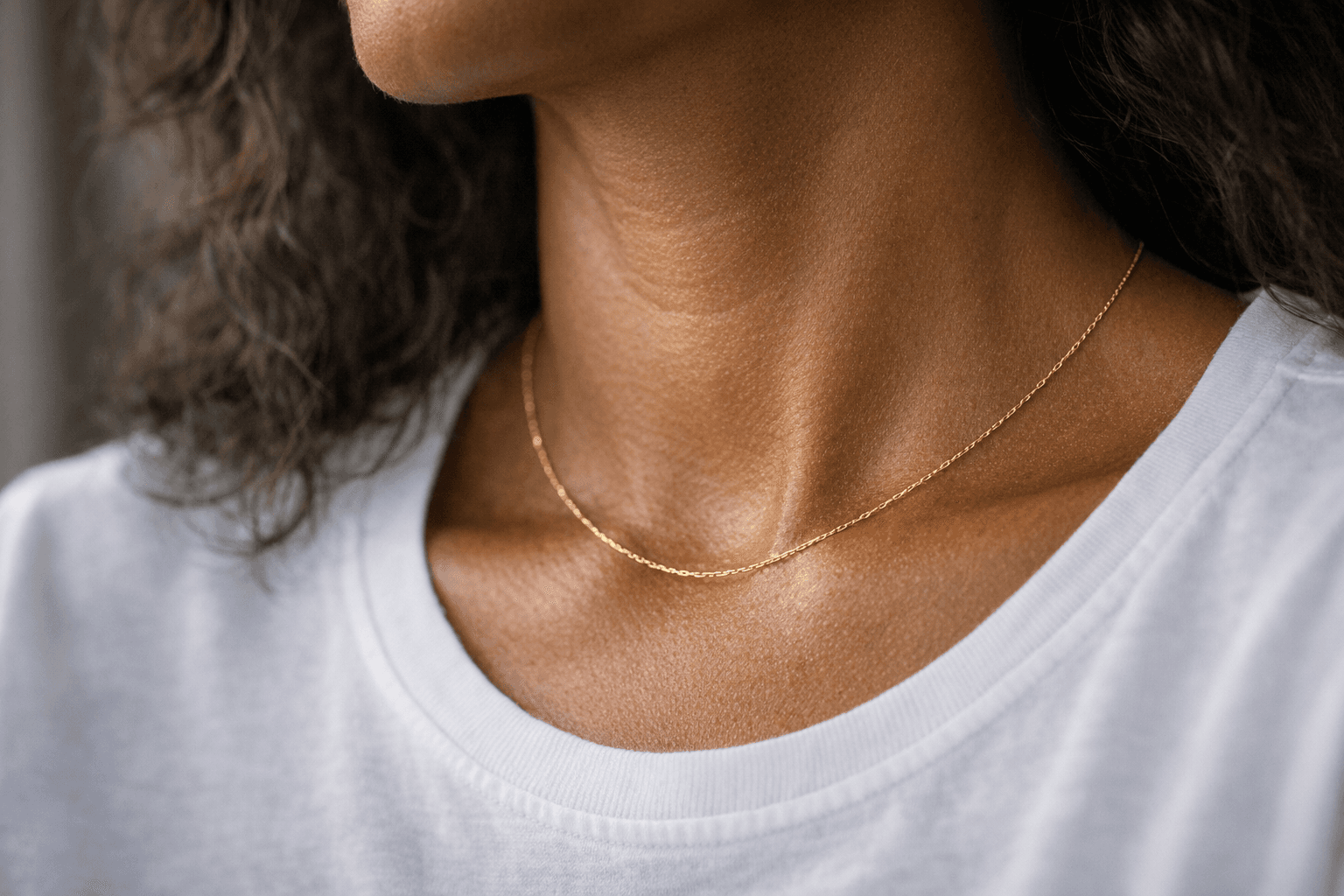
A single gold necklace has a way of making everything underneath it look intentional. Not in a trying-too-hard way, but in that specific, quietly confident way that makes people ask whether you've done something different. The good news is that the mechanics behind it are simple, and the investment, both in money and effort, is modest.
Why gold works so well with casual dressing
Gold catches light in a way that other metals don't quite replicate. Its warm luminosity adds what stylists often describe as structure and intentionality to an outfit, making a five-minute get-ready routine read as though it took considerably longer. Yellow gold in particular harmonizes with warm skin undertones and plays beautifully against the off-white of a cotton tee or the indigo of raw denim. White gold reads as cooler and more minimal, pairing naturally with grey tones and monochromatic dressing. Rose gold sits somewhere between the two: feminine without being precious, warm without being loud. Understanding which of these three works with your wardrobe's existing palette is the most useful starting point.
Start with a five-piece foundation
Before reaching for more, build from less. A wardrobe of versatile gold jewelry doesn't need to be extensive; it needs to be considered. A practical starting point is four or five pieces: one necklace, a pair of studs, a bracelet, and one or two rings. These cover every zone of the body without competing with one another, and they're flexible enough to mix and restyle rather than serving one outfit and one occasion.
For earrings, small hoops or dainty studs are the workhorses. Solid gold huggies from brands like GLDN are exactly the kind of thing worth owning in solid gold rather than plated: they won't tarnish, they don't need to come off before a shower, and they function as a permanent fixture rather than a daily decision. Solid gold, whether 10k or 14k, is genuinely waterproof and tarnish-resistant in a way that gold-filled or gold-plated options simply aren't.
For the neck, a thin chain worn at the collarbone is the single most efficient piece in a casual wardrobe. Oak & Luna stands out here with its personalized name necklaces and stackable initial pendants in 14k gold vermeil starting from $50 — pieces that introduce a genuinely personal dimension to the formula while keeping the price accessible enough to build a collection over time. Mejuri's 14k solid gold Demi-Fine pieces and Monica Vinader's lighter-weight chains offer strong entry points into solid gold without committing to fine jewelry price points.
The layering formula that actually works
Layering necklaces is where casual gold dressing gets interesting, but it's also where things go wrong most often. The principle is simple: vary the chain length, vary the chain weight, and limit the number of pieces to three at most. A choker or collar-length chain at 14 to 16 inches, a standard pendant sitting at 18 inches, and a longer layer at 22 to 24 inches gives the visual depth without the visual noise.
Combining a slightly chunkier chain, such as a figaro or curb link, with finer, more delicate strands creates the contrast that makes a layered look feel curated rather than accidental. The chunkier piece grounds the stack; the fine chains add softness. This combination works particularly well with open or V-necklines where there's actual surface area for the layers to land.
The same logic applies to rings. Stacking thin bands across two or three fingers reads as intentional. Piling multiple statement rings onto one hand reads as clutter. Keep one hand quieter if the other is doing the work.
The single statement piece approach
Layering isn't the only answer. For certain outfits, especially those with busier prints or structured silhouettes, one strong piece does more than a collection of smaller ones. A substantial gold cuff worn alone against a bare wrist, or a wide chain necklace sitting flat against a crew neck, produces the same polished effect with zero risk of imbalance. This is the approach French dressing consistently returns to: one piece, worn with conviction.

The key with a statement piece is proportion. A delicate pendant disappears against a thick-knit sweater. A bold chain overwhelms a fine silk slip. Match the visual weight of the jewelry to the visual weight of the fabric.
Mixing metals without the mess
The old rule about matching metals is functionally obsolete. Pairing silver, gold, and rose gold in the same look adds what stylists describe as depth and intrigue, but it works best when one metal is clearly dominant and the others are accents. If yellow gold is your primary metal, a single silver ring or a watch with a steel case reads as intentional contrast. Three metals in roughly equal proportion reads as indecision.
A practical technique: anchor the metals at one point. If the necklace is gold, allow the earrings to be silver. If rings are mixed, keep the necklace singular. Mixing at every zone simultaneously dilutes the effect.
A reliable casual outfit formula
The simplest proof of concept: white tee, straight-leg jeans, clean sneakers. Layer a thin gold chain with a slightly longer pendant over the tee. Add small gold hoop earrings. Stack two or three thin rings across both hands. If wearing a belt, a gold buckle detail echoed in the jewelry creates a visual throughline that ties the entire outfit together without any apparent effort. This combination, deliberately casual at every other point, reads as deliberate and considered precisely because the gold is doing quiet work.
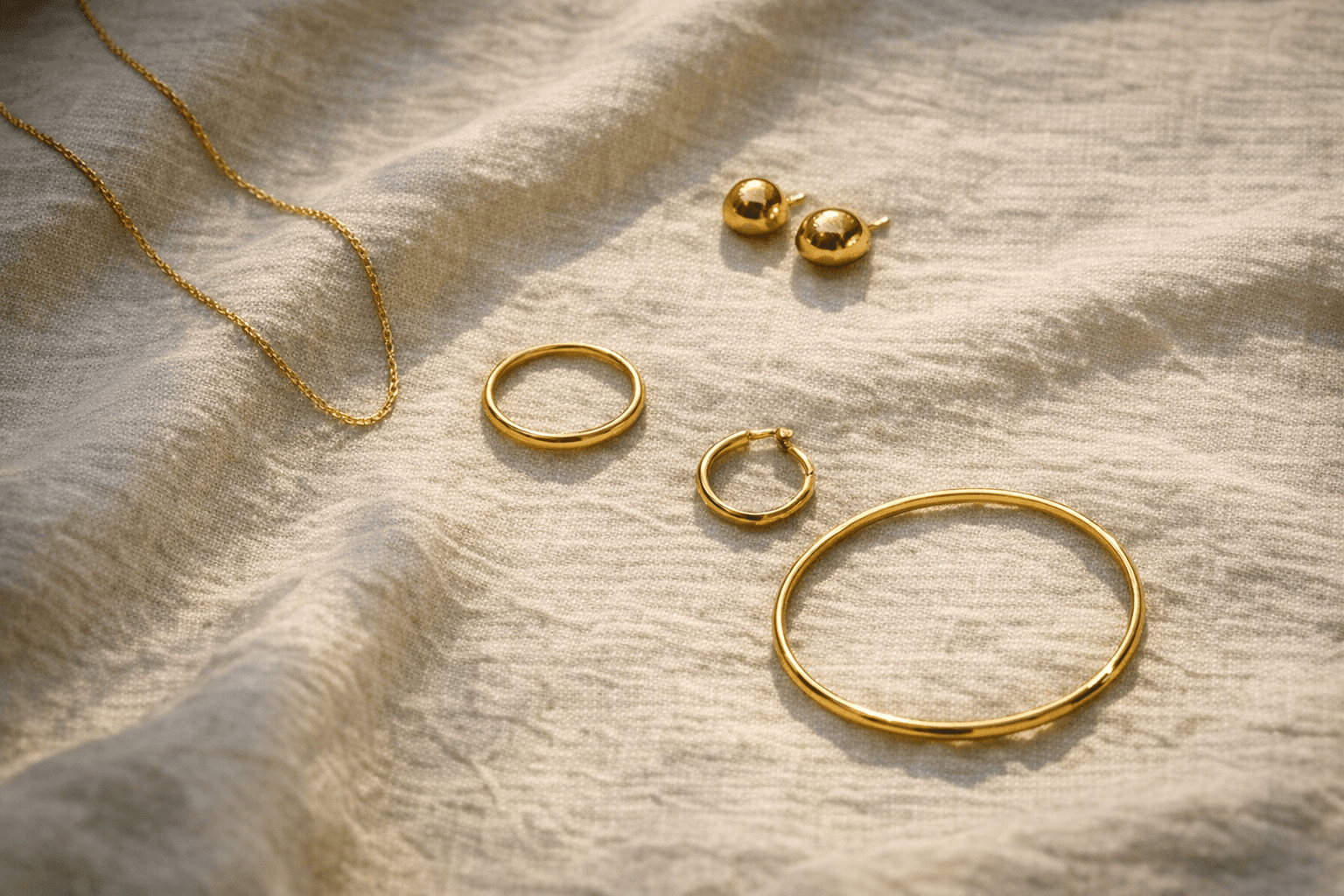
The formula scales. Swap the tee for a linen shirt and the sneakers for loafers and the same jewelry principles apply. Add a blazer and the layered necklace and stack rings hold their own in a work context. Gold in simple forms travels across dress codes in a way that heavier or more embellished jewelry doesn't.
Solid gold versus gold vermeil: what to buy first
If budget is a factor, gold vermeil, a sterling silver base coated in 14k or 18k gold, is the most sensible entry point. It looks identical to solid gold, holds its color longer than gold-plated options, and lets you build a wardrobe of shapes and lengths without the price premium of solid gold throughout. Once you know which pieces you actually reach for daily, those are the candidates worth replacing in 10k or 14k solid gold for longevity.
The case for solid gold is durability. A 10k solid gold stud or chain can be worn continuously, including through workouts and showers, without degradation. For pieces worn as near-permanent fixtures, that resilience justifies the higher cost.
The real shift in casual dressing comes from treating gold not as an accessory applied on top of an outfit but as a structural element considered alongside it. A well-placed chain, a confident stack of rings, a single cuff: these aren't finishing touches. They're what make the outfit feel like a decision.
Know something we missed? Have a correction or additional information?
Submit a Tip