Elevate Your Everyday OOTD With One Simple, Effortless Styling Move
One elevated staple is all it takes to transform a basic outfit into something that looks intentional, polished, and entirely effortless.

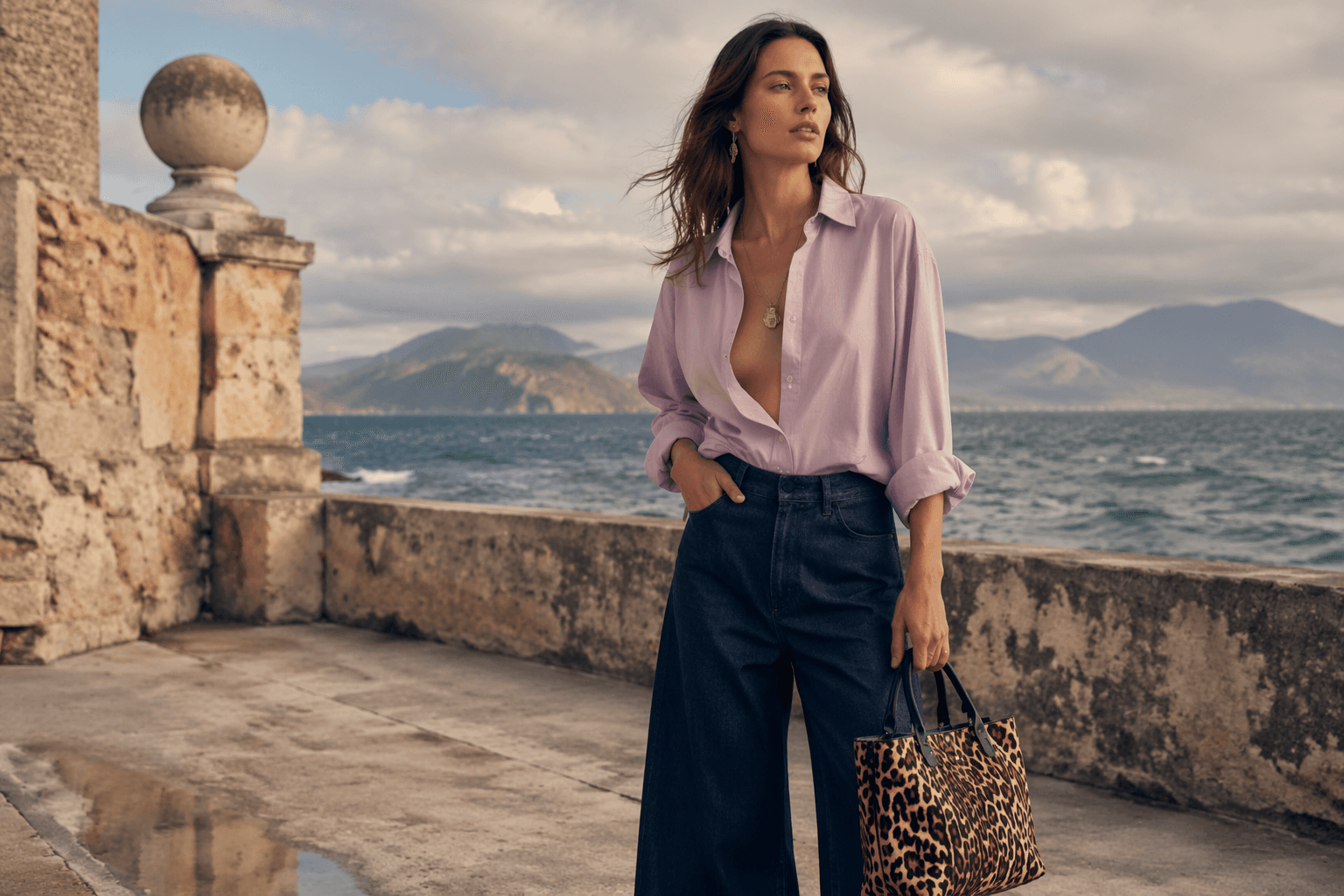
There is a particular kind of dressing that looks like you tried just enough — where the outfit reads as considered without being precious, put-together without being stiff. It is the aesthetic that dominates the most-saved corners of fashion content right now, and its mechanics are simpler than the result suggests. The move at the center of it: anchoring your entire look to one elevated staple.
This is not about a wardrobe overhaul or a new season of shopping. It is a single, deliberate choice made before you leave the house.
The Logic Behind the "One Staple" Rule
Most everyday outfits fail not because they are bad, but because they are neutral in every direction. A great T-shirt, well-fitting jeans, clean sneakers — individually, each piece is doing its job. Together, they read as an outfit that has not quite committed to anything. The fix is not more pieces. It is one piece that carries the visual weight of intention.
An elevated staple does exactly that. It shifts the register of everything around it without requiring you to change anything else. A structured blazer thrown over a white tee and straight-leg trousers does not just add a layer; it reframes the entire silhouette as something deliberate. A knit set — say, a fine-gauge ribbed cardigan paired with its matching skirt or trouser — introduces cohesion and a quiet luxury that reads as studied, even if you reached for it in under two minutes. The logic is cumulative: when one piece in your outfit clearly belongs to a higher register, the eye assumes the rest of it was intentional too.
What Counts as an Elevated Staple
The category is specific. An elevated staple is not a statement piece — it is not asking for attention on its own terms. It is a foundational item with better-than-average construction, fabric, or silhouette. The three formats that do this most effectively are the blazer, the knit set, and the structured bag or shoe.
The blazer is the most versatile entry point. A single-breasted, slightly oversized blazer in a neutral — camel, ivory, charcoal, or a muted check — works across almost every combination of basics underneath it. The key is fit through the shoulders: if the shoulder seam sits correctly, the rest of the blazer's proportions tend to follow, even if it skims loosely over the body.
The knit set operates differently. Where a blazer adds structure, a knit set adds softness and harmony. The matching element is what does the work here: co-ordinating separates signal a level of intentionality that individual pieces cannot replicate on their own. Reaching for a ribbed knit co-ord in a single tone — rust, sage, cream, or a deep navy — instantly creates an outfit that looks considered. Wear it with minimal accessories and low-profile shoes to let the set speak for itself.
A structured accessory — a quality leather bag with clean lines, or a pointed-toe flat or heel with visible craftsmanship — works best when your clothing is simple. The accessory becomes the organizing principle of the look. Everything else, by comparison, appears to have been chosen to complement it.
How to Build the Outfit Around It
Once you have identified your elevated staple for the day, the rest of the dressing process becomes a process of subtraction rather than addition. The question is not "what else can I add?" but "what can I strip back so this piece does its job?"
If the blazer is your anchor, keep the base layer quiet: a fitted white or black tee, a slim-cut tank, or a simple button-down left open at the collar. The trouser or bottom half should have a clean line — wide-leg, straight-leg, or tailored. Avoid anything with heavy detailing like distressed finishes, embroidery, or strong pattern mixing, which will compete with the blazer's structure rather than support it.
If you are working with a knit set, resist the temptation to layer. The co-ord is already doing the work of looking considered; adding a jacket or belt bag on top can tip it from effortless into overthought. A clean sneaker or a simple loafer, a small shoulder bag, and a single piece of jewelry — a chain, a ring, a pair of hoops — is the formula that works most consistently. For that single jewelry piece, something personalized tends to carry more visual weight than something generic; Oak & Luna's name necklaces in 14k gold vermeil or their stackable initial rings, starting from around $50, strike the right balance between personal detail and everyday restraint.
The Common Mistakes That Undercut the Effect
The effortless aesthetic is easy to disrupt. The most frequent error is over-correcting in the other direction: once you have an elevated staple in place, the instinct to keep adding pieces to "complete" the look is the thing most likely to undo it. The look you are after is one where the elevated piece appears to have simply been what you reached for first, not the centerpiece of a carefully assembled outfit.
A second mistake is choosing an elevated staple in a color or silhouette that does not actually work with the majority of what you own. A beautifully constructed blazer in a bold cobalt is a great piece; it is not an effortless piece if you have to build an entirely new outfit around it each time. The staples that create the most reliable, repeatable returns are the ones that integrate easily: neutral or near-neutral colors, classic silhouettes, materials that hold their shape across seasons.
Finally, watch the proportion. If the elevated piece is voluminous, the rest of the outfit should lean slim. If the staple is tight or fitted, a wider or looser counterpart below or above it creates the visual balance that makes the outfit look like it was styled, not just assembled.
Why This Works Better Than Trend-Based Dressing
Trend pieces require context: they need the right moment, the right setting, the right companions in the outfit to land correctly. An elevated staple requires none of that. It is a piece with inherent authority that does not depend on cultural timing to work. A well-cut blazer in a neutral reads as intentional in 2026 the same way it did in 2016 and will in 2036. The investment is not in a trend cycle; it is in a recurring dividend.
The most consistently well-dressed people are not those who have the most clothes or who track micro-trends most closely. They tend to be people who have identified three or four elevated staples that they return to repeatedly, understanding how each one reframes a basic outfit. The rotation is small, the results are consistent, and the effort required each morning stays almost imperceptibly low. That, precisely, is what effortless dressing actually means.
This article was produced by Prism’s automated news system from verified source data, official records, and press releases, then run through automated quality and moderation checks before publishing. The system is built and supervised by the people who set the standards it runs under. Read our full AI policy.
Did this article answer your question?