Elwood and Birdwell revive ’90s surf style for summer dressing
Elwood and Birdwell turn early-’90s surf memory into washed tees, camo shorts, and the 312 boardshort. The capsule lands June 27 in limited quantities, built for real summer wear.
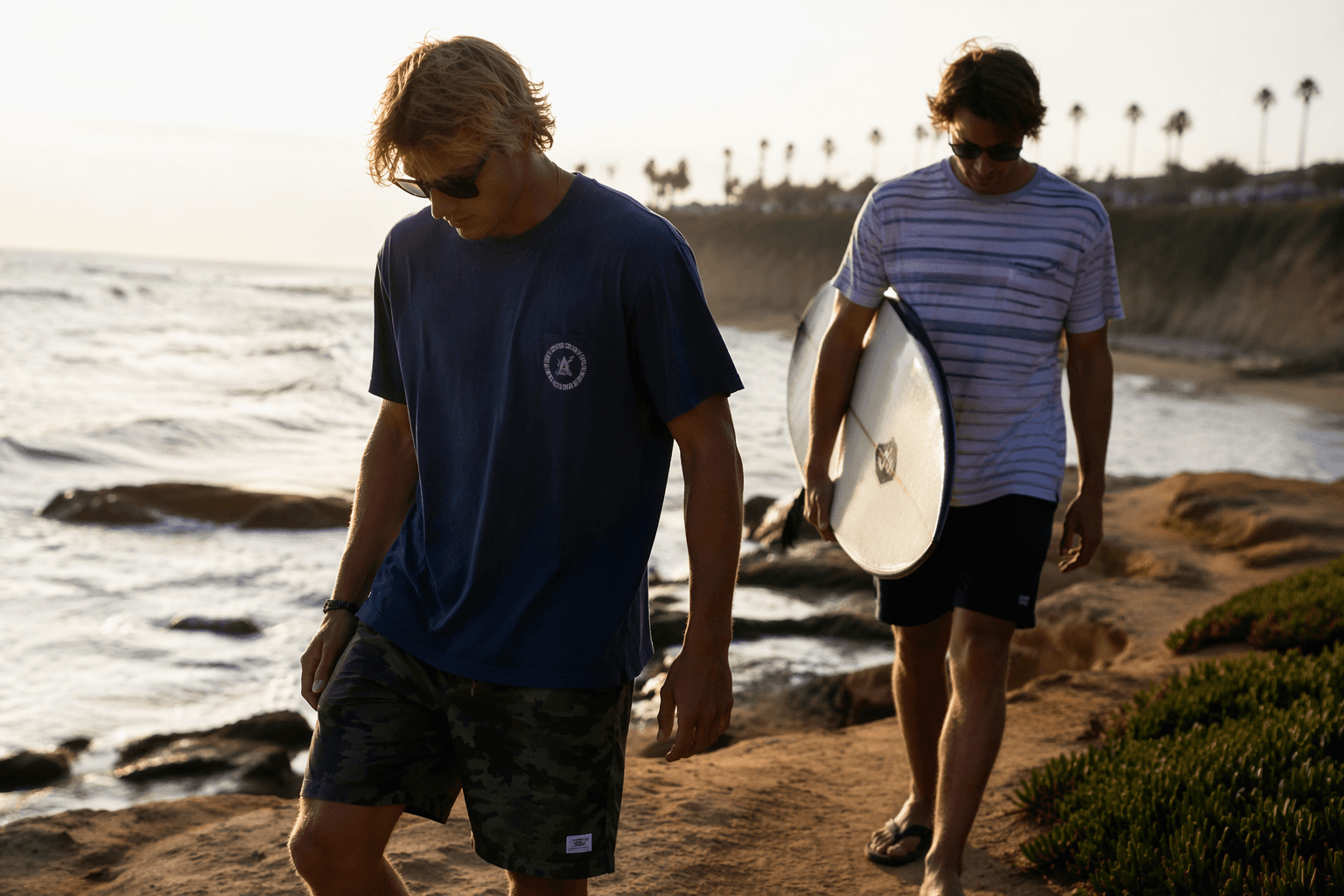
Elwood and Birdwell are making the kind of summer capsule that sells because it looks like something already lived in. Washed tees, striped zip hoodies, camo shorts, swim trunks, canvas totes, straw hats, and a few sharp accessories take early-’90s surf nostalgia and turn it into a uniform you can actually wear from beach to bar without looking dressed as a memory.
The move is smart because both labels already speak fluent California casual. Elwood, the Los Angeles-based brand founded in 1996 and acquired by Justin Saul in 2020, built its lane around vintage-inspired dressing and the easy rhythm of everyday clothes. Birdwell has been at this since 1961, when Carrie Birdwell Mann founded the Santa Ana brand and set it on a path making boardshorts, apparel, and swimwear in the USA ever since.
Why this collaboration hits now
Heritage California brands have been leaning hard into nostalgia because nostalgia is a clean business when the clothes still function. Birdwell and Elwood are not chasing costume surfwear or a fake throwback fantasy; they are mining memory for silhouettes that already feel familiar, then softening them with washed finishes and lived-in fabrics. That matters in a market where summer dressing has gotten more stripped back, more utility-driven, and a lot less interested in pieces that need an explanation.
The capsule is also launching in a way that keeps it sharp. It drops Friday, June 27, 2026, exclusively on elwoodclothing.com and birdwell.com, and Birdwell says the collection is being produced in limited quantities. That scarcity gives the clothes a little heat, but the real appeal is that the pieces are still anchored in approachable wardrobe territory rather than high-concept fashion theater.
Elwood’s own focus on fit, quality, durability, and lived-in washes is exactly why this pairing works. The brand’s point of view is not precious, and that keeps Birdwell’s beach heritage from tipping into museum-piece territory. Instead, the capsule reads like the clothes you reach for when you want to look relaxed on purpose.
The 312 is the anchor, and it carries the whole story
Everything circles back to Birdwell’s 312 long board short. Birdwell says the style is built with two layers of SurfNyl, reinforced seams, a signature wax pocket, a button fly, nickel-plated grommets, and a lifetime guarantee. It is also constructed in the USA and, in Birdwell’s own design language, carries over 60 years of know-how in the cut.
That technical backbone is what keeps the collaboration from getting too sentimental. Eric Crane, Birdwell’s CEO, called the 312 “the perfect silhouette” for the current appetite for ’90s-era beachwear, and he is right because the shape does the heavy lifting. A 6-inch inseam and 16-inch outseam keep it close to the body without looking tight, which is exactly where modern casual dressing lives right now.
This is where the business of effortless style gets interesting. A good boardshort no longer needs to scream surf shop, and the 312 proves the point by being specific without being loud. The collaboration uses the short as a base, then layers on textures and color stories that feel more like a summer uniform than a themed capsule.
Texture does the nostalgia work
The strongest detail in the collection is the fabric mix. Elwood brings in terry, slub cotton, and French terry, while Birdwell uses its in-house SurfNyl nylon across the board shorts and a baseball cap built on Elwood’s fit. That contrast between soft, washed knits and harder-wearing nylon is what makes the lineup feel current instead of reenactment-ready.
You can see the styling logic immediately. A striped zip hoodie over a tee, camo shorts that look broken in from day one, and a pair of swim trunks that can pass for regular shorts after lunch all play into the same easy summer language. The canvas totes and straw hats finish the look without overloading it, which is crucial when the whole point is to feel casual, not styled within an inch of your life.
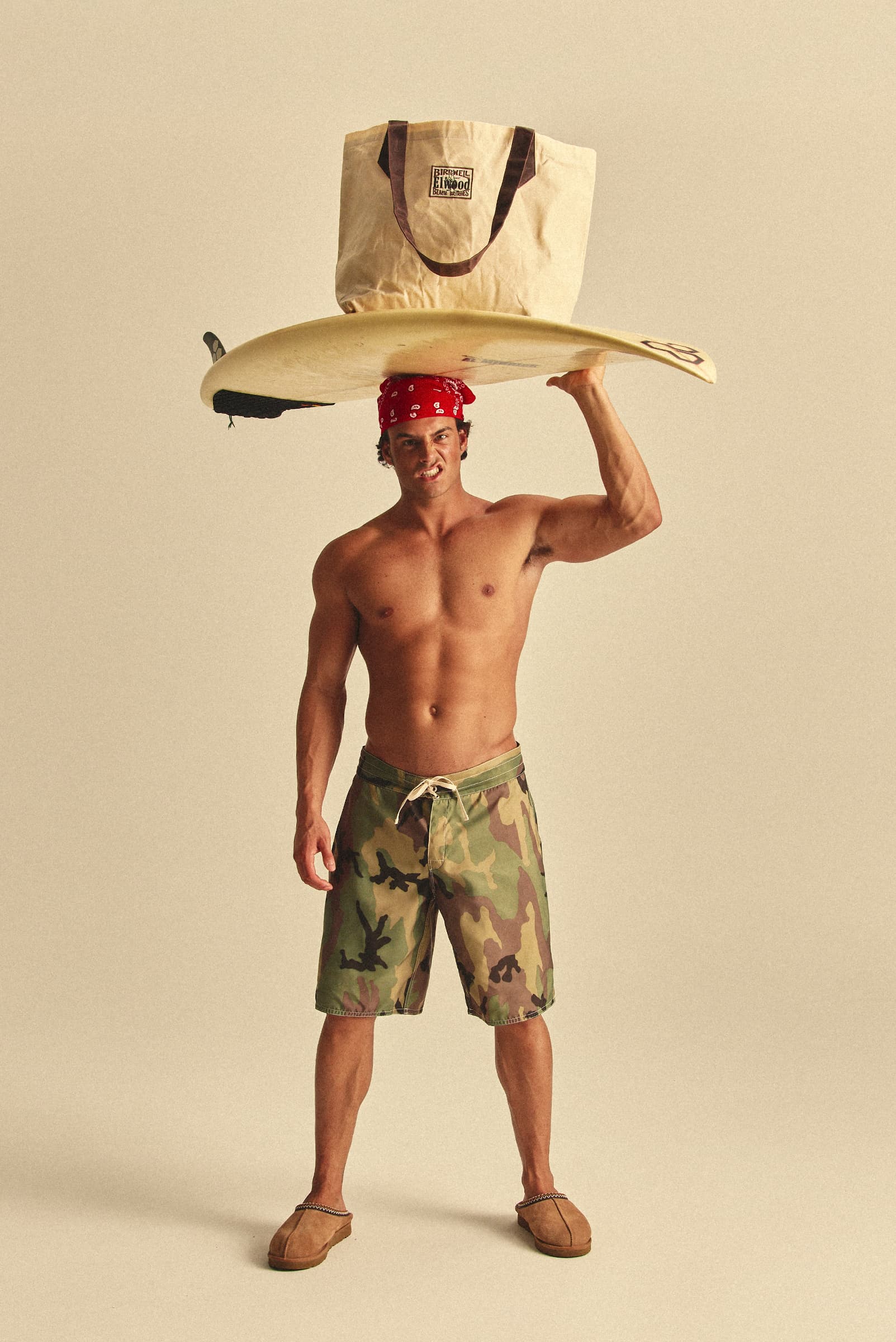
The brands say the collection was shaped by memories of growing up in Southern California, including surf magazine cutouts and sticker-covered boards. That detail matters because it explains why the pieces feel more personal than trend-chasing. The reference points are not abstract moodboard words. They are the stuff of actual teenage beach culture, translated into clothes that sit naturally in a closet today.
What it reveals about casualwear right now
The real play here is how heritage brands are monetizing memory without making the product feel dusty. Elwood and Birdwell are leaning on archive codes, but they are also sanding everything down with wearability: washed cotton, familiar proportions, practical shorts, and beach accessories that slot into daily life. That is the current sweet spot for casualwear, where the most convincing clothes look effortless because they have just enough history in them to feel earned.
Elwood’s price positioning, which Fashionista puts mostly in the $20 to $200 range, also keeps the collaboration grounded. This is not luxury surf cosplay. It is everyday clothing with better bones, more provenance, and enough texture to feel worth reaching for when the temperature rises and you want a uniform that does not require overthinking.
That is why the capsule lands as more than a nostalgia exercise. Birdwell’s 1961 origin gives it beach credibility, Elwood’s vintage-skate DNA gives it downtown ease, and the result is a set of pieces that can actually carry a summer. The clothes feel like the memory of a California season, but the real point is simpler: they are built to be worn now.
This article was produced by Prism’s automated news system from verified source data, official records, and press releases, then run through automated quality and moderation checks before publishing. The system is built and supervised by the people who set the standards it runs under. Read our full AI policy.
Did this article answer your question?