Halter tops return as a polished, grown-up summer staple
The halter top is back with sharper lines and a more tailored attitude, turning a once clubby staple into a polished summer piece that works from desk to dinner.

The halter top has grown up
The season’s most useful neckline is no longer dressing for the door code at a nightclub. It has been recut into something sleeker, cleaner, and far more adaptable, moving from a going-out top to a polished wardrobe essential. That shift matters because it changes the halter’s role in a closet: instead of signaling late-night excess, it now offers a neat frame for the shoulders and a controlled line through the torso, which makes it feel right with tailoring as much as with bare skin.
That is why the revival reads less like costume nostalgia and more like a real wardrobe adjustment. The halter is showing up again in street style and on influencers, but the styling has changed: it is being paired with maxi skirts, strappy sandals, and more tailored separates, which gives the silhouette a calmer, more adult register. Marie Claire placed halter tops among the Y2K trends returning in 2025, while Who What Wear pointed to the cut’s elevated fit, stylish versatility, and timeless appeal as the reason it is trending again.
Why this version feels polished, not clubby
What makes the new halter feel wearable is not just the neckline itself, but how the entire top is being engineered. The best versions are cleaner at the bust, more precise at the shoulder, and less dependent on shine or body-con excess. That subtle recalibration is what allows the style to move easily between a sharp trouser and a silk skirt, or between a tailored blazer and a bare summer evening.
The old shorthand for halters was nightlife, but the current version is built for volume control. A halter with a fluid drape feels more expensive than one that clings too hard; a structured knit or crepe version can hold its line under a jacket; and a minimal satin style works because it reflects light without looking loud. In other words, the halter is being treated like a cut, not a gimmick, which is exactly why it suddenly reads as sophisticated.
A silhouette with real fashion history
The return also lands differently because the halter has deeper roots than the Y2K moment suggests. The Metropolitan Museum of Art notes that halter silhouettes were present in American fashion in the mid-20th century, and Claire McCardell was central to that story. The Met describes one McCardell dress in which the shape becomes a halter on the body, a reminder that the line was never only about sensuality, but also about invention and structure.
McCardell’s importance matters here. The Met identifies her as a pioneer of American fashion who designed inventive, sometimes daring looks, and that spirit feels visible in today’s revival. The modern halter is not simply reviving a sexy top from the early 2000s; it is reconnecting with a longer design language in which the shoulder, neckline, and torso are arranged to create ease. That history gives the trend more credibility than a pure nostalgia play ever could.
How social media accelerated the comeback
The speed of this return also says something about how fashion now moves. AP reported in July 2024 that TikTok has shortened the shelf life of trends and transformed the way people engage with fashion and other consumer categories. That compression matters: silhouettes do not need years to filter back through the system anymore, and the halter’s comeback is part of that faster rhythm.
But speed alone would not be enough without a shape that can survive repeated viewing. The halter does, because it is instantly legible. It photographs well, it shows a clean line at the shoulder, and it reads as special without needing a lot of ornament. In a market where trends can burn out quickly, that combination of visual clarity and styling flexibility is what keeps it in rotation long enough to feel like a staple.
How to wear the halter now
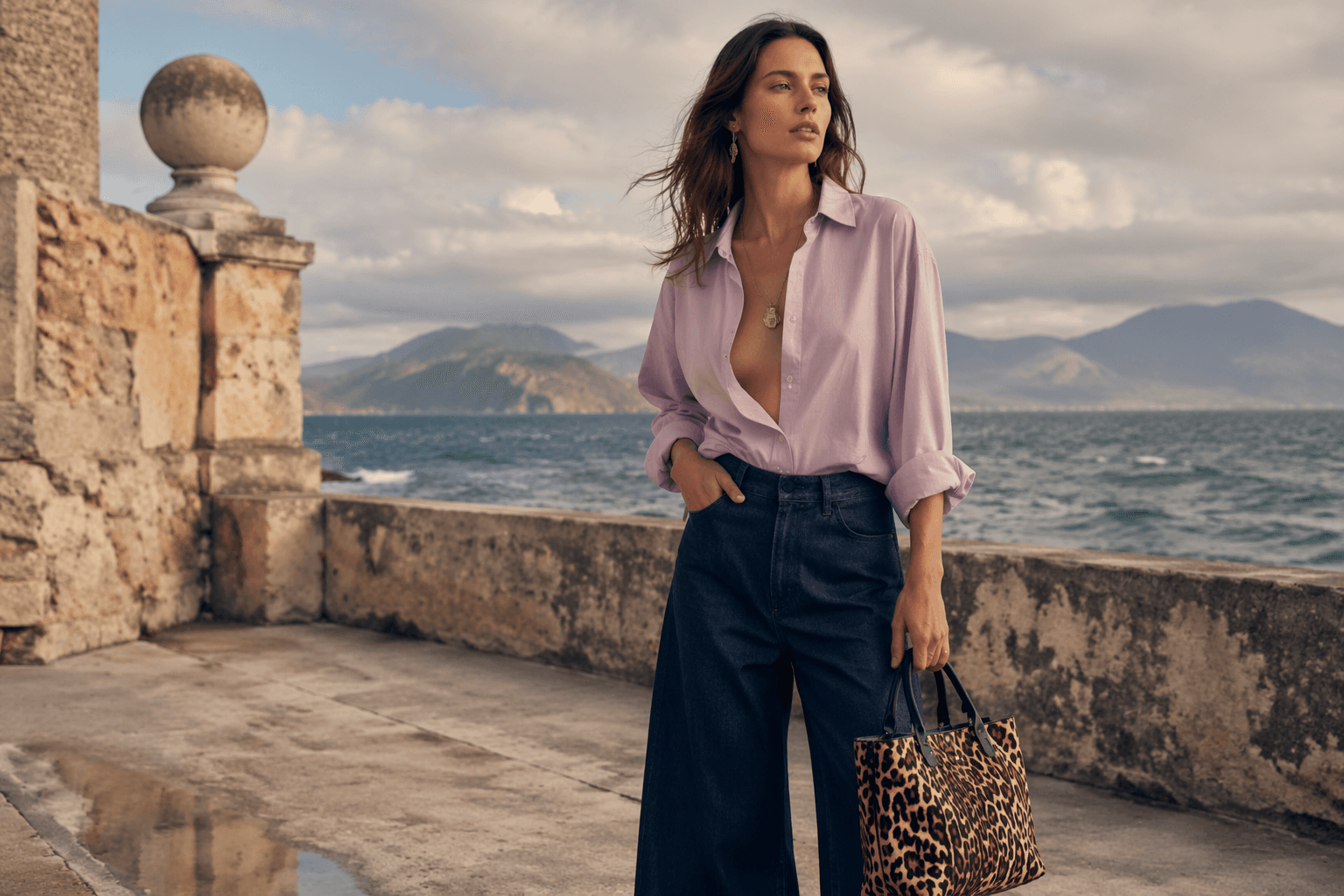
The easiest way to make the halter feel current is to anchor it with pieces that remove any leftover club energy. Tailored trousers, a long skirt with weight, or a sharply cut blazer all shift the mood immediately. The silhouette also looks strongest with accessories that keep the line clean, especially strappy sandals and minimal jewelry, so the neckline stays in focus.
A few directions are doing the heaviest lifting:
- A halter with wide-leg trousers, which turns the top into a clean evening substitute for a blouse.
- A fluid halter with a maxi skirt, which softens the skin-baring effect and feels elegant rather than exposed.
- A fitted halter under a blazer, which makes the piece work for dinner after the office.
- A simple halter paired with strappy sandals, which keeps the look light and polished without overcomplicating it.
Fabric matters here more than volume. Satin, crepe, and fine knit all give the halter a more mature finish than overly glossy stretch materials, while tailoring nearby keeps the effect grounded. When the cut is sharp and the fabric has enough body to hold shape, the halter becomes one of those rare summer pieces that can handle both heat and polish.
The larger 2000s revival may have brought the halter back into view, but the better reason to keep it around is simpler: it solves a real styling problem. It gives summer dressing shape, shows skin without losing control of the silhouette, and bridges the gap between casual and dressed-up with unusual ease. That is why the halter top, once filed under going-out clothes, now belongs in the polished center of the wardrobe.
This article was produced by Prism’s automated news system from verified source data, official records, and press releases, then run through automated quality and moderation checks before publishing. The system is built and supervised by the people who set the standards it runs under. Read our full AI policy.
Did this article answer your question?