Marks & Spencer Returns to U.S. Shelves With a Curated Nordstrom Capsule
Sixty pieces, 30 stores, $60 to $170: M&S makes its first U.S. fashion push in 25 years, landing at Nordstrom from LA to New York.
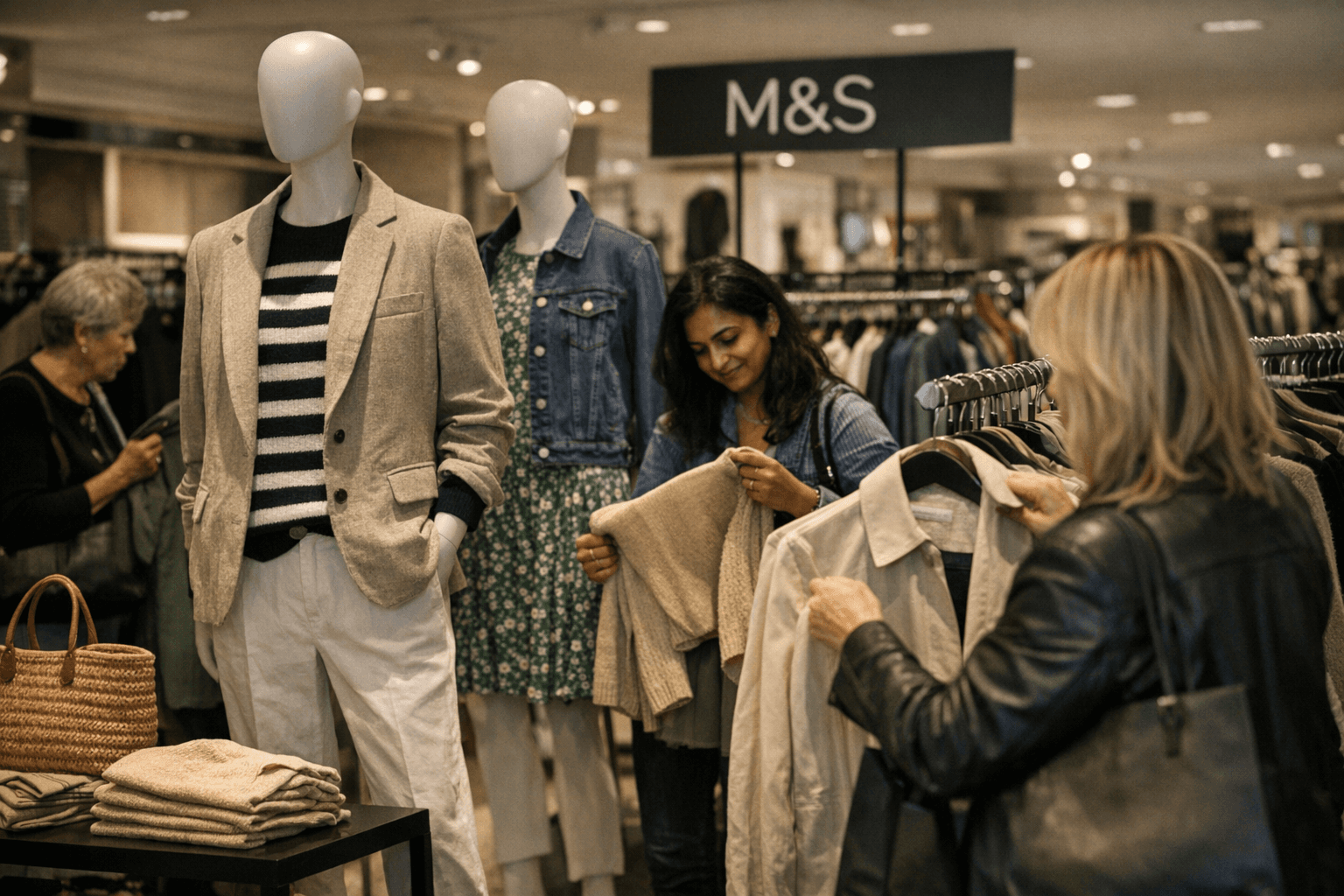
Sixty pieces. That is the entire footprint of Marks & Spencer's long-anticipated American fashion reentry, now on Nordstrom floors from Los Angeles to New York and available at Nordstrom.com. The number is deliberately modest, a curated edit rather than a category flood, and for the U.S. shopper who has spent years ordering M&S online or carrying pieces back from Heathrow, it finally answers a straightforward question: where do I find these in person, on a hanger, in my size?
The capsule, which launched across 30 Nordstrom stores on March 29, pulls from two of M&S's best-performing in-house labels: Per Una, the premium casual line known for crafted details, feminine prints, and dresses that move between a weekend farmers market and a Monday meeting, and M&S Collection, the retailer's core range covering the tailoring, denim, knitwear, and outerwear that forms the backbone of most British women's wardrobes. Prices run from $60 to $170, a range that positions the line squarely alongside Nordstrom's own private-label offerings like Caslon and Treasure & Bond, but with a distinctly British construction sensibility and the kind of considered detailing, covered buttons, shirred bodices, funnel-neck outerwear, that M&S has been quietly building a cult following around.
Mark Lemming, M&S's Managing Director of International, framed the move as a deliberate timing decision. "Now is the time to build our brand awareness in the U.S. fashion market and establish ourselves as a globally trusted brand," he said. The momentum he is referencing is real: M&S has spent the last two years reclaiming its position as the UK's most trusted retailer, posting consecutive market share gains on style, quality, and value perceptions within its womenswear range, a trifecta that was not always a given for a high street institution better known to an older generation for its food halls than its fashion floors.
Emily Crandall, Nordstrom's EVP and General Merchandise Manager of Women's and Men's Apparel, described the partnership as an extension of the retailer's ongoing effort to bring international brands to its shoppers. "Marks & Spencer is known globally for delivering quality and style at a value," she said, "and we're excited to help introduce their bestselling items to U.S. customers."
The $60-to-$170 band deserves more scrutiny than most launch coverage has given it. At the lower end, it undercuts much of Nordstrom's established mid-market positioning and sits below where a buyer would typically find Vince or Theory on the same floor. At the upper end, a $170 Per Una piece remains roughly half the entry price of comparable continental casualwear brands that Nordstrom carries alongside it. For the shopper building a functional capsule rather than a statement wardrobe, the math is straightforward. M&S Collection's denim and tailored trousers in the $60-to-$90 window go directly against Nordstrom's Caslon basics at similar prices, but offer a more European cut and better inseam consistency. Per Una's printed midi dresses and easy layering tops in the $80-to-$130 range compete with Halogen and Treasure & Bond staples, though M&S wins consistently on fabrication weight and the kind of print placement that avoids the mass-market bleed.
For practical purposes, consider what seven days of real dressing actually requires from this edit. A structured blazer from M&S Collection, around $120, anchors Monday through Wednesday worn over the label's straight-leg trousers, a pairing that sits comfortably above the business-casual baseline without requiring dry-cleaning after every wear. Thursday and Friday pivot around Per Una's layering tops, fabric-cut blouses with a relaxed ease that works under a cardigan or worn alone, with the collection's clean-line denim underneath. The weekend is where Per Una's print midi dresses earn their keep: the shirred bodice and relaxed skirt length make them genuinely wearable from a morning errand run through an evening gathering, without the self-consciousness of an obviously "going out" look. Threading through the whole week is M&S Collection's fine-knit roundneck sweater, priced toward the lower end of the capsule at roughly $60, the layering piece that makes everything else work harder across temperatures and occasions.
That kind of low-friction dressing is exactly what Per Una has been refining for years on British high streets. The line occupies a specific niche: it is not M&S's entry-level offering and it is not a designer collaboration, but something more durable and more interesting than either. For Spring 2026, the label's standout pieces include a quilted navy-and-cream jacket with covered buttons, a shirred-bodice dress in soft pastel shades, and a funnel-neck coat that generated significant word-of-mouth on UK social channels before the Nordstrom deal was announced. The construction details suggest a label paying genuine attention at a price point where construction is usually the first casualty. For a U.S. shopper used to choosing between COS at the upper edge of accessible minimalism and J.Crew at the lower edge of American prep, M&S Collection and Per Una together occupy a gap that has had no clear occupant on Nordstrom floors until now.
The Nordstrom deal did not arrive in isolation. M&S has been methodically rebuilding its international footprint through partnership structures rather than direct retail, a strategy shaped in part by the brand's earlier and costly attempt at standalone American presence. The retailer made its first U.S. push in the 1980s, acquiring Brooks Brothers and Kings Super Stores before eventually exiting both and retreating from the market entirely. That exit, now more than 25 years in the past, left M&S with considerable stateside name recognition among older shoppers and near-zero physical presence. The Nordstrom partnership is structured explicitly as a wholesale market test, an arrangement that limits capital exposure while building the consumer data M&S needs to understand American sizing preferences, category demand, and price elasticity.
The food-first strategy has already done part of the groundwork. M&S landed at Target in 2022 and, by its own account, now sells more than 30,000 bags of Percy Pigs per week across the U.S., a figure that has driven general M&S brand awareness to the point where one in 10 American shoppers now recognises the brand as an apparel retailer. That recognition is concentrated most heavily among women aged 25 to 34, who are, not coincidentally, the core Nordstrom fashion customer.
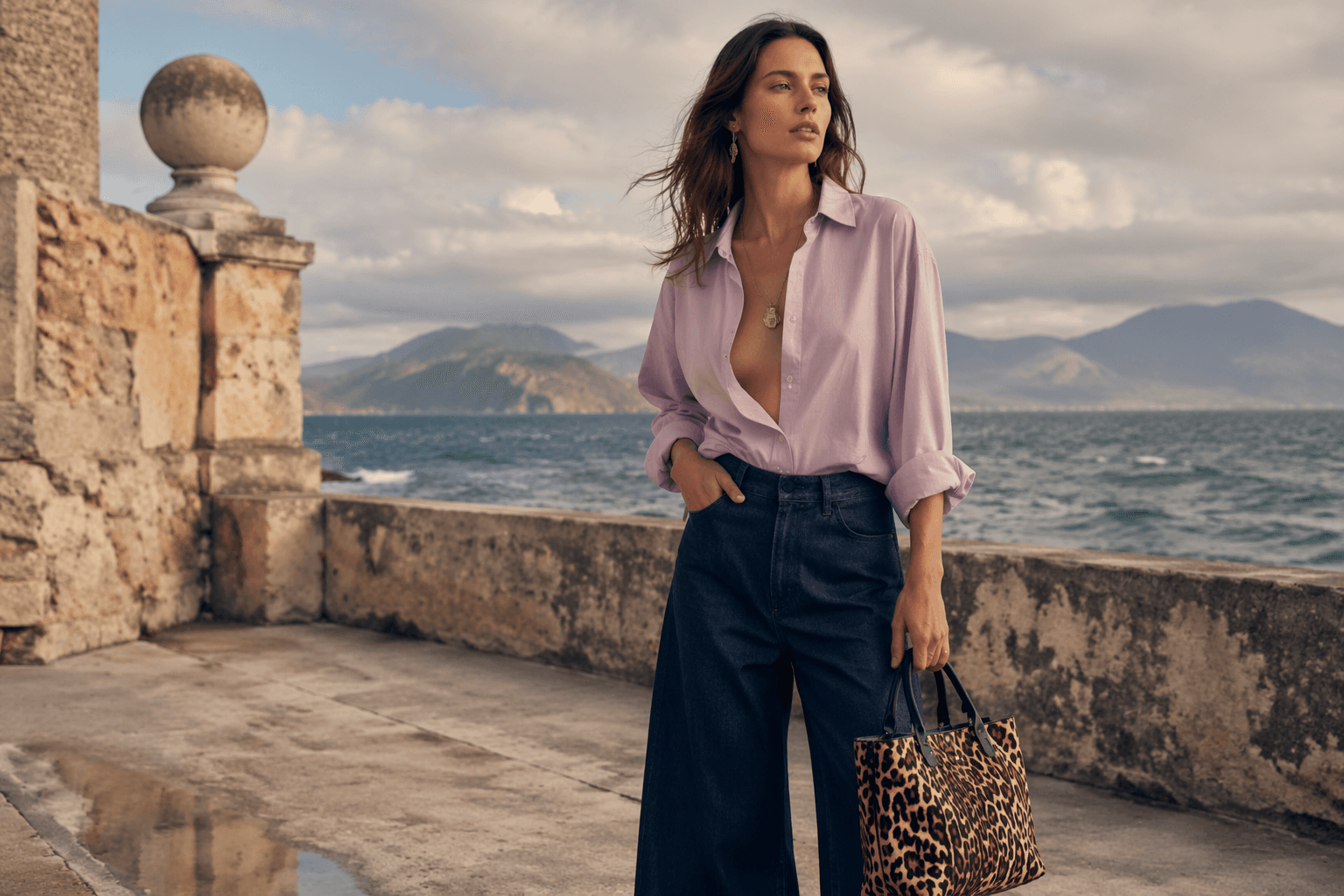
The Spring 2026 campaign, fronted by Gillian Anderson, gave the brand a clean aesthetic moment to anchor the U.S. launch. Anderson, whose public image is woven through with a particular kind of unfussy, self-possessed European elegance, is well cast as the face of a collection pitched at women who have stopped apologising for wanting clothes that simply work. The campaign communicates exactly what the Nordstrom capsule promises: that M&S fashion is not about trend-chasing but about building a wardrobe that earns its keep across seasons.
A parallel wholesale deal with David Jones in Australia, initially launched with M&S lingerie and now expanding into full womenswear and menswear, confirms that the Nordstrom partnership is not an isolated experiment but part of a structured international rollout. M&S has stated it will continue pursuing similar arrangements as it positions itself as a globally trusted brand, which is a more measured ambition than anything it attempted in the 1980s and a more credible one given where its womenswear reputation currently stands. If the 30-store, 60-piece test reads well in the next two quarters, a wider Nordstrom rollout becomes the obvious next conversation.
This article was produced by Prism’s automated news system from verified source data, official records, and press releases, then run through automated quality and moderation checks before publishing. The system is built and supervised by the people who set the standards it runs under. Read our full AI policy.
Did this article answer your question?