Milan Design Week activations spotlight Bottega Veneta, Hermès and more
Bottega Veneta and Hermès just turned Milan Design Week into a style forecast, with woven leather, palladium metal, and horsehair set to ripple into accessories next season.
Bottega Veneta sets the pace
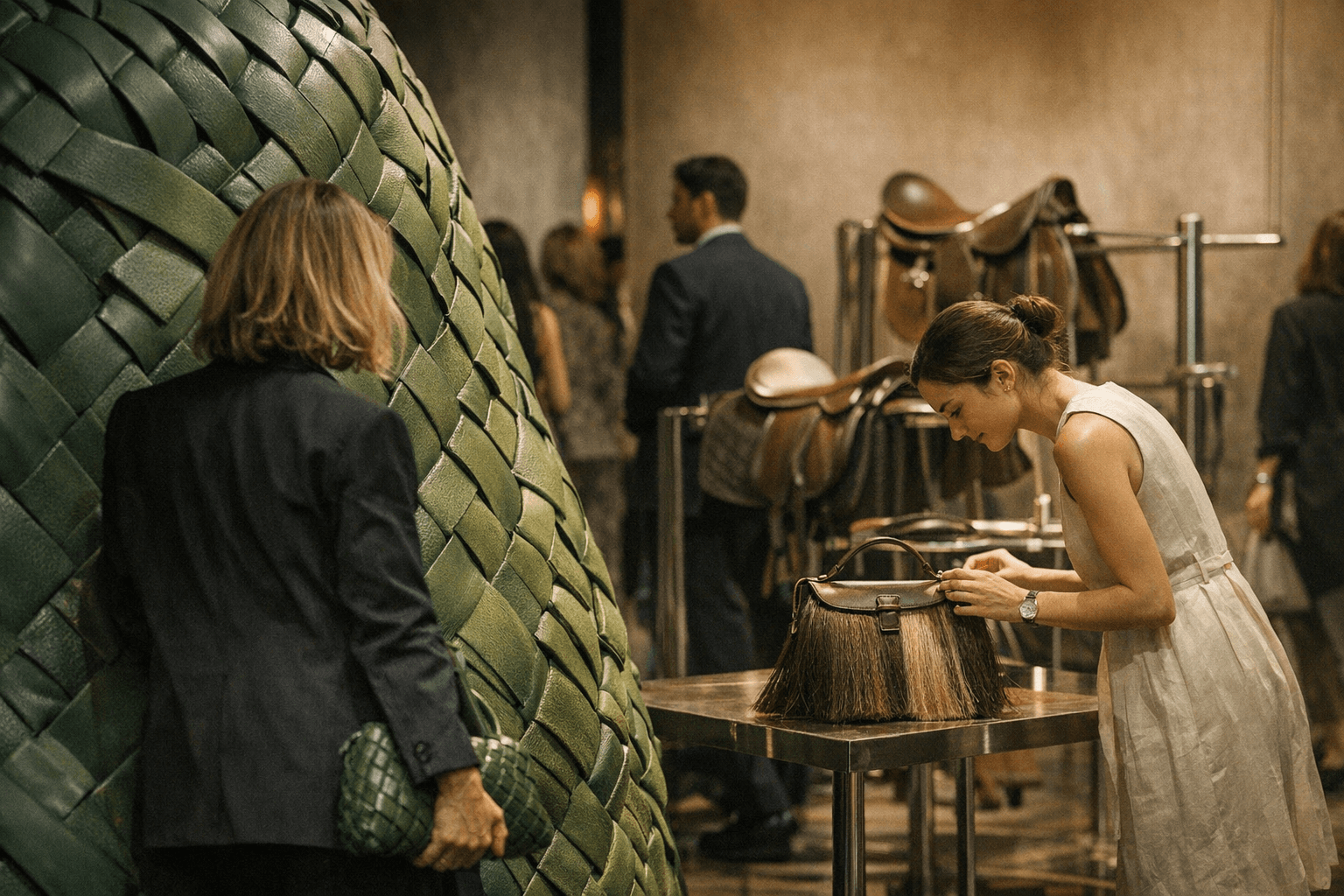
Bottega Veneta is the one to watch first, because “Lightful” feels less like a pretty installation and more like a mood board for where luxury is headed. Staged at the brand’s Via Sant’Andrea store, the project is Bottega Veneta’s first Salone del Mobile activation under creative director Louise Trotter, and it lands with real intent: a suspended woven structure, light sculptures built from the house’s leather “fettucce” strips, and a palette of bespoke black and green chosen by Trotter. That combination of craft, shadow, and saturated color is exactly the kind of visual language that tends to migrate from a Milan installation into actual closets.
Kwangho Lee’s role matters here too. This is the third collaboration between Bottega Veneta and the Korean artist under Trotter’s tenure, after his appearance in the spring 2026 show venue and the “Weaving the World: The Language of Intrecciato” exhibition in Seoul in June 2025. Lee also visited Bottega Veneta’s atelier in Montebello Vicentino while developing the project, which explains why the whole thing feels less decorative and more built from the inside out. The work has that satisfying tension between handwork and spectacle, the kind that makes woven bags, lattice accessories, and tactile outerwear suddenly feel less like trend items and more like the main event.
Bottega is also playing the city smart. Beyond the store, the brand pushed the activation into Milan with posters distributed at Micamera Bookstore and custom flower wrapping at Anna Flower, a move that keeps the project from becoming a sealed-off luxury shrine. The addresses matter: Via Sant’Andrea, 15 for the installation, Anna Flower on Corso Magenta, 52, and Micamera on Via Medardo Rosso, 19. That spread turns the project into a route, not just a room, and that is how luxury brands win during Milan Design Week now, by becoming part of the city’s daily drift.
Hermès turns the home into a wardrobe reference
Hermès is taking a different path, but the signal is just as sharp. At La Pelota, the maison has reconfigured the venue into an urban-like space defined by repeated modules and the push-pull of empty and filled space, with Charlotte Macaux Perelman and Alexis Fabry leading the presentation. It runs from Wednesday, April 22, through Sunday, April 26, 2026, at Via Palermo 10, and the setup reads like Hermès doing what Hermès does best: making restraint feel expensive without going flat.
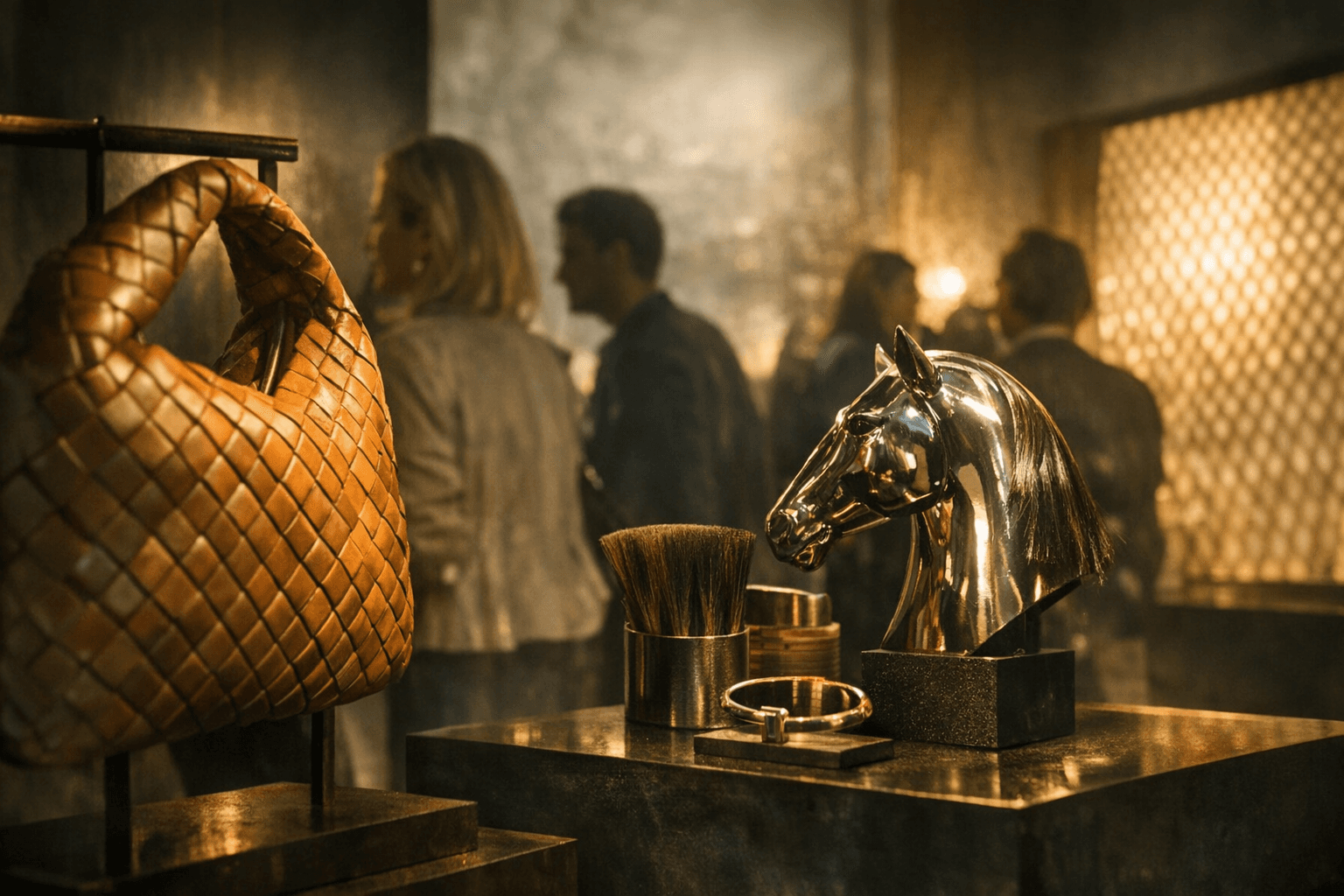
The collection itself leans into materials that are already whispering their way into accessories and interiors across the market. The “Palladion d’Hermès” vase is hammered, palladium-plated metal with lizard, leather, and horsehair accents, while the matching jug pairs the same metal with cassia wood. That mix is very Hermès, but it also tracks with where taste is going: polished metal softened by animal texture, hard surfaces broken up by organic detail, and objects that feel collected rather than matched.
Then there is the “Stadium d’Hermès” table by Edward Barber and Jay Osgerby, made in marble marquetry and shaped to suggest either the curve of a horse’s back or the oval of an equestrian track. That idea, translated into personal style, is all about line and movement. Expect more rounded silhouettes, saddle-inspired curves, and accessories that borrow from sports equipment and riding gear without becoming costume. Hermès is also pointing to its textile savoir-faire, including handwoven Nepalese cashmere blankets sometimes blended with linen, which reinforces the bigger message: softness is not going anywhere, but it is getting more architectural.
What actually moves from installation to outfit
Milan Design Week is centered on Salone del Mobile, and this year’s edition is drawing hundreds of designers, architects, and brands across the city. That scale matters because the fashion labels showing up here are not just decorating a fair. They are using design-led storytelling to move the conversation from product to atmosphere, then from atmosphere to wardrobe.
A few clear style cues are already obvious:
- Woven surfaces are getting more literal and more luxurious. Bottega’s fettucce strips and Lee’s suspended structure make the case for woven leather, intrecciato finishes, and bag bodies that show construction instead of hiding it.
- Black and green are having a real moment. Bottega’s bespoke shades feel disciplined, not loud, which is exactly why they will translate into accessories that look sharp now and still feel right later.
- Metal is going softer. Hermès’ palladium-plated pieces, especially with lizard, leather, horsehair, and cassia wood, point to jewelry and hardware that mix sheen with texture instead of chasing mirror polish alone.
- Shape is becoming emotional. The Stadium table’s horse-back curve and the repeated modular setup at La Pelota suggest a continued move toward rounded, body-aware forms in bags, shoes, and tailoring.
- Cashmere is staying, but with structure. Hermès’ handwoven blankets, especially the versions blended with linen, hint at a broader appetite for tactile layers that feel light rather than precious.
The larger trend is easy to spot if you were actually walking the city this week: luxury is getting more physical. Brands are not just staging beautiful rooms. They are building environments that make you want to touch the walls, notice the seams, and imagine the material on your shoulder, your wrist, your table, your bed. That is the real takeaway from Milan Design Week 2026. The most relevant fashion ideas are coming from objects that know how to hold a space, and the smartest style next season will borrow that same confidence.
This article was produced by Prism’s automated news system from verified source data, official records, and press releases, then run through automated quality and moderation checks before publishing. The system is built and supervised by the people who set the standards it runs under. Read our full AI policy.
Did this article answer your question?