Nigo’s Kenzo pre-spring lineup leans into easy workwear and tailoring
Nigo turns Kenzo’s pre-spring lineup into a study in useful luxury: soft tailoring, worn-in workwear and heritage references that feel ready to live in.
The wardrobe thesis
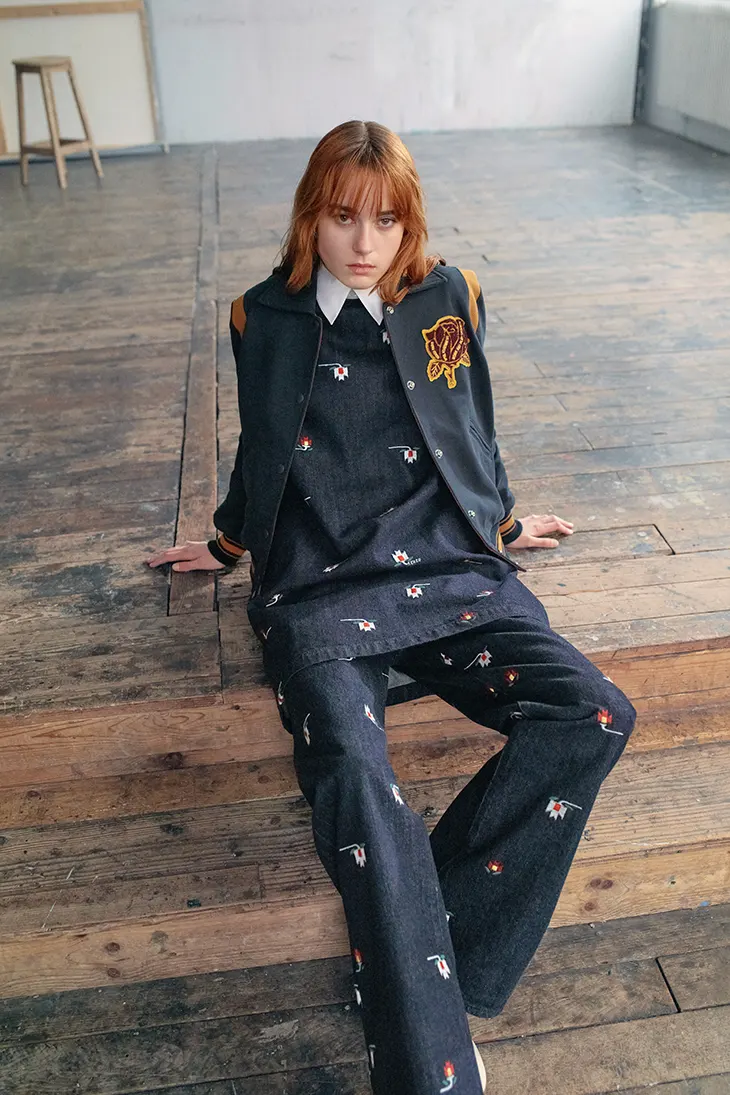
Nigo’s first pre-spring collection for Kenzo makes a sharp case for where everyday luxury is heading: toward clothes that look polished, but never precious. The strongest pieces are the ones built for repeat wear, with soft tailoring, workwear, Americana, denim, overshirts, camp shirts and striped poplin all pushed into the center of the wardrobe rather than treated like seasonal detours.
That is what gives the lineup its confidence. Instead of chasing novelty for its own sake, the collection reads like a practical reordering of modern dressing, where an overshirt can stand in for a jacket, striped poplin can move from office to weekend, and denim is cut to feel easy rather than over-designed. The mood is relaxed, but the thinking is precise.
Work & Play, revisited for now
The collection starts from Kenzo’s archival “Kenzo Work & Play” label, and that reference is doing more than providing a retro footnote. It gives the clothes a built-in logic: utility silhouettes, casual essentials and graphic applications that feel familiar enough to slip into real wardrobes, but still carry the playfulness that has always mattered to the house.
Kenzo’s own framing is that the season moves from Nigo’s wardrobe staples and functional dressing toward a lighter, more outdoor atmosphere inspired by Japanese gardens. That shift matters because it softens the line between city and leisure, which is exactly where a lot of modern dressing now lives. The result is a collection that feels less like a statement wardrobe and more like an edit of pieces that can actually keep up with daily life.
The appeal of low-friction dressing
What makes this lineup resonate is its lack of friction. The best clothes here do not demand a complicated styling theory, and that is the point. Soft tailoring brings ease to structure, while workwear references keep the pieces grounded, so the whole collection lands in that sweet spot between considered and casual.
There is also a clear understanding of how people really wear clothes now. Pieces like overshirts, camp shirts and striped poplin are valuable because they move across settings without feeling overworked, and denim remains one of the few categories that can absorb both Americana and tailoring cues without losing clarity. In a market crowded with trend noise, this kind of low-pressure versatility has more staying power than a dramatic seasonal flourish.
Ceramics, signature and the hand-made touch
One of the most distinctive layers in the collection comes from Nigo’s long-running ceramics obsession. His favorite museum is the Kyoto house of ceramicist Kawai Kanjiro, and he hand-throws his own vessels, a detail that gives the collection a more intimate, craft-minded backbone than a typical heritage reference cycle. That personal connection shows up in the stamped monogram treatments, which are inspired by his own method of signing ceramics.
It is a small but telling move. The stamped monogram does not shout luxury in the usual glossy way; instead, it suggests authorship, touch and repeat gesture, the same qualities that make a handmade vessel feel alive in the hand. In a collection built around approachable wardrobe staples, that sort of detail keeps the clothes from feeling anonymous.
Why the Japanese reference feels central, not decorative
The Japanese garden inspiration, the ceramics reference and the archival Kenzo label all reinforce the same message: this is not a surface-level remix of workwear and Americana. It is a continuation of the house’s Japanese heritage and of the identity Kenzo Takada established when he founded the brand in 1970. That history gives the collection more weight than a simple mood board of utility dressing.
Nigo is the first Japanese designer to lead Kenzo since Takada, and that fact gives his tenure a symbolic importance that extends beyond any one season. His appointment on September 15, 2021, effective September 20, 2021, marked a major house moment, with LVMH initially saying his first Kenzo collection was scheduled for January 2022. Seen in that context, this pre-spring lineup feels like a mature articulation of the role, where heritage is not just referenced but actively translated into wearable, contemporary forms.
Accessories and the next phase of the wardrobe
The collection does not stop at clothing. Accessories are part of the same utility-first logic, with the new KENZO Rush sneaker and KENZO Janguru bag line extending the lineup’s practical, everyday energy. Those names suggest movement and ease, which fits the broader collection narrative: pieces that do not interrupt a wardrobe, but complete it.
That matters because accessories are often where a collection either sharpens its point of view or dilutes it. Here, they reinforce the idea that Kenzo is building a wardrobe with real continuity, one where the finishing pieces carry the same balance of function, play and heritage as the clothes themselves. Available next October, the pre-spring 2027 collection arrives with a clear message: the new luxury is not about overstatement, but about clothes that earn their place by being the ones you reach for again and again.
This article was produced by Prism’s automated news system from verified source data, official records, and press releases, then run through automated quality and moderation checks before publishing. The system is built and supervised by the people who set the standards it runs under. Read our full AI policy.
Did this article answer your question?