Plan C doubles down on simplicity for spring 2027 wardrobe solutions
Plan C’s spring 2027 lineup turns restraint into a summer strategy, pairing poplin, broderie anglaise and raffia with sculptural ease.
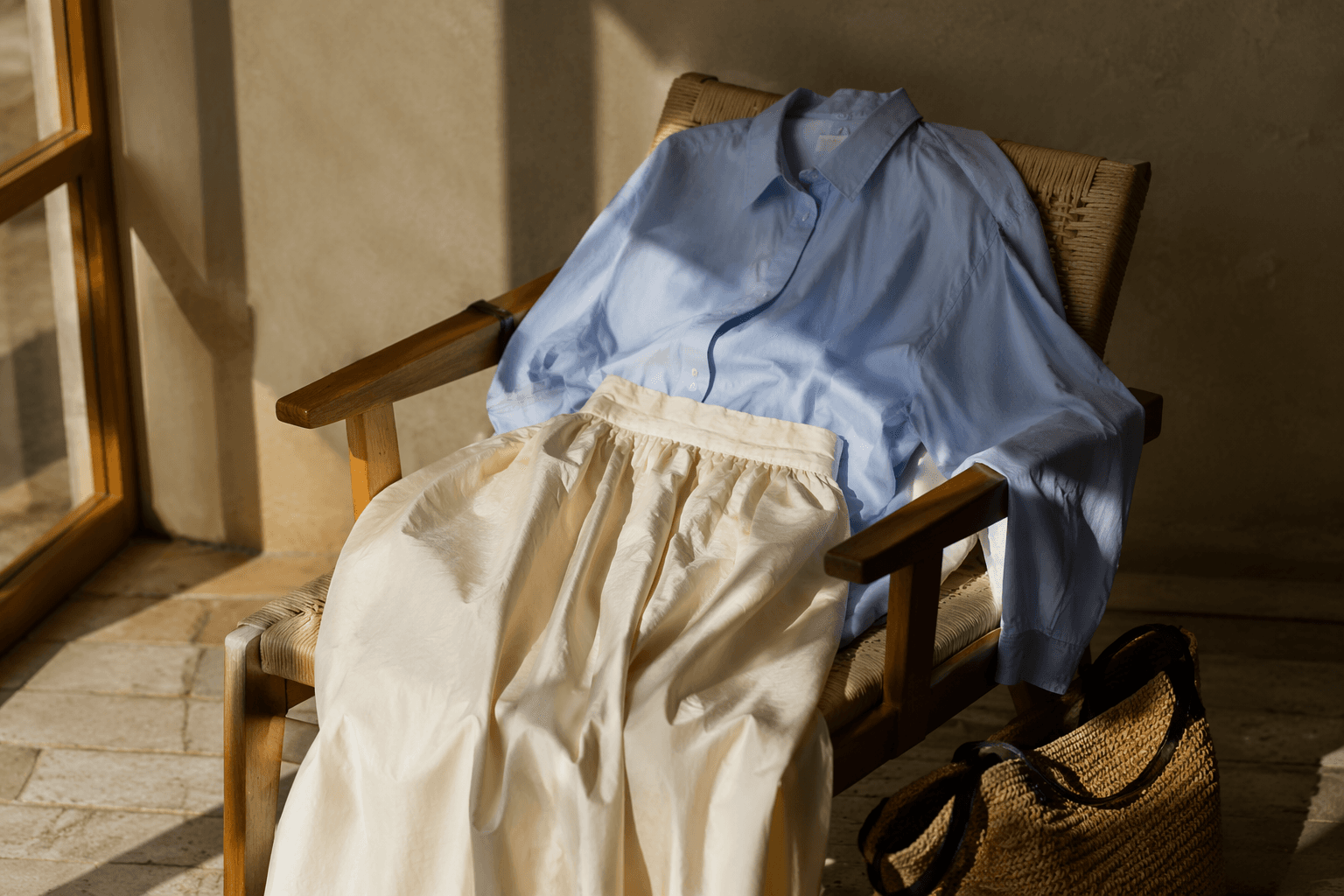
Carolina Castiglioni’s spring 2027 collection for Plan C makes a persuasive case for dressing simply, but never blandly. The clothes lean into crisp poplin, viscose, broderie anglaise and raffia, then sharpen those easy summer fabrics with silhouettes that feel polished, sculptural and quietly modern. It is the kind of collection that understands heat, movement and real-life dressing, and still keeps its head above the tidal wave of trend clutter.
A wardrobe built on restraint, not reduction
What makes this season distinctive is the discipline behind it. Plan C is not stripping things back to the point of austerity, but editing with intention, letting texture do the talking while the shapes stay clean and controlled. The result is a summer wardrobe that feels practical enough for daytime wear and refined enough to hold its own at dinner, which is exactly where the best warm-weather clothes earn their keep.
The collection’s promise lies in its balance: relaxed, wearable pieces that never lose their architecture. Poplin brings that sharp, papery crispness that instantly suggests polish in high temperatures, while broderie anglaise softens the mood with cutwork and airiness. Raffia accents add a tactile, sunlit note, the sort of detail that reads as vacation-ready without tipping into costume.
The new luxury is technical clarity
Vogue described the lineup as suitable for “optimistic séjours,” and that feels right because the clothes are built for movement between city, coast and suitcase. The magazine’s observation that these “basics” are only basic in the most technical sense gets to the heart of Plan C’s appeal: these are not anonymous staples, but carefully engineered pieces with enough character to register from across a room.
That technical quietness is the brand’s signature. Plan C has long been associated with a minimalist language that still carries contemporary allure, and this collection continues that conversation with fabrics that lead the design rather than merely support it. The effect is subtle but not shy. You see ease first, then the precision beneath it.
Why Carolina Castiglioni’s point of view still feels distinctive
Plan C was founded in 2018 by Carolina Castiglioni, after her family sold Marni to Renzo Rosso’s OTB group. That lineage matters because the brand carries the Castiglioni family’s instinct for fabric, proportion and considered eccentricity, but translates it into something more restrained and pragmatic. Carolina Castiglioni has described Plan C as a family business rooted in Milanese style, with her father Gianni involved in the company and her brother Giovanni handling production, and that structure helps explain the coherence behind the clothes.
Her design process starts with materials, and you can feel that priority in every season. Rather than building from a gimmick or a loud silhouette, Plan C begins with the hand of the cloth, then lets the shape emerge from there. That method is what keeps the brand’s simplicity from flattening out into plainness.
What to borrow from the runway for real life
This is a collection that lends itself to immediate translation, which is part of its appeal. The clothes suggest a summer formula that feels grown-up, breathable and polished without effort. If you want the look in practice, think in terms of texture, proportion and one strong material gesture.
- Start with crisp poplin. A poplin shirt or skirt gives structure to the rest of the outfit and keeps the silhouette feeling fresh in the heat.
- Use broderie anglaise as your softness. It breaks up severity and adds detail without requiring prints or embellishment.
- Let raffia stay in the supporting role. Whether it appears at the edge of a bag, shoe or trim, it works best as a tactile accent rather than a full statement.
- Keep the silhouette easy but not loose. Plan C’s strength is the way it makes room around the body while preserving line and intent.
- Choose pieces that look considered from every angle. The sculptural quality matters because it keeps the outfit polished even when the materials are relaxed.
The point is not to imitate the runway literally, but to adopt its logic. One excellent fabric can do more for a summer wardrobe than three competing trends, especially when the cut is calm and the finish is exacting.
From clothes to a broader Milanese lifestyle idea
Plan C’s appeal has always extended beyond the rack, and the brand has been widening that world through Plan C Frame, its new Milan flagship concept on Via Alessandro Manzoni 21. Developed with the creative platform April and the Milan architecture studio (AB)NORMAL, it reinforces the sense that Plan C is thinking about atmosphere, retail and lifestyle as part of the same system.
That matters because the spring 2027 collection is not just a set of looks, but an extension of a larger point of view. The store concept, like the clothes, suggests a brand interested in framing simplicity as something cultivated rather than bare. It is a very Milanese proposition: practical, beautiful and just slightly intellectual.
Sustainability without slogans
Plan C has also emphasized sustainability through deadstock-fabric capsule projects, which fits neatly with its fabric-first approach. Rather than treating responsibility as a layer of branding, the label seems to fold it into the same design discipline that governs its silhouettes and materials. That makes sense for a house that already thinks in terms of texture, utility and longevity.
The broader takeaway from spring 2027 is clear. Plan C is not chasing spectacle; it is refining a language of modern ease, where a crisp fabric, a carefully judged proportion and a smart accent can carry an entire season. In a summer market often crowded with noise, that kind of restraint feels like the most convincing luxury of all.
This article was produced by Prism’s automated news system from verified source data, official records, and press releases, then run through automated quality and moderation checks before publishing. The system is built and supervised by the people who set the standards it runs under. Read our full AI policy.
Did this article answer your question?