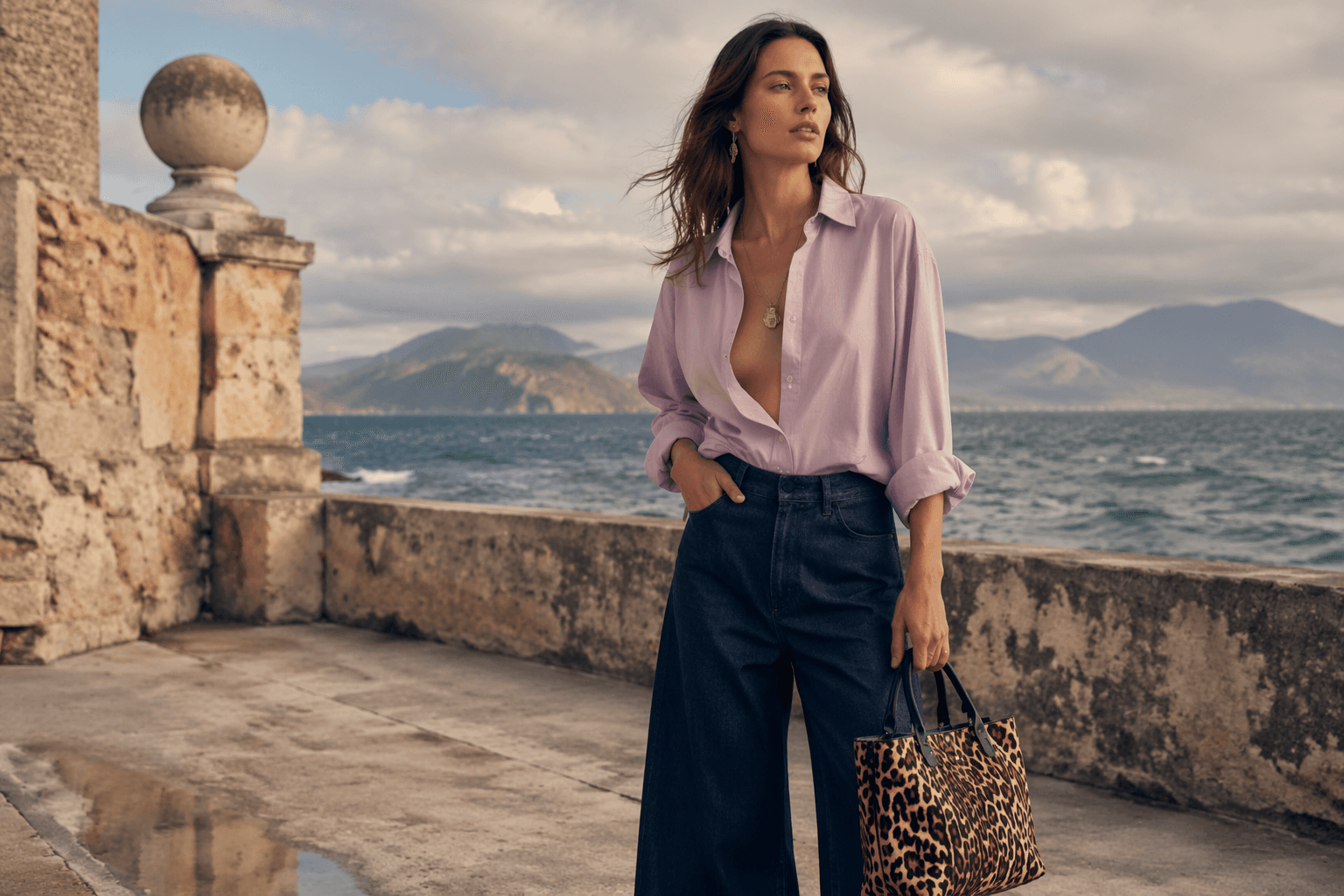
Pom Klementieff leans into instinctive dressing for Zimmermann High Summer 2026
Pom Klementieff's Zimmermann look turns instinct into a style code: a floaty pink dress over a swimsuit, built for movement, not overthinking.

The new luxury move is to stop overstyling
Pom Klementieff did not show up dressed like she was trying to prove a theory. She wore a floaty pink printed Zimmermann dress over a swimsuit, and the whole point was how naturally it moved with her. That is the shift worth paying attention to: luxury is starting to reward instinct again, the kind of dressing that follows feeling first and explanation later.
The look lands because it solves a real style problem. It bridges the space between poolside and polished without forcing a costume change, and it does it with actual ease, not the fake kind brands love to sell. The dress has that light, airy swing that makes movement part of the outfit, while the swimsuit underneath keeps it grounded in summer reality. Nothing about it looks trapped in place, and that freedom is exactly why it works.
Zimmermann's high summer language is all about motion
Zimmermann's High Summer 2026 collection fits this mood cleanly. The clothes are built for warm weather, but not in the blunt, throw-on-a-cover-up sense. They lean into print, softness, and silhouette, giving the body room instead of boxing it in. That matters, because the best summer luxury now feels less like armor and more like an answer to the day in front of you.
Klementieff's pink printed dress is the kind of piece that makes movement part of the look. The fabric reads light, the shape reads floaty, and the styling reads unforced. It is the opposite of the hyper-managed celebrity outfit that looks assembled by committee, then photographed into submission. Here, the appeal is that the clothes seem to have been chosen by instinct, not by a spreadsheet of trends.
Why the swimsuit matters as much as the dress
The swimsuit under the dress is not a detail, it's the whole trick. It turns the outfit into a real transition piece, the kind that makes the changeover disappear. That is where this look gets smart: it handles the shift from water to dinner, from lounging to going out, without asking for a full wardrobe reset.
That kind of versatility is exactly what modern luxury keeps circling back to. People do not want to keep changing just to feel styled, especially in summer when heat and movement already ask enough of you. A dress worn over swimwear signals readiness, ease, and a little bit of spontaneity. It says the outfit can handle the day without fussing over it.
And that is where Klementieff's take feels current. She is not selling the idea that fashion has to be complicated to be interesting. She is making the case that clothes are at their best when they let you move, live, and decide on the fly. In other words: style should keep up with the person wearing it.
Instinctive dressing is beating algorithmic taste
The phrase that hangs over this look is intuition. Klementieff's approach feels rooted in gut instinct, not in the algorithmic version of personal style that dominates so much of the internet now. That matters because the internet often rewards sameness disguised as individuality: the same silhouettes, the same references, the same "effortless" formula repeated until it stops looking effortless at all.
This Zimmermann moment cuts through that. It is personal without being precious, polished without being overworked, and specific without trying too hard to telegraph taste. The pink print gives it personality, the floatiness gives it softness, and the swimsuit keeps it practical. The result feels like a woman dressing for herself first, which is still the rarest luxury move of all.
That is also why this look feels bigger than one celebrity appearance. Fashion keeps pretending the next big thing is a new microtrend or a fresh styling hack, but the real shift is simpler: people want clothes that respond to how they feel in the moment. In summer especially, that means pieces that can flex with plans, weather, and mood.
How to wear the idea without copying the look exactly
The smartest way to borrow from Klementieff's Zimmermann moment is to think in terms of movement and ease, not exact duplication. The formula is clear: choose one piece with air in it, let it float over something functional, and resist the urge to add too many finishing touches.
A strong version of this approach usually has three ingredients:
- A lightweight printed dress or cover-up that moves when you walk
- A swimsuit or base layer that can stand on its own
- Minimal styling that keeps the outfit from turning rigid
The key is restraint. A look like this does not need heavy accessories, tight tailoring, or overly coordinated extras. The print is already doing enough work, and the silhouette does the rest. If the clothes are the point, let them breathe.
Why this matters for celebrity style right now
Celebrity dressing has been swinging hard between maximal polish and deliberately undone ease, and this look lands in the smarter middle. It is styled enough to be memorable, but not so styled that it loses its pulse. That balance is what makes it feel modern.
Klementieff's Zimmermann outfit also shows why movement is becoming a new marker of luxury. Not just drape, not just softness, but actual physical ease. The clothes have to look beautiful in motion, because motion is where real life happens. That is a much more interesting standard than merely looking expensive from a distance.
The larger point is simple: the most compelling summer fashion right now does not shout about its effort. It slips into place, handles the transition, and makes the wearer look like she trusted her own taste. In Zimmermann's High Summer 2026, that instinct reads as the highest form of polish.
This article was produced by Prism’s automated news system from verified source data, official records, and press releases, then run through automated quality and moderation checks before publishing. The system is built and supervised by the people who set the standards it runs under. Read our full AI policy.
Did this article answer your question?