Quiet Confidence and Simplicity Define Fashion's Most Effortless Year Yet
Simplicity is fashion's loudest statement this year, as effortless style displaces maximalism as 2026's defining aesthetic.
Something has shifted in the way people want to dress, and it isn't subtle. The maximalism that dominated recent seasons, with its layered prints, baroque embellishment, and performative excess, has given way to something quieter and more considered. Call it effortless style: a mode of dressing built on simplicity, versatility, and the kind of quiet confidence that needs no explanation. It's the aesthetic that DC Fashion Week identified as 2026's defining movement, and if you've been paying attention to what actually resonates right now, it's hard to argue with that read.
The Cultural Shift Behind the Look
Fashion doesn't change in a vacuum, and the turn toward effortlessness makes complete sense when you trace it back to how people are actually living. Hybrid work has fundamentally rewritten the daily wardrobe equation. The strict binary between office-appropriate and weekend-casual dissolved somewhere around 2022, and what's emerged in its place is a wardrobe that needs to do everything without looking like it's trying to do anything. A blazer that reads as polished in a 10 a.m. video call and relaxed enough for a late lunch. Trousers with enough ease to carry you through a long commute and still look intentional when you walk into a room.
That functional demand has created something aesthetically interesting: clothes that derive their power from proportion and fabric rather than decoration. When you strip away the embellishment, what remains has to be good on its own terms. The effortless aesthetic is, in many ways, the more technically demanding one.
What Effortless Actually Means
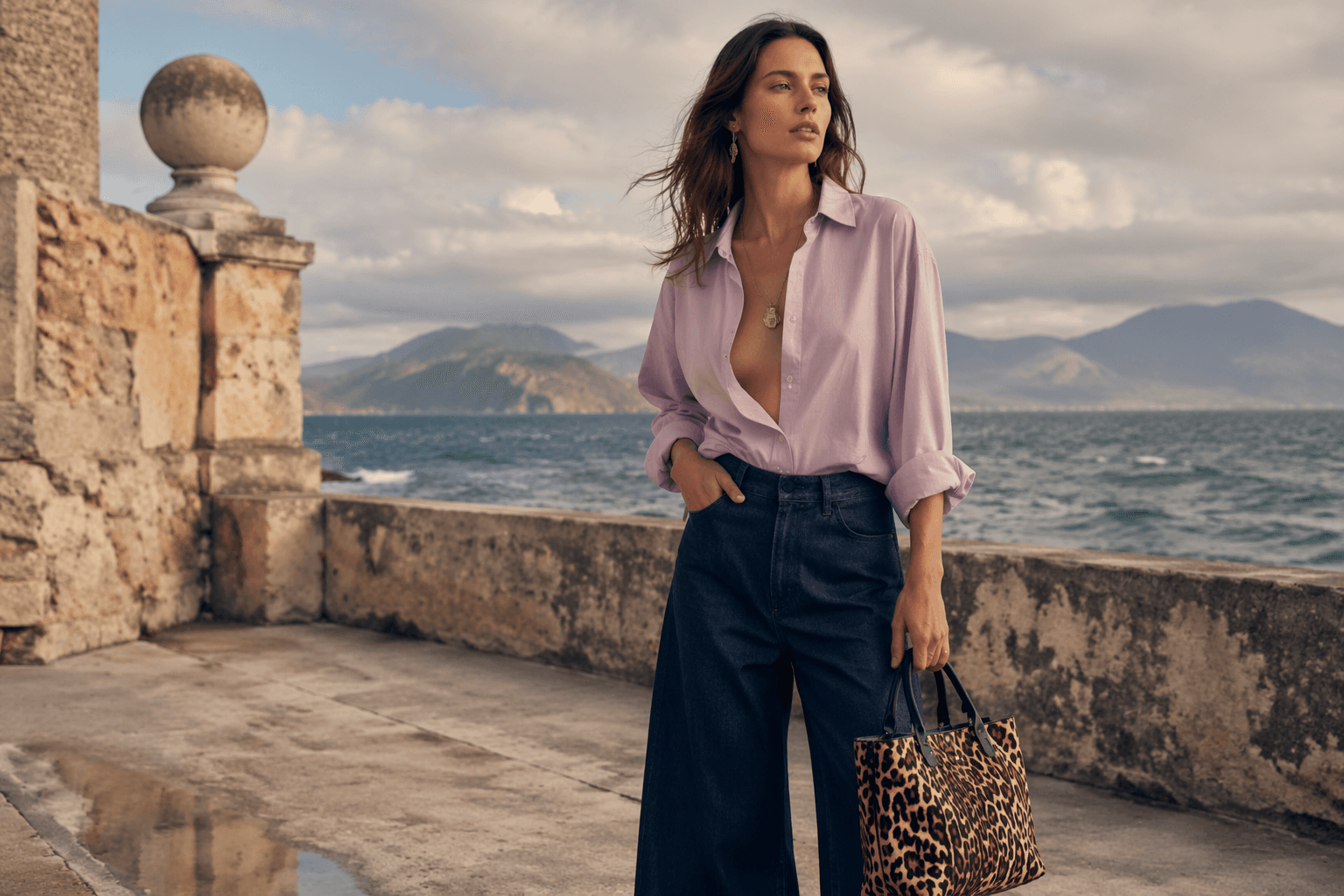
The word gets misused constantly, so it's worth being precise. Effortless style isn't the absence of effort; it's the absence of visible effort. It requires more deliberate curation, not less. The difference between a thrown-together look and a genuinely effortless one comes down to fit, fabric quality, and the coherence of a personal point of view. A perfectly cut linen shirt in a considered neutral does more work than a maximalist outfit that announces itself before you've crossed the room.
Simplicity here functions as a design principle, not a limitation. Versatility means pieces that earn their place in a wardrobe by working across multiple contexts, not just a single occasion. And quiet confidence is perhaps the most telling element: it's the aesthetic posture of someone who doesn't need their clothes to make a case for them.
Silhouettes and Fabrics That Define the Moment
The effortless aesthetic has a very specific visual vocabulary. Silhouettes lean toward ease: relaxed shoulders, unconstructed tailoring, fluid trousers that move well. Nothing is excessively oversized or aggressively fitted. The proportions feel considered rather than calculated, as though the clothes arrived at the right shape naturally.
Fabric is doing significant heavy lifting in this direction. Textures that reward close attention, washed linens, soft brushed wools, lightweight jersey that holds its shape, are favored over anything with obvious surface drama. The tactile quality of a piece matters enormously in this aesthetic register, because there's less visual noise to distract from it. When you reach for something and it feels as good as it looks, that's effortless style functioning as intended.
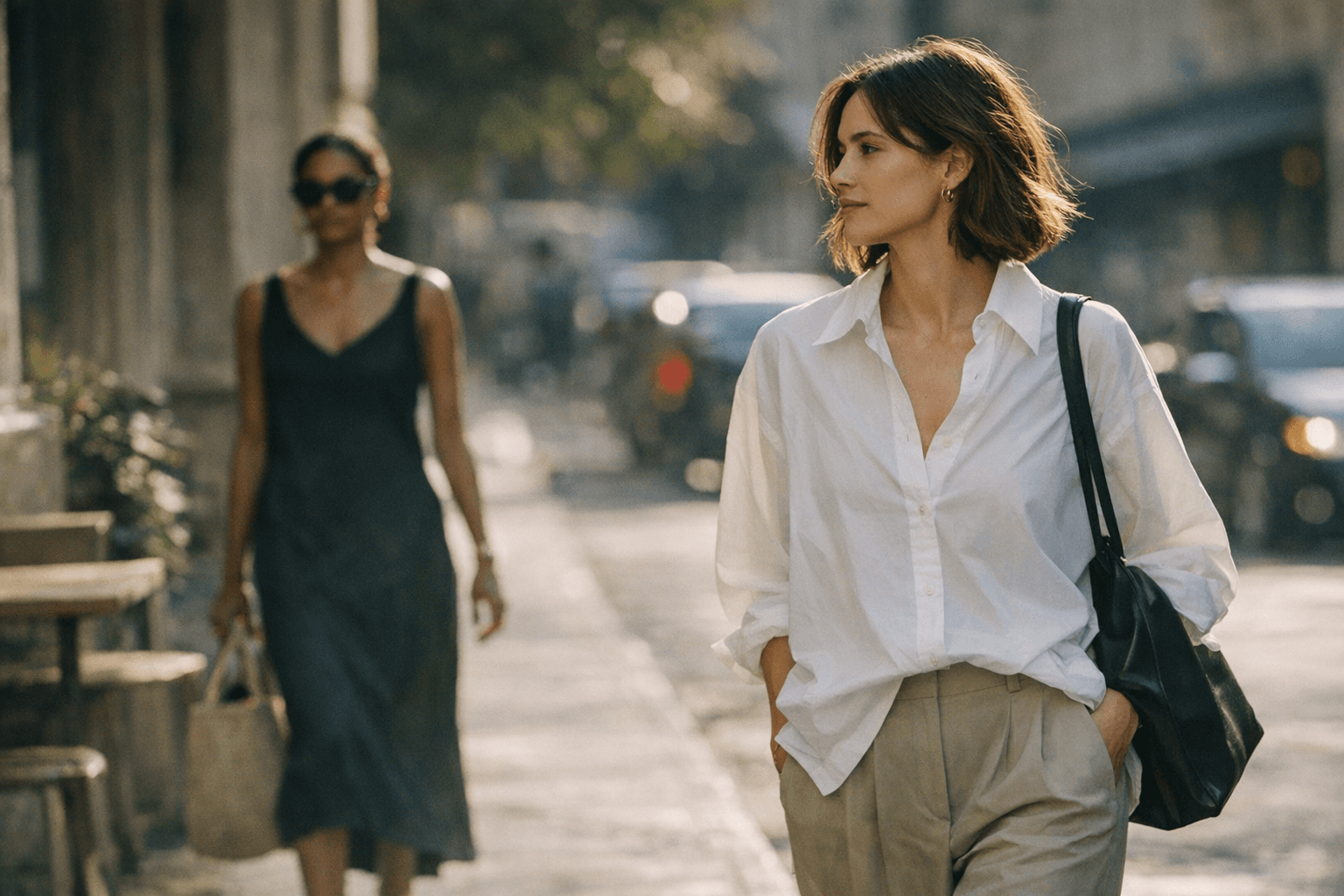
Color follows the same logic. Muted tones, warm neutrals, and carefully chosen earthy palettes dominate, with the occasional deeper accent that feels deliberate rather than decorative. The point is cohesion: a wardrobe where things speak to each other without having been rigidly coordinated.
Building a Wardrobe Around This Aesthetic
The practical application of effortless style isn't about buying a capsule wardrobe kit from a single brand. It's about editing. The most common wardrobe mistake is accumulation without intention: pieces added impulsively that don't integrate with what's already there. The effortless wardrobe runs counter to that impulse.
Start with fit and fabric as your primary filters. A well-proportioned piece in a quality fabric will outlast any trend cycle, which matters both economically and aesthetically. Consider versatility at the point of purchase: if a piece only works in one context, it's working against the simplicity principle. The best acquisitions in this mode are the ones that seem to multiply the usefulness of everything around them.
There's also something worth noting about the relationship between restraint and personal style. Editing down to what genuinely reflects your aesthetic sensibility is how a personal point of view develops. The maximalist approach offers constant novelty; the effortless approach offers something rarer: consistency, and the visual coherence that comes from knowing exactly what you're about.
Why This Aesthetic Has Staying Power
Trend cycles have accelerated to the point of near-incoherence, with micro-trends minted and retired within a matter of weeks. The effortless aesthetic sits outside that churn, not because it's static, but because its core principles, simplicity, versatility, quiet confidence, aren't seasonal propositions. They're a framework that can absorb new influences without losing its essential character.
The hybrid work reality that helped catalyze this shift isn't going away. Neither is the growing awareness among fashion consumers that a wardrobe built on deliberately chosen, high-quality pieces carries more long-term value than one assembled from reactive trend purchases. DC Fashion Week's framing of effortless style as 2026's dominant movement reflects a broader recalibration: the industry reading where its most discerning customers have already arrived.
The most compelling thing about this moment isn't that simplicity has become fashionable. It's that it has become the baseline expectation. Getting dressed with quiet confidence, wearing clothes that work without announcing themselves, has shifted from a niche sensibility to the prevailing standard. That's not a trend. That's a new point of departure.
This article was produced by Prism’s automated news system from verified source data, official records, and press releases, then run through automated quality and moderation checks before publishing. The system is built and supervised by the people who set the standards it runs under. Read our full AI policy.
Did this article answer your question?